
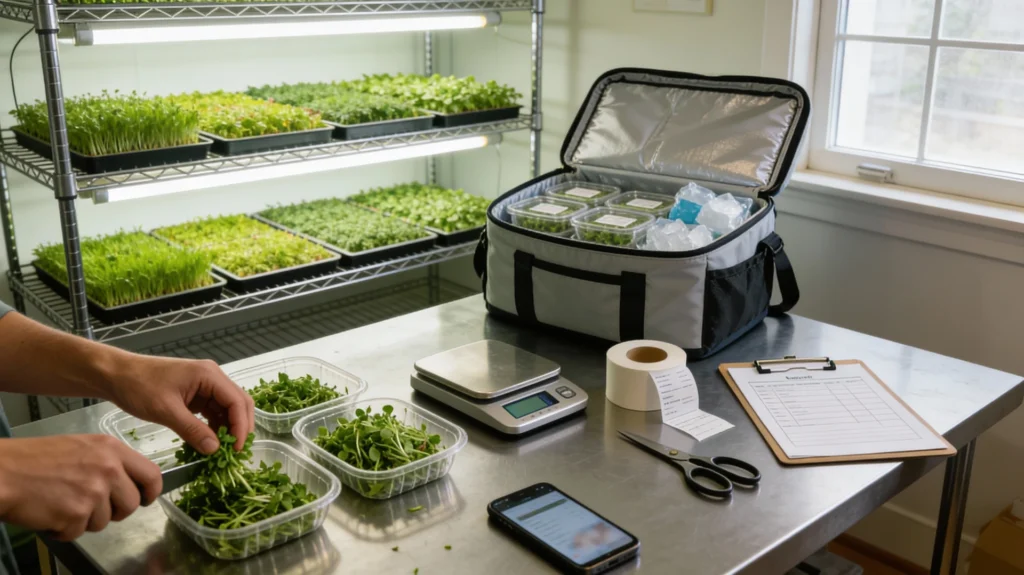
Turning tiny greens into serious green isn’t just hype anymore. Microgreens are taking kitchens and bank accounts by storm. With just a small space and a few trays, you can build a steady income stream right from your home.
People all over are turning this into a profitable side hustle and even a full-time business. From quick-growing sunflower shoots to spicy radish sprouts, the demand keeps rising, and the margins are sweet.
This guide lays out the real steps you need to start smart, grow fast, and sell like a pro without fancy gear or a huge budget. If you’re ready to grow more than just plants, you’re in the right place 🌱💸📈
Understanding the Microgreens Market
Success in the microgreens business depends on understanding the market’s dynamics — who buys microgreens, what drives demand, and which products generate the highest margins.
Primary customer segments include:
- Restaurants and Chefs: These buyers use microgreens for flavor, nutrition, and presentation. They value reliability, consistency, and custom growing options.
- Health-Conscious Individuals: These are often people on plant-based, anti-inflammatory, or detox diets. They’re willing to pay for freshness and transparency in farming methods.
- Retail Outlets and Grocery Stores: Local health food stores and organic grocers are great repeat buyers if the grower can ensure supply and meet food safety standards.
- Subscription and Meal Kit Companies: This growing segment is ideal for recurring sales, especially when the grower can maintain consistency and meet volume needs.
Certain varieties stand out for both popularity and profitability. Sunflower, pea shoots, radish, and broccoli microgreens are known for strong yields and faster harvest cycles. Retail prices often range from $33 to $54 per kilogram ($15 to $25 per pound) depending on market, quality, and branding.
Because microgreens are highly perishable, local growers can outcompete large farms by offering freshness and flexible delivery. Weekly cycles create recurring demand, especially with chefs and individual consumers. The combination of fast turnover and strong margins makes this a powerful model for local agriculture.
The Business Model: How Microgreens Make Money
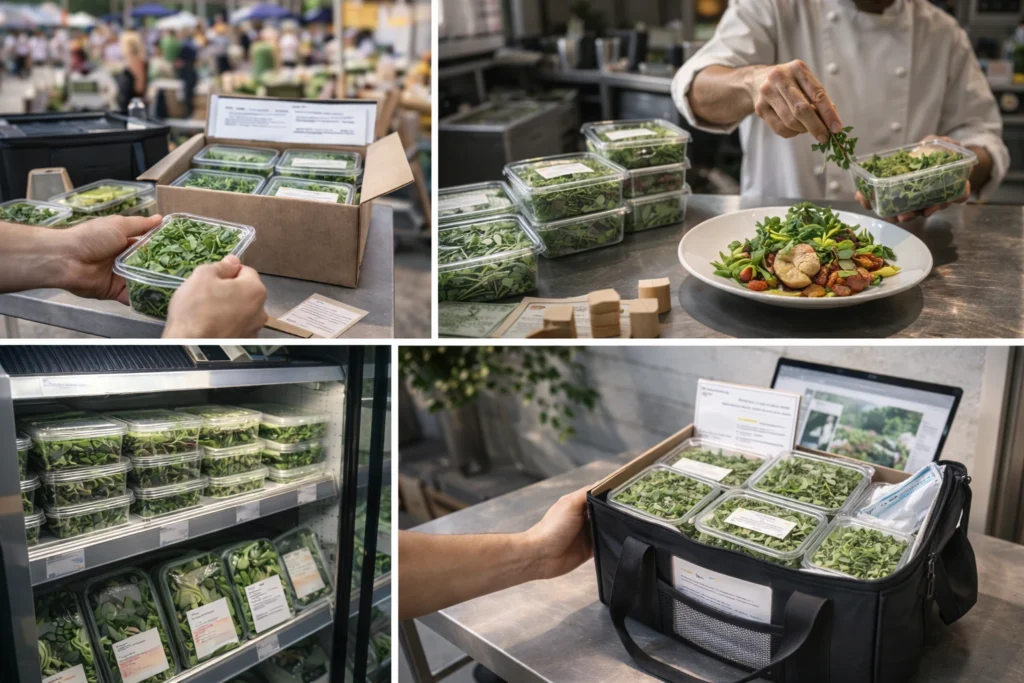
The microgreens business model is agile, profitable, and scalable. It can be adapted to suit different levels of time investment, space, and financial resources.
Primary revenue streams include:
Direct-to-Consumer (DTC) Sales: Includes farmers’ markets, doorstep delivery subscriptions, and local pick-up programs. These customers offer the best margins — often paying $4 to $8 per container — but require more branding, education, and customer service.
Business-to-Business (B2B) Sales: Selling directly to chefs, cafes, and meal services is a common path to stable, recurring revenue. Orders are larger and more predictable but require meeting strict quality and delivery expectations.
Wholesale and Retail Partnerships: Once scaled, growers can work with local grocery stores, natural food retailers, or co-ops. While margins are lower (due to distributor cuts or retailer markups), this channel opens up significant volume potential.
Educational Products and DIY Kits: These include grow-your-own kits, online workshops, and consulting services for aspiring growers. These income streams don’t require more crops and offer high-margin digital or product-based extensions.
A well-run microgreens operation can maintain gross profit margins of 40–50% in the early stages. As operations grow and more labor is added, margins may dip slightly to 30–35%, but this still outperforms most traditional agriculture businesses.
For example, one grower started with an investment of just $6,500, growing part-time in a home setup. In the first year, they generated over $11,000 in revenue. By reinvesting profits into expanding production and delivery systems, they scaled to $175,000 in revenue by year two. With consistent branding, automation, and staff management, the same business later reached $1 million+ in annual revenue by year five.
Roadmap to Success: The 3 Growth Levels
The path to scaling a microgreens business typically follows three progressive stages. Each level involves different time, financial, and operational commitments.
Level 1: Side Hustle (Home-Based)
This level uses minimal space — often a spare room, basement, or garage — with simple rack systems and grow lights. The setup cost ranges from $1,100 to $4,300. Growers can manage 20 to 40 trays per week with just 1–2 hours of daily effort.
Each tray can produce $10 to $25 in sales, depending on the crop and buyer. This means a grower producing 40 trays/week at $15 per tray earns around $2,400 per month, or $28,000 annually, part-time. Profit margins are high due to minimal overhead.
This is ideal for testing the market, building relationships, and understanding the production process.
Level 2: Full-Time Business
The grower now moves to a dedicated facility — a small warehouse, converted container, or rented commercial unit. Initial investment rises to $11,000–$108,000 depending on equipment, automation, and compliance needs (such as temperature control or sanitation systems).
At this stage, the owner spends 8–12 hours/day managing operations, orders, and deliveries. A few part-time staff may be required. One business example showed revenue growth from $38,000 in year one to over $175,000 in year two. Even with increased expenses, profit margins stayed at 30–40% due to effective scheduling and customer retention.
Level 3: Scalable Organization
Now the business operates as a company, with staff in place for production, sales, customer service, and marketing. Operations are streamlined with standard operating procedures, inventory tracking, and automated workflows. Marketing becomes a major focus, with budgets allocated to ads, social media, packaging, and content.
Revenue at this level can exceed $1 million per year. The founder shifts to managing growth, partnerships, branding, and possibly franchising or licensing. Food safety certifications and quality assurance become central to maintaining contracts with retail chains and meal services.
Costs, Investment, and Profitability
Costs and profitability vary based on business stage, sales channels, and operational systems. Here’s a financial breakdown by level:
Level 1 – Home-Based Setup
- Equipment (shelves, trays, lights): $1,100–$2,200
- Seeds and consumables (monthly): $110–$325
- Space needed: ~130–160 sq. ft.
- Monthly revenue: $500–$1,500
- Gross profit margin: 40–50%
- Example: 40 trays/week × $15 = $600/week, or $2,400/month
Level 2 – Commercial Facility
- Infrastructure and automation: $11,000–$33,000
- Rent: $500–$2,000/month
- Compliance (food safety, packaging): variable
- Labor: 1–2 employees or contractors
- Monthly revenue: $5,000–$12,000
- Gross profit margin: 30–40%
- Annual revenue target: $60,000–$150,000
Level 3 – Scaling Up
- Full team: operations, marketing, customer service
- Advanced systems: CRM, delivery logistics, analytics
- Marketing budget: $1,000–$5,500/month
- Annual revenue potential: $300,000–$1,200,000+
- Profit margin: 20–30%, depending on reinvestment
- A high-growth model often involves reinvesting heavily in systems, staff, and marketing for sustainable scale
Growers must decide whether they want to pay with time or money. Those with limited capital should be prepared to handle more manual tasks themselves, while those with upfront capital can invest in automation, consulting, and brand development to accelerate growth.
🌿 Recommended Microgreens Supplies |
Sales and Marketing Strategies That Actually Work
Growing high-quality microgreens is only half the battle — selling them consistently at good margins is where most growers either succeed or struggle. Effective sales and marketing strategies are essential to turn this into a reliable and growing income stream.
A. The “Go Narrow, Go Deep” Approach
Rather than trying to sell to everyone, the most successful growers focus on just 1–2 customer types (e.g., chefs and direct consumers). One example involved a business that focused heavily on restaurant partnerships during the early years, developing deep relationships with fewer clients who ordered in higher volumes weekly. This reduced delivery costs, ensured consistency in revenue, and allowed better planning.
B. Building a Chef Pipeline
Chefs are excellent recurring clients when treated as partners. The top-performing growers use a simple 4-step strategy:
- Identify restaurants in a 5-mile radius that already serve high-end or health-conscious meals.
- Offer free samples — ideally with custom labeling and usage suggestions.
- Follow up with a simple PDF catalog (with pricing and available varieties) and a weekly text/email ordering system.
- Deliver reliably and offer to grow specific varieties or blends on request.
Chefs typically pay $20 to $30 per pound ($44–$66 per kg), depending on freshness, variety, and relationship. They often prefer recurring weekly deliveries, making them ideal for long-term income.
C. Direct-to-Consumer Subscription Models
This model has higher margins than B2B but requires more effort in branding, packaging, and customer service. The process includes:
- Weekly or biweekly delivery of fresh microgreens
- $6–$10 per unit (container or clamshell)
- The average customer spends $20–$40 per month
Use tools like Shopify, Google Forms, or Square to set up pre-orders or subscriptions. Use SMS/email reminders weekly to keep retention high.
One operation reported that over 70% of their recurring customers came through Instagram and community events. They built trust with behind-the-scenes content, stories about the farm, recipes, and consistent interaction.
D. Partnering with Retail Outlets
Local grocery stores and co-ops are excellent volume buyers. However, they often require:
- Food safety documentation
- Consistent packaging and labeling
- On-time deliveries
The average price drops slightly here, often $12–$18 per pound ($26–$40 per kg) wholesale. But the volume makes up for lower margins, especially once production is automated.
A smart marketing strategy also includes content: reels, blogs, recipe cards, email newsletters, and local storytelling. Customers don’t just want microgreens — they want to feel connected to a local grower with a purpose.
Common Mistakes to Avoid
The microgreens business has a relatively low barrier to entry, but it also has a high rate of abandonment. Most people fail not because the model is flawed, but because of avoidable mistakes in execution. Here are the most common errors to steer clear of:
A. Overproducing Without a Sales Pipeline
Many new growers start by producing dozens of trays without first confirming who will buy. This leads to waste, frustration, and burnout. One grower admitted they threw out 50% of their crops in the early months due to poor sales planning.
Start by locking in a few clients (even friends or chefs) before increasing your tray count.
B. Underestimating the Complexity of Deliveries
Delivering microgreens daily or even weekly without a route plan can be time-consuming and expensive. Smart growers batch deliveries by geography and offer fixed drop-off days to reduce costs.
Use basic route-mapping apps like Circuit or RouteXL to avoid this pitfall.
C. Ignoring Hygiene and Food Safety Early On
Selling perishable food requires clean systems. Some growers operate out of dusty garages or use reused containers without sanitation protocols. This not only risks illness but can ruin customer trust — especially with chefs or retail stores.
Set up clear workflows: cleaning trays, washing hands, storing microgreens at the right temperature (32–40°F or 0–4°C), and using tamper-proof packaging.
D. Not Standardizing Processes
A major factor in the scale-up of successful growers is the use of standard operating procedures (SOPs). Without them, you’ll forget watering cycles, mess up orders, and waste time retraining helpers.
Simple checklists, labeled stations, and automation (like timers and humidity control) reduce mistakes and enable smooth delegation.
E. Trying to Sell Too Many Varieties
Each variety has different needs, harvest times, and seeding rates. Trying to grow 12–15 types at once can wreck schedules and waste trays. Most profitable growers start with 3–5 high-demand crops (like sunflower, radish, pea shoots, and broccoli) and add more once they have stable systems.
Systems and Tools to Maximize Efficiency
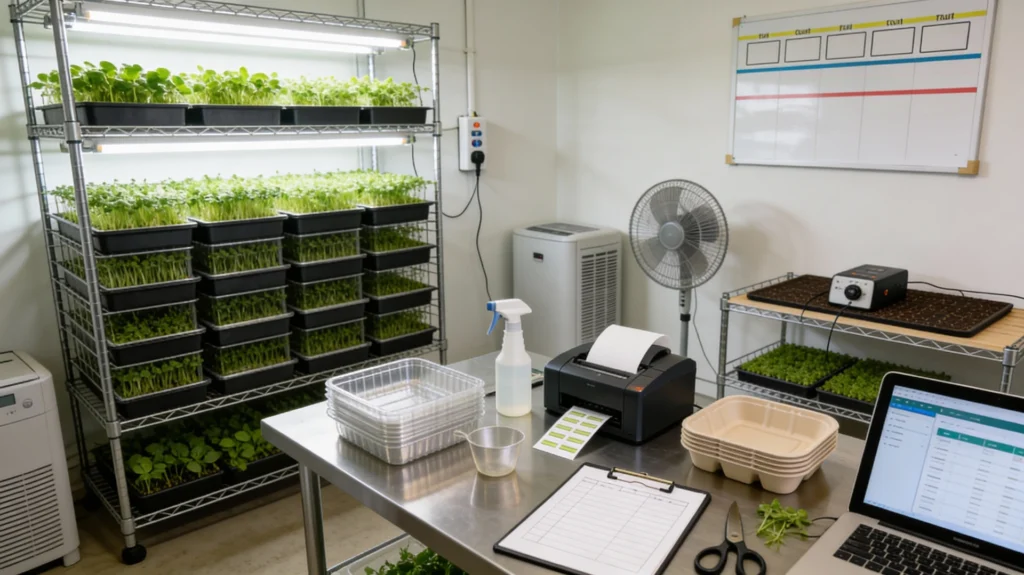
What separates a hobby grower from a scalable microgreens business is operational efficiency. The right systems reduce time, lower costs, and improve consistency. Here’s how top growers streamline their workflow:
A. Scheduling and Production Management
Use a whiteboard or spreadsheet to track:
- Weekly tray counts by variety
- Seeding days, blackout periods, harvest days
- Sales channel allocations (e.g., 20 trays to chefs, 10 to subscribers)
Advanced growers move to apps like Trello, Airtable, or Notion with shared templates for staff.
B. CRM and Order Management
A simple Google Form or Typeform linked to a Google Sheet can manage chef orders. For direct-to-consumer, a Shopify store, Squarespace, or Subbly allows subscription-based sales.
Top growers automate confirmations via email or text using tools like Mailchimp or Twilio.
C. Financial Tracking
Track revenue and expenses from day one. Use tools like:
- Wave (free accounting)
- QuickBooks (scalable)
- Google Sheets with templates for the early stages
Successful growers calculate cost per tray (including seeds, labor, and energy) and adjust pricing accordingly to maintain 30–50% gross margins.
D. Automation Tools
To scale beyond solopreneur status, invest in:
- Watering timers
- Heat mats with thermostats
- Humidity domes or greenhouses
- Label printers for custom branding
- Dehumidifiers and fans for airflow control
A well-equipped setup running 100–200 trays weekly can be managed by 2 people in under 25 hours/week if systems are tight.
Case Study: $1 Million in 5 Years
Let’s look at a real-world example of someone who scaled their microgreens business from $0 to over $1 million in revenue in 5 years — without buying land or raising external capital.
Stage 1: The Side Hustle (Year 1)
- Setup: home garage
- Initial investment: $6,500
- First-year revenue: $11,000
- Crops: sunflower, pea, radish, broccoli
- Strategy: Sold to friends, then chefs, then small retailers
Stage 2: Full-Time Leap (Years 2–3)
- Moved into a rented unit
- Added part-time staff
- Used a manual CRM system and Excel for tracking
- Revenue jumped to $175,000 by Year 2
- Profit margin: 35–40%
Stage 3: Systems & Scale (Years 4–5)
- Switched to automated systems (Shopify, CRM, timers)
- Created branded packaging and recipe cards
- Began paid ads and chef outreach campaigns
- Revenue hit $1.05 million in Year 5
- Team of 6 people
- Full-time founder role shifted to strategy, training, and outreach
Step-by-Step Action Plan to Start and Scale a Microgreens Business
This roadmap synthesizes the strategies, tools, and real-world experience shared earlier, giving you a clear blueprint from day one through sustainable growth.
Phase 1: Research & Planning (Weeks 1–2)
Goals:
- Understand your local market
- Identify your ideal customers
- Choose profitable crops to grow
Steps:
- Market Analysis
- Visit local farmers’ markets and grocery stores
- Contact 3–5 restaurants and ask if they use microgreens
- Search local Facebook groups and Instagram to gauge interest
- Customer Targeting
- Decide between B2B (chefs, grocery stores) and B2C (consumers, subscriptions)
- Start building a list of potential clients
- Crop Selection
- Start with high-demand, easy-to-grow varieties like:
- Sunflower
- Radish
- Broccoli
- Pea shoots
- Aim for crops that grow in 7–10 days
- Start with high-demand, easy-to-grow varieties like:
- Financial Planning
- Estimate startup budget ($500–$1,000 for home setup, or $5,000–$7,000 for small commercial unit)
- Use a spreadsheet to calculate the cost-per-tray and the break-even point
Phase 2: Setup & First Crops (Weeks 3–5)
Goals:
- Get your growing space ready
- Launch trial batches of microgreens
- Start documenting SOPs
Steps:
- Space Setup
- Home growers: use the garage, spare room, or basement
- Renters: consider 100–200 sq. ft. warehouse or unused storefront space
- Setup includes:
- Racks and trays
- LED grow lights
- Seeds, potting mix, or hydro pads
- Timer-based watering (manual or semi-automatic)
- Clean airflow system (fans or filters)
- Grow First Batches
- Aim to grow 10–20 trays/week at first
- Usea labeling system for blackout, watering, and harvest cycles
- Begin building a photo/video library for marketing content
- Build Standard Operating Procedures
- Document your seeding, watering, harvesting, and packaging steps
- Create a checklist for food safety and cleaning routines
Phase 3: Sales Launch & Feedback (Weeks 6–8)
Goals:
- Secure initial customers
- Launch delivery system
- Gather real-world feedback
Steps:
- Sell Sample Boxes
- Offer free or discounted “microgreen tasting kits” to chefs, neighbors, and friends
- Include small recipe cards, origin story, and contact info
- Get Feedback & Testimonials
- Ask recipients for specific feedback on taste, packaging, and delivery
- Use good quotes as reviews on social media and the website
- Set Up Ordering System
- Use Google Form or Shopify Lite for order collection
- Create a simple inventory sheet to track trays, orders, and delivery dates
- Launch Instagram or Facebook Page
- Post 2–3 times per week
- Show behind-the-scenes, farm process, recipes, testimonials
Phase 4: Growth & Recurring Revenue (Months 3–6)
Goals:
- Transition from one-off orders to repeat customers
- Increase production and pricing
- Improve branding and operations
Steps:
- Introduce Subscriptions
- Offer weekly or bi-weekly delivery boxes to households
- Use tools like Subbly or Shopify subscriptions
- Price: $20–$40/month per customer
- Approach Local Retailers or Co-ops
- Prepare a professional sample pack and pricing sheet
- Offer to do in-store demos or tastings
- Be ready with food safety documentation and labels
- Add Efficiency Tools
- Timer-based lights and watering
- Pre-made labels
- Delivery routes using apps like RouteXL
- Hire a Helper (If Needed)
- A part-time assistant can help with harvesting, packing, or deliveries
- Track labor time and cost carefully in your financial sheet
Phase 5: Scale & Optimize (Months 6–24)
Goals:
- Build a 6-figure business or more
- Expand the customer base and production
- Standardize operations for scale
Steps:
- Expand into Commercial Space
- Rent a small warehouse or an unused commercial unit
- Increase tray count to 100–200/week
- Invest in vertical rack systems and better airflow/humidity control
- Automate Ordering & Delivery
- Use Shopify + CRM + route planner
- Set fixed delivery windows for clients
- Build a Brand
- Use consistent logo, labels, recipe cards, and social content
- Explore online courses or teaching as additional revenue
- Track Metrics Religiously
- Revenue per tray
- Customer retention rate
- Waste % per crop
- Time spent per task
Expected Milestones (Conservative Estimate):
| Timeframe | Revenue Goal | Notes |
|---|---|---|
| Month 3 | $500–$1,000/month | 15–30 trays/week to 5–10 clients |
| Month 6 | $1,500–$3,000/month | Start recurring subscriptions or retail accounts |
| Year 1 | $25,000–$50,000/year | Optimize SOPs, packaging, delivery |
| Year 2–3 | $100,000–$200,000/year | Scale team, add automation, expand customer base |
| Year 5 | $500,000–$1M+ | Full-scale operation with team, systems, brand |