
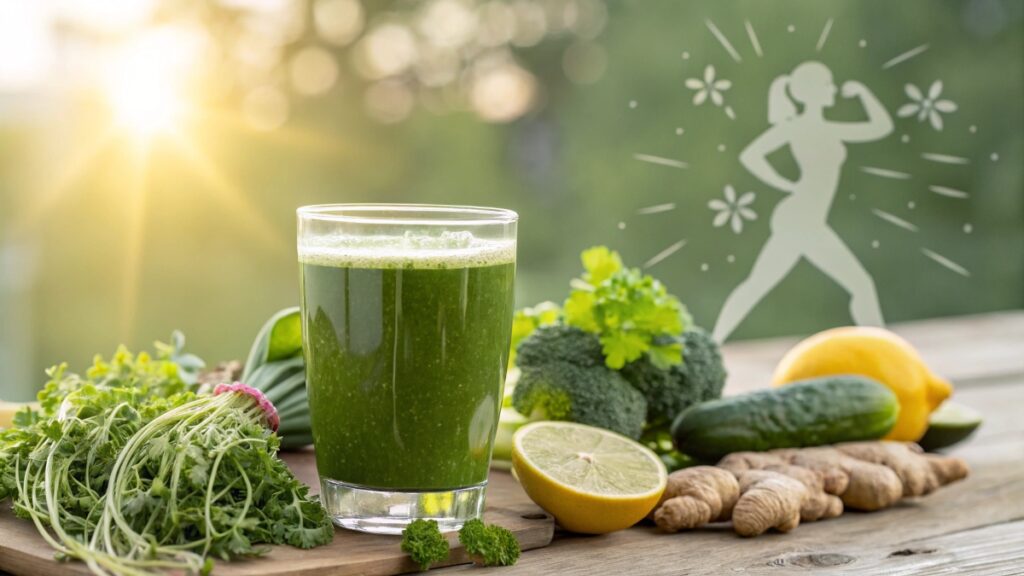
Your body keeps the score. The late nights, the heavy meals, the constant screen time — it all adds up. You feel it in your skin, your energy, and the way your clothes fit. Microgreens juice brings a reset that’s gentle but powerful.
These tiny greens are loaded with nutrients that help your system let go of what it doesn’t need and hold on to what truly fuels you.
Each sip supports natural detox, smoother digestion, and skin that looks just as clear as you feel. It is not about restriction or trends. It is nourishment that works in sync with your body’s rhythm. Real greens, real results, real glow 🌿💧✨
What Are Microgreens?
Microgreens are the tender seedlings that appear after a vegetable, herb, or grain seed has germinated and produced its first cotyledon leaves plus one or two true leaves. Harvest typically happens seven to twenty‑one days after sowing, so the plant has already started photosynthesis, unlike sprouts grown in darkness. This timing positions microgreens between sprouts and baby greens in both size and nutrient maturation. Because the root mass is usually left behind, growers avoid many of the food‑safety issues linked to sprout production. A survey of chefs and consumers shows that the most common species for juicing are broccoli, kale, radish, sunflower, wheatgrass, and arugula because they remain flavorful yet tender at this early stage.
Biologically, rapid cell division concentrates resources that would later be distributed through a larger plant. Controlled‑environment studies demonstrate that red cabbage, cilantro, garnet amaranth, and green daikon radish seedlings contain the highest concentrations of vitamin C, carotenoids, vitamin K, and vitamin E, respectively (ARS). This hypersaturation of protective compounds is one reason microgreens have become a preferred raw ingredient for functional juices.
Nutritional Profile of Microgreens Juice
A landmark United States Department of Agriculture analysis of twenty‑five species reported vitamin C levels from 20 to 147 milligrams per 100 grams fresh weight and carotenoid totals up to 12 milligrams in the same mass. On average, these seedlings delivered about five times the vitamin and carotenoid concentration measured in mature leaves of the same plants (ARS, ARS). Independent reviews have expanded that range, noting four‑to‑forty‑fold enrichment for specific micronutrients, especially in members of the Brassicaceae family.
For juice makers,s this translates into a shot that weighs only 50 milliliters yet can supply the vitamin C of a full cup of diced bell pepper, the vitamin E of a handful of almonds, and meaningful percentages of iron, zinc, selenium, and provitamin A carotenoids. Broccoli and sunflower shoots provide 31 calories and roughly 2.4 grams of fibre per 100 grams, making the base liquid both low‑energy and satiating. High chlorophyll, peaking near 96 milligrams per 100 grams in broccoli seedlings, supports phase II liver enzymes that clear xenobiotics and metabolic waste.
Detoxifying Benefits for Skin Health
Skin resilience depends on limiting oxidative damage and maintaining robust collagen cross‑linking. Vitamin C is required for the hydroxylation steps that stabilize collagen’s triple helix; red cabbage microgreens deliver approximately 147 milligrams per 100 grams, versus 32 milligrams in mature cabbage, a 4.6‑fold advantage (Dawn Farm). Vitamin E and carotenoids such as beta‑carotene and lutein occupy cell membranes where they quench lipid radicals, and microgreen forms of amaranth and daikon radish lead those categories (ARS).
Chlorophyll binds certain heavy metals in the gastrointestinal tract, lowering systemic exposure that can precipitate inflammatory skin conditions. Polyphenols and glucosinolate derivatives (especially sulforaphane from broccoli shoots) activate the Nrf2 transcription factor, raising endogenous glutathione and superoxide dismutase. These pathways collectively reduce UV‑induced erythema and speed wound remodeling, outcomes documented in cell and mouse models that used red‑cabbage microgreens extracts (Biomedgrid).
Juicing preserves heat‑labile antioxidants; a chilled hydraulic press keeps ascorbate oxidation under ten percent during extraction, whereas simmering mature greens destroys up to one‑third of vitamin C. The result is a potent, fast‑absorbing beverage that can complement topical regimens targeting photo‑aging.
Microgreens Juice for Weight Loss
Successful fat loss hinges on creating an energy deficit while avoiding micronutrient shortfalls that trigger hunger. Broccoli microgreens supply about 31 kilocalories per 100 grams—comparable to cucumber yet with three‑times the protein and almost twice the fibre . Fibre delays gastric emptying and blunts postprandial glucose spikes, leading to lower insulin secretion and greater lipolysis.
Beyond macronutrient economics, glucoraphanin‑derived sulforaphane up‑regulates AMP‑activated protein kinase and improves mitochondrial efficiency, mechanisms linked to increased fat oxidation in rodent studies. Broccoli microgreens can contain ten to fifty milligrams of sulforaphane per 100 grams, whereas mature florets seldom exceed eighteen milligrams .
Micronutrient density matters as well. Consuming 75 grams of mixed microgreen juice can meet up to one‑third of daily vitamin A requirements, 60 percent of vitamin C, and more than the full daily value for vitamin K, while adding negligible calories. Randomized dietary interventions show that such nutrient saturation reduces cravings for high‑energy snacks and assists body‑composition change over twelve‑week periods (MDPI).
Together, er these properties make detoxifying microgreens juice an evidence‑based adjunct for people pursuing leaner physiques without sacrificing skin vibrancy or day‑to‑day vitality.
Boosting Vitality and Energy Naturally
Microgreens juice serves as a concentrated source of bioavailable nutrients that support mitochondrial energy production, red blood cell formation, and oxygen transport—all critical to physical and mental vitality. B vitamins, particularly folate and B6, found in greens like pea shoots and beet microgreens, play pivotal roles in the synthesis of ATP (adenosine triphosphate), the energy currency of cells. Folate also supports methylation processes, which are essential for DNA repair and neurotransmitter balance—both linked to mood, focus, and sustained energy.
Iron, abundant in microgreens like amaranth and sunflower shoots, contributes directly to hemoglobin formation. Iron deficiency, even in mild cases, is one of the most common causes of fatigue in adults. Pairing iron-rich microgreens with vitamin C-rich varieties (such as red cabbage or broccoli) in juice increases non-heme iron absorption significantly. In fact, adding just 50 mg of vitamin C to a plant-based meal can boost iron absorption by over 60%, making microgreens juice an efficient, synergistic energy tonic.
Chlorophyll, which is present in high concentrations in microgreens like wheatgrass and kale, enhances red blood cell production by mimicking the molecular structure of hemoglobin. While chlorophyll itself does not carry oxygen, its impact on red cell synthesis and antioxidant activity improves circulation and cellular oxygen delivery. This supports a steadier, more natural energy curve compared to caffeine-based energy drinks, without the risk of crashes or adrenal fatigue.
Scientific Backing and Research
A growing body of peer-reviewed research supports the superior nutrient density and therapeutic potential of microgreens. A study published in the Journal of Agricultural and Food Chemistry by researchers from the University of Maryland and the USDA Agricultural Research Service analyzed 25 varieties of microgreens. Their findings confirmed that microgreens contain significantly higher concentrations of essential vitamins and phytonutrients than their mature counterparts—ranging from four to forty times more, depending on the species and compound tested.
Red cabbage microgreens, for example, were found to have 6 times more vitamin C, 40 times more vitamin E, and almost 70% more beta-carotene than mature red cabbage leaves. These are not trivial gains; they represent functional enhancements that could meaningfully impact cellular health and oxidative stress levels.
Furthermore, sulforaphane, a sulfur-containing compound present in large quantities in broccoli microgreens, is widely studied for its detoxifying, anti-inflammatory, and anti-carcinogenic properties. Clinical trials have shown that sulforaphane activates the Nrf2 pathway, a master regulator of antioxidant response. Activation of this pathway increases glutathione production, protects DNA from oxidative damage, and boosts the body’s ability to neutralize environmental toxins.
These findings are further corroborated by dietitian-reported case studies where regular consumption of microgreens (in raw or juiced form) led to improvements in skin clarity, digestion, and metabolic function in patients undergoing lifestyle-based interventions.
How to Prepare Detox Microgreens Juice at Home
Creating an effective detoxifying microgreens juice at home requires thoughtful ingredient pairing to maximize nutrient synergy, palatability, and digestive comfort. Start with a base of high-chlorophyll microgreens like broccoli, kale, or wheatgrass—about 1 packed cup (30–40 grams) per serving. Add ½ cup of a vitamin C-rich option such as red cabbage or mustard microgreens. Include a handful of sunflower or pea shoots for added sweetness, protein, and iron content.
To enhance detox effects and improve taste, include:
- 1 small cucumber (hydration and potassium)
- ½ lemon (boosts vitamin C and liver support)
- 1 thumb-sized piece of ginger (anti-inflammatory and digestive support)
- 1 green apple (natural sweetness and quercetin)
All ingredients should be organic if possible, especially microgreens, as their delicate structure makes them susceptible to pesticide absorption. Use a slow-masticating juicer or hydraulic cold-press to preserve enzymes and antioxidants. Consume immediately on an empty stomach for maximum absorption, ideally in the morning when detoxification processes are active.
For those new to juicing microgreens, start with small amounts (¼ cup of juice diluted with water) and gradually increase to avoid digestive discomfort due to high enzyme and chlorophyll content.
Precautions and Who Should Avoid
While microgreens juice is generally safe and highly beneficial, it may not be suitable for everyone. Individuals with autoimmune thyroid conditions should be cautious with cruciferous microgreens (such as broccoli, kale, and radish) due to their goitrogenic potential. Although juicing reduces some of these compounds, excessive daily intake could interfere with thyroid hormone synthesis in sensitive individuals.
People on blood-thinning medication such as warfarin should moderate their intake of vitamin K-rich microgreens (like mustard, kale, and red cabbage) to avoid interactions. For this group, consistent rather than fluctuating consumption of vitamin K is critical.
Hygiene is also essential. Because microgreens grow in moist environments, they are susceptible to bacterial contamination if not handled properly. Always wash thoroughly before juicing and store in refrigerated conditions. Only purchase from reputable growers who follow food safety protocols.
Lastly, those with compromised kidney function should avoid large quantities of high-oxalate greens like spinach microgreens, which could contribute to oxalate buildup and kidney stone risk.