
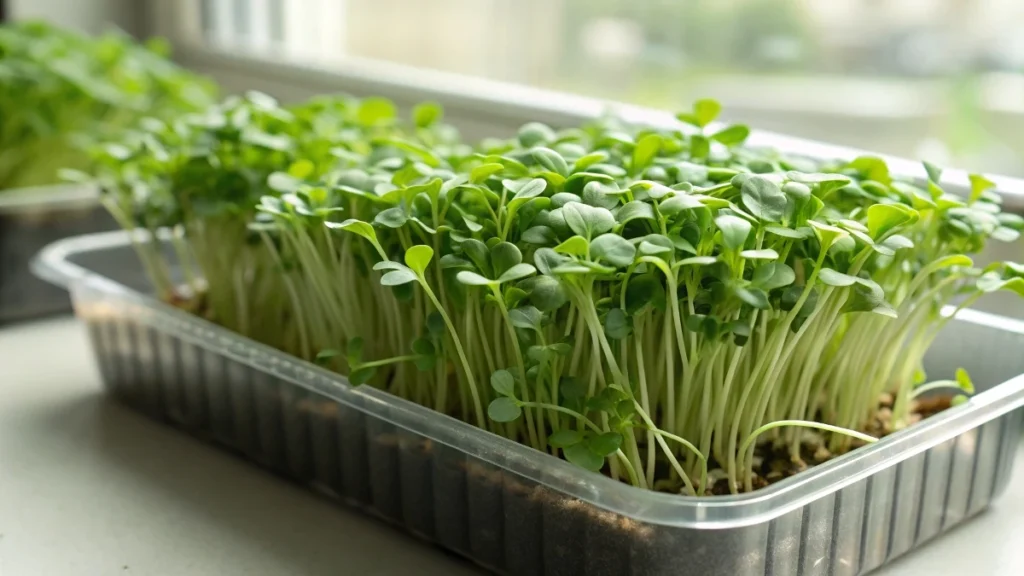
Pak choi microgreens are one of the easiest and most rewarding greens to grow at home. Ready to harvest in just 7 to 10 days, these tender shoots pack the fresh crunch of bok choy with a gentle peppery note that complements both raw and cooked dishes.
Beyond their delicate flavor, they are rich in vitamins A, C, and K along with minerals like calcium and potassium, offering concentrated nutrition in every bite.
Whether you are interested in boosting daily meals, saving money on groceries, or starting a small market venture, pak choi microgreens fit perfectly into a healthy and sustainable lifestyle.
In this guide, you will discover how to grow them step by step, explore their health benefits, and learn simple recipes that make them shine.
Nutritional Profile and Health Benefits of Pak Choi Microgreens
Pak choi microgreens are part of the brassica family and carry the same clean cabbage taste as their mature counterparts, but in a smaller, more tender form. The flavor is mild with a light peppery finish, and the stems remain firm and crisp even at just a few days old. This makes them easy to include in everyday dishes without overpowering other ingredients.
These young greens are naturally rich in vitamins A, C, and K. They also provide folate, calcium, potassium, and magnesium. Their short growth cycle means you are harvesting and eating them at their nutritional peak. Research on microgreens in general shows that they may contain four to forty times more concentrated nutrients than the same plants grown to maturity. Eating them fresh also reduces nutrient loss that can occur with long storage and transport.
Another benefit is the clean growing practices used by experienced growers. By avoiding overcrowding and managing airflow, the leaves dry quickly after watering. This lowers the chance of mold and ensures the greens store safely. With their crisp stalks, pak choi microgreens work well in salads, soups, sandwiches, smoothies, and stir fries, encouraging regular intake of important nutrients.
Methods to Grow Pak Choi MicrogreensSoil-Based
Soil Based Tray Growing with Coco Coir
One of the most common ways to grow pak choi microgreens is in a ten-by-twenty tray filled with coco coir. About twenty grams of seed are enough for one tray. Adding more seed may create dense growth, which traps moisture and can lead to damping off. The surface should be leveled so that seeds distribute evenly.
Mist thoroughly once at sowing and then cover the tray with another one for weight. Trays can be stacked four to six high, saving space and ensuring uniform sprouting. The crop usually spends two to three days in germination before moving into blackout for another two days. Around day six, the cover is removed,d and the plants are placed under light. Bottom watering with either plain water or a diluted nutrient mix helps the crop stay hydrated without soaking the leaves.
By day ni,ne the canopy can trap humidity, so airflow from a fan and reduced watering help dry the leaves. Harvest usually takes place around day ten, yielding about three containers of two ounces each. In some markets,ets these sell for six dollars per container, turnintwo-dollarllar investment in seed and medium into about eighteen dollars of produce.
Mini Kratky Tray with Deep Reservoir
For growers who want less daily work, the mini Kratky system provides a low-maintenance solution. It combines a deep no-hole tray with a shallower mesh tray. A silicone grow mat sits on the mesh to hold seeds in place. About fifteen grams of seed are spread evenly, misted, and covered with a no-hole tray.
Seeds are misted twice daily through the first three days. By day four, roots are visible through the mesh, and the tray is placed under a blackout dome. On day five, ve the blackout is removed, old water is poured out, and the deep tray is filled with about nine cups of nutrient water. Roots should touch the solution, while an air gap prevents the medium above from flooding.
From this point,t the growth is nearly hands-free. Roots draw from the reservoir, and growers often do not need to add more water before harvest. Around day nine, the tray produces about one hundred grams of microgreens from fifteen grams of seed. After harvests,t the silicone mat is cleaned, sanitized, and reused.
Fast Soil Mix Method
A quick soil-based approach uses a mix of half organic potting soil and half coco coir. This blend holds moisture without becoming too compact and is less costly than pure potting soil. Very fine seed starting mixes are not recommended because they can repel water.
For a ten-by-twenty tray, sow about one ounce of seed. Mist the surface so the seeds stick and distribute them evenly using a shaker. Cover for two to three days until germination begins. By day four, the tray can be moved into light. If grown near a window, rotate the tray daily to prevent the plants from leaning toward one direction.
Harvest occurs around day seven when the greens reach about one to one and a half inches tall. Cutting about a quarter inch above the soil with a sharp knife keeps the crop clean. A tray typically produces eight to twelve ounces of microgreens. Depending on local prices, this yield can be valued at two to four dollars per ounce.
Shallow Saucer Trays
Shallow trays such as twelve-inch plant saucers provide an inexpensive and convenient way to grow pak choi microgreens. These saucers are usually one and a half inches deep and cost around three dollars each. The shallow depth makes harvesting much easier than deeper trays.
A thin layer of organic soil is spread inside, moistened, and seeded. Some growers divide the saucer to grow pak choi on one side and tat soi on the other. The seeds are covered with a light layer of soil and watered for the first time generously. Since these saucers often lack drainage, careful watering is important to prevent flooding.
Keep the tray in a dim spot for the first few days to encourage taller growth. By day five, the sprouts will be yellow and stretched. Moving them into light turns them green within a day. Pak choi is often ready by day eight, while tat soi may need a few more days. Using the rim of the saucer as a cutting guide ensures a clean and level harvest. Cutting only what you need allows the rest to continue growing.
🌿 Recommended Microgreens Supplies |
Downspout Hydroponics for Baby Greens
Another innovative way to grow pak choi is in opaque three-by-four-inch downspouts used as hydroponic channels. These block light from the root zone, preventing algae growth. The downspouts are portable and can be moved to follow sunlight or taken indoors during storms.
The process begins by germinating seeds for about ten days in smaller containers, then transplanting them into the downspouts. In mild outdoor conditions with cool mornings and midday sun, the plants establish quickly. Growers often report that no additional nutrients are needed immediately after transplanting because the containers still hold enough from the starting phase.
Harvest can begin after a week as cut-and-come-again baby greens. Alternatively, letting the plants grow for an extra week or two allows fuller heads to form. After each cycle, the downspouts are rinsed, new seeds are started, and the system continues. This method eliminates weeding, keeps roots clean, and supports continuous harvesting.
Step by Step Growing Schedule for Pak Choi Microgreens
Day one is the sowing stage. Trays or saucers are filled with coco coir or soil, leveled, and seeded at the appropriate rate. In a ten-by-twenty tray, this is about twenty grams for the coco coir method or one ounce for the soil blend. In a mini Kratky tray, fifteen grams are used. Seeds are misted thoroughly and covered to provide darkness and humidity.
During days two and three, the seeds remain covered for germination. Opening the tray is not necessary unless using the Kratky method, od which calls for brief misting twice daily. Roots usually appear by day three or four.
On day four, trays using coco coir are moved into a blackout with a tall dome. The Kratky tray remains under a dome while roots continue to grow. For the fast soil blend, the tray can begin receiving light if sprouting is strong. Saucer trays can stay in dim light until more height is reached.
By day five or six blackout is ended. In the Kratky method,d the old water is drained, ed and the reservoir is filled with nutrient solution so that roots touch the water without flooding the medium. Under lights, three lamps of twenty watts each provide sufficient intensity, though bright natural light also works. Soil trays and saucers are placed fully under light at this stage.
From day seven through ten, moisture and tray weight are monitored. Bottom watering is done as needed. Some growers alternate nutrient water with plain water, while others use only water. Reducing watering and providing airflow before harvest ensures a dry canopy. Most soil methods are harvested around day seven to day ten. Kratky trays are ready around day nine. Saucer trays can be cut from day seven onward, ard depending on growth.
Harvesting, Packaging, and Storage of Pak Choi Microgreens
A sharp knife is the preferred tool for cutting microgreens cleanly. Cutting about a quarter inch above the medium helps prevent soil or coco coir from mixing with the greens. Tilting the tray over a bowl and slicing in sections keeps the harvest tidy. In shallow saucers, the rim serves as a natural cutting guide.
Harvesting is best done when the canopy is dry. If moisture is visible in the center of the tray, a fan can be run for a few hours, and watering can be reduced before cutting. Dry microgreens store longer and resist spoilage. After cutting, a gentle shake helps remove empty seed husks and small debris. Washing is usually not needed if the crop is clean, since rinsing shortens shelf life.
For packaging, biodegradable starch-based containers are a good option. These containers hold about two ounces by weight while fitting twenty-four ounces by volume. Adding a humidity control pack inside each container helps maintain freshness. Labels can include the crop name, harvest date, and weight.
Yields vary by method. A coco coir tray yields about three packs of two ounces each. At six dollars per pack, this amounts to eighteen dollars in sales. Largerfour-ouncee packs can be priced at ten dollars, saving on packaging and labels. Soil blend trays produce eight to twelve ounces from one ounce of seed, with prices commonly ranging from two to four dollars per ounce. When harvested dry and kept in a refrigerator, pak choi microgreens generally store well for five to seven days.
Culinary Uses and Easy Recipes with Pak Choi Microgreens
Pak choi microgreens deliver a fresh, crisp texture and a mild cabbage flavor with a gentle peppery undertone. They work well in both raw and cooked dishes.
Ramen Topping
Prepare a bowl of ramen with broth, noodles, and toppings of your choice. Add a handful of pak choi microgreens just before serving. The heat from the broth softens the stalks slightly while leaving the tops bright and fresh.
Fresh Spring Rolls
Soften rice paper sheets, then fill them with sliced cucumber, carrots, herbs, and a generous portion of pak choi microgreens. Wrap tightly and serve with sesame soy dipping sauce. The microgreens provide crunch and flavor similar to lettuce but with more aroma.
Omelets and Egg Wraps
Cook a thin omelet or egg wrap. Place microgreens inside, fold, and drizzle with sesame oil or chili oil. The warmth wilts the greens slightly while keeping their crisp bite.
Smoothies
Blend a banana, pineapple chunks, a handful of pak choi microgreens, and coconut water. The fruit balances the subtle peppery flavor of the greens, creating a refreshing drink.
Sesame Salad
Combine pak choi microgreens with avocado slices. Whisk together rice vinegar, soy sauce, honey, and sesame oil as a dressing. Toss gently and sprinkle with sesame seeds. Serve immediately for the best flavor.
Sandwich and Burger Upgrade
Add a handful of microgreens to burgers, wraps, or sandwiches in place of lettuce. Their crunchy stalks and mild flavor elevate everyday meals.
Search-friendly takeaway
Pak choi microgreens can be enjoyed in soups, salads, wraps, smoothies, egg dishes, and sandwiches. Their crisp texture and mild flavor make them easy to incorporate into daily meals.
Sustainability and Cost Benefits of Growing Pak Choi Microgreens
Growing pak choi microgreens at home or in small market setups is not only fast but also highly sustainable. These greens grow in as little as seven to ten days, making them one of the quickest crops to produce fresh food consistently. Unlike larger vegetables that take weeks or months, microgreens deliver nutrition almost immediately after planting.
Low Seed to Yield Cost
The cost to grow pak choi microgreens is very low compared to the value of the final product. In a soil-based tray using coco coir, about twenty grams of seed costs roughly two dollars. That single tray can yield three two-ounce packs of microgreens, which may sell for about eighteen dollars in some regions. In the mini Kratky tray, just fifteen grams of seed can produce one hundred grams of microgreens in nine days, enough to supplement meals for a family.
This strong return makes them popular for small businesses and farmers’ markets. Even if you are growing only for personal use, the savings are clear. Instead of buying delicate greens at premium grocery prices, you can grow them fresh at home for pennies per serving.
Reusable Growing Systems
Several methods of growing pak choi microgreens emphasize sustainability through reusable materials. The Kratky setup uses silicone mats that can be washed, sanitized, and reused multiple times. Downspout hydroponics relies on opaque channels that last for years, preventing algae growth and requiring only a rinse between cycles. Even shallow saucer trays are affordable and can be used indefinitely with proper care.
By using reusable trays and avoiding single-use plastics, you reduce waste and cut costs over time.
Reduced Food Waste
Another advantage is the ability to harvest only what you need. With downspout hydroponics or saucer trays, you can practice cut-and-come-again harvesting. This means you take a portion of the crop while leaving the rest to continue growing. The result is less spoilage in the refrigerator and fresher food directly from your tray.
Minimal Resource Requirements
Microgreens require very little space, water, and electricity compared to mature crops. Indoor soil trays can sit on a shelf or countertop under a small LED light. Hydroponic systems like the Kratky method do not need pumps or electricity to circulate water. The water savings compared to outdoor gardening are substantial, as microgreens are grown in shallow trays that need only misting or small bottom watering sessions.
Flexible Market Pricing
Pricing varies depending on where you live. In New Jersey, one grower charges six dollars for a two-ounce container or ten dollars for a four-ounce container, emphasizing the savings from reduced packaging and labels. In other areas, prices can range from two to four dollars per ounce. Even at the lowest pricing, microgreens remain profitable and accessible.
Search-friendly takeaway
Pak choi microgreens grow quickly, cost very little, and produce a strong yield. Reusable systems reduce waste, and harvesting only what you need prevents food spoilage. They are a sustainable choice for both home growers and small businesses.