
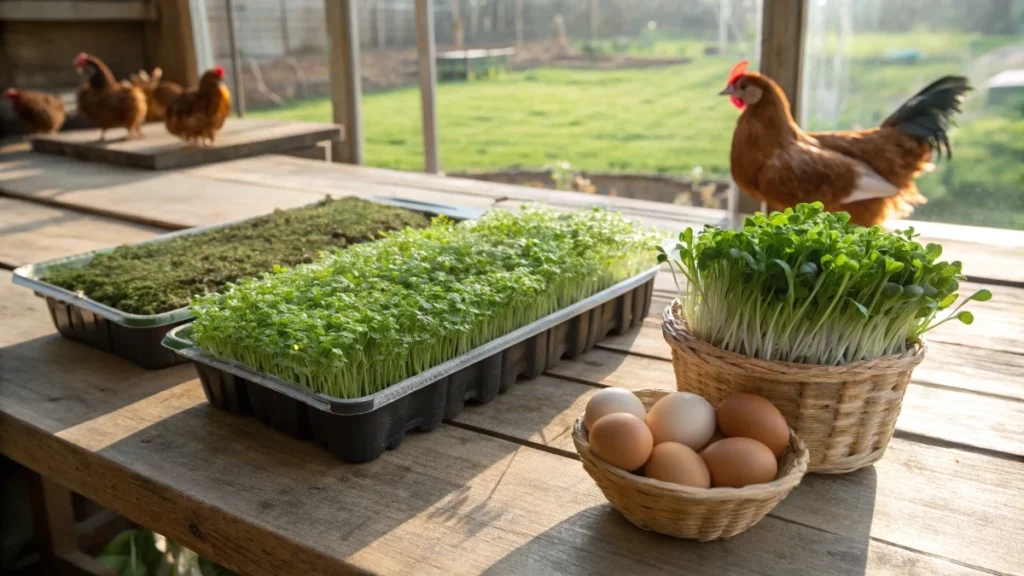
Providing chickens with fresh, nutrient-rich food can be a challenge, especially during winter or in areas where free-ranging is limited. While commercial feed keeps a flock going, nothing compares to the boost that living greens bring. Microgreens are one of the easiest and most effective ways to deliver that boost.
These tiny plants, harvested just after germination, are packed with vitamins, minerals, enzymes, and natural pigments that support strong immune systems, vibrant yolks, and overall bird health.
Growing them requires little space and minimal effort, yet the rewards are immediate. From peas and sunflowers to broccoli and silverbeet, microgreens can transform both your flock’s diet and your egg basket, making them an invaluable addition to any chicken keeper’s routine.
Nutritional Benefits of Microgreens for Chickens
Microgreens and very young greens deliver a dense package of vitamins, minerals, and natural pigments that support overall flock health. When seeds begin to germinate, their stored nutrients are activated and transformed. In the materials above, one guide explains that germination can raise enzyme and antioxidant activity dramatically, citing up to four thousand times more than the unsprouted seed. This jump happens during the earliest growth window, which is why very short sprouts and tender microgreens are prized for nutrition.
Flocks respond to this freshness. Keepers observed birds eating entire trays down to bare media, roots and all, within a day when given the chance. Greens that are rich in chlorophyll, such as silverbeet, brassicas, and chicory, contribute to vivid yolk color and can support digestion and general vigor. During winter or in barren yards, these living greens replace the missing foraging layer. Several keepers noted that offering fresh sprouts and greens in the cold season can nudge production upward in younger birds by improving the daily nutrient mix.
Pea shoots are a standout example. They provide sweet new growth that birds seek out, and they continue to push new tips after a light cut. Sunflower greens add energy and protein because hens go after the kernels within the shoots. Together, these options diversify the diet beyond dry ration, which supports both feather condition and egg quality when outdoor forage is thin.
Best Microgreens to Grow for Chickens
Brassicas such as broccoli, kale, cabbage, mustard, and radish
Small brassica seeds sprout quickly and move to a tender leafy stage without special equipment. A keeper demonstrated broccoli as a fast option that fills a jar in three to five days when grown as sprouts, and seven to fourteen days when grown on a tray to the microgreen stage. These plants carry notable levels of vitamins and natural antioxidants in the early stages. Radish types add a peppery note and sprout rapidly as well.
Peas, including dun peas and common garden peas
Peas are reliable for trays of shoots. One homesteader set a dense layer of peas on moistened soil, weighted the tray during germination, then removed the weight to grow a lush mat. Birds devoured the green tops and dug into the roots. Pea trays can be cut for salads first, then regrow new tips for the flock, making them efficient for shared kitchen and coop use.
Sunflower
Sunflower greens offer two payoffs. Birds will nibble the tender shoots, but also seek the kernels that remain in the sprout. In a small backyard flock, hens initially picked out the seeds embedded in the shoots and returned to eat the rest by the next day, leaving the tray completely clean. Growsunflowersr densely to keep stems stout and tender.
Silverbeet and spinach
These leafy greens are rich in chlorophyll and well accepted by birds. One backyard flock consumed two trays of leafy greens in a single day. Silverbeet will often grow taller if left too long, though birds still eat it readily. For the best texture, harvest while leaves are young and soft.
Chicory
Chicory brings chlorophyll and a mildly bitter green that supports digestion. Germination can vary with warmth. In a warm setting, one grower saw lagging growth and held the tray back, then noted it would likely have done better in cooler weather. In the mild season, a chicory can be a dependable addition to a mixed tray.
Nasturtium
Leaves and flowers are edible for people and flocks. One gardener chose to keep nasturtium as full plants rather than cutting at the microgreen stage, since it thrives as a potted accent that can be shared with the coop. The foliage brings a fresh, slightly peppery bite that many birds enjoy.
Clover and alfalfa
These are classic sprouting seeds mentioned as part of mixed greens. They sprout quickly and are known for protein and calcium, a helpful pairing for layers. They perform well in jars for short sprouts or on trays mixed with other small seeds to create a fine-textured mat for pecking.
Microgreens Chickens May Not Prefer or Struggle With
Arugula can be tricky at the soaking stage. When soaked in a jar, the seed coat can release a gel that turns the rinse water into a thick slurry. One grower described water that would not drain through a mesh lid even after repeated attempts. This does not harm chickens, but it complicates the process and raises the risk of stagnant water. If arugula is grown, it is more practical on a tray with gentle misting rather than jar sprouting.
Young birds sometimes hesitate with new textures and greens. A small flock showed little interest at first, then returned the next day and cleaned the trays completely. Patience helps. Offer small amounts often, and birds usually learn quickly.
Growing Microgreens for Chickens: Practical Tips
Choose your method based on your space and schedule. Jars excel for quick sprouts. Trays excel for tender microgreens and pea shoots.
For jars, two tablespoons of seed can expand to fill a quart jar tightly. Soak the seeds for six to twelve hours, then drain. Rinse two or three times daily, swirling to spread the seed layer along the inside of the glass so air can circulate. Keep the jar tilted to allow water to drain fully. Tiny white roots appear by the third day for many seeds. Most sprouts reach a good length between one eighth of an inch and two inches by day three to seven. Room temperature is sufficient. Heat mats and special lights are unnecessary for this stage.
For trays, spread seed thickly on moist media. One homesteader placed pea seed on the surface, set another tray on top to add weight, and removed it at germination. This produced stout stems and an even canopy. Trays grown indoors benefit from bright ambient light. If leaves look pale at first, set them by a sunny window so photosynthesis can kick in and deepen the color.
Airflow is important. One guide emphasized leaving a gap, so seeds do not pack tightly at the drain end of a jar. If a webby film appears, rinse thoroughly. Often, the seedlings recover by the next cycle. To keep a steady pipeline, another grower planned a new tray every three days once shelves and lights were in place, which is a practical cadence for small flocks.
Media can be reused when birds eat everything down to the roots, as was shown with dense trays that were left completely bare. Inspect for compaction and refresh as needed before reseeding.
Feeding Microgreens to Chickens
Offer greens when birds are active and curious. Whole trays can be set in the run so hens can graze and scratch, which adds enrichment. This approach works especially well with pea shoots and sunflowers, since birds will eat the tops, roots, and any remaining kernels. If space is tight, cut the greens and scatter them over bedding to encourage natural foraging behavior.
Real-world intake can be high. Five hens finished two trays within a single day, leaving the media clean and ready for reseeding. Sunflowers may be eaten in stages, with birds picking out seeds first and returning later for stems and leaves. Pea shoots are often eaten immediately. If greens are new to the flock, begin with smaller portions in the morning and observe how quickly they disappear. Provide fresh water and access to grit so birds can process the added fiber easily.
When feeding jar sprouts, harvest when sprouts are between one-eighth of an inch and two inches long. This is the window described as most nutritious. Longer sprouts remain useful, but the nutrient concentration shifts from the early peak. Rinse before serving to remove seed hulls and improve freshness.
Advantages of Microgreens for Chickens
Microgreens and sprouts bring living nutrition into the coop during seasons when pasture is limited. They fit in small homes and even busy kitchens, since a single quart jar seeded with two tablespoons can produce a dense mass within a few days, and a small tray can deliver a flock-sized salad within one to three weeks. Birds relish the variety, which supports steady intake during cold snaps and can help younger hens maintain lay.
These greens are economical. Seeds bought in bulk stretch far, and basic gear such as jars with mesh lids or simple trays is all that is required. Trays that birds clean to the roots leave little waste and can often be reset quickly. The act of pecking and scratching through a living mat is also enriching, helping to reduce boredom when birds spend more time indoors.
Finally, the benefits show up in the basket. Keepers associate fresh greens with rich yolk color and overall egg quality. In winter, that can make the difference between a bland ration-only diet and a more vibrant daily menu that keeps the flock bright and active.