
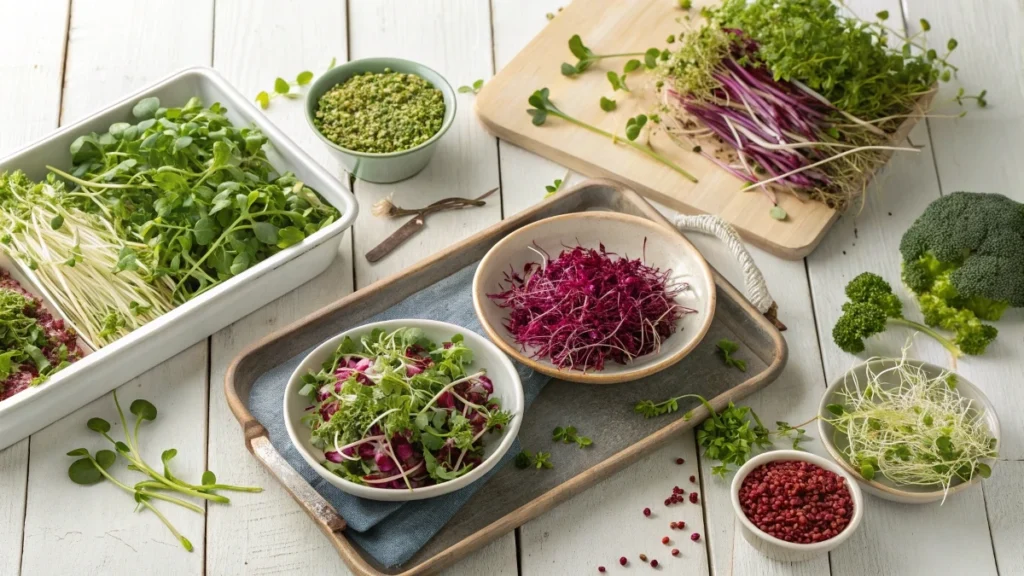
Microgreens have exploded in popularity in recent years — not just among chefs, but also home gardeners and health enthusiasts. These tiny greens are harvested at 7–21 days after germination, when their nutrient density and flavor are at their peak. According to USDA research, microgreens often contain 4 to 40 times more vitamins and antioxidants than their mature counterparts.
The global microgreens market is projected to grow at a compound annual growth rate (CAGR) of around 7–8% from 2023 to 2030, driven by rising demand in restaurants, smoothies, and wellness diets. From classic sunflower shoots to exotic shiso leaves, here’s the ultimate list of the 50 most popular microgreens you’ll find today.
Culinary Staples & Widely Grown Microgreens
- Sunflower Microgreens – Mild, nutty flavor; rich in vitamin E and zinc; great in salads and sandwiches.
- Pea Shoots – Sweet, crunchy, high in vitamin C; stir-fry favorite and salad topper.
- Radish Microgreens – Spicy, peppery bite; packed with vitamins A, B, C, E, and K.
- Broccoli Microgreens – Mild cabbage flavor; high in sulforaphane (anti-cancer compound).
- Arugula Microgreens – Peppery, tangy; excellent for pizzas, pasta, and salads.
- Mustard Microgreens – Spicy kick; loaded with antioxidants and selenium.
- Wheatgrass – Classic detox green; juiced for chlorophyll and iron content.
- Kale Microgreens – Nutrient powerhouse; vitamin A, C, and K concentration up to 10x mature leaves.
- Cabbage Microgreens – Crunchy, slightly sweet; rich in anthocyanins (especially red cabbage).
- Cilantro Microgreens – Citrus-herb flavor; adds zing to tacos, soups, and curries.
Nutrient-Dense Favorites
- Basil (Sweet, Thai, Lemon) – Fragrant and flavorful; great for Italian and Asian dishes.
- Swiss Chard (Rainbow) – Colorful stems; good source of iron and magnesium.
- Beet Microgreens – Earthy, slightly sweet; anthocyanin-rich for heart health.
- Spinach Microgreens – Mild taste; high in folate and vitamin K.
- Amaranth Microgreens – Striking red color; protein-rich with lysine.
- Dill Microgreens – Aromatic, feathery; boosts digestion.
- Parsley Microgreens – Fresh, slightly bitter; rich in vitamin C and calcium.
- Celery Microgreens – Crisp, refreshing; high in vitamin A and potassium.
- Fenugreek Microgreens – Bitter-sweet, maple-like flavor; used in Ayurvedic remedies.
- Mizuna Microgreens – Mild mustard taste; high in glucosinolates.
🌿 Recommended Microgreens Supplies |
Asian & Specialty Varieties
- Shiso (Perilla) – Mint-basil flavor; popular in Japanese cuisine.
- Tatsoi Microgreens – Mild, mustardy; excellent in soups and salads.
- Pak Choi (Bok Choy) – Light cabbage flavor; calcium-rich.
- Endive Microgreens – Bitter edge; good for gourmet salads.
- Watercress Microgreens – Spicy, tangy; ranked among the most nutrient-dense foods by CDC.
- Purslane Microgreens – Slightly sour; one of the richest plant sources of omega-3s.
- Mustard Frills – Fiery, decorative; common in fine dining.
- Sorrel Microgreens – Lemon-tart bite; pairs well with fish dishes.
- Nasturtium Microgreens – Peppery, edible flowers and leaves; high in vitamin C.
- Lemongrass Microgreens – Citrusy aroma; unique garnish for soups and teas.
Colorful & Textural Microgreens
- Purple Kohlrabi Microgreens – Crunchy, sweet cabbage notes; anthocyanin-rich.
- Corn Shoots – Sweet, tender; vibrant yellow hue.
- Onion Microgreens – Strong onion punch; used in salsas and soups.
- Garlic Chives – Garlicky flavor; supports heart health.
- Leek Microgreens – Onion-like but milder; rich in vitamin A.
- Fennel Microgreens – Anise flavor; aids digestion.
- Cress (Garden Cress) – Spicy, sharp; one of the fastest-growing microgreens.
- Chrysanthemum Greens – Slight bitterness; traditional in Asian broths.
- Orach (Mountain Spinach) – Bright red-purple leaves; ancient leafy green.
- Dill Fronds (Baby Form) – Soft, aromatic; decorative garnish.
🌿 Recommended Microgreens Supplies |
Rare & Gourmet Microgreens
- Marjoram Microgreens – Sweet oregano-like taste; Mediterranean dishes.
- Oregano Microgreens – Intense flavor; used in sauces and pizzas.
- Thyme Microgreens – Woody, aromatic; meat and poultry dishes.
- Lovage Microgreens – Celery-like taste; rare in gourmet cuisine.
- Tarragon Microgreens – Anise flavor; French cooking staple.
- Catnip / Lemon Balm – Citrusy, calming; used in teas.
- Sage Microgreens – Earthy, slightly peppery; rich in rosmarinic acid.
- Anise Hyssop Microgreens – Mint-licorice taste; desserts and teas.
- Epazote Microgreens – Strong, medicinal flavor; used in Mexican beans.
- Lavender Microgreens – Floral, fragrant; unique in cocktails and desserts.