
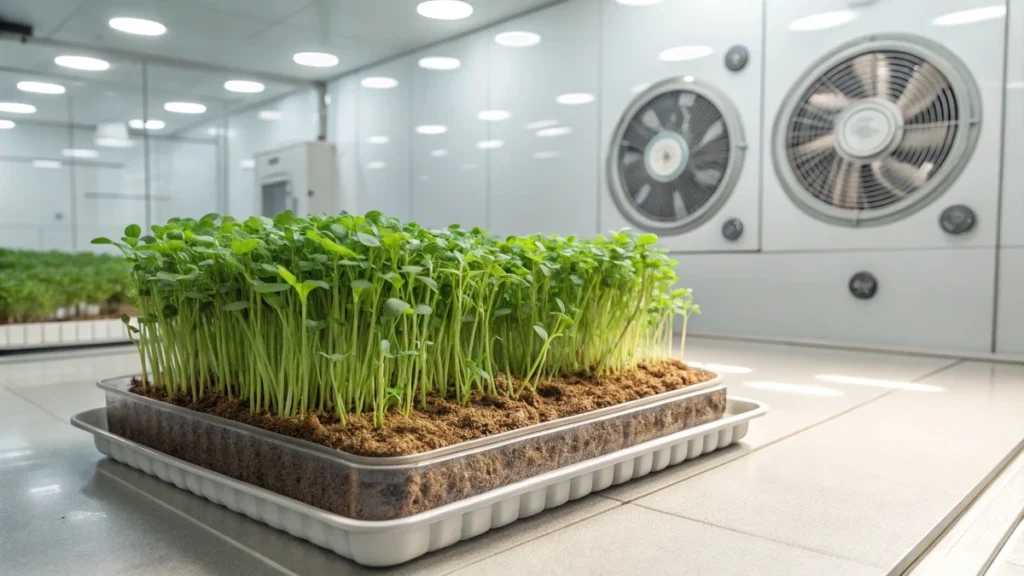
Mold is one of the most common challenges faced by microgreens growers, especially in indoor environments where humidity and moisture levels are harder to control.
Left unchecked, mold can quickly spread, impacting the health, appearance, and nutritional value of your crops. Preventing mold in microgreens is crucial for ensuring a successful harvest and avoiding crop loss.
By creating the right growing conditions, including proper airflow, humidity control, and sanitation practices, you can significantly reduce the risk of mold.
In this guide, we’ll explore the most effective strategies for mold prevention, offering practical tips on soil management, watering techniques, and when to take action if mold does appear. With the right approach, you can grow mold-free, healthy microgreens every time.
Ideal Growing Conditions to Prevent Mold
Airflow
One of the most important factors in preventing mold in microgreens is proper airflow. Mold thrives in environments where there is stagnant air and excess moisture. Ensuring that air circulates freely in the growing area helps prevent mold spores from settling and multiplying.
Good airflow is crucial during the germination phase and throughout the growing cycle. Fans and circulation systems can help keep air moving, ensuring that moisture doesn’t accumulate on plant surfaces. For those growing in smaller spaces, it’s helpful to use shallow trays instead of deep ones. Shallow trays promote better airflow across the growing medium and prevent the buildup of moisture on the surface. Additionally, even in stacked trays, leaving small gaps between them allows air to circulate more effectively.
Humidity Control
High humidity is another factor that encourages mold growth. While microgreens need moisture to germinate and grow, too much humidity in the growing space can create conditions that are ideal for mold. The key is to maintain humidity levels between 50% and 60% to prevent excess moisture accumulation, which promotes mold growth.
Using a dehumidifier can help keep the humidity levels in check, especially in an indoor environment where moisture can build up quickly. Overwatering also plays a role in increasing humidity, so controlling the amount of water given to the plants is essential. A drip irrigation system can be particularly useful in reducing water waste and ensuring that water goes directly to the roots, preventing excess moisture on the surface.
Temperature Control
Temperature management is equally important in mold prevention. Extremes in temperature, whether too hot or too cold, can encourage fungal growth. For microgreens, maintaining a temperature range between 70°F and 75°F (approximately 20°C to 24°C) provides an ideal balance for growth while minimizing the risk of mold.
If temperatures are too high, moisture from the soil evaporates more quickly, which can lead to increased humidity levels. On the other hand, if the temperature drops too low, moisture can become trapped around the plants, contributing to mold growth. Using heat mats can help regulate temperature during cooler months, but it’s essential to ensure that the environment doesn’t get too warm, which could exacerbate mold issues.
Soil and Substrate Management
Soil Mix
The type of soil mix used plays a critical role in mold prevention. Using overly rich or dense soil can contribute to mold growth, as it holds more moisture than a lighter, well-draining mix. While it’s beneficial to incorporate some organic compost into your soil, too much compost can lead to problems. Rich compost often contains high salt content, which can draw moisture away from the plants, creating the perfect environment for mold to thrive.
The best soil mix for microgreens should balance peat, perlite, and lime to improve drainage and reduce excess moisture retention. Too much organic matter or compost in the soil can trap water and create conditions conducive to mold. A well-draining soil mix ensures that water is absorbed by the roots while allowing any excess moisture to evaporate quickly, which helps prevent mold growth.
Sanitation
Maintaining cleanliness in the growing environment is essential for mold prevention. Mold spores are everywhere, so keeping trays, tools, and growing equipment clean is one of the simplest yet most effective ways to reduce the risk of mold. After each use, sterilize your trays and any tools used in the growing process to remove any spores or contaminants that may have been left behind.
A simple solution of food-grade hydrogen peroxide or diluted bleach can be used to clean trays, ensuring that any residual spores are eliminated. Regularly cleaning and sterilizing trays before reuse minimizes the risk of mold contamination and helps maintain a healthy growing environment for your microgreens.
🌿 Recommended Microgreens Supplies |
Germination Stage and Early Care
Germination Process
The germination stage is when microgreens are most vulnerable to mold. During this phase, humidity levels are typically higher, and microgreens need plenty of moisture to sprout. However, excess moisture in the air or on the surface of the growing medium can provide a perfect environment for mold to develop.
To prevent mold during germination, it’s important to control humidity levels while providing adequate warmth for the seeds to sprout. Uncovering trays early after germination is an effective strategy. As soon as the seedlings begin to grow and the trays lift off the bottom, the humidity drops, reducing the chances of mold taking hold. It’s essential to wait for the seeds to develop enough to withstand a slightly drier environment before uncovering them.
Uncovering the Trays
Timing is everything when it comes to uncovering the trays. Uncovering too early can trap moisture and humidity, while waiting too long can cause excess moisture to build up, which encourages mold growth. A good rule of thumb is to uncover the trays when the seedlings have enough stem length to shift the trays, signaling that the seedlings are strong enough to handle reduced humidity.
The right moment to uncover microgreens is when you notice the trays starting to lift slightly off the growing medium, allowing for airflow to circulate. This helps reduce the moisture in the environment and minimizes the chances of mold. Properly timing this step ensures that your crops are not exposed to excess humidity during the critical germination phase.
Using Hydrogen Peroxide and Other Mold Control Solutions
Hydrogen peroxide is one of the most effective solutions for controlling mold on microgreens. It acts as a natural disinfectant, killing mold spores without damaging the plants when used properly. A diluted hydrogen peroxide solution (usually arounda 1:16 ratio with water) can be applied directly to affected areas. This simple remedy is effective in preventing mold from spreading once it’s noticed.
In addition to hydrogen peroxide, a vinegar solution can be used as an alternative mold treatment. Vinegar has natural antifungal properties, making it another viable option for controlling mold growth. These treatments can be applied as a preventative measure during the growing process or as a spot treatment if mold is spotted on the plants.
Both hydrogen peroxide and vinegar offer safe, non-toxic methods for managing mold without harming the microgreens. Using these solutions regularly, especially when mold starts to appear, can prevent it from taking over the crop.
Proactive Measures and Monitoring
While mold control is essential, prevention should always be the primary focus. The best way to keep mold at bay is by creating the right environment from the start. Regular monitoring of your microgreens and making small adjustments to their growing conditions can help you identify mold risks early, before they become a larger problem.
Ensuring that your microgreens are not overcrowded, watering only when necessary, and providing sufficient air circulation will keep the growing space optimal for healthy growth. Additionally, avoiding overuse of compost and maintaining proper sanitation are easy ways to reduce the chances of mold forming.
Daily inspections of your crops can help catch any issues early. If you notice any signs of mold, taking quick action—whether it’s adjusting watering practices, improving airflow, or applying a mild disinfectant—can prevent it from spreading and impacting your harvest.
Using Preventive Measures and Monitoring
Preventing mold from affecting your microgreens requires a consistent approach, combining good practices with vigilant monitoring. Proactive steps taken early in the growing process can make a significant difference in avoiding mold-related issues. Regular inspections of your growing trays, as well as small but important adjustments, can drastically reduce the chances of mold taking over.
Preventive Measures
Starting with the right practices is key to preventing mold from appearing in the first place. Proper seed soaking is one essential practice. Soaking seeds in a diluted hydrogen peroxide solution before planting not only ensures the seeds are free from harmful pathogens but also helps reduce the likelihood of mold development. This small step gives the seeds a better chance to germinate without the introduction of mold or other diseases.
Another important aspect is avoiding overcrowding the seeds. When seeds are too densely packed, it limits airflow between them, creating a humid microenvironment that mold can easily exploit. Spacing out the seeds evenly ensures that each seed gets enough light, airflow, and moisture, without increasing the chances of mold growth. Experimenting with seed density helps find the right balance, ensuring the seeds have enough room to grow but aren’t at risk of mold due to overly tight conditions.
Controlling the water supply is another key preventive measure. Overwatering is one of the most common reasons for mold growth. Microgreens should be watered carefully, with extra attention given to ensuring the soil isn’t oversaturated. Instead of soaking the entire growing tray, water directly into the soil, avoiding wetting the surface of the leaves. This prevents the moisture from accumulating on the leaves and reduces the risk of mold growth.
Monitoring Your Microgreens
Once the conditions are set, it’s important to keep a watchful eye on your microgreens throughout their growing cycle. Daily checks on the moisture levels, airflow, and general health of the plants can prevent minor issues from turning into major problems.
For example, monitor humidity levels regularly to ensure they are within the optimal range of 50%-60%. If you see the humidity creeping up, consider using a dehumidifier or adjusting watering practices to ensure the environment stays dry enough for mold prevention. If you notice any signs of excessive moisture around the trays or growing medium, it’s important to act quickly by adjusting the watering schedule, increasing airflow, or using a mild mold treatment solution.
When you notice any signs of early mold, like a slight fuzz or discoloration on the soil surface or microgreens, immediate action should be taken. A quick hydrogen peroxide spray is often enough to contain the mold and stop it from spreading. However, if the mold persists, you might need to adjust environmental factors like humidity or temperature.
Finally, the germination stage is a critical time for mold formation, so close attention should be paid during the first few days of growth. It’s during this phase that trays should be uncovered at the right time to prevent excess humidity from lingering. As soon as the seedlings have started to establish themselves and show visible growth, uncovering them helps the environment dry out, reducing mold risk. Timing this step correctly can make a huge difference in the health of the crop.
By making these practices part of your daily routine, you can effectively prevent mold growth and ensure that your microgreens are healthy and thriving.
Final Thoughts: Balancing Prevention and Reaction
Mold control in microgreens is ultimately a balancing act between proactive prevention and quick, efficient responses when issues arise. Setting up the proper growing conditions, including ideal humidity, temperature, and airflow, goes a long way in ensuring that mold doesn’t take hold in the first place. However, no system is perfect, and the likelihood of mold developing increases with certain factors like environmental changes, overwatering, or overcrowding.
The key is to stay vigilant and monitor your growing trays regularly. Small issues caught early can be resolved with minimal effort, while larger problems can require more drastic measures, such as adjusting the growing medium or applying a mold-control solution like hydrogen peroxide.
Most importantly, maintaining a clean growing environment is essential. Sterilizing trays and tools before each use prevents mold spores from being introduced to the growing medium, significantly reducing the risk of mold infestations.
Creating an efficient, mold-free system isn’t just about reacting to problems as they arise. It’s about setting up the right conditions from the beginning and constantly adjusting as needed. By taking these preventive steps and maintaining vigilant care, you can grow healthy, high-quality microgreens without the constant worry of mold.