
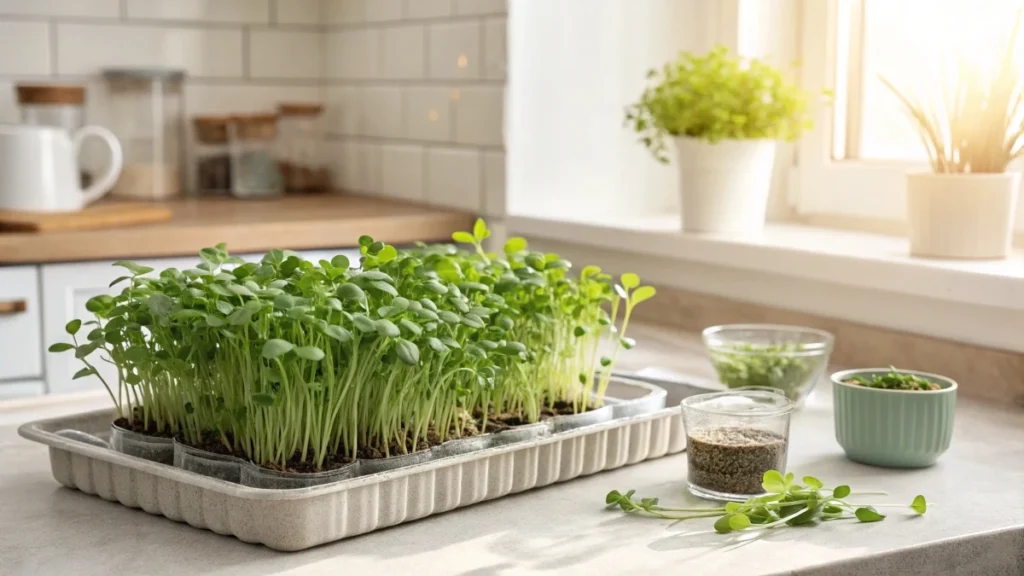
Mint microgreens are a popular, easy-to-grow herb that offers a burst of fresh flavor and impressive health benefits. Whether you’re a seasoned gardener or a beginner, growing mint microgreens indoors or outdoors is a rewarding experience.
These tiny, nutrient-packed greens thrive in both environments, making them perfect for home gardening, even in small spaces.
Rich in vitamins A and C, antioxidants, and essential oils, mint microgreens are known to support digestion, boost immunity, and add a refreshing taste to a variety of dishes.
In this guide, we’ll explore how to grow mint microgreens, their benefits, and delicious recipes you can create with them.
What are Mint Microgreens?
Mint microgreens are young, edible plants harvested shortly after germination, typically between 7 and 14 days. These tiny plants pack a punch of flavor and nutrition, offering all the distinct aromas and health benefits of mature mint plants but in a smaller, more concentrated form.
Unlike fully-grown mint, which has a more robust flavor, mint microgreens offer a lighter, fresher taste. They are often used as garnishes, in teas, salads, and smoothies, or as a flavorful addition to a wide range of dishes. The most common varieties of mint used for microgreens include spearmint, peppermint, and pineapple mint. However, microgreens from other varieties like chocolate mint or orange mint can add unique flavors to your meals.
In terms of nutrition, mint microgreens are a great source of vitamins A and C, which are essential for immune health, skin health, and overall well-being. They are also rich in antioxidants, which help protect the body from free radicals and oxidative stress. Additionally, mint microgreens contain essential oils that aid in digestion, making them a natural remedy for nausea, bloating, and indigestion.
Benefits of Growing Mint Microgreens
Health Benefits
Mint microgreens are not only flavorful but also provide a variety of health benefits. Their high vitamin content, particularly vitamins A and C, supports immune health, promotes skin health, and improves vision. Vitamin A, for instance, is essential for maintaining healthy eyesight, while vitamin C supports collagen production and enhances skin elasticity.
Furthermore, mint microgreens are packed with antioxidants, which help combat inflammation and improve overall health. These antioxidants play a crucial role in neutralizing free radicals in the body, which can damage cells and contribute to chronic diseases.
Mint is widely known for its digestive properties. The essential oils in mint microgreens help relieve indigestion, ease nausea, and promote healthy digestion. This makes mint microgreens an excellent addition to your diet if you’re prone to stomach discomfort or bloating.
Easy to Grow
Mint microgreens are incredibly easy to grow, whether indoors or outdoors. They have a quick germination period, and their low-maintenance nature makes them perfect for beginner gardeners or anyone with limited space. Unlike other herbs or vegetables that might require intricate care, mint microgreens thrive with minimal effort, making them ideal for busy individuals or those new to gardening.
Versatility in Cooking
Mint microgreens are incredibly versatile. You can use them in a wide range of culinary applications, from salads to smoothies to garnishing desserts. Their mild, refreshing flavor pairs beautifully with a variety of ingredients. Whether used in savory dishes like Greek salads or in beverages like mojitos, mint microgreens add a burst of freshness that elevates the overall flavor.
Sustainability
Growing mint microgreens is also an environmentally friendly choice. By growing your own, you reduce the carbon footprint associated with purchasing store-bought herbs, which often require packaging and transportation. Mint microgreens grow quickly and can be harvested several times throughout the year, making them a sustainable and cost-effective option for home gardeners.
How to Grow Mint Microgreens (Indoor & Outdoor Methods)
Indoor Growing Method
Light Requirements
Mint microgreens need around 6-8 hours of light per day for optimal growth. If natural light is insufficient, particularly in winter months, it’s essential to use grow lights. LED grow lights or fluorescent bulbs placed a few inches above the plants can provide the necessary light spectrum to ensure healthy growth. The key is to avoid direct, harsh light that can dry out the soil too quickly. Ensure the light source is consistent to avoid stunted growth or leggy plants.
Container Selection
Choosing the right container is crucial for growing mint microgreens indoors. Shallow trays or small pots with proper drainage holes are ideal. This allows the soil to remain moist without becoming waterlogged. Mint microgreens don’t need large containers, as they don’t grow deep roots. Shallow trays allow the plant to spread out but also make it easier to harvest the young leaves.
Soil
Mint thrives in well-draining, organic soil. A light, nutrient-rich potting mix works best. Avoid using garden soil, as it may not have the proper drainage and can harbor pests. Adding compost or organic matter to the soil can enhance its fertility and improve the growth rate of mint microgreens. It’s essential to keep the soil moist but not overly saturated to prevent mold and mildew growth.
Temperature and Air Circulation
Ideal temperatures for growing mint microgreens indoors range from 65°F to 70°F. Too hot or too cold can stunt their growth. Proper ventilation is also crucial. Ensure the room has good airflow to avoid excessive moisture buildup and prevent mold. A fan or open window can help maintain a healthy growing environment.
Outdoor Growing Method
Light and Temperature
Outdoors, mint microgreens require around 4-6 hours of sunlight each day. A location with partial sun or light shade works well, especially in warmer climates. Mint microgreens prefer mild temperatures between 50°F and 70°F. In hotter regions, some afternoon shade can help protect them from the scorching sun and keep the soil from drying out too quickly.
Soil and Watering
The soil for growing mint microgreens outdoors should be fertile, rich in organic matter, and well-draining. Raised garden beds or containers are great for mint as they allow for better control over soil quality and drainage. Mint microgreens need consistent moisture, so it’s essential to water them regularly, especially in dry climates. However, be cautious not to overwater, as this can lead to root rot.
Harvesting
Outdoors, mint microgreens can be harvested once the leaves have fully formed, usually about 7-14 days after sowing. Use a pair of scissors to trim the leaves just above the soil level. Regular harvesting encourages the plant to produce more leaves and ensures a continuous supply of fresh mint.
🌿 Recommended Microgreens Supplies |
Mint Tea Benefits
Digestive Aid
Mint tea has long been used as a remedy for digestive issues. The menthol in mint helps relax the muscles in the digestive tract, which can relieve indigestion, bloating, and gas. Drinking mint tea after meals can improve digestion and promote overall gut health.
Cooling Effect
Mint tea has a natural cooling effect on the body. It can help lower body temperature, making it especially refreshing during hot weather. Sipping mint tea can also be a calming experience, helping to soothe both the body and mind.
Antioxidants
Mint tea is rich in antioxidants, which help fight off free radicals and reduce inflammation in the body. These antioxidants are essential for overall health, as they can help protect cells from damage and lower the risk of chronic diseases.
Relaxation and Sleep
Mint tea’s soothing properties also help with relaxation and sleep. The menthol in mint has a calming effect on the nervous system, which can help reduce anxiety and promote a restful night’s sleep.
Creative Recipes Using Mint Microgreens
Mint Tea with Microgreens
For a fresh twist on traditional mint tea, use mint microgreens instead of mature mint leaves. Simply steep the microgreens in hot water, allowing their delicate flavors to infuse. Add a slice of lemon or a touch of honey for extra flavor.
Mint Microgreen Salad
Create a light and refreshing salad by combining mint microgreens with other fresh greens like arugula, spinach, or lettuce. Toss with a simple vinaigrette made from olive oil, lemon juice, and a pinch of salt.
Mint Microgreen Smoothie
Add a handful of mint microgreens to your favorite smoothie for an extra boost of freshness. Blend with ingredients like spinach, banana, lime, and cucumber for a healthy, hydrating treat.
Mint Microgreens Pesto
Use mint microgreens in place of basil for a unique twist on traditional pesto. Blend mint with garlic, pine nuts, olive oil, and Parmesan cheese for a refreshing pesto sauce that pairs perfectly with pasta or roasted vegetables.
Mint Infused Water
For a simple and hydrating drink, add mint microgreens to a pitcher of water. Let it infuse for a few hours in the fridge, and enjoy a naturally flavored, refreshing beverage throughout the day.
Troubleshooting Common Issues with Growing Mint Microgreens
Growing mint microgreens is generally easy, but like all plants, it can sometimes face challenges. Here are some common issues you might encounter, along with solutions to keep your mint thriving.
Indoor Problems
Overwatering
One of the most common issues with indoor mint microgreens is overwatering. While mint thrives in moist soil, it’s essential to ensure that the soil has proper drainage. Overwatering can lead to root rot, causing the plant to wilt and die. To prevent this, always use containers with drainage holes, and check the soil’s moisture level before watering. It’s best to water when the top inch of soil feels dry to the touch.
Lack of Light
Mint microgreens need at least 6-8 hours of light per day to grow healthily. Without enough light, they may become leggy or weak, stretching toward the light source in an attempt to find more sunlight. If your indoor space lacks adequate natural light, consider investing in a good-quality grow light. Ensure the light is placed a few inches above the plants and keep it on for 12-16 hours a day, depending on the light intensity.
Leggy Growth
Leggy growth, where the mint microgreens become tall and spindly, is often a result of insufficient light. Mint microgreens need strong light to develop thick, bushy growth. If the light is too far away or not intense enough, the plants will stretch out and grow weak. To prevent this, ensure your mint microgreens are getting plenty of light or move them closer to a light source, and if necessary, adjust your grow lights to a shorter distance.
Mold Growth
Mold can develop in damp conditions, particularly when there is poor air circulation or too much moisture in the environment. To avoid mold, ensure your growing area is well-ventilated. Avoid overcrowding your mint, and make sure the air circulated the plants. Additionally, don’t water directly on the leaves—water the soil gently to prevent excess moisture buildup on the plant surfaces.
Outdoor Problems
Pests
Pests like aphids, slugs, and caterpillars are common threats when growing mint microgreens outdoors. Aphids can be particularly troublesome, as they feed on mint leaves and can cause stunted growth. To control pests naturally, consider using insecticidal soap or neem oil. You can also introduce beneficial insects like ladybugs to help control aphid populations. Regularly inspect your mint plants for signs of pests and remove them manually if needed.
Wilting Leaves
Wilting leaves can be caused by various factors, such as inconsistent watering, extreme temperatures, or nutrient deficiencies. If your outdoor mint microgreens are wilting, check the soil moisture. Mint prefers moist soil but can’t tolerate standing water. Make sure your mint is getting adequate water, but avoid letting it sit in soggy soil. If the weather is too hot, consider providing some shade during the hottest parts of the day to prevent heat stress.
Yellowing Leaves
Yellowing leaves often signal a lack of essential nutrients, especially nitrogen. If you notice yellowing leaves on your outdoor mint microgreens, consider applying a balanced organic fertilizer to the soil. Be careful not to over-fertilize, as this can harm the plants and lead to poor growth. It’s also possible that mint microgreens are not getting enough light, so ensure they are placed in a location with sufficient sunlight.
Root Rot
Root rot is a common issue in mint microgreens if the soil doesn’t drain properly or if the plant is overwatered. In outdoor conditions, ensure the soil is well-draining. Mint prefers rich, fertile soil, but heavy clay soils that retain too much moisture can contribute to root rot. To remedy this, amend the soil with organic matter or plant mint microgreens in raised beds or containers with good drainage.
Solutions for Common Growing Issues
- Proper Watering: Always check the soil before watering. If the top inch is dry, water thoroughly, but ensure that the soil drains well. Use a moisture meter if you’re unsure about the soil’s water content.
- Adequate Light: Whether growing indoors or outdoors, ensure mint microgreens receive enough light. In indoor settings, consider using grow lights, and outdoors, make sure your mint gets at least 4-6 hours of sunlight per day.
- Soil Health: Good-quality, well-draining soil is key to healthy mint growth. Regularly check the soil for compaction or dryness, and refresh the soil or repot the plant when necessary.
- Pest Control: Use natural remedies like neem oil, insecticidal soap, or companion plants that deter pests. Check your mint regularly for early signs of pests and treat promptly.
- Pruning and Harvesting: Regularly prune your mint microgreens to promote new growth. This also helps keep them bushy and full. Always harvest just above the leaf nodes, which will encourage two new branches to grow from each cut, creating a fuller plant.