
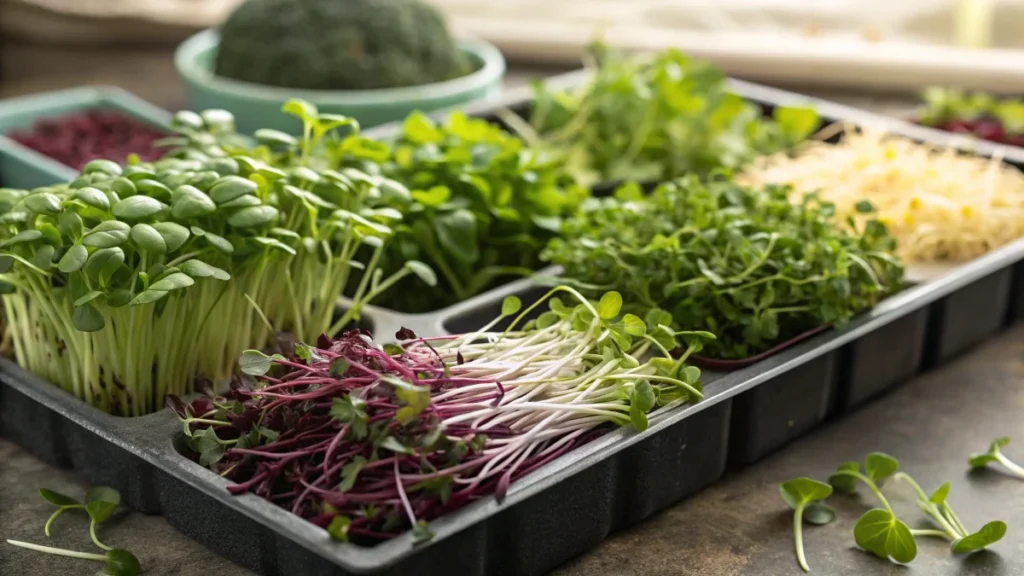
Microgreens may be small, but their flavor is anything but subtle. These tiny greens pack more taste and aroma than many mature vegetables, turning a simple salad or sandwich into something memorable. Because they are harvested at their peak of freshness, every bite carries concentrated nutrients and natural plant compounds that heighten sweetness, spice, and aroma.
Taste tests from experienced growers show clear flavor families: pea shoots shine for their gentle sweetness, sunflower offers a nutty crunch, and radish delivers a lively heat. With more than 80 varieties available for home growing, knowing which ones truly stand out can save time and help you enjoy the most delicious greens right from your kitchen tray.
Why Microgreens Taste So Flavorful
Flavor concentrates early in the plant life cycle. At the microgreen stage, stored seed energy drives fast growth, which keeps tissues tender and full of aromatic compounds. That is why a tiny cilantro leaf can taste like a whole handful, and why a few radish shoots can warm the palate moments after chewing. Water content also shapes taste and mouthfeel.
Pea shoots hold more juice than many greens, so they feel refreshing and slightly sweet. Sunflower keeps a firmer bite, which reads as hearty and nutty. Because the harvest happens young, bitterness stays low while freshness stays high. This combination explains the common feedback that microgreens taste light, vivid, and more expressive than mature leaves.
How Taste Is Judged in Microgreens
To rank flavor in a useful way, consider six simple factors. Sweetness shows up clearly in pea shoots and in the lighter brassicas. Crunch signals freshness and structure, with sunflower offering the most satisfying snap.
Juiciness boosts perceived sweetness and refreshment, which is why peas stand out during tastings. Aroma intensity decides how much a small garnish can transform a dish, and cilantro leads that category.
Bitterness should be minimal at this stage, so milder brassicas often feel easy for new tasters. Versatility matters for daily cooking, so greens that play well in salads, eggs, bowls, and sandwiches float to the top. Using these criteria gives a fair picture of flavor quality that aligns with real kitchen habits.
🌿 Recommended Microgreens Supplies |
Flavor Families of Microgreens
Sweet and Fresh
Pea shoots and tender brassicas taste bright and slightly sweet with a clean finish.
Nutty and Crunchy
Sunflower delivers a firm bite with a toasty seed note that feels rich and satisfying.
Spicy and Bold
Radish sends heat that arrives a moment after chewing, with pink types usually landing hotter than purple types.
Herbal and Aromatic
Cilantro packs a powerful herbal rush. Even a small pinch changes the entire bowl.
Mild and Comforting
Cabbage and broccoli sit in the gentle zone with balanced green flavor that works in nearly any meal.
The Best Tasting Microgreens by Category
Sweet and Fresh Winner
Pea shoots rank first for universal appeal. They taste like crisp pea pods and feel juicy and refreshing.
Nutty and Crunchy Winner
Sunflower takes the crown for texture and a pleasant, nutty flavor that recalls green sunflower seeds.
Gentle Brassica Winner
Cabbage edges out broccoli for many tasters with a slightly sweeter, very clean profile. Broccoli follows closely with mild, earthy notes.
Spicy Winner
Pink radish usually hits spicier than purple radish, creating a lively finish that wakes up sandwiches and bowls.
Herbal Winner
Cilantro offers the strongest aroma. Use lightly to lift tacos, rice bowls, and salads without overwhelming other flavors.
Detailed Flavor Profiles
Pea Shoots
Pea shoots taste like fresh pea pods with a clear hint of natural sweetness. The stems and leaves hold a lot of water, so every bite feels crisp and juicy. That high juiciness makes them refreshing and easy to enjoy on their own. The aroma is gentle and green, which helps them blend with many foods without taking over. New tasters often call them the most snackable microgreen because the flavor reads familiar and friendly.
Sunflower
Sunflower microgreens bring a firm crunch and a round, nutty taste. The flavor reminds many people of green sunflower seeds, which adds a pleasant earthy note to salads and bowls. The texture feels sturdier than most green,s so a small handful gives a full mouthfeel. Use them when you want more body without bitterness. They also stay satisfying after a light dressing since the leaves are thick and resilient.
Cabbage
Cabbage microgreens offer a clean brassica flavor with a faint natural sweetness. The taste sits close to raw cabbage but lighter and brighter. Many growers fall in love with this variety because it feels balanced and very easy to use daily. The leaves are tender yet not flimsy, which keeps the bite neat in wraps and snacks. If you want a gentle green that still tastes lively, cabbage is a dependable choice.
Broccoli
Broccoli microgreens are mild and approachable with a soft green note and a hint of earth. People who do not enjoy mature broccoli often find this version pleasant because the taste is subtler and the texture is delicate. The leaves fold into eggs, soups, and grain bowls without adding sharpness. When you need a background green that supports other flavors, broccoli performs well.
Radish
Radish microgreens deliver a lively heat that blooms a moment after chewing. The pink types usually land hotter than the purple types, which creates a fun contrast when you taste them side by side. Along with the spicy kick, you still get a light radish character that feels bright rather than heavy. A small pinch can wake up sandwiches, tacos, and noodle bowls. Start with a modest amount, then adjust to taste.
Cilantro
Cilantro microgreens pack powerful herbal intensity. Even a few leaves can change the whole direction of a dish. Fans of cilantro will love the way the small leaves concentrate the signature citrusy and green notes. If you are sensitive to cilantro, use tiny amounts to add aroma without overwhelming the plate. These greens shine in fresh salsas, rice bowls, soups, and seafood dishes.
Best Ways to Enjoy These Flavors
Pea Shoots
Toss with lemon and olive oil for a quick side. Layer into spring rolls with cucumber and mint. Add to omelets at the end of cooking so they stay crisp and juicy.
Sunflower
Use as the main salad base with toasted seeds and a light vinaigrette. Add to grain bowls for texture contrast. Place on sandwiches where you would normally use lettuce for a richer bite.
Cabbage
Mix into slaws with yogurt or lime for a bright finish. Top pulled chicken or fish tacos to add lift without overpowering spice rubs. Fold into fried rice right before serving to keep the tender crunch.
Broccoli
Stir into soups and broths off the heat to preserve the gentle flavor. Pair with avocado and tomato on whole-grain toast. Combine with citrus segments in salads for a clean and balanced profile.
Radish
Scatter over buttered toast with a pinch of salt for a simple snack. Finish noodle bowls and ramen with a small handful to add heat and freshness. Pair with creamy dressings where the spice cuts through richness.
Cilantro
Blend into salsa verde and chutneys for a vivid green punch. Top rice bowls and quesadillas with a small sprinkle. Brighten seafood and bean dishes with a few leaves just before serving.
Tips for Maximizing Flavor at Home
Harvest Timing
Cut when the first true leaves are present, and tissues still feel tender. Younger harvest keeps bitterness low and aroma high. Waiting too long can dull sweetness and reduce snap.
Rinse and Dry
Give a quick cold rinse and spin dry. Excess surface water flattens flavor and softens texture. Proper drying helps dressings cling and keeps crunch alive.
Chill and Use Soon
Refrigerate in a breathable container with a paper towel to manage moisture. Use within a few days for peak taste and aroma. The light and vivid profile is strongest when the greens are fresh.
Gentle Handling
Avoid pressing greens at the bottom of heavy containers. Tender leaves bruise easily, which can mute flavor. Pack loosely and add to plates at the end.
Beginner-Friendly Picks to Start With
Easiest Wins
Begin with pea shoots for sweet juiciness and sunflowers for nutty crunch. Add cabbage for a clean and slightly sweet brassica note that works in many meals.
Build a Flavor Set
Bring in broccoli when you want a mild background green. Try a small amount of radish when you crave heat. Use cilantro in tiny pinches to learn how much intensity you enjoy.
Taste Test Guide for Home Growers
Set Up
Place small piles of each variety on a plate. Start with mild greens and move toward stronger flavors. Keep water nearby to reset the palate.
What to Notice
For each sample, note sweetness, crunch, juiciness, aroma, and any aftertaste. Compare pea shoots and sunflowers for texture. Compare pink radish and purple radish for heat. Notice how a tiny amount of cilantro shifts the entire aroma.
Choose Your Everyday Mix
Pick one sweet, fresh option, one crunchy option, and one accent option. For many people, that means pea shoots, sunflower, and either cabbage or broccoli. Keep radish and cilantro as finishing touches for days when you want a brighter or spicier plate.