
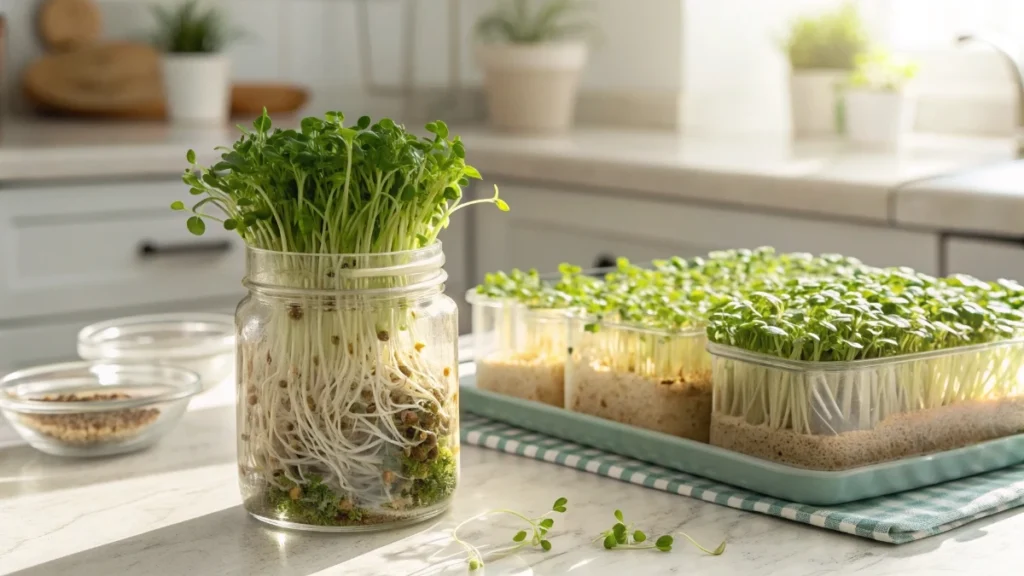
Growing Sprouts and Microgreens at Home: Step-by-Step for Beginners

Growing Sprouts and Microgreens at Home: Step-by-Step for Beginners

Growing sprouts and microgreens at home is one of the simplest ways to enjoy fresh and nutrient rich greens throughout the year. In just a few days, ordinary seeds can turn into crisp sprouts or tender microgreens packed with vitamins, minerals, and antioxidants.

You do not need a backyard garden to begin; a simple jar, tray, and some light are enough. Whether you grow broccoli, alfalfa, or sunflower greens, these tiny plants develop quickly and bring vibrant flavor to salads, sandwiches, and smoothies.

This beginner friendly guide explains how to grow, harvest, and store them safely and efficiently while highlighting the main differences between sprouts and microgreens and how to enjoy a continuous supply of fresh homegrown greens in your kitchen.

Sprouts vs microgreens explained in plain language

What sprouts are

Sprouts are just germinated seeds grown in water. You eat the whole plant including the root and shoot. They grow in a jar with a mesh top or a piece of cloth held by a ring. They do not need light to grow. The process is fast because the seed is living off its own stored energy. Most common sprouts are ready in 3 to 6 days.

Daily care matters. Rinse two to three times a day with clean water. Drain very well with the jar angled so moisture does not pool. That simple routine keeps the environment fresh and reduces the chance of off smells, sliminess, or mildew from decomposing seed coats. Because sprouts live in a constantly wet setting, commercial sales often face stricter rules than microgreens. At home you can manage risk by keeping tools clean, rinsing on schedule, and refrigerating promptly once they are ready.

What microgreens are

Microgreens are seedlings grown on a substrate such as coco coir, potting mix, or plant fiber mats. You harvest stems and leaves only and leave the roots in the medium. They need light once they sprout. Plan for about 7 to 14 days to harvest for fast growers like radish, kale, or broccoli. Pea shoots and sunflower shoots take a few more days. Slow herbs such as parsley or carrot tops can push to 3 weeks.

The workflow looks different from sprouts. You seed densely on a shallow tray, press the seeds for contact, cover or stack another tray to create gentle weight and darkness for even germination, then move the tray under lights when the seeds sprout. Water from the bottom to keep leaf surfaces dry. Harvest by cutting just above the medium. Because the edible part grows above the damp zone, and you are not eating the roots, microgreens are generally considered the lower risk choice when grown and handled cleanly.

Why the distinction matters

Time, taste, storage, and safety all change with the method. Sprouts are crisp and juicy with a stronger bite and a shorter fridge life of about 3 to 5 days. Microgreens develop fuller flavor notes with a longer fridge life that often reaches one to two weeks when kept dry and cool. Sprouts demand more daily attention but almost no equipment. Microgreens ask for a light and trays, yet daily labor is usually just a quick check and bottom watering.

Sprouts and microgreens compared at a glance

Growing environment

Sprouts grow in water inside a jar. Microgreens grow on a thin layer of coco coir, soil, or a grow mat inside shallow trays.

Light needs

Sprouts do not need light. Microgreens need consistent light after germination. Place lights close to the canopy, often about one to two inches above, and raise as plants grow.

What you eat

Sprouts are eaten whole including the roots. Microgreens are cut above the medium and only the stems and leaves are eaten.

Daily care

Sprouts are rinsed and drained two to three times each day. Microgreens are kept evenly moist with bottom watering and the canopy stays dry.

Time to harvest

Sprouts are usually ready in 3 to 6 days. Microgreens are typically ready in 7 to 14 days, with some varieties taking up to 3 weeks.

Storage life

Sprouts store about 3 to 5 days in a paper towel lined container in the refrigerator. Microgreens often store one to two weeks when kept dry and cool, and some growers report longer when conditions are excellent.

Flavor and texture

Sprouts give a juicy snap and a peppery or nutty kick depending on the seed. Microgreens bring more developed flavors, from the heat of radish to the sweet crunch of pea shoots or sunflower.

What to grow first for consistent success

Best starter seeds for sprouts

Broccoli is a smart first choice because it germinates reliably and is widely praised for sulforaphane. Alfalfa produces a light fresh sprout that fits sandwiches and salads. Mung beans and lentils are forgiving and fast, often ready in about three to four days, and add a mild earthy note. Mixed salad sprout blends are an easy path to variety and can combine brassicas for a balanced flavor.

Choose seeds labeled for sprouting. These have been handled to food grade standards and are intended for growing in water. That step supports good hygiene from the start.

Best starter seeds for microgreens

Radish is a top pick for beginners. It germinates in one to two days and can be ready to cut in a week with a bright flavor and vivid color. Broccoli and kale produce dense mats quickly and are mild enough for daily use. Pea shoots bring sweet crunch and are best cut before tendrils turn tough. Sunflower shoots are thick, nutty, and satisfying. Buckwheat adds a gentle lemon note and a soft texture.

If you want very fast wins, brassicas like radish and broccoli are the most responsive. If you want easy handling, larger seeds such as sunflower and peas are simple to spread and harvest. For tiny seeds like amaranth, place them on a smooth surface such as tissue over a moist base so they do not sink, then keep evenly misted during the early days.

When to harvest for best taste

Sprouts are ready when they reach about 3 to 5 centimeters depending on the seed and smell clean and fresh. Pea shoots taste best before tendrils extend and toughen. For microgreens in general, harvest at the cotyledon stage or at the first true leaf stage for fuller flavor. If you wait too long the stems can get stringy and the mild sweetness can fade.

Gear you actually need and what it really costs

Simple kit for sprouts

You need a wide mouth glass jar, a mesh lid or a piece of clean cloth secured with a ring, and a small stand to keep the jar tilted so it drains completely. That angle also helps airflow into the jar between rinses. Many home growers keep the jar near the sink to build the rinse routine into the day. A large bowl is useful when you want to float off seed hulls after the final rinse.

Starter kits with a jar, mesh lid, and a starter seed pack are commonly priced around 15 to 30 dollars. Bulk seed is where you save most. A one pound bag of common sprouting seeds often falls in the 10 to 15 dollar range and can cover many batches. With that math, a jar of sprouts can cost only pennies per day.

Practical set-up for microgreens

Use shallow trays that nest. One tray has holes and sits inside a second tray without holes. The inner tray holds the growing medium and seeds. The outer tray catches water for bottom watering. Shallow trays make clean harvesting easier than deep seed trays.

Coco coir is a favorite medium because it is clean, neutral, and easy to hydrate. Many growers use about half a small coir block per tray and spread a thin even layer. You can also use a light potting mix or plant fiber mats. For tiny seed species, you can place a sheet of tissue on the surface to keep seed tops clean and then mist lightly to hydrate.

You will need a light. A basic LED shop light or a clip on grow light placed close to the canopy works well. Keep the light about one to two inches above the tops and slide it up as the greens stretch. Some growers keep the light on a long schedule for simplicity so both sides of a tray get equal coverage by shifting the light during the day.

Add a spray bottle for early misting if needed, scissors or a sharp knife for harvesting, and a clean container or produce bag for storage.

A realistic starter budget looks like this. A pair of trays can be found in the 15 to 30 dollar range. A simple light is often around 30 dollars. A coir block and a few seed packs round out the setup. Water use is modest. As a reference point, many growers report about one and a half cups of water per 24 to 36 hours for a full size tray when bottom watering. Reusable trays and bulk seed keep the ongoing cost low.

Small workflow details that pay off

Stacking a second tray or putting a light weight on top during the first few days creates even pressure across the seed layer. That encourages uniform contact with the medium and balanced germination. Switching from top watering to bottom watering as soon as roots reach the tray floor keeps leaves dry and clean. Placing the harvested greens toward the front of the refrigerator helps avoid freezing at the back wall, which can ruin texture in a single day.

Step by step for sprouts in 3 to 6 days

Day zero to day one

Measure the seed. For a one quart jar, a tablespoon or two of small seeds such as alfalfa or broccoli is usually enough. Larger seeds like mung beans can require a little more volume. Fill the jar with cool water and soak for 4 to 8 hours. Overnight is convenient.

Day one to finish

After the soak, drain fully and rinse well. Invert the jar on its stand so excess water continues to run out. Rinse two to three times a day. Keep the jar at room temperature in an out of the way spot with normal household airflow. You will see roots and shoots quickly. By day three to six depending on variety the jar will look full, the sprouts will be crisp, and the smell will be fresh.

If seed hulls cling and you want a cleaner look, pour the finished sprouts into a bowl of water. Agitate gently and many hulls will float and can be skimmed. Drain well. A salad spinner makes this step faster.

Storage and food safety

Line a container with paper towels, add the well drained sprouts, top with another paper towel, and close the lid. Store in the refrigerator and change the towels daily to control moisture. Plan to use them within about 3 to 5 days and give them a quick rinse before serving. The simple habits that matter most are clean jars and lids for every new batch, thorough draining after each rinse, and prompt cold storage once they are ready.

Step by step for microgreens in about one to two weeks

Prepare the tray and medium

Use a shallow tray with holes nested inside a solid tray. Hydrate coco coir with cool water until it is evenly moist but not soggy. Spread a thin, level layer so roots can knit the mat without wasting medium. Press the surface lightly with a clean tray or your hand to create a flat bed. This smooth base helps tiny seeds make good contact and speeds even germination.

Seed generously but not overcrowded

Seed so the grains are almost touching. Brassicas like radish and broccoli can be thick because they stay slender. Large seeds such as peas and sunflower need a little more elbow room so air can move through the canopy. After seeding, press gently again. Many growers place a second tray on top for the first few days to create light, even pressure. That weight helps the entire surface sprout at the same time.

Manage germination in darkness

Keep the tray covered and in a cool spot. Check moisture daily. Mist the surface only if it looks dry. Overwatering at this stage invites rot and uneven growth. Brassicas commonly show sprouts in one to two days. Peas and sunflower often take a little longer. When you see short pale shoots across the tray, move to the light phase.

Move under lights and switch to bottom watering

Place the tray under lights about one to two inches above the canopy. Bottom water by adding water to the solid tray below. Root tips will pull up what they need while leaves stay dry and clean. As a useful reference, many growers find a full tray uses about one and a half cups of water every day to day and a half, though your room temperature and humidity will change that. Raise the light as plants grow to keep a tight, sturdy stand.

Harvest at the right stage

Cut just above the medium when cotyledons are fully open or when the first true leaves begin to show. Radish, broccoli, and kale are often ready around day seven to day ten. Pea shoots are sweetest before tendrils run long. Sunflower shoots are best when the seed hulls release and the leaves are thick and glossy. Use clean scissors or a sharp knife and gather into a clean bowl or produce bag.

Food safety and hygiene that actually matter

Clean tools and containers every cycle

Wash and sanitize jars, lids, trays, and knives before each new batch. A clean start is the simplest way to avoid problems later. For sprouts, this is essential because the crop lives in constant moisture. For microgreens, it keeps surfaces free of lingering microbes that can take hold in a warm room.

Rinse schedule and drainage for sprouts

Rinse sprouts two to three times per day with cool water. Drain completely and keep the jar angled so no water pools at the bottom. After a rinse, many growers let the jar sit upright for a short time so fresh air can move in, then return it to the stand. If seed coats collect and begin to decompose, remove them in a bowl of water before storage.

Keep the canopy dry for microgreens

Shift to bottom watering as soon as roots reach the tray floor. A dry canopy is the single best practice to avoid mold. Good airflow around the shelves helps. If you see fuzzy white growth at root tips, check carefully. Fine root hairs are normal and disappear when the mat is hydrated. True mold forms patches that spread across the medium and has an off smell. If that happens, increase airflow, reduce watering volume, and thin your next sowing slightly.

Storage habits that extend freshness

Move finished sprouts into a paper towel lined container and change the towels daily. Plan to use them within about three to five days. With microgreens, store harvests dry in a breathable container. Keep them toward the front of the refrigerator where temperatures are steady. The back wall can freeze tender leaves and ruin texture. Many varieties hold one to two weeks when kept dry and cool.

Why simple home routines work

Small batches are easy to rinse, drain, and cool quickly. You are eating what you grew within days rather than after transport and shelf time. Clean tools, steady routines, and prompt refrigeration do most of the safety work for you.

Light, placement, and room conditions

How close the light should be

Set lights close to the tops, often about one to two inches. This distance produces compact stems and broad leaves. If plants lean or stretch, lower the light or add an hour count. As the canopy rises, lift the light a little at a time to keep the same distance.

How long to run lights

Aim for a long bright day. Many home growers keep lights on for most of the day to simplify the routine. Clip on lights and basic shop lights both work well as long as they are close. If a light does not cover the entire tray, slide it across the surface during the day so both sides receive equal exposure.

Room temperature and airflow

Normal room temperatures suit both sprouts and microgreens. Avoid hot, stagnant corners. Gentle airflow reduces surface moisture and helps leaves dry after you lift the blackout cover. A small fan on low, not pointed directly at the tray, is often enough.

Windowsills versus fixtures

A sunny window can raise a small pot, but trays usually perform better under fixtures. Glass and short winter days can create leggy growth. If you do use a window, rotate the tray daily and bring the leaves as close to the glass as you can without touching it.

Harvest, washing, and storage for maximum shelf life

Sprouts

Harvest when they are crisp, juicy, and fragrant. Rinse in cool water and remove seed coats by floating them off in a bowl if you like a cleaner mix. Spin or drain very well. Store between paper towels inside a sealed container. Change towels daily. Use within three to five days. Give a quick rinse before serving.

Microgreens

Harvest dry. Wet leaves break down faster in storage. Cut slowly so you do not pull the medium into the harvest. Shake gently to release any stray hulls. For immediate use, a quick rinse and spin is fine. For storage, skip the rinse and keep the cut greens dry and cool. Place containers toward the front of the refrigerator where temperatures are stable. Many greens stay fresh for one to two weeks when handled this way.

Small tactics that help

Harvest in the cool part of the day. Keep knives and scissors clean. Do not compress greens in storage. If condensation appears inside the container, open it for a minute to release humidity and add a dry towel layer.

🌿 Recommended Microgreens Supplies
These are the tools and supplies I personally recommend for growing healthy and flavorful microgreens at home.
💡 Best Grow Lights 🌾 Best Growing Seeds 🪴 Best Grow Medium 🧵 Best Grow Mats 🧺 Best Growing Trays 🌿 Best Growing Stand 🌱 Best Microgreens Kit
As an Amazon Associate, I earn from qualifying purchases.

A simple weekly rotation you can actually maintain

Sprouts rhythm

Start a new jar every five days. This cadence keeps fresh sprouts arriving just as the previous jar is finished. If you like variety, run two jars on alternating schedules. For example, begin broccoli today and a salad blend two to three days later so harvests never collide.

Microgreens rhythm

Sow two small trays once a week. A common pattern is two trays on a weekend day, then repeat seven days later. The first pair is ready around the time the next pair is entering the light phase. This overlap gives you steady harvests without crowding your fridge.

How to scale up or down

If a household eats lots of greens, add another pair of trays to the weekly sow. If you are cooking for one, sow one tray per week and choose fast brassicas so you harvest frequently. Keep notes on how quickly your household eats a tray. Within two or three cycles you will have a schedule that fits your meals and your space.

Keep it effortless

Place the rinse jar near the sink. Keep trays and coir stored together. Set phone reminders for rinses and for the weekly sow. A few minutes of attention on a routine schedule is all it takes to keep crisp sprouts and vibrant microgreens on the table every week.

Costs, yields, and real efficiency

Growing sprouts and microgreens doesn’t require a big investment. Most of the setup cost happens only once, and supplies last a long time. The ongoing expense mainly comes from seeds, which are affordable when bought in bulk.

Cost breakdown

A simple jar kit for sprouting, which includes a mesh lid and stand, usually costs around $15–20. A good pair of 10×10 or 10×20 trays for microgreens can be found in the $15–30 range, while a basic LED shop light or clip-on grow light costs about $25–35. A block of coco coir that makes several trays runs about $10. Bulk seed, such as a one-pound bag of broccoli, radish, or sunflower, typically ranges from $10–15 and yields dozens of batches.

Once the setup is complete, each jar of sprouts costs only a few cents a day to produce. A tray of microgreens averages about fifty cents to a dollar per harvest, depending on the seed type and density. With that, you can grow several trays for less than the cost of one small store-bought pack.

Yield and savings

A 10×20 tray of microgreens usually produces 140–180 grams of fresh greens, enough for four to six servings. A pound of broccoli seed can yield more than twenty trays, equaling several months of weekly harvests. Sprouts give smaller but faster yields—a tablespoon of broccoli or alfalfa seeds fills a quart jar in four to six days.

Efficiency and water use

Both methods are water-efficient. A microgreen tray typically needs only about one and a half cups of water every 24–36 hours, while sprouts use fresh rinse water two or three times a day but in small volumes. Since you harvest and eat everything within days, there’s little waste.

The overall efficiency becomes clear once you see how little space and time it takes. A single light shelf or counter corner can provide daily greens for salads, sandwiches, smoothies, and cooking. The key investment is consistency, not cost.

Common problems and easy fixes

Sprouts turning slimy or smelling bad

This usually means the jar didn’t drain fully or wasn’t rinsed often enough. Wash all equipment with warm soapy water, use fewer seeds per jar, and angle the jar for airflow. Keep it out of direct sunlight and rinse more frequently.

Mold on microgreens

What looks like white fuzz may just be root hairs. To check, mist lightly; true mold stays visible while root hairs vanish when damp. Improve airflow, reduce watering, and thin your next sowing slightly. Always bottom-water once roots reach the tray base.

Tall, leggy growth

This happens when light is too far away or trays stay covered too long. Place lights about one to two inches above the greens and uncover as soon as germination evens out. Longer light hours strengthen stems.

Uneven growth or patchy germination

Seed density or uneven contact with the medium can cause gaps. Press seeds gently after sowing and use a light blackout weight for the first few days. Keep moisture consistent but avoid puddles.

Seed hulls clinging to leaves

A quick misting and gentle brushing with your fingers or a soft stream of air can remove them. Stronger light and balanced humidity also help the hulls loosen naturally as leaves expand.

Easy, everyday ways to use your harvest

Sprouts and microgreens fit almost anywhere in the kitchen. Add them to salads, grain bowls, sandwiches, or wraps for a crisp texture. Sprinkle radish or kale microgreens on soups and stir-fries after cooking to preserve color and nutrients. Mix pea shoots or sunflower greens into omelets, pasta, or rice dishes.

Broccoli and alfalfa sprouts pair well with eggs and avocado toast. Buckwheat or mild sunflower greens blend smoothly into fruit smoothies without adding bitterness. You can even toss microgreens into warm dishes just before serving for a fresh note similar to fresh herbs.

Experiment by combining flavors: peppery radish with sweet pea shoots, or nutty sunflower with lemony buckwheat. Their short shelf life encourages a natural rhythm—eat what you grow, sow again, and enjoy new flavors every week.

Quick-start checklist for beginners

  1. Choose your first seeds: broccoli or alfalfa for sprouts, and radish or sunflower for microgreens.
  2. Gather basic tools: one quart jar with mesh lid, two shallow trays (holes and no-holes), coco coir, and a small LED light.
  3. Prepare your first soak: measure and soak seeds overnight.
  4. Rinse on schedule: twice daily for sprouts; check daily for microgreens and water as needed.
  5. Track the cycle: sprouts ready in 3–6 days, microgreens in 7–14 days.
  6. Harvest clean: cut above the medium, store dry, and refrigerate.
  7. Keep it going: start new batches every few days for a constant supply.

Leave a Comment

Your email address will not be published. Required fields are marked *