
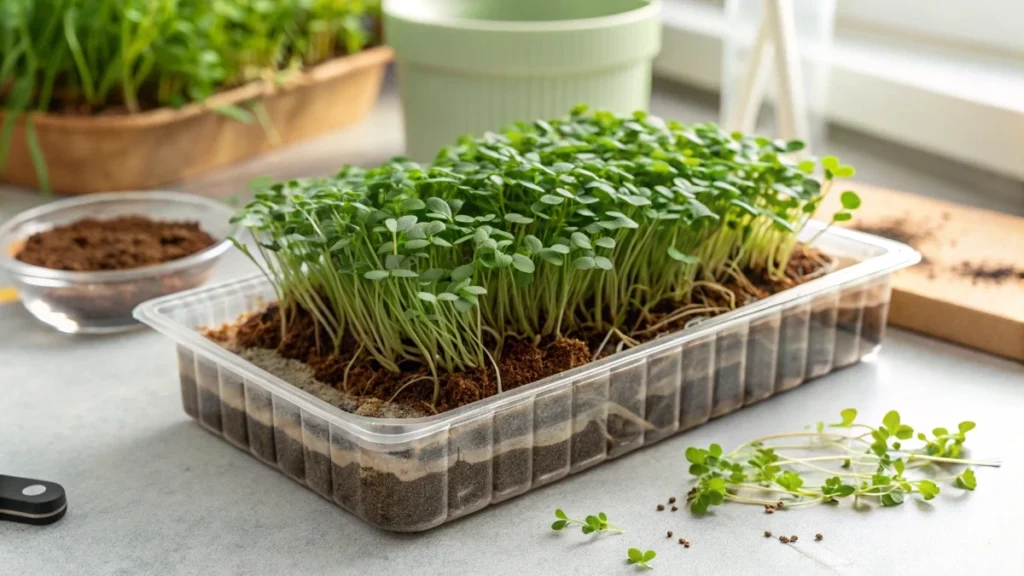
Growing microgreens at home becomes much easier once you have a tray that fits your space, holds the right amount of moisture, and keeps the roots breathing well. Building your own tray gives you that control without spending much.
You get to choose the depth, the drainage pattern, and even the watering method, which all influence how your microgreens look and taste.
I mean, once you understand how the medium feels when it is hydrated or how the roots anchor themselves, the whole growing cycle starts to feel predictable.
Most people notice healthier stems and fuller harvests when they switch from random containers to a thoughtfully made diy microgreens tray. If you want steady results, this simple setup becomes a small but game-changing upgrade.
Why Build Your Own Microgreens Tray
Creating a diy microgreens tray gives you control that store-bought trays rarely offer. You decide the size, the depth, the drainage pattern, and the way the tray holds water, which all affect growth, yield, and mold risk.
Cost is usually the first reason people start building their own microgreens growing tray. A sturdy commercial ten-by-twenty tray often falls somewhere between ten and eighteen dollars. If you want a double tray setup for bottom watering, that cost doubles. When you build a tray from food-safe containers, bakery sheets, or recycled produce boxes, the average cost often lands between two and five dollars per tray, sometimes less if you already have containers at home. For someone growing ten trays a month, that difference can add up to well over one hundred dollars in the first year.
There is also performance. A diy microgreens setup lets you match the tray to your growing style. For example, if you know your room runs humid, you can design extra drainage and more air gaps. If your room dries out quickly, you can build a slightly deeper tray that holds more moisture. In test runs with brassica microgreens like kale, a well designed diy tray with good drainage and even seed density has produced six to twelve ounces of fresh microgreens from a single ten-by-twenty area.
Finally, building your own microgreens tray builds confidence. You start to understand how water moves through the growing medium, how roots behave, and what a healthy tray feels like when you lift it. That hands-on knowledge is worth more than any branded tray and supports every future crop you grow.
🌿 Recommended Microgreens Supplies |
Choosing the Right Tray Base
The tray base is the foundation of your diy microgreens system. If you get the size, depth, and material right, everything else becomes easier.
Depth matters more than people expect. Most microgreens prefer a shallow tray because their roots do not need deep soil. A depth between one and one and a half inches usually works very well. It gives enough room for roots to anchor and for water to hold in the growing medium, yet it does not create a heavy, soggy block that dries slowly and encourages mold.
Material is the next choice. Many growers like food-safe plastic with recycling code five, often found in restaurant supply containers, bakery clamshells, and some produce boxes. These plastics are light, do not rust, and handle repeated cleaning. Metal baking sheets can also work as a base for a mesh or mat system, but they require more care to avoid rust. Glass looks nice, but it is heavy and breaks easily when moved full of wet soil.
You can also repurpose supermarket containers for a very low cost diy microgreens tray. Salad boxes, mushroom trays, and rotisserie chicken containers often have the right depth and footprint. Before using them, make sure they are clean, not cracked, and marked as food safe.
There is a quiet trade-off between clear trays and opaque trays. Clear plastic lets you see root development and moisture levels through the side, which is helpful while you learn. At the same time, clear walls let light reach the growing medium and the water in the bottom, which can encourage algae if the tray sits in pooled water. Opaque trays block that light and keep the root zone darker, which roots prefer.
When you pick a base, think about the rest of your diy microgreens setup. If you plan to grow under lights on a rack, a classic ten-by-twenty footprint uses space efficiently. If you want trays on a windowsill, shorter and narrower containers might fit better.
Drainage System Setup
Drainage is the quiet hero of any diy microgreens tray. Good drainage keeps the growing medium moist but not soaked and gives roots the oxygen they need. Poor drainage leads to sour smells, slimy roots, and mold.
The simplest way to build drainage is to start with your chosen tray base and create holes in the bottom. For a ten-by-twenty size, many home growers use somewhere in the range of fifteen to twenty-five holes. That count can be scaled down proportionally for smaller containers. The holes are usually about four to five millimeters wide, just large enough for water to escape freely without losing chunks of soil.
Spacing also matters. If all the holes sit in the center, water can still pool near the edges. A better pattern covers the whole base. You can think of the tray in a grid and place holes evenly in each square so that any water poured into the tray can find an exit with a short travel distance.
You will notice the impact of good drainage in day-to-day use. When you water from below, the tray will wick up what it needs, and then the excess can drain away. When you lift the tray, it will feel moist but not overly heavy. The growing medium will stay airy, which lets roots spread and absorb nutrients more easily. Many growers report that once they improved their drainage pattern, they saw fewer areas of patchy growth and far less standing water under the mat or soil.
For very light media like coco coir, proper drainage is even more important because the fibers hold water for a long time. Without enough holes, the lower layer never fully releases moisture, which can lead to anaerobic pockets. With a better hole pattern, the tray can cycle between moist and slightly drier, which is healthier for microgreens.
Diy Bottom Watering and Optional Self-Watering System
Once your tray drains well, the next step is to take advantage of that design with bottom watering. Bottom watering is simple. Instead of spraying water from above, you pour water into a second tray and let your microgreens tray sit in it so the growing medium wicks moisture upward from the base.
A basic bottom watering setup uses two trays. One tray contains the soil or growing medium with seedlings. The second tray has no holes and acts as a shallow water reservoir. You pour a small amount of water into the reservoir tray, usually enough to cover the bottom in a thin layer, then place the growing tray inside for a few minutes. The medium absorbs what it needs, and you then pour out any extra water that remains.
Growers who switch from overhead watering to bottom watering usually notice several things. The surface of the medium stays drier, which discourages mold on stems and leaves. Water reaches the roots more evenly, so you do not get saturated spots where the watering can hit hardest. In repeated grows, many people find they have far fewer trays with questionable fuzzy patches once they rely on bottom watering for most of the growing cycle.
You can upgrade this system to a simple self-watering microgreens tray by adding a wicking layer. A strip of absorbent cloth, capillary mat, or thick paper towel can run from the water tray up through holes in the growing tray, touching the base of the medium. As long as there is a small amount of water in the lower tray, the wick will keep pulling moisture upward. This type of setup works well in warm rooms or for people who cannot check their trays every day. It is especially useful for thirsty varieties or for coco coir, which can dry out quickly on the surface.
The key is balance. A self-watering system should keep the medium consistently moist, not saturated. It helps to start with a short test. Fill the reservoir lightly, let the wick do its work for a few hours, then lift the growing tray. If it feels very heavy and the surface looks glossy and wet, reduce the water level next time. Over a few cycles, you will learn how much water keeps your specific diy microgreens tray happy.
Preparing the Growing Medium
The growing medium inside your diy microgreens tray acts as both a bed and a pantry. It supports the roots and holds water while seeds transform into a dense green canopy. Different media change how often you water, how roots form, and how clean the harvest looks.
Many home growers start with a fine-textured potting mix. A good mix for microgreens is light, peat or coco-based, and free of large wood chunks or stones. In a ten-by-twenty tray, a layer roughly one inch deep is usually enough. This depth gives roots space to anchor, yet does not trap too much water. When you press the surface gently with your hand, it should feel firm but still spring back slightly. If it compacts into a hard slab, roots may struggle to push through.
Coco coir is another popular choice for a diy microgreens tray. It is made from coconut husk fibers and holds water very well. Coir mats or loose coir blocks that you hydrate with water both work. The benefit is a lighter tray and a clean root zone with fewer fine particles. The trade-off is that coco coir can stay wet longer, so you need to pay attention to watering intervals and airflow. In test grows with kale and other brassica microgreens, trays with pure coir often require a little more fan time to keep stems dry near the base.
Hemp mats and other fiber mats are convenient for people who want an almost soil-free cleanup. You place the mat directly in the tray, moisten it evenly, and then sow seeds on top. Roots grip the fibers and form a dense sheet that is easy to lift after harvest. These mats are thin, so they depend heavily on consistent bottom watering. If the tray dries out, there is not much reserve water in the medium itself.
Some growers experiment with reusable mesh or screens placed over shallow water, allowing roots to grow hydroponically. While this can work, it demands more attention to water level and nutrients, and is usually better as an upgrade once you are comfortable with soil or coir.
Regardless of which medium you choose, leveling is an important step. After filling the tray, run a straight edge or your hand gently over the surface to create a flat, even bed. Any dips will collect seeds and hold more water, leading to uneven germination and patchy growth. A flat surface supports a uniform canopy, which makes harvesting easier and gives your diy microgreens tray a market-ready look.
Seed Density and Sowing Technique
Getting the right seed density is one of the most important steps in building a reliable diy microgreens tray. Too few seeds create empty patches that let light reach the growing medium. Too many seeds trap moisture, raise humidity between seedlings, and slow airflow. A balanced density produces a full canopy with strong stems and minimal disease pressure.
For most brassica microgreens, including kale, broccoli, and mustard, growers consistently see dependable results when they use roughly three-quarters of an ounce to one full ounce of seed for a ten-by-twenty tray. This range gives enough coverage for a dense harvest without overcrowding. When this density was used in repeated kale grows, the seedlings formed a tight carpet with good airflow between stems and showed far less patchiness compared with heavier sowing rates.
If your diy tray is smaller, you can adjust the seed rate proportionally. For example, if your container is half the size of a standard grow tray, you can use half the seed amount. The goal is to create a single even layer of seeds that almost touch but do not pile on each other.
The way you spread the seed matters as much as the amount. Start by gently shaking the seeds across the surface in a sweeping motion rather than pouring them in one spot. You can hold the container slightly above the tray and tap it as you move along. This helps avoid clumps that later hold moisture and slow germination. Once the seeds are spread, you can lightly press them into the surface of the medium with your hand. This does not bury them. It simply improves contact between the seed and the surface, which helps with hydration.
Many growers mist the seeds lightly after sowing to settle them into place before the blackout phase. A gentle mist is different from a heavy spray. Too much water at this stage pushes seeds into dips or creates wet spots that turn muddy. If you are using a medium that holds moisture well, such as coco coir, you may not need to mist at all.
The ideal seed density creates a canopy that grows upright with minimal crowding. When you lift the blackout tray after a few days, you should see a sheet of evenly sprouted seedlings. If you notice thick clumps or bare areas, you can adjust your density or spreading technique in the next tray. Over time, you will find the rate that matches your climate, medium, and tray size.
Germination and Blackout Method
The blackout phase is where your diy microgreens tray begins to take shape. This short period helps the seeds absorb moisture, push roots into the medium, and stretch upward as they search for light. A consistent blackout routine leads to even germination and strong stems.
A simple blackout setup uses a second tray placed on top of the seeded tray. The upper tray blocks light and holds in moisture, creating a microclimate that supports germination. Most growers also place a little weight on the top tray, usually between two and five pounds. This weight encourages the seedlings to grow upward with more strength, resulting in straighter stems and a firmer canopy. It also keeps the seeds in good contact with the medium during the first days when roots anchor themselves.
Humidity inside the blackout period matters. Seeds germinate well when the moisture level is steady but not wet. When the growing medium is pre-moistened correctly, you usually do not need to add more water during the blackout. If the room is dry, you can quickly lift the top tray, check the surface, and give a light mist only if needed. Over-watering at this stage can cause excessive condensation under the top tray, which raises the risk of mold.
The length of the blackout depends on the variety. Brassica microgreens usually stay in blackout for two to three days. Some seeds benefit from an extra day if the room is cool, but most trays are ready once the seedlings lift the top tray slightly and show uniform sprouting. If you wait too long, the stems can stretch more than necessary, which creates a leggy look once they reach the light.
When you remove the blackout tray, the seedlings often look pale or yellow. This is normal and changes quickly once they get light. They will green up within a day and become visibly stronger in the next twenty-four hours.
Observe your tray during the first hours after a blackout. This is when the seedlings adjust to air and light, and the surface begins to dry. If the tray looks too wet, a little airflow from a small fan can help bring conditions back into balance.
Light Setup for DIY Trays
Light is one of the major factors that shape the look and strength of microgreens. Once the blackout phase ends, your tray needs consistent lighting to build color, thicken stems, and grow evenly. You do not need expensive equipment to provide good light. Many growers use simple LED shop lights and get excellent results in diy microgreens setups.
The distance between the light and the canopy affects how the plants grow. A common range is eight to twelve inches above the top of the seedlings. When the light is too far away, the microgreens lean and stretch as they reach upward. When the light is too close, the leaves can dry at the tips or become too warm. Watching your tray for a few days helps you fine-tune the height.
Microgreens usually respond well to a daily light cycle of twelve to fifteen hours. This length gives the plants enough energy to grow without causing stress. A small outlet timer can automate this cycle so you do not have to turn lights on and off manually.
LED shop lights are popular because they stay cool, use little electricity, and spread light evenly. If you already have a grow light panel, that works too. The key is consistency. Microgreens rely on uniform light across the whole tray to create an even canopy. If part of the tray is in shadow, that side will be shorter or more yellow.
Color development is another sign you can watch. Many growers notice that the leaves take on their rich green shade after one day under the lights. Brassica varieties tend to respond quickly once they get enough light. If you see slow greening or continued stretching, raise or lower the lights slightly and observe the difference the next day.
Watering Routine After Germination
Your watering routine changes once the tray leaves the blackout period. At this stage, bottom watering becomes the main method for keeping the tray hydrated. Bottom watering gives the roots steady access to moisture without soaking the leaves or creating wet pockets on the surface.
A common schedule for many microgreens is to bottom water every twenty-four to forty eight hours. The exact timing depends on the medium and the room conditions. Coco coir holds moisture longer than soil, so trays in coir often need less frequent watering. Warm rooms dry out trays faster, while cooler rooms slow evaporation.
An easy way to judge the need for water is by lifting the tray. After a few grows, you learn the feel of a properly hydrated tray. When the tray feels very light, the plants are ready for water. If it feels heavy and the surface looks glossy, it already has enough moisture.
When watering, pour a small amount of water into the reservoir tray and let the growing tray sit in it for a few minutes. Then remove the tray and pour away any extra water. Leaving a tray sitting in water for long periods can cause the lower layer of the medium to stay saturated, which restricts oxygen and can lead to root issues.
Bottom watering also helps maintain cleaner stems. When water stays off the surface, the base of the plant remains dry, which naturally lowers the chance of mold forming. Many growers who switched from misting to bottom watering noticed healthier stems and more consistent growth.
If you see any signs of excess moisture, such as heavy condensation on leaves or a sour smell, increase airflow or adjust your watering interval. Microgreens prefer a rhythm where the medium becomes moist and then slowly dries slightly before the next watering.
Airflow and Mold Prevention
Airflow plays a quiet but important role in keeping a diy microgreens tray healthy. Once seedlings leave the blackout stage, they release moisture through their leaves. In a still room, this moisture hangs in the air and settles back onto the stems, which creates the kind of damp environment mold prefers. A small amount of controlled airflow prevents this by moving humidity away from the tray and helping the surface dry between water cycles.
A simple desk fan placed a few feet away is enough for most growers. The air does not need to blow directly on the microgreens. A gentle circulation across the growing area supports stronger stems and a cleaner growing surface. Many growers run a fan for fifteen to twenty minutes at intervals during the day, although some prefer to keep the fan on low continuously, especially in warmer climates.
Airflow also improves oxygen exchange in the root zone. When the growing medium stays slightly airy and not overly compact, roots can extend deeper and anchor more firmly. In repeated kale and brassica growth, trays with regular airflow showed less surface moisture and fewer patches where growth stalled.
It is also helpful to understand the difference between root hairs and mold. Beginners often mistake the white fuzzy growth at the base of stems for mold, but these are usually just root hairs that appear during early growth. Root hairs are bright white and evenly spaced. Mold tends to look irregular, clumpy, and often appears where excess moisture collects. When airflow is steady and watering is balanced, mold becomes far less likely.
Spacing trays slightly apart helps, too. If trays touch or sit too close, warm air gets trapped between them. Leaving small gaps improves airflow around the edges and reduces microclimates that favor mold.
Harvesting from a DIY Tray
Harvesting is one of the most satisfying steps in growing microgreens, and a well built diy tray makes this stage much smoother. Most common varieties are ready within seven to twelve days, though room temperature, light levels, and seed type influence the exact timing. Brassica microgreens like kale, broccoli, and mustard usually fall in the middle of that range.
You can tell microgreens are ready when the leaves look full, and the stems stand upright with strength. Some growers prefer to harvest at the cotyledon stage for milder flavor, while others wait an extra day or two for the first hint of true leaves. The choice depends on taste and texture preference.
For a clean cut, hold a small cluster of microgreens gently between your fingers and cut just above the growing medium with a sharp knife or scissors. The goal is to avoid disturbing the soil or mat so the stems stay clean and easy to wash later. Cutting in smooth, confident motions keeps the leaves crisp and reduces bruising.
Yield depends on seed density, medium type, and tray conditions. A well-grown ten-by-twenty tray of kale microgreens often yields six to twelve ounces of fresh greens. Trays that receive consistent light, balanced moisture, and steady airflow tend to produce on the higher end of that range.
After harvesting, rinse the greens briefly under cool running water and lay them on a cloth or salad spinner to remove excess moisture. Proper drying helps them stay fresh longer in the refrigerator.
Cleaning and Reusing Your DIY Trays
A diy microgreens tray can last many cycles if you clean it well. Proper cleaning removes leftover debris, soil, and any organisms that could affect the next crop. The process is simple but pays off in healthier trays and more consistent harvests.
Start by removing any growing medium or mats from the tray. Rinse the tray under warm water to remove loose particles. A soft brush can help clear corners and ridges where soil collects. Once the tray is free of debris, wash it with a mild soap or a natural cleaning solution. Many growers prefer a mix of warm water and vinegar or a diluted hydrogen peroxide rinse because these options clean without strong fragrances or harsh chemicals.
After washing, rinse the tray thoroughly so no residue remains. Set the tray somewhere with good airflow to dry completely. Moist trays stored in closed spaces can hold humidity longer than expected, which encourages unwanted growth before the next planting. A fully dry tray gives your next round of seeds a fresh start.
If you use a bottom watering system, clean both the grow tray and the reservoir tray. Over time, algae can form where light reaches standing water. Rinsing and drying the reservoir every few days keeps the system clean and reduces odors.
Most food-safe plastic trays hold up well through repeated use. Container choices like PP5 plastic remain sturdy, resist cracking, and handle warm water without warping. If you repurpose recycled containers, inspect them after each cycle for signs of stress or brittleness.
Troubleshooting Common Issues
Even with a well made diy microgreens tray, small issues can pop up during the growing cycle. Recognizing them early helps you correct the environment before growth slows.
Yellow leaves often appear during the first day after a blackout because the seedlings have not received light yet. Once the tray sits under lights, the color usually shifts to a deep green within a day. If yellowing continues, check the distance between the tray and the light source. The seedlings may be stretching for light or receiving too little intensity.
Patchy growth usually points to uneven seed distribution or dips in the growing medium. Creating an even surface before sowing and spreading seeds consistently across the tray often solves this issue in future crops.
Leggy stems occur when the light is too weak or too far from the tray. Adjusting the height and ensuring twelve to fifteen hours of lighting per day usually brings the next crop back to normal.
Mold forms where moisture stays trapped. Excess condensation under a blackout tray, heavy misting, or poor airflow can all contribute. Improving circulation and spacing trays slightly apart can reduce this risk. In many cases, switching fully to bottom watering resolves recurring mold issues.
Slow growth or weak stems may happen when the tray remains wet for too long. If the medium feels heavy and cool, increase the time between waterings and let the surface dry slightly before the next cycle.
Cost Breakdown
One of the biggest advantages of a diy microgreens tray is how budget-friendly it is. A commercial ten-by-twenty grow tray usually sells for ten to eighteen dollars, and that price doubles when you need a second tray for bottom watering. Many growers use multiple trays each week, so these costs add up quickly.
A homemade tray using food-safe containers, bakery sheets, or repurposed produce boxes typically costs two to five dollars. If you clean and reuse these trays, they last through many cycles. When a grower uses ten trays per month, the savings over a year can easily reach one hundred dollars or more.
Growing medium costs vary depending on whether you use soil, coco coir, or mats. Soil is often the most affordable, while mats cost more but offer convenience. Seed costs stay about the same regardless of the tray type, so the savings come mainly from the container setup.
Because a diy microgreens setup allows you to grow consistently with low overhead, many people use it to produce greens for home use, side income, or small local sales. The low initial investment makes it easy to scale up gradually.
Beginner Tips for Faster Success
Starting with a diy microgreens tray is straightforward, and a few habits make the learning curve even smoother. First, choose easy varieties like kale, broccoli, or radish. These grow quickly and offer clear feedback on whether your watering and lighting are on track.
Second, stick to one medium for your first few trays. Soil, coir, and mats each behave differently. Mastering one type helps you understand watering rhythms and growth patterns before experimenting.
Third, take quick notes during your first batches. Jot down how long the blackout lasted, when you watered, and how the seedlings looked each day. These small observations help you understand what your microgreens need in your specific environment.
Finally, focus on consistency. Keeping the watering routine stable, the light height steady, and the airflow gentle creates predictable growth. Once you see how your tray responds, you can begin adjusting small things like seed density or lighting hours to fine-tune your harvests.