
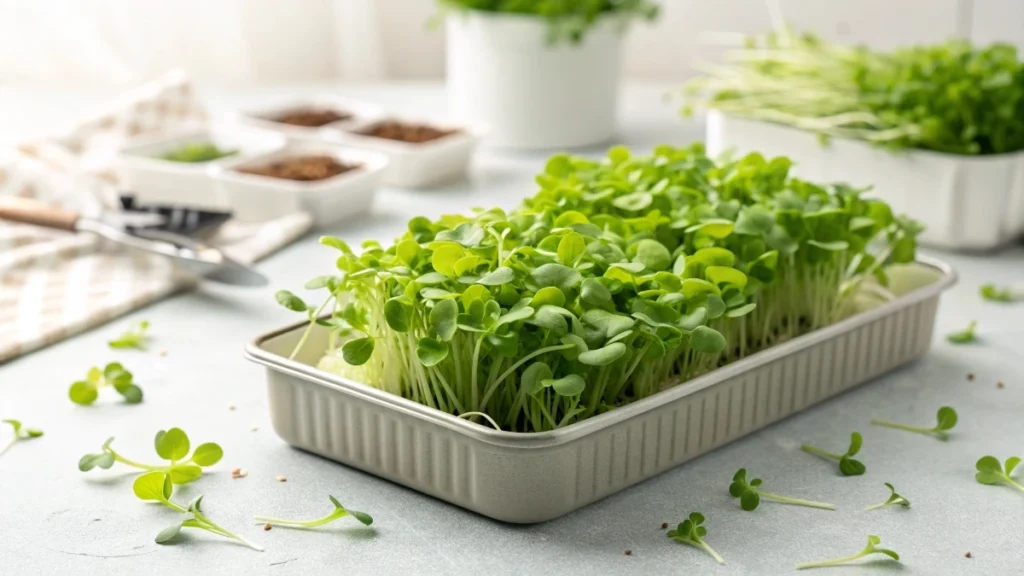
Growing lettuce microgreens is one of the easiest ways to keep a steady supply of fresh greens on your table, even if you only have a shelf and a simple light. In this guide, you will learn exactly how to grow lettuce microgreens indoors step by step, from seed density and watering to the best time to harvest for flavor and yield.
We will also look at lettuce microgreens benefits, basic nutrition, and how they can upgrade everyday meals. At the end, you will find quick lettuce microgreens recipes you can use right away, so your trays turn into real food and not just a fun project.
What Are Lettuce Microgreens
Lettuce microgreens are simply young lettuce plants harvested long before they develop into full heads. They are grown densely in shallow trays and cut when they are about five to ten centimeters tall. At this point, the plant has already used the stored energy inside the seed and begun to take in light and moisture. That is why the flavor feels clean, crisp, and slightly sweet, and why the nutritional concentration per bite tends to be higher compared with mature lettuce.
They sit between sprouts and baby lettuce. Sprouts grow only in water and are eaten whole with their roots. Lettuce microgreens grow in a thin layer of soil or another medium and are clipped above the surface. That gives them a softer bite and makes them feel like a tiny salad rather than a crunchy sprout.
Most growers cut lettuce microgreens around day ten to day fourteen from sowing. Some wait an extra two to three days until the first true leaves peek out, because that adds more yield without making the stems tough. In several growing trials, the true leaf stage added about half an inch of extra height and noticeably improved the final harvest weight.
Where lettuce microgreens sit in the growth cycle
The first leaves you see are the rounded seed leaves. They are the mildest stage and perfect if you want a delicate flavor. As the plant continues, the true leaves emerge from the center. These tiny true leaves signal a slightly later harvest point where flavor becomes more interesting and yield increases.
A lot of growers use lettuce microgreens not only as food but also as a nursery. You can lift a few seedlings with their roots, move them into pots or raised beds, and grow full-size lettuce from the same tray.
Common types of lettuce used
Any lettuce variety works. Green leaf, romaine, red romaine, speckled varieties, bronze lettuce, and salad blends all grow perfectly well. Mixed salad blends often include mild brassicas like mizuna to give a slight peppery tone and more color.
🌿 Recommended Microgreens Supplies |
Why Grow Lettuce Microgreens: Benefits
Lettuce microgreens are reliable, fast, nutritious, and inexpensive to grow. Because of their mild flavor, they fit into salads, sandwiches, bowls, and garnishes without overwhelming the dish.
Fast and forgiving
Growers repeatedly show that lettuce microgreens are ready in ten to fourteen days. Fresh seed often germinates in as little as three days. Even when grown in cooler indoor temperatures like eighteen to twenty degrees Celsius, trays fill out well. Seeds do not require soaking, and they tolerate small mistakes, which makes lettuce one of the easiest microgreens for beginners.
Nutrient density
Microgreens are known for being rich in vitamins A, C, and K and contain beneficial compounds concentrated in early growth. Lettuce is naturally a mild green, yet the early growth stage still boosts antioxidant and carotenoid levels. Because microgreens are mostly water and fiber, they add a lot of nutrition without many calories, making them a smart choice for everyday meals. SEO-friendly terms here include lettuce microgreens nutrition and health benefits of lettuce microgreens.
Cost savings
One tray of lettuce microgreens harvested indoors produced around six to seven ounces of fresh greens for one grower. In the density study, one gram of seed produced about three point three ounces, two grams produced about five point five ounces, and seven grams produced around nine point three ounces on a ten-by-ten tray.
With seed priced at nine dollars and ninety-eight cents per ounce and soil roughly three dollars per tray, the most cost-effective density was about six to seven grams per ten-by-ten tray. Scaling up, this equals roughly half an ounce of seed on a standard ten-by-twenty tray. That range produced a healthy, full tray without rot or crowding.
Compared with store-bought microgreens at four to five dollars for a tiny box, homegrown trays offer huge savings.
Year-round indoor growing
Lettuce prefers cooler temperatures, making it an ideal indoor microgreen. Growers used garages, grow tents, kitchen shelves, LED shop lights, and hydroponic setups. Even at winter temperatures in the mid-sixties Fahrenheit, lettuce grew steadily. Readers searching for growing lettuce microgreens indoors or indoor lettuce microgreens will naturally find your content through these ideas.
Supplies You Need
Growing lettuce microgreens does not require special equipment. A shallow tray, a reliable medium, fresh seeds, and basic lighting are enough to produce consistent harvests.
Trays and containers
Shallow trays make harvest easier and keep roots from growing too deep. Some growers prefer trays with holes placed inside a second tray for bottom watering. Others use single trays without holes and water more carefully. Takeout food containers, nursery flats, or reusable microgreen trays all work.
A clear lid or blackout dome helps retain moisture during the first few days. Make sure the container is wide enough to support even coverage and tall enough for five to ten centimeters of growth.
Growing medium
The most common medium is seed starting mix or any fine-textured potting mix. Several growers added perlite to improve drainage and screened the mix, so seeds could rest on a smooth surface. Coconut coir also works well, though it retains more moisture, so careful watering is needed to prevent mold.
For readers searching for soil-less microgreens or hydroponic lettuce microgreens, you can mention sand-based setups. One grower used washed play sand above a nutrient reservoir with a self-watering adapter. The sand was rinsed clean at harvest and was reusable.
Whatever medium you choose, it should hold moisture without becoming soggy and allow airflow around the roots.
Seeds
Any lettuce seed works. Garden seed, bulk seed, saved seed, or purchased microgreen blends all perform well. One gardener harvested their own lettuce seeds from dried seed heads and saw germination in three days.
Buying larger seed quantities lowers cost. Salad mixes, or romaine blends, offer color variety and steady growth. Since you are sowing densely, having a larger supply makes experimentation easier.
Light, temperature, and airflow
Lettuce microgreens grow well under simple LED shop lights, fluorescent bars, or built-in hydroponic lights. A range of ten to sixteen hours of light per day encourages compact growth and rich color.
Temperatures between fifteen and twenty-two degrees Celsius work well. Good airflow prevents excess humidity, especially in crowded trays. A gentle fan in the room or simply opening the growing space helps.
How To Grow Lettuce Microgreens Step by Step
Here is how to grow reliable, flavorful lettuce microgreens using the methods proven in multiple indoor trials.
Prepare your tray
Fill your tray with three to four centimeters of medium. Smooth the surface. Some growers add water first in the bottom tray, then pour in the dry soil so moisture wicks upward evenly. Others mist the surface until it is damp but not muddy.
Sow the seeds
Scatter the seeds evenly. Since they are tiny, they naturally fall into small gaps. The density study found that six to seven grams per ten-by-ten tray offered the best balance between yield and cleanliness. When scaled to a full ten-by-twenty tray, this equals around half an ounce of seed.
After sowing, mist lightly and gently press down the seeds with a flat board to help them make contact with the surface.
Covered germination
Cover the tray for three to five days. Fresh seed often germinates in three days. Keep the surface slightly moist. If the room is cold, a small heat mat set to a mild temperature helps. During this stage, seedlings may look pale or yellow. That is normal.
Move to light
Once most seeds have sprouted and stems reach one to two centimeters, move the tray under lights. Color will deepen within one to two days. Water from below or water the edges carefully so the foliage does not stay wet.
A typical ten-by-ten tray may take one and a half cups of water after the blackout stage, while larger trays need about two cups.
Harvest at the right time.
Lettuce microgreens are usually ready ten to fourteen days from sowing. Cut when leaves form a full, even canopy. If true leaves appear, you can harvest immediately for delicacy or wait two to three days for a heavier yield.
Cut just above the medium using a clean knife or scissors. One grower harvested fuller trays weighing up to nine ounces when using the correct density.
Using your tray as a nursery
If you want full-sized lettuce later, lift a few seedlings gently using a spoon. Transplant them into pots, cups, or raised beds. Growers who transplanted lettuce microgreens at around day twenty saw them quickly adapt and grow into full heads.
Troubleshooting and Common Mistakes
Mold or slimy centers
True mold appears as fuzzy white or gray patches that spread. High seed density, poor airflow, and overwatering cause this. In the density trial, trays sown at ten and fourteen grams developed slimy leaves in the center due to overcrowding. Sticking to six to seven grams per ten-by-ten tray avoids this.
Root hairs, which cling tightly to the root, are harmless and disappear when watered.
Yellow or pale leaves
After the cover comes off, the lettuce should green up within a day. If not, check your lights. Insufficient light or too much distance between the light and the tray causes pale growth. Older trays may need a light feeding if kept longer than three weeks. Short ten-day crops do not need fertilizer.
Tall, floppy stems
This is a sign of stretching for light or sowing too sparsely. Bring the light closer or increase density slightly. Crowded trays under weak light stretch upward, while moderately dense trays under strong light remain sturdy.
Watering issues
Dry trays wilt quickly. Overwatered trays smell sour. Learn the weight of a properly watered tray so you can re-water at the right time. Bottom watering avoids splashing soil onto leaves.
Patchy germination
Old seed, dry surfaces, or rough soil cause gaps. Fresh seed in a moist, fine-textured medium germinates very reliably, sometimes within three days.
Benefits of Lettuce Microgreens for Health and Everyday Cooking
Lettuce microgreens might look delicate, but they pack more weight than regular store lettuce in both taste and nutrition. Because you harvest them so young, many of the vitamins and plant compounds are tightly concentrated in the tiny stems and leaves.
You can honestly describe lettuce microgreens as a good source of vitamin A and vitamin K, with some vitamin C and protective antioxidants. They also bring water and fiber, which help with hydration and digestion without adding many calories.
On the cooking side, lettuce microgreens bring a cleaner bite than mature lettuce. They feel crisp without being tough, and they do not overpower delicate dishes. You can scatter a small handful over pasta, tuck them into a sandwich, top a soup, or build an entire microgreen salad bowl. The mild flavor makes them a good entry point if someone in the family is still unsure about strong greens like arugula or radish.
Another quiet benefit is freshness. One grower cut a tray and used the greens within fifteen minutes. The difference between that and lettuce that sat in a plastic bag for a week is obvious in both texture and taste. When your tray is on a kitchen shelf or under a light near the counter, fresh greens become part of your normal routine instead of something you remember only on shopping day.
Financially, homegrown lettuce microgreens help keep the grocery bill under control. With store prices for herbs and microgreens running three to five dollars for a tiny bundle or box, having your own supply from a tray that costs just a few cents per gram of seed and a small amount of soil feels very satisfying. The seed density experiment that showed the sweet spot around six to seven grams per ten-by-ten tray gives you a clear starting point to get the most value from each crop.
Finally, there is the mental benefit. Watching a tray go from bare medium to a thick green carpet in two short weeks can be surprisingly uplifting, especially in winter. Small, reliable gardening wins like this build confidence and make the idea of growing more of your own food feel realistic rather than overwhelming.
Easy Lettuce Microgreens Recipes
You do not need complicated recipes to use lettuce microgreens. In fact, the simpler the dish, the more you notice its flavor and texture. Here are some easy ideas that match how real growers actually eat their greens.
Recipe Card: Simple Lettuce Microgreens Salad
Prep Time: 5 minutes
Total Time: 5 minutes
Servings: 1–2
Ingredients
• 2–3 cups lettuce microgreens
• 1 tablespoon olive oil
• 1–2 teaspoons lemon juice or mild vinegar
• A pinch of salt
• A pinch of black pepper
• Optional: shaved Parmesan, sliced cucumber, cherry tomatoes
Instructions
- Place lettuce microgreens in a bowl.
- Drizzle with olive oil and lemon juice.
- Toss gently so the leaves stay light and crisp.
- Season with salt and pepper.
- Add optional toppings if you want more texture or flavor.
Recipe Card: Microgreen and Grain Lunch Bowl
Prep Time: 10 minutes
Total Time: 10 minutes
Servings: 1 bowl
Ingredients
• 1 cup cooked quinoa or brown rice
• 1 packed cup lettuce microgreens
• 1 chopped cucumber or bell pepper
• 1 tablespoon hummus or yogurt
• 1 teaspoon olive oil
• 1 teaspoon lemon juice
• Salt and pepper to taste
Instructions
- Add cooked grain to a bowl.
- Arrange chopped vegetables on one side and microgreens on the other.
- Add hummus or yogurt to the center.
- Drizzle olive oil and lemon juice over the grain and greens.
- Season and mix as you eat.
Recipe Card: Egg and Lettuce Microgreens Breakfast Toast
Prep Time: 7 minutes
Cook Time: 3–5 minutes
Total Time: 10 minutes
Servings: 1 toast
Ingredients
• 1 slice toasted bread
• 2–3 tablespoons mashed avocado or butter
• 1 fried or soft-boiled egg
• ½ cup lettuce microgreens
• Salt and pepper
Instructions
- Toast your bread and spread it with avocado or butter.
- Add the egg on top.
- Pile lettuce microgreens over the egg.
- Season lightly.
Recipe Card: Lemon Pasta with Lettuce Microgreens
Prep Time: 5 minutes
Cook Time: 10 minutes
Total Time: 15 minutes
Servings: 2
Ingredients
• 2 cups cooked pasta (short shapes work best)
• 2 tablespoons olive oil
• 2 tablespoons grated Parmesan
• 1 teaspoon lemon zest
• 1 teaspoon lemon juice
• 1–2 handfuls of lettuce microgreens
• Salt and pepper
Instructions
- Toss hot pasta with olive oil, Parmesan, lemon zest, and juice.
- Add a spoonful of pasta water if the sauce feels dry.
- Serve in bowls.
- Top each serving with a generous handful of lettuce microgreens.
Recipe Card: Lettuce Microgreens Sandwich Upgrade
Prep Time: 5 minutes
Total Time: 5 minutes
Servings: 1
Ingredients
• 2 slices of your favorite bread or a wrap
• Your preferred filling: egg salad, tuna salad, hummus, grilled vegetables
• 1 large handful of lettuce microgreens
Instructions
- Add your filling to bread or wrap.
- Layer plenty of lettuce microgreens on top.
- Close or fold and press lightly.
FAQs
How long do lettuce microgreens take to grow
Most lettuce microgreens are ready in ten to fourteen days from sowing. Fresh seed often sprouts in three days under a cover. After that, the tray needs about one week under lights to reach a good harvest height.
Do I need a grow light to grow lettuce microgreens
You can grow lettuce microgreens on a bright windowsill, but results are more consistent under a simple LED light. Growers who use inexpensive LED shop lights or small indoor gardens report thick, even growth and less stretching.
How much seed should I use per tray?
A careful trial using one, two, four, seven, ten, and fourteen grams of seed per ten-by-ten tray showed that yield increased up to around seven grams and then leveled off. When soil cost was included, the lowest cost per ounce of harvested lettuce was in the range of six to seven grams on that tray size. For a standard ten-by-twenty tray, aim for about half an ounce of lettuce seed and adjust slightly based on your conditions.
Can lettuce microgreens regrow after cutting
Lettuce microgreens sometimes regrow a little after cutting if you leave enough stem and keep watering, but the second growth is usually thinner and less uniform. Most growers prefer to harvest once and then start a new tray. If you want a continued harvest, treat the tray as a nursery and transplant seedlings instead of waiting for a second flush.
What is the difference between lettuce sprouts and lettuce microgreens?
Sprouts grow only in water and are eaten whole at just a few days old. Microgreens grow in a thin layer of medium and are harvested at ten to fourteen days by cutting the stems above the surface. Sprouts are more prone to contamination if handled poorly, because they grow in warm, wet jars. Microgreens grown in a clean medium with good air flow are generally easier to keep fresh and safe.
Do I need fertilizer for lettuce microgreens?
For short crops harvested around ten to twelve days, you usually do not need extra fertilizer. The seed carries enough energy to reach that stage. For longer growth, such as twenty to thirty days, or when you plan to transplant, a light organic feed or slow-release pellets can help once the initial nutrients in the medium are used.
Why are my lettuce microgreens bitter?
Lettuce microgreens are usually mild. If they taste bitter, they might have grown too long in hot, dry conditions or under very strong light, which can stress the plants. Try harvesting earlier, keeping temperatures moderate, and making sure the tray does not dry out completely.
Can I grow lettuce microgreens hydroponically?
Yes. You can grow them in inert mediums like washed sand, clay pebbles, or on hydroponic pads above a nutrient solution. The key is to keep the roots moist and oxygenated while the tops stay dry and well-lit. Many indoor growers combine a simple nutrient mix with a self-watering container for very low-maintenance lettuce microgreens.
Are lettuce microgreens safe to eat raw
When grown in clean containers with safe water and handled with clean hands and tools, lettuce microgreens are intended to be eaten raw. As with any fresh produce, basic hygiene matters. Harvest into clean bowls, store them dry in the fridge, and avoid letting them sit warm and wet for long periods.