
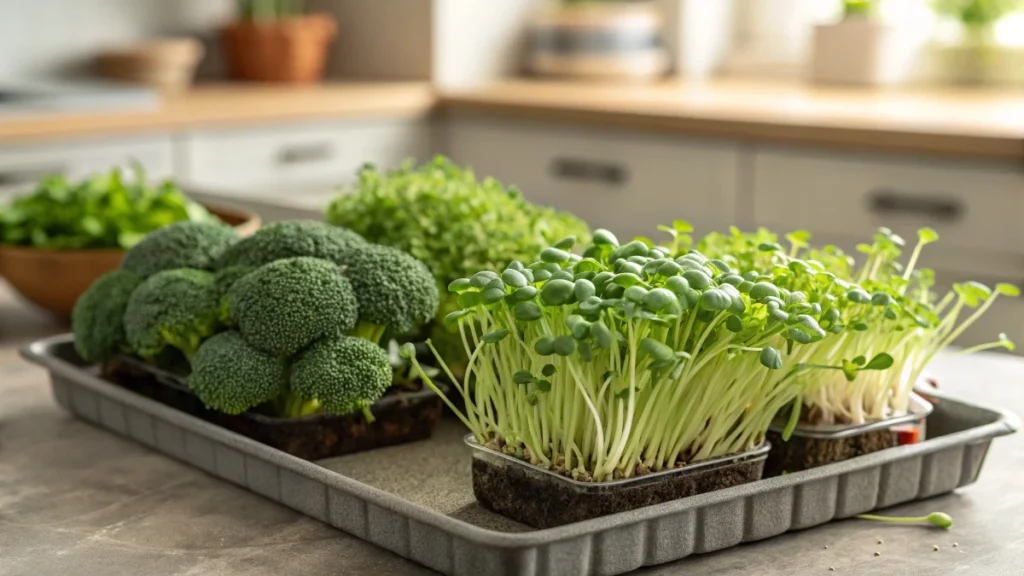
Some foods make a difference quietly, and microgreens fall into that category. I mean, it still surprises me how these tiny greens can hold so much nutrition in such a little space. If you’re trying to eat better without forcing yourself into diets you can’t maintain, microgreens fit naturally into the day.
A small handful brings vitamins, minerals and antioxidants your body uses for energy, immunity and repair.
They’re light, fresh, easy to grow and even easier to add to familiar meals. I’m not sure a simpler habit exists that gives this much back. You sprinkle them, mix them, taste them, and your health quietly shifts in the right direction.
What Makes Microgreens Different From Regular Vegetables
Microgreens are simply young plants that are harvested very early in their life. They are usually cut when they are only a few centimetres tall and just have their first true leaves. That early stage is where they are very different from a mature vegetable and also from sprouts.
Sprouts are soaked and germinated seeds. They grow in water or a very moist environment, often in jars or special sprouting trays. You usually eat the whole thing, including the seed and the root. Because they grow in warm and humid conditions and stay packed together, sprouts carry a higher risk of bacterial contamination if they are not handled well.
Microgreens grow in a shallow layer of growing medium such as soil mixes, coco fibre or special substrates. They need light to become green and to start making more nutrients. You only harvest the stem and leaf above the growing medium, and the roots stay behind in the tray. That simple difference already makes them safer and cleaner to eat compared to sprouts.
Compared to mature vegetables, microgreens are the same plant at a different age. Broccoli microgreens and a full head of broccoli come from the same seed. The difference is that the microgreen is harvested after a few days rather than a few weeks or months. At this early stage, the plant has concentrated a lot of nutrients from the seed into a very small body. That is why a small handful of microgreens can carry a similar or sometimes greater amount of vitamins and plant compounds than a big serving of the full-grown vegetable.
Another practical difference is how easy they are to grow. Many people struggle to grow big vegetables in small spaces or in changing seasons. Microgreens can be grown in balconies, on kitchen counters and even near a sunny window. Germination often starts in two or three days, and wide varieties are ready in five to ten days. You do not need garden skills to grow them, and you do not need much land. This makes microgreens an accessible way to bring very fresh, nutrient-dense greens into everyday meals.
From a health point of view, microgreens sit in a sweet spot. They carry the intense flavour and nutrition of the plant in a very tender form while avoiding most of the safety concerns linked to sprouts and the long growing time of full-sized vegetables.
Nutrient Density: Why Microgreens Deliver More In Less
When people ask why microgreens are good for you, the most honest answer is that they offer more nutrition in less food. The idea of nutrient density describes how many vitamins, minerals and plant compounds you get per gram of food. Microgreens score very high on this scale.
Research on a range of common microgreens found that they can contain around four to forty times more nutrients than their mature counterparts, depending on the variety. Red cabbage microgreens were shown to have about forty times more vitamin E and around six times more vitamin C than mature red cabbage. Cilantro microgreens carried roughly three times more beta carotene than full-grown cilantro. Some measurements of red cabbage microgreens found up to two hundred and sixty times more beta carotene than in mature cabbage.
This does not mean that mature vegetables are useless. It means that microgreens can act like a nutritional shortcut. A small serving can give a concentrated dose of vitamins and protective compounds that would normally require a much larger plate of salad or cooked vegetables.
For someone who struggles to eat enough vegetables or for parents trying to support children who dislike greens, this density matters. A spoonful or two of microgreens sprinkled over soup, eggs, dals, rice bowls or wraps can quietly lift the overall nutrient intake of the day. That allows microgreens to fit into normal meals rather than forcing a complete change in eating habits.
Nutrient density is also important for people with lower appetite such as older adults or those recovering from illness. When you cannot eat large volumes of food, each bite needs to work harder for you. Microgreens can help fill that gap with concentrated vitamins, minerals and active plant chemicals in a tender and easy-to-chew form.
🌿 Recommended Microgreens Supplies |
Vitamins, Minerals, Antioxidants And Plant Compounds In Microgreens
Microgreens are not just small leaves. They pack a wide range of vitamins, minerals and special plant compounds that support different parts of the body.
On the vitamin side, many microgreens are rich in vitamin C, vitamin E and vitamin K, along with carotenoids such as beta carotene and lutein. Vitamin C helps support the immune system and is involved in collagen formation, which affects skin, joints and blood vessels. Vitamin E is a fat-soluble antioxidant that helps protect cell membranes from damage. Vitamin K supports normal blood clotting and works with minerals like calcium to support bone health. Carotenoids such as beta carotene and lutein are known for their role in eye health and as precursors for vitamin A in the body.
Mineral content in microgreens is also impressive. Studies on brassica microgreens, such as cabbage, radish and broccoli, found that potassium was often the most abundant element, followed by phosphorus, calcium, magnesium and sodium. Potassium helps regulate blood pressure and fluid balance, magnesium is involved in hundreds of enzyme reactions, including nerve and muscle function, and calcium supports bones and teeth as well as muscle contraction. When you add small amounts of microgreens regularly to meals, you are adding a steady stream of these essential minerals.
Beyond basic vitamins and minerals, microgreens are rich in antioxidants and polyphenols. When your body breaks down food and responds to stress, it naturally produces unstable molecules known as free radicals. If these are not controlled, they can damage cells, proteins and DNA, a process called oxidative stress. Antioxidants from food step in to neutralize these molecules and limit the damage. Microgreens provide many of these antioxidants in concentrated form.
Different microgreens bring different strengths. Red cabbage microgreens are particularly high in vitamin C and vitamin E. Green daikon radish microgreens are very high in vitamin E. Cilantro, wasabi, basil, pea tendrils and amaranth microgreens contain beta carotene at levels comparable to foods like carrots and sweet potatoes. Buckwheat microgreens are not only a good source of plant protein but also offer flavonoids and carotenoids that support eye and heart health.
Many microgreens contain complex polyphenols and other phytonutrients that have been linked in early research to anti-inflammatory, anti-bacterial, and blood sugar-balancing effects. Because the young plant is in a rapid growth phase, it naturally concentrates many of these protective compounds to defend itself. When we eat microgreens raw and fresh, we benefit from that same package of protective chemistry.
Sulforaphane: The Special Compound In Broccoli Microgreens
One of the reasons broccoli microgreens attract so much attention is a compound called sulforaphane. This naturally occurring chemical is part of the defence system of cruciferous vegetables such as broccoli, cabbage, cauliflower and radish. In the body, sulforaphane activates pathways that support detoxification, antioxidant defence and cellular repair.
At a cell level, health depends on how well each cell can manage damage, communicate with neighbouring cells and repair its DNA. When that balance breaks down, the risk of chronic disease increases. Sulforaphane has been shown to stimulate internal antioxidant systems and support enzymes that neutralize toxins. It can influence how genes linked to inflammation and protection are switched on or off. In simple terms, it helps the cell handle stress better and maintain cleaner communication.
Because broccoli microgreens are harvested very young, they can contain higher levels of sulforaphane precursors compared to the mature vegetable. That makes a tablespoon or two of broccoli microgreens a very efficient way to bring this compound into your daily meals.
From a health perspective, sulforaphane is closely studied for its role in several areas.
It supports healthy aging by reducing chronic inflammation and oxidative stress, two of the major drivers of early wrinkles, stiff joints, low energy and many lifestyle-related disorders. No skin cream can compensate for internal inflammation. Supporting the internal environment with foods rich in sulforaphane works at the root level, where cells renew and repair.
It plays a role in cardiovascular support. The inner lining of blood vessels is made of delicate endothelial cells. High blood sugar, smoking, chronic stress and poor diet can inflame and bruise this lining, making it easier for plaque to build up. Sulforaphane can help reduce this inflammation and support normal function of the endothelial layer, which is valuable for anyone concerned about blood pressure, heart disease or kidney stress.
It is being explored for its potential in cancer prevention and as a supportive food during conventional treatment. Cruciferous vegetables have long been considered protective in this area. Concentrated forms such as broccoli microgreens bring that same family of compounds in a smaller, more targeted serving.
There is also growing interest in sulforaphane for brain and nerve-related conditions, including conditions on the autism spectrum. Gut health and DNA repair are both important in this space, and broccoli microgreens appear to support both by influencing the gut microbiome and cellular defence systems.
All of this does not mean broccoli microgreens are a magic cure. They are, however, a very meaningful way to add sulforaphane and other cruciferous compounds into an ordinary diet in a small, tasty serving.
How Microgreens Support Immunity, Energy And Everyday Wellness
Microgreens are good for you not only because they are rich in nutrients on paper, but because they fit into real daily life. They support immunity, energy and general wellness in a way that feels simple and sustainable.
A strong immune system depends on a constant supply of vitamins, minerals and plant compounds that build and guide immune cells. When meals are dominated by processed food, fried snacks and sugar, the body does not get what it needs to maintain this defence system. Over time, this can lower resistance to infections and slow recovery. Microgreens add back many of the missing pieces. Vitamin C, vitamin E, carotenoids and polyphenols in microgreens all contribute to a more resilient immune response.
For children, this is especially important. Modern lifestyles often include irregular meals, junk food and limited outdoor time. Small bodies that are still growing need more support, not less. Adding fenugreek, moong, radish or mixed microgreens to family meals is an easy way to bring better nutrition to the plate without starting a battle over food. When children are involved in growing microgreens at home, they are usually more willing to taste what they have nurtured. That simple habit can help shape a healthier relationship with vegetables and nutrition as they grow up.
From an energy point of view, microgreens provide vitamins and minerals that participate in energy production in the cells. B vitamins from the base diet work together with the vitamin C, vitamin E, iron, magnesium and other elements that microgreens provide. When cells have what they need to produce energy efficiently and when oxidative stress is kept under control, it is easier to feel steady rather than drained or sluggish.
Microgreens also support everyday wellness through their effect on inflammation and detoxification. Chronic low-grade inflammation is linked to tiredness, joint discomfort, brain fog and many long-term conditions. Antioxidants and plant compounds in microgreens help to calm this internal fire. Sulphur-rich microgreens such as broccoli and kale support the liver as it processes daily toxins from food, environment and medications.
In practical terms, microgreens allow you to upgrade what you already eat. A bowl of soup becomes more nourishing with a handful of broccoli or mustard microgreens on top. Scrambled eggs, omelettes, dals, lentil stews, grain bowls, salads, sandwiches and wraps all become more supportive for immunity and general health when you finish them with a layer of fresh young greens. You do not need to eat huge salads or make dramatic changes in order to benefit. A few spoonfuls of microgreens spread across your day can quietly lift the quality of your overall diet and support your body in doing what it is already designed to do, which is stay well.
Disease Prevention Potential Backed by Early Research
Microgreens are still a young area of nutrition research, yet the early findings are promising. What makes them especially interesting is how many different systems of the body they seem to influence. Since microgreens contain concentrated vitamins, minerals, antioxidants and unique plant compounds, they naturally support the body’s built-in defence pathways. When those pathways work well, the risk of long-term conditions tends to go down.
One of the areas most often discussed is heart health. The inner lining of the arteries is a very thin layer of endothelial cells. These cells get irritated easily when blood sugar stays high, when the diet is heavy in fats and refined foods, or when stress becomes chronic. Irritated endothelial cells are more likely to develop plaque buildup, which raises blood pressure and increases the risk of stroke or heart attack. Compounds present in cruciferous microgreens, especially sulforaphane, help calm this irritation and support the natural repair of the vessel lining. Some animal studies show improvements in triglycerides and bad cholesterol when diets are supplemented with microgreen extracts, and although human studies are still limited, the early direction is encouraging.
Equally important is the role microgreens may play in blood sugar balance. In laboratory experiments, fenugreek microgreens improved cellular sugar uptake by about twenty-five to forty-four percent. When cells draw sugar from the bloodstream more effectively, it can help keep blood sugar levels steadier. For people who are managing type 2 diabetes or trying to prevent it, foods that improve insulin sensitivity are valuable. Microgreens do not replace medication, but they complement the dietary side of diabetes care gently and naturally.
Antioxidant-rich foods have also been linked with better cognitive function and a lower risk of memory-related disorders over time. Vitamin E, vitamin C and carotenoids in microgreens help protect brain cells from oxidative stress, which is one of the triggers of age-related cognitive decline. While no single food prevents conditions such as Alzheimer’s, regular intake of antioxidants supports the environment in which brain cells function, making it easier for them to stay healthy for longer.
Another area of active research is the potential role of microgreens in cancer prevention. Polyphenols and sulforaphane found in cruciferous microgreens are being studied for their ability to influence gene expression related to inflammation, detoxification and cell growth. These compounds help the body neutralize harmful substances, support enzymes that process toxins, and improve communication pathways inside cells. When cells can repair themselves more effectively, and inflammation is kept under control, the risk of abnormal cell growth decreases. This does not mean microgreens are a cure, but they can support the internal systems that keep cell behaviour in balance.
There is also growing interest in how microgreens may support children and adults on the autism spectrum. Many specialists emphasize the connection between gut health and behavioural symptoms. Broccoli microgreens appear to support the microbiome while also providing nutrients linked to better cellular communication and DNA repair. Families who work on improving gut health often report improved behaviour and digestion, and microgreens are one of the foods being explored in that journey.
All of this is early but meaningful. Microgreens are not medicine, yet they work with the body’s natural defences. By improving antioxidant status, supporting detoxification pathways, strengthening cell repair processes and helping balance inflammation, they create an internal environment that is less likely to develop chronic disease. For most people, that alone is a strong reason to keep these young greens in everyday meals.
Support for Gut Health, Detoxification and Inflammation Control
Gut health is now recognized as a central piece of overall wellness. The gut influences digestion, immunity, nutrient absorption and even mood. Microgreens contribute to gut support in several ways. They provide fibre, antioxidants and plant compounds that help nourish beneficial gut bacteria. Young greens, especially cruciferous ones like broccoli and kale, contain sulphur-based compounds that support the growth of a healthier microbiome. A balanced gut environment makes digestion smoother and helps the body absorb nutrients more efficiently.
Detoxification is another area where microgreens offer gentle but powerful support. The liver works around the clock to process natural by-products of metabolism, environmental pollutants, additives from food and the by-products of medication. Sulphur-rich microgreens such as broccoli, kale and radish help activate enzymes involved in this detoxifying process. These enzymes make it easier for the liver to neutralize and remove harmful substances. When detoxification pathways are supported, it reduces the load on the liver and helps maintain better overall energy and clarity.
Inflammation is the thread that ties many modern health concerns together. Stress, lack of sleep, sugary foods, and sedentary habits all feed inflammation. Over time, it becomes a slow internal fire that affects joints, skin, digestion, blood vessels and even mood. The antioxidants and polyphenols in microgreens help put out this fire. By neutralizing free radicals and supporting the body’s own antioxidant production, microgreens create a calmer internal environment.
Compounds like sulforaphane work especially well in this area. They influence the pathways that regulate inflammation at a cellular level. When these pathways are balanced, cells function more efficiently. This affects everything from how quickly your muscles recover after exercise to how your skin looks and how well your immune system responds to daily challenges.
Many people notice that when they include microgreens regularly, bloating reduces, digestion feels smoother, and they experience fewer energy crashes. These small changes reflect the internal shifts toward reduced inflammation and better detoxification. Over time, these benefits compound, supporting long-term wellness naturally and sustainably.
Why Microgreens Help Kids, Picky Eaters and Busy Families
Feeding families healthy food can be challenging, especially when children are selective about what they eat. Microgreens fit beautifully into this situation because they offer a lot of nutrition in a small volume. A spoonful or two added to familiar dishes can lift the nutrient value without changing the taste significantly. For young children, the tender texture and tiny size make microgreens less intimidating than full-grown vegetables.
Another advantage is the simple act of growing them. Many parents find that when children take part in sowing seeds, spraying the tray with water and watching the greens pop up day by day, they become more curious about tasting what they grew. This hands-on connection often breaks the resistance that children feel toward leafy vegetables. Microgreens grow so quickly that children do not lose interest. A tray started on the weekend begins to sprout after two or three days and is usually ready to cut by the next weekend.
For busy families, microgreens are practical. They do not need washing, peeling or long cooking. They are ready to use straight from the tray. This makes them easy to add to sandwiches, wraps, soups, dals and even omelettes. Parents who struggle to get enough vegetables into their children’s meals often appreciate the silent nutritional upgrade that a small handful of microgreens can provide.
Microgreens also help parents set a positive example of healthy habits. Children tend to copy what they see. When they watch adults sprinkle microgreens over meals and enjoy them, they often follow. Over time, this creates a home environment where greens feel normal rather than forced.
Beyond children, adults with busy schedules also benefit. On days when cooking a full, balanced meal feels impossible, adding microgreens helps maintain nutritional support. They provide vitamins, minerals and antioxidants that the body needs for energy, immunity and mental clarity, even when the rest of the meal is simple. This practical flexibility is one of the reasons microgreens are becoming a staple in many households.
How Easy They Are to Grow at Home and Why That Matters for Health
One of the most appealing things about microgreens is how little effort they require. You do not need gardening knowledge, special equipment or large spaces. A shallow tray, a light growing mix, clean seeds and a small sunny spot are enough. Many people start with broccoli, mustard, fenugreek or radish because they germinate quickly and are forgiving even for beginners.
Germination usually begins within two or three days. The tray stays covered until the seeds sprout and push upward. Once the cover is removed and the sprouts get light, they turn green and grow fast. Most varieties are ready to harvest in five to seven days. This quick cycle gives you fresh greens every week without waiting for long seasons or dealing with pests and weather issues.
Growing medium does matter. Early comparisons found that trays grown in soil mixed with manure produced the most nutritious microgreens and the highest yield. Other substrates like coco fibre, tissue or jute can also work well, but soil plus organic matter tends to offer a broader range of minerals. This is helpful if the aim is to get the richest possible nutrient profile.
What matters most for health is freshness. Microgreens eaten straight after harvest retain more vitamins and antioxidants. Because you cut only what you need, food waste is minimal. For people looking for chemical-free produce, growing at home gives complete control over cleanliness and quality. There is no need for pesticides, and irrigation is as simple as misting or gentle watering.
Another health benefit is the sense of involvement. Many people find that nurturing a tray of microgreens becomes a calming daily habit. Spending a few minutes checking on the tray, watering lightly and watching new growth can reduce stress and encourage mindfulness. These small routines support emotional well-being as much as the greens support physical health.
Home-grown microgreens bring nutritional confidence. You know exactly where they came from, how they were grown and how fresh they are. For anyone trying to improve diet quality without complicating life, this simple growing method offers a very practical solution.
Simple Ways to Use Microgreens Daily
Microgreens blend into everyday meals without effort. Because they have a tender texture and fresh flavour, they work well as a finishing touch. Adding them at the end preserves their nutrients, which can be sensitive to heat.
A handful on top of soups brings colour and a gentle bite. Sprinkling them over scrambled eggs or omelettes lifts the overall nutrition of a breakfast that feels familiar. They fit naturally into salads, sandwiches and wraps, adding freshness without changing the meal. Many people stir microgreens into lentils, dals or rice bowls just before serving. The warmth gently softens them without destroying their vitamins.
Smoothies are another option. A small amount of microgreens blends easily with fruits and yogurt. Even children who resist greens often do not notice a mild microgreen in a smoothie. Broccoli or kale microgreens can add a slight bitterness, so they pair well with sweeter fruits.
Because microgreens are harvested fresh, their flavour is more intense than that of mature vegetables. Radish microgreens are peppery and bright. Mustard microgreens have a sharp hint like the mature mustard leaf. Broccoli microgreens are mild and slightly earthy. This variety makes it easy to match microgreens to the meal.
The goal is not to replace all vegetables with microgreens. Instead, they are a simple upgrade. A spoonful here and a pinch there can gradually improve the nutrient quality of breakfast, lunch and dinner. Over time, these small choices add up and support a healthier routine without creating pressure or complexity.
Why Microgreens Fit Into Real Life: A Small Habit With A Big Impact
Healthy habits usually fail when they require too much effort or feel disconnected from everyday routines. Microgreens avoid that problem entirely. They slip naturally into meals without forcing major changes. This is one of the reasons people stick with them long term. Instead of “starting a new diet” or following strict rules, you simply add a spoonful of fresh greens on top of what you already eat.
Microgreens work because they provide a meaningful amount of vitamins, minerals and plant compounds in such a small serving. When nutrition is concentrated, you do not need to eat large bowls of vegetables to feel the benefits. This makes microgreens practical for busy mornings, rushed lunches or dinners where the plate may not be perfectly balanced. A sprinkling of broccoli, mustard or mixed greens enriches the meal instantly.
This small habit also supports the body’s own repair processes. Every day, your cells handle stress, metabolism and environmental exposure. Over time, these demands create wear and tear. When meals regularly include antioxidant-rich foods, the body manages this stress more smoothly. That does not require complicated planning. It simply requires consistency, and microgreens make consistency much easier.
Another reason microgreens work in real life is their flexibility. You can add them to traditional foods like dals, khichdi, curries, chapati rolls, omelettes, soups, or stir-fries. You can use them in Western-style meals such as salads, wraps, pasta or grain bowls. You can even mix them with comfort foods without feeling like you are restricting yourself. This adaptability allows people to improve their diet while still enjoying their favourite flavours.
For families who want healthier meals but lack time, microgreens act like a nutritional safety net. Even on days when food is simple, the meals remain nutrient-rich. Parents can add microgreens quietly to dishes without creating resistance from children. Older adults who struggle with chewing or appetite can also benefit because microgreens are tender and easy to eat.
People often underestimate how much emotional ease matters in health. When something feels simple, supportive and non-stressful, it becomes part of daily life naturally. Microgreens sit exactly in that space. They do not demand extra skills. They do not require long hours. They do not complicate the kitchen. They simply add value. And because they grow so quickly and look vibrant on the tray, many people feel more motivated to include them each day.
Microgreens create a sense of progress without pressure. Each tray you grow becomes a gentle reminder that taking care of yourself can be enjoyable and uncomplicated. That mindset shift is as valuable as the nutrients themselves. When health feels manageable, consistency follows.
FAQs
Are microgreens healthier than regular vegetables?
Microgreens often contain higher levels of vitamins, minerals and antioxidants compared to their mature forms. Some varieties offer four to forty times more nutrients by weight. They do not replace regular vegetables but provide a concentrated dose in a small portion, especially useful for people who struggle to eat enough produce.
How do microgreens support immunity?
They offer vitamin C, vitamin E, carotenoids, polyphenols and minerals that help build and guide immune cells. Adding even a small amount regularly strengthens the body’s defence system and supports faster recovery from daily stress.
Can children eat microgreens?
Yes. They are safe for children and often more acceptable because of their mild taste and tender texture. Kids who grow microgreens themselves tend to enjoy eating them more willingly.
Are microgreens safe to eat raw?
Microgreens grown in clean trays and harvested above the soil line are generally safe to eat raw. They carry a lower contamination risk than sprouts because the roots stay in the tray, and the greens grow in open air and light.
How much should I eat daily?
A tablespoon or two added to meals once or twice a day is enough to offer noticeable nutritional benefits. Because microgreens are concentrated, you do not need to eat large quantities.
Which microgreens are the most nutritious?
Broccoli, red cabbage, radish, kale, mustard, fenugreek and cilantro microgreens are among the most nutrient-dense. Broccoli microgreens are particularly valued for sulforaphane, a compound linked to detoxification, inflammation control and cellular repair.
Do microgreens help with blood sugar?
Fenugreek microgreens have shown an increase in cellular sugar uptake by about twenty-five to forty-four percent in laboratory experiments. This suggests they may support better blood sugar balance when included in a healthy diet.
Are microgreens good for skin and anti-aging?
Yes. Antioxidants such as vitamin C, vitamin E and carotenoids help reduce oxidative stress that contributes to wrinkles and dull skin. They support collagen formation and protect cells from environmental damage.
How long do microgreens stay fresh after harvesting?
Freshly cut microgreens usually stay crisp for three to five days when stored in a dry, airtight container in the refrigerator. Harvesting them directly from the tray keeps them at their peak nutritional value.