
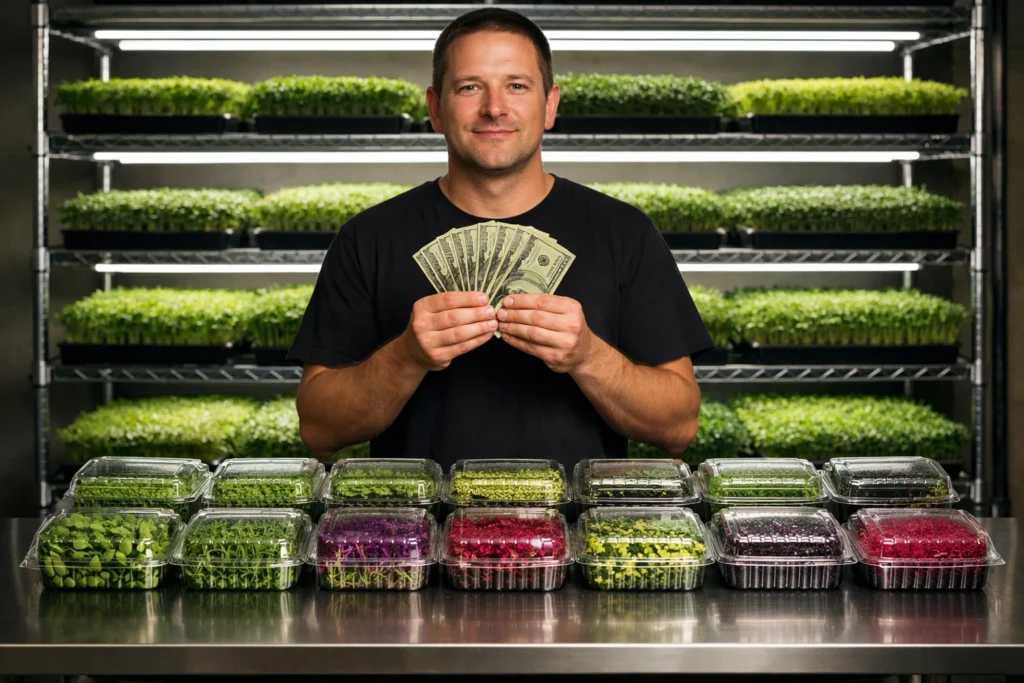
Profit in microgreens doesn’t come from “the fanciest” crop. It comes from a simple combo: fast cycles, strong demand, low loss, and a price customers happily pay again next week. In 2026, the growers who win are the ones who treat microgreens like a repeatable system, not a one-time harvest.
If you’re growing indoors, you’re selling consistency: clean flavor, fresh cut, reliable weight, and packaging that looks like it belongs on a shelf. The right varieties make that easier. The wrong ones turn your racks into stress.
The Most Profitable Microgreens to Grow Indoors in 2026
1. Sunflower Microgreens
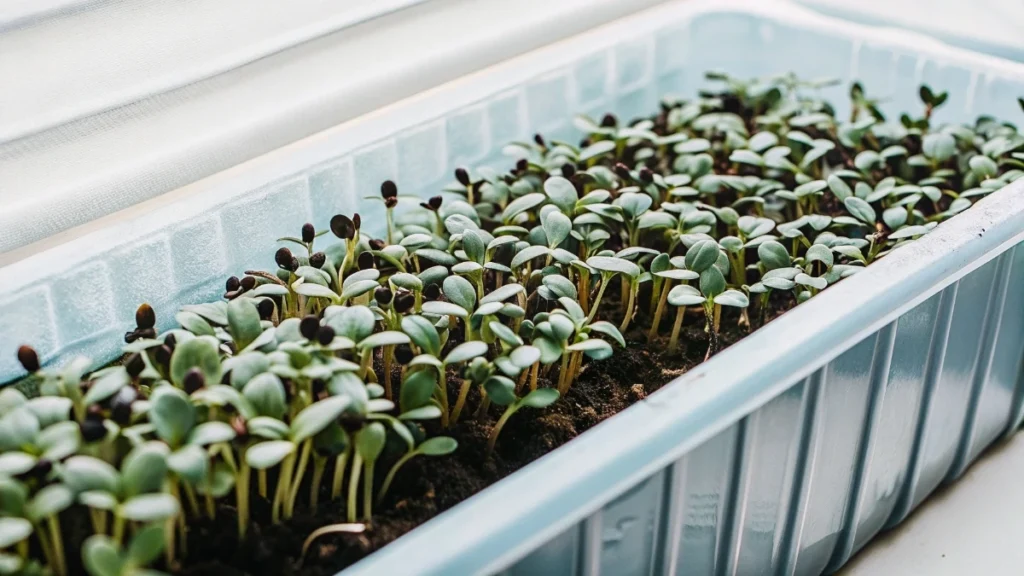
Sunflower is profitable because it gives real weight fast, and customers use it like food. In a standard 10×20 indoor tray, seeding is usually 8 to 10 oz, harvest is often 8 to 14 days, and sellable yield commonly lands around 12 to 20 oz.
Seed cost typically runs $1.00 to $2.50 per tray. Add the rest of your real costs,s and sunflower still holds up well: medium $0.75 to $1.75, utilities $0.20 to $0.70, cleaning and consumables $0.10 to $0.30, labor $4.00 to $8.50, plus overhead and waste allowance $0.75 to $2.50. Packaging and delivery allocation add about $0.90 to $3.50 wholesale, or roughly $1.80 to $6.00 retail if you pack into 2-oz clamshells. Total cost often lands around $8 to $20 wholesale or $9 to $24 retail per tray.
Revenue commonly falls around $14 to $40 wholesale or $24 to $70 retail, depending on yield and your price. After all costs, realistic net profit often ranges from negative $6 up to $32 per tray wholesale, or $2 up to $60 per tray retail, with the low end showing what happens when yield dips or labor runs long.
2. Pea Shoots
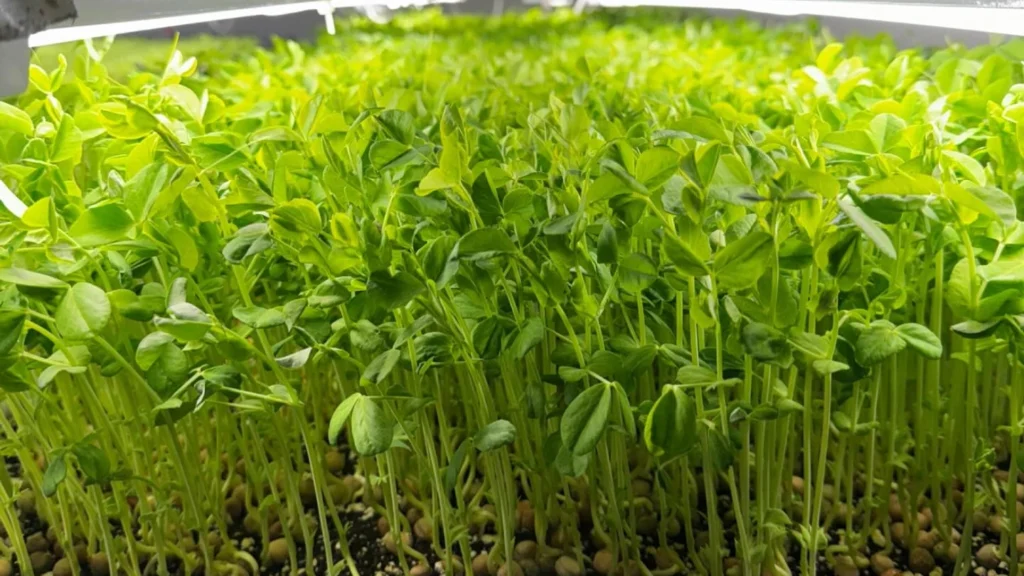
Pea shoots sell steadily because people recognize them, and they look generous in a clamshell. In a 10×20 tray, the seeding rate is heavier at 10 to 14 oz, harvest often lands around 8 to 14 days, and yield commonly sits around 12 to 20 oz.
Seed cost is usually $1.60 to $4.35 per tray. Other costs are similar to sunflower: medium $0.75 to $1.75, utilities $0.20 to $0.70, cleaning $0.10 to $0.30, labor $4.00 to $8.50, plus overhead and waste allowance $0.75 to $2.50. Packaging and delivery add about $0.90 to $3.50 wholesale or roughly $1.80 to $6.00 retail. Total cost often lands around $8 to $22 wholesale or $10 to $26 retail per tray.
Typical revenue ranges are around $12 to $38 wholesale or $24 to $70 retail. After including all costs, net profit often ranges from negative $10 up to $29 per tray wholesale, or around $0 up to $59 per tray retail, with peas rewarding you most when your yield is high and sell-through is quick.
3. Radish Microgreens
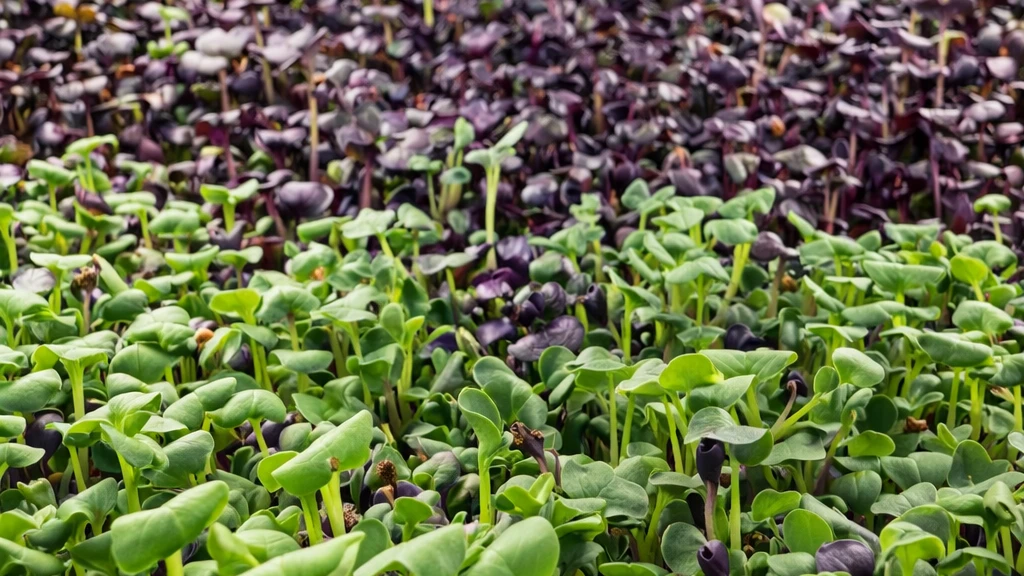
Radish is a strong cash flow crop because it’s fast and sells well by the ounce due to color and bite. In a 10×20 tray, seeding is usually 0.8 to 1.2 oz, harvest often hits 6 to 10 days, and yield commonly lands around 8 to 14 oz.
Seed cost per tray is usually low at $0.30 to $0.90, since the sow rate is low. Add medium $0.75 to $1.75, utilities $0.20 to $0.70, cleaning $0.10 to $0.30, labor $4.00 to $8.50, plus overhead and waste allowance $0.75 to $2.50. Packaging and delivery add about $0.90 to $3.50 wholesale, or $1.20 to $4.20 retail, depending on how many 2-oz packs you fill. Total cost often lands around $7 to $18 wholesale or $8 to $20 retail per tray.
Revenue commonly lands around $14 to $48 wholesale or $20 to $63 retail. After all costs, net profit often ranges from negative $4 up to $41 per tray wholesale, or $1 up to $55 per tray retail, especially when quality is consistent, and you are not discounting.
🌿 Recommended Microgreens Supplies |
4. Broccoli Microgreens
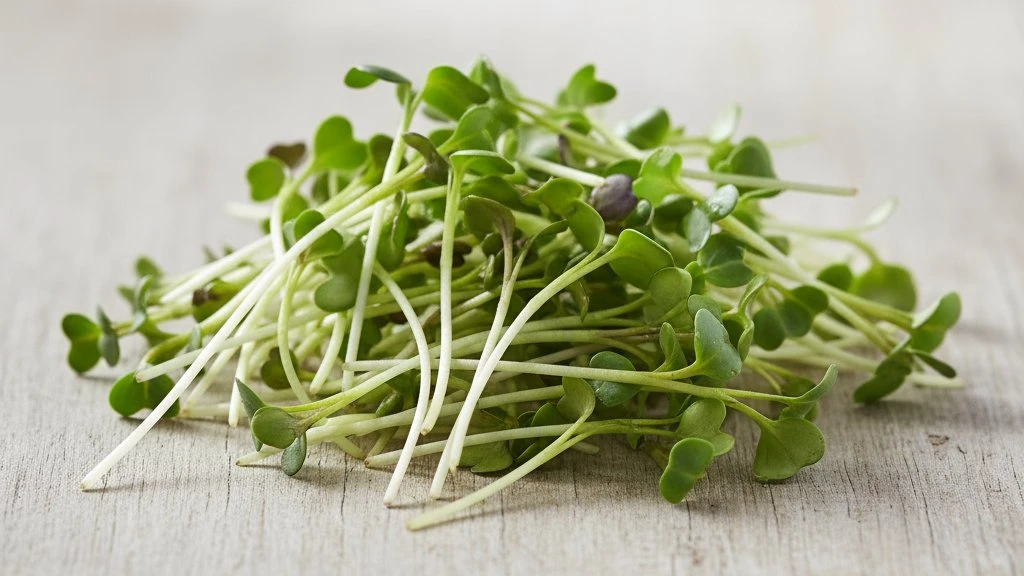
Broccoli sells because it fits the everyday wellness buyer, but yields are usually lighter, so efficiency matters. In a 10×20 tray, seeding is often 0.8 to 1.2 oz, harvest is usually 8 to 14 days, and yield commonly lands around 5 to 9 oz.
Seed cost tends to be $0.25 to $0.75 per tray. Add medium $0.75 to $1.75, utilities $0.20 to $0.70, cleaning $0.10 to $0.30, labor $4.00 to $8.50, plus overhead and waste allowance $0.75 to $2.50. With packaging and delivery, the total cost often lands around $7 to $18 wholesale or $7 to $19 retail per tray.
Revenue often lands around $8 to $27 wholesale or $12.50 to $36 retail. After all costs, net profit often ranges from negative $11 up to $20 per tray wholesale, or negative $6 up to $28 per tray retail, which is why broccoli performs best in bundles, subscriptions, and mix packs.
5. Mustard Wasabi Microgreens

Mustard earns well when customers want flavor, because it supports strong pricing per ounce even with smaller yields. In a 10×20 tray, seeding is often 0.5 to 0.9 oz, harvest commonly hits 7 to 12 days, and yield usually lands around 4 to 7 oz.
Seed cost is usually tiny at $0.13 to $0.45 per tray. Add medium $0.75 to $1.75, utilities $0.20 to $0.70, cleaning $0.10 to $0.30, labor $4.00 to $8.50, plus overhead and waste allowance $0.75 to $2.50. Packaging and delivery push the total cost to roughly $7 to $18 wholesale or $7 to $18 retail per tray.
Revenue often falls around $9 to $31 wholesale or $12 to $35 retail. After all costs, net profit often ranges from negative $9 up to $24 per tray wholesale, or negative $5 up to $28 per tray retail, with mustard becoming far steadier when you sell it as a premium piece in spicy mixes rather than relying on it alone.
🌿 Recommended Microgreens Supplies |
6. Amaranth microgreens
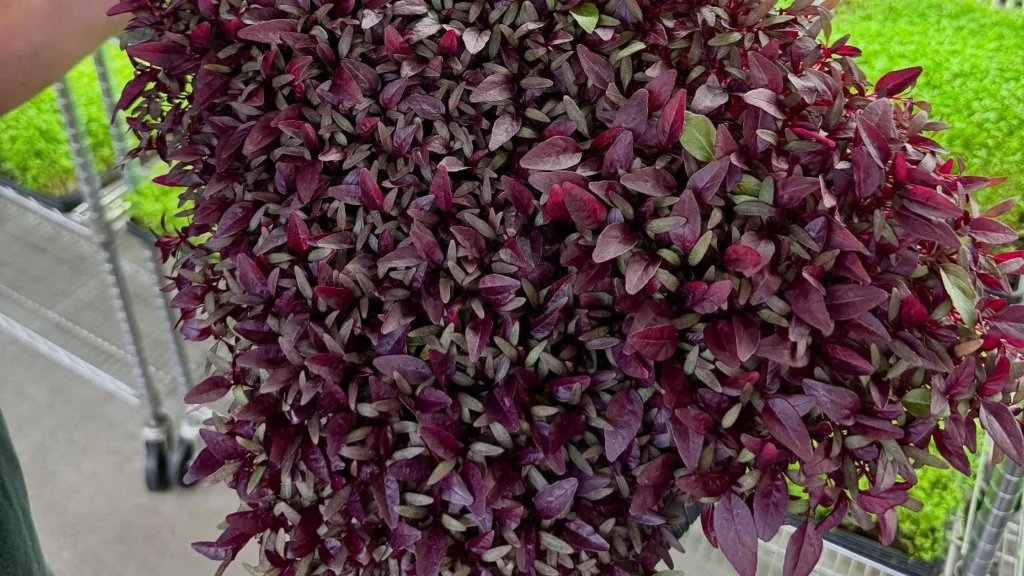
Amaranth is a premium-looking crop that sells on color. Those magenta stems photograph well, stand out in mixes, and often move faster at markets because they look special even before the buyer tastes them. In a standard 10×20 indoor tray, seeding is usually 0.3 to 0.6 oz, harvest often lands around 10 to 16 days, and sellable yield commonly falls around 3.5 to 7 oz.
Seed cost is usually higher per ounce than common greens, but the sow rate is light, so seed cost per tray often lands around $0.60 to $2.50. Add the full cost stack: medium $0.75 to $1.75, utilities $0.20 to $0.70, cleaning $0.10 to $0.30, labor $4.00 to $9.50, since amaranth often needs a bit more attention, plus overhead and waste allowance $0.75 to $2.50. Total cost usually lands around $7 to $19 wholesale or $7.50 to $20 retail, depending on how you pack it.
Revenue is usually strong per ounce because it’s treated as a specialty item. Wholesale commonly lands around $40 to $80 per l,b and retail often sits around $6 to $11 for a 2-oz clamshell when quality is consistent. After all costs, net profit often ranges from negative $8 up to $22 per tray wholesale, or negative $4 up to $26 per tray retail, with the best results coming when you sell it as a premium mix component instead of relying on it alone.
7. Cilantro Microgreens
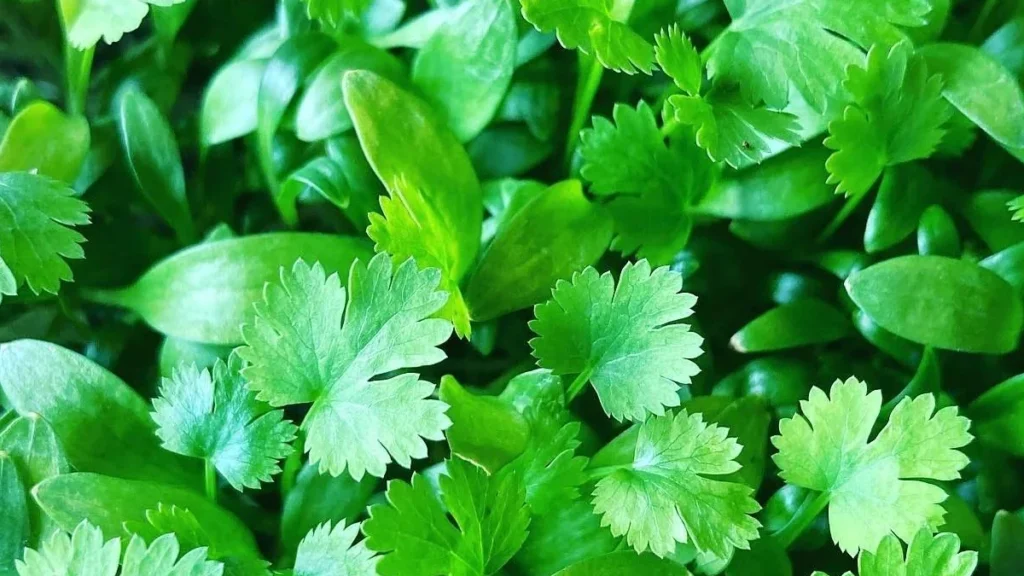
Cilantro can be a high-value crop when you have steady buyers, especially restaurants, but it is not the easiest for beginners because it usually takes longer than fast brassicas. In a 10×20 tray, seeding is often 1.0 to 2.0 oz, harvest commonly lands around 18 to 28 days, and yield usually falls around 4 to 8 oz, depending on density and how even your stand comes in.
Cilantro seed can be pricey, so the seed cost per tray often lands around $1.50 to $6.00. Add medium $0.75 to $1.75, utilities $0.30 to $1.20 because it sits under lights longer, cleaning $0.10 to $0.30, labor $5.00 to $11.00, plus overhead and waste allowance $0.75 to $3.50. Total cost often lands around $9 to $24 wholesale or $10 to $26 retail, mainly because time under lights and labor eat margin.
Cilantro can still pay off when priced correctly. Wholesale often lands around $40 to $90 per lb, and retail commonly sells around $6 to $12 for 2 oz when the aroma is strong, andthe leaves are clean. After all costs, net profit often ranges from negative $10 up to $20 per tray wholesale, or negative $6 up to $26 per tray retail, and it becomes far more reliable when you already have repeat orders lined up.
8. Arugula Microgreens
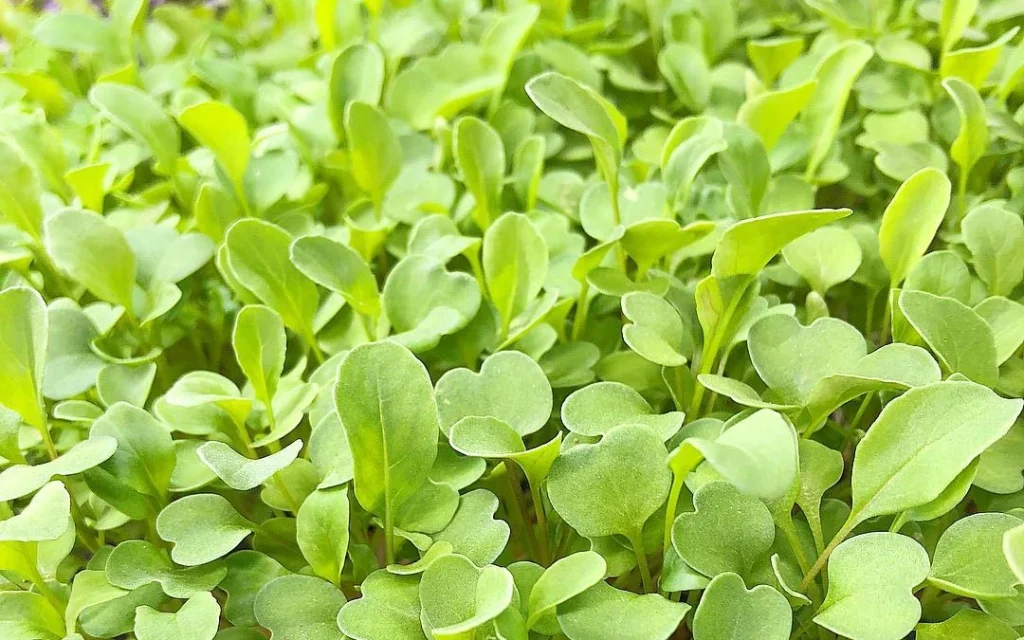
Arugula is a profitable “grown-up flavor” crop. It has a peppery bite that chefs like, and it sells well to home buyers who want something more interesting than mild greens. In a 10×20 tray, seeding is often 0.7 to 1.3 oz, harvest commonly lands around 10 to 16 days, and yield often falls around 5 to 10 oz.
Seed cost per tray is usually around $0.60 to $2.00, depending on your seed price and sow rate. Add medium $0.75 to $1.75, utilities $0.20 to $0.70, cleaning $0.10 to $0.30, labor $4.00 to $9.00, plus overhead and waste allowance $0.75 to $2.50. Total cost often lands around $7 to $19 wholesale or $7.50 to $20 retail, with retail packaging costs rising if you pack into multiple small clamshells.
Wholesale arugula often sells around $30 to $70 per lb, and retail commonly lands around $5 to $10 for 2 oz when leaves are dry, crisp, and not bruised. After all costs, net profit often ranges from negative $6 up to $26 per tray wholesale, or negative $3 up to $34 per tray retail, especially when you use arugula to lift the value of a “spicy blend” pack.
9. Basil Microgreens
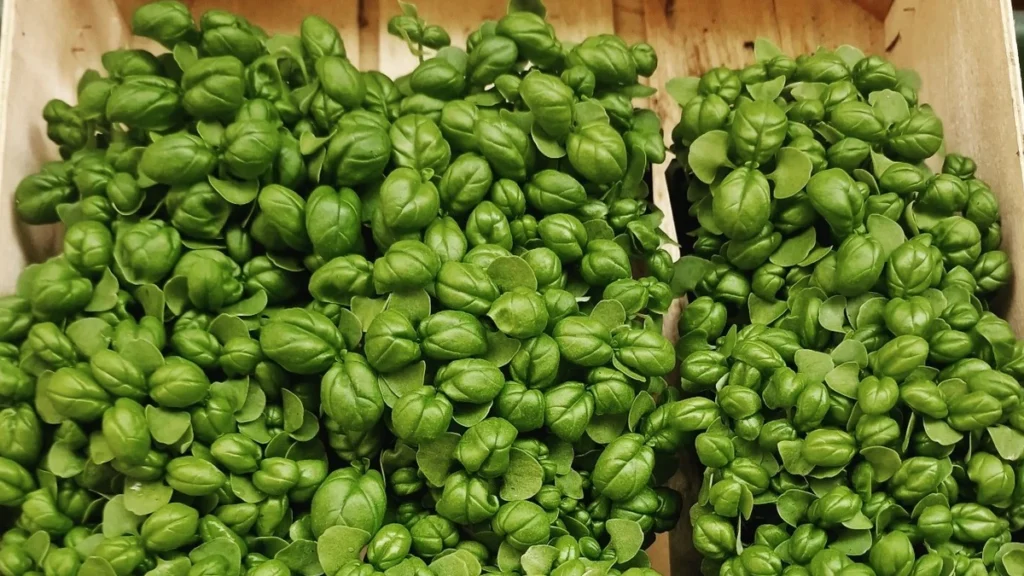
Basil microgreens can command premium pricing, but they are usually more sensitive and can be slower than fast growers. They shine when your market values aroma, and you can deliver consistent quality without damping off or weak stands. In a 10×20 tray, seeding is often 0.4 to 0.9 oz, harvest commonly lands around 16 to 25 days, and yield often falls around 3 to 7 oz.
Seed cost per tray is often $1.00 to $4.50 because basil seed can be expensive, and germination needs care. Add medium $0.75 to $1.75, utilities $0.30 to $1.10, cleaning $0.10 to $0.30, labor $5.00 to $12.00, plus overhead and waste allowance $0.75 to $3.50. Total cost often lands around $9 to $26 wholesale or $10 to $28 retail, with cost rising if you do extra sorting or careful packing to avoid bruising.
Selling prices can be high. Wholesale basil microgreens often land around $60 to $120 per lb, and retail commonly lands around $7 to $14 for 2 oz when the aroma is strong, and the product looks premium. After all costs, net profit often ranges from negative $12 up to $18 per tray wholesale, or negative $8 up to $24 per tray retail, and it becomes much more reliable when you sell to chefs who specifically request basil.
10. Kohlrabi Microgreens (purple)
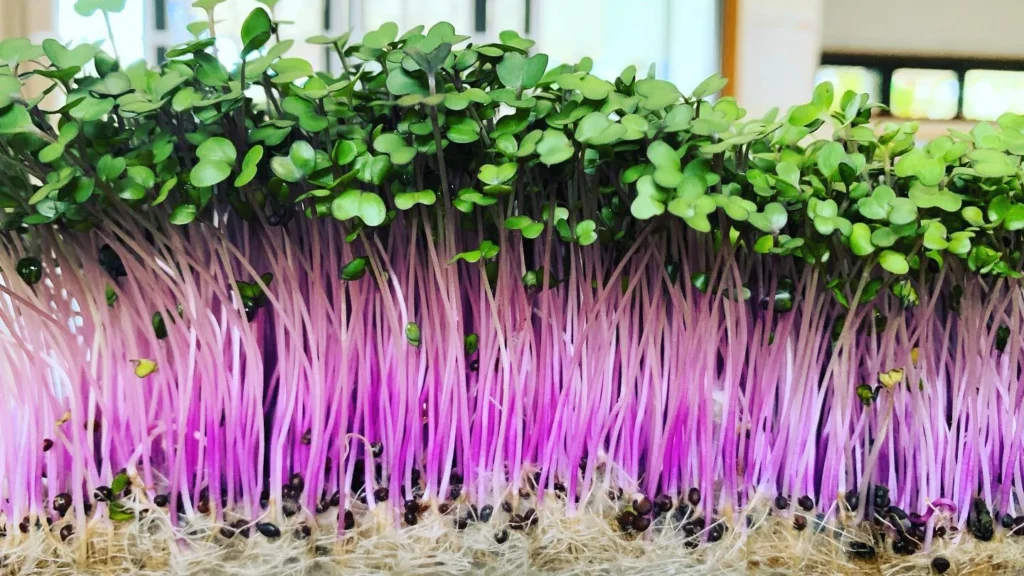
Purple kohlrabi is a strong “profit-friendly” choice because it grows like a brassica but sells like a premium item thanks to its color. It also fits well in mixes with broccoli and radish, letting you create a higher value pack without adding much complexity. In a 10×20 tray, seeding is often 0.8 to 1.2 oz, harvest commonly lands around 8 to 12 days, and yield often falls around 6 to 10 oz.
Seed cost per tray often lands around $0.80 to $2.50, depending on seed pricing. Add medium $0.75 to $1.75, utilities $0.20 to $0.70, cleaning $0.10 to $0.30, labor $4.00 to $8.50, plus overhead and waste allowance $0.75 to $2.50. Total cost often lands around $7 to $18 wholesale or $7.50 to $20 retail, and it usually stays stable because kohlrabi is not as finicky as the herbs.
Wholesale purple kohlrabi often lands around $35 to $80 per lb, and retail commonly sells around $5 to $10 for 2 oz when the color is bright and the stems are crisp. After all costs, net profit often ranges from negative $5 up to $28 per tray wholesale, or negative $2 up to $36 per tray retail, with the best outcome when you market it as a colorful premium green or include it in a signature blend.