
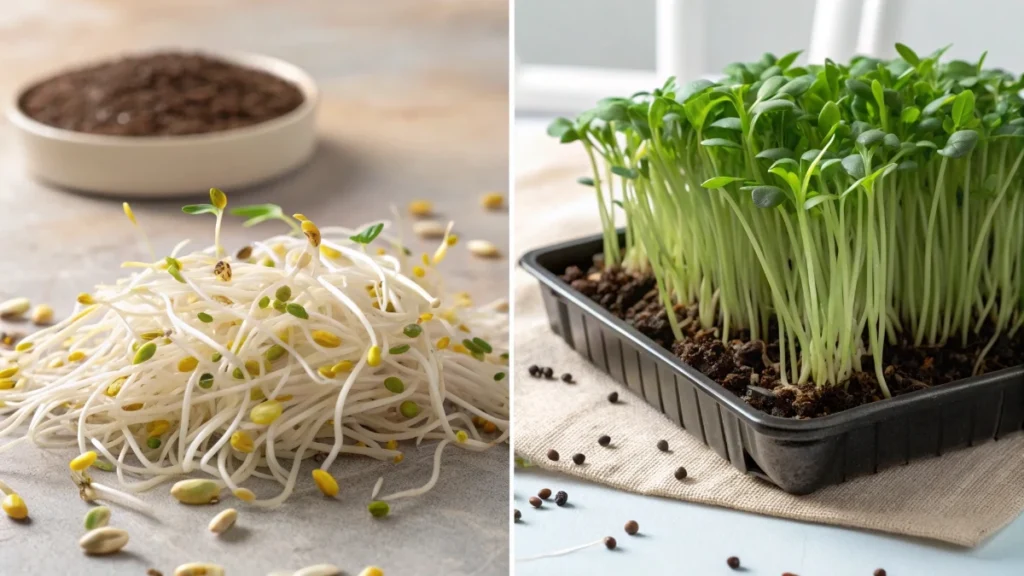
When you look at a plate sprinkled with tiny greens, it can be hard to tell what you are really getting. Both microgreens and sprouts are small, fresh and full of life, and both are promoted as nutrient rich foods. It makes sense to ask a simple question that many people type into search bars every day
are microgreens healthier than sprouts.
To answer that honestly, you need to look beyond appearances. They are grown in different ways, harvested at different stages and used differently in the kitchen. All of that affects their nutrition, their safety and how they fit into your daily meals. Once you understand those differences, it becomes much easier to decide which one deserves more space on your plate or in your growing setup at home.
Quick Verdict For Are Microgreens Healthier Than Sprouts
If you only want the short answer
For most people focusing on vitamins, antioxidants and overall nutrient density per bite, microgreens usually come out ahead. They are young plants grown in a medium and harvested after their first true leaves appear, and research has shown that some types can contain up to forty times more nutrients than the mature plant they grow into. That means a small handful can deliver a surprisingly concentrated amount of certain vitamins and helpful plant compounds.
Sprouts still deserve serious respect. They are especially valued for their natural enzyme activity, which can support digestion and gut health, along with useful plant based protein, especially from legumes like lentils and mung beans. Sprouts also bring vitamin C, some B vitamins and fiber to your diet.
So in simple terms
microgreens usually win on nutrient density and antioxidant content, while sprouts stand out for digestive support, speed of growth and ease of use for plant based eaters. The good news is that you do not really have to choose one or the other. You can use each for what it does best.
What Are Sprouts
How Sprouts Grow
Sprouts are the first stage of life for a seed. You soak seeds such as alfalfa, mung beans or lentils in clean water so they can wake up and begin to grow. After soaking, they are kept moist in a jar or similar container with good drainage and airflow. There is no soil or growing medium involved.
Within about two to five days the seed has pushed out a little root and a tender shoot. At this early stage you eat the entire thing
the softened seed, the root and the new sprout. Because you are eating the whole germinated seed, you get a slightly different nutritional profile than you would from the later plant.
Taste, Texture and Everyday Use
Sprouts have a very mild flavor. Many people describe them as fresh, slightly grassy or nutty, but never overwhelming. The texture is soft yet crunchy because of the water content and the tender shoot.
That neutral taste makes sprouts easy to add into many familiar dishes without changing the flavor in a big way. People often toss them into salads, tuck them into sandwiches or wraps, or add them at the end of a stir fry for slight crunch. Since they grow so quickly, they are a convenient way to add fresh plant food to meals even when you do not have access to a garden.
Key Nutrients in Sprouts
When seeds sprout, a lot happens inside them. Stored compounds in the dry seed are activated and converted into forms the young plant can use. For you, that means
- Enzymes
Sprouts are known for their natural enzyme content. These enzymes help the plant break down stored starches and proteins as it grows. When you eat fresh sprouts, you also take in some of this enzyme activity, which may help your body handle certain foods more comfortably and support a healthy gut environment. - Protein
Sprouts from legumes such as lentils, chickpeas and mung beans can provide a helpful amount of plant based protein relative to their size. For someone reducing animal protein or building more plant forward meals, these sprouts can be an easy add on. - Vitamins and fiber
Sprouts supply vitamin C and certain B vitamins that support energy metabolism and immune function. They also add fiber, which supports regular digestion and helps you feel satisfied after a meal. Because people often pile sprouts generously on a salad or sandwich, the overall contribution of fiber can be meaningful.
In short, sprouts give you a combination of enzymes, protein, vitamins and fiber in a form that is easy to grow and easy to eat.
What Are Microgreens
How Microgreens Grow
Microgreens are the next stage of growth after sprouting. Instead of stopping at the first sign of a shoot, you allow the young plant to grow in a shallow tray filled with soil or another growing medium. Seeds are scattered densely over the surface, lightly covered or pressed in, then kept moist.
They need light, either from a sunny window or a grow light, to grow well. Over the next seven to twenty one days the plants develop their first true leaves. At this stage they are cut just above the soil line with scissors and eaten fresh. You only eat the stem and leaves, not the seed and roots.
Common varieties include kale, arugula, radish, broccoli, beet and sunflower greens. Each type has its own color, leaf shape and nutrient pattern.
Taste, Texture and Presentation
Microgreens are leafy and crisp, more like a tiny version of a salad green than a sprout. Their flavor is more intense than sprouts because the plant has had more time to develop its natural oils and compounds.
For example
radish microgreens taste sharp and peppery
sunflower microgreens taste nutty and slightly sweet
kale microgreens taste earthy and similar to mature kale but gentler
Because they come in bright greens, purples and reds, microgreens instantly make a plate look more alive. You often see them sprinkled over grain bowls, avocado toast, soups or main dishes in restaurants. At home, they can turn a very simple meal into something that feels more special without much effort.
Key Nutrients in Microgreens
Microgreens are known for having a very high concentration of nutrients relative to their size. Research on different varieties has shown that some microgreens can contain up to forty times more vitamins and beneficial plant compounds compared with the full grown vegetable from the same seed. That does not mean every type hits that number, but it shows how concentrated this growth stage can be.
Here are some of the main nutritional points
- Vitamins
Many microgreens are rich in vitamin C, vitamin E and vitamin K.
Vitamin C supports immune health, skin and tissue repair.
Vitamin E contributes to cell protection.
Vitamin K plays an important role in bone health and normal blood clotting. - Antioxidants and plant compounds
Microgreens contain a range of plant based compounds often called phytonutrients. These include various carotenoids and other antioxidants that help your body handle oxidative stress. That process is linked to long term health of the heart, blood vessels, eyes and many other systems. - Fiber and low calorie density
Even though they are tiny, microgreens still provide fiber and volume with very few calories. That makes them a smart way to enrich a meal for someone watching their weight or trying to get more nutrients without eating huge portions.
Because a small handful of microgreens can provide a significant amount of vitamins and antioxidants, they are often described as a compact way to upgrade the nutritional quality of your meals.
Nutritional Comparison
Sprouts vs Microgreens
When you ask are microgreens healthier than sprouts, you are really asking about how all of these details work together in real life. Both foods support health but in slightly different ways.
Vitamins and Minerals
Microgreens usually have the edge when it comes to vitamin and mineral density. Studies have found that certain microgreens can contain up to forty times more vitamins and helpful plant compounds than the mature version of that vegetable. Since you often eat them in small amounts on top of meals, that concentrated content matters.
Sprouts still contribute vitamins, especially vitamin C and some B vitamins, but the overall concentration per gram is often lower than what has been measured in microgreens. People tend to eat sprouts in larger handfuls though, which can partly balance that out in everyday meals.
Protein, Fiber and Fullness
If you focus on plant based protein, sprouts from legumes are a very practical choice. They pack more protein per bite than leafy microgreens and are easy to heap into a salad or bowl. That helps support muscle maintenance and keeps you satisfied between meals.
Both sprouts and microgreens contain fiber, which supports digestion and slows down the absorption of sugars from a meal. Because sprouts are often used more generously, they can make a visible difference in how filling a dish feels. Microgreens contribute a gentler amount of fiber alongside their vitamin content.
Enzymes and Digestive Comfort
One of the unique strengths of sprouts is their enzyme activity. During sprouting, the seed activates enzymes to break down stored starches and proteins so that the young plant can grow. When you eat fresh sprouts, you get some of that enzyme activity too. Many people feel that this makes certain foods easier to digest and supports a healthier gut environment.
Microgreens, harvested later and grown in a medium, do not have the same reputation for enzyme levels. Their main benefits for digestion come from fiber and the overall improvement in diet quality when you add more fresh plant foods.
Antioxidants and Long Term Protection
Microgreens have a clear advantage when it comes to antioxidants and plant compounds linked with protection against oxidative stress. Their concentrated levels of carotenoids and other phytonutrients support cell health throughout the body. This can play a supporting role in heart health, healthy aging and normal immune function as part of a balanced lifestyle.
Sprouts also contain protective compounds, especially when you look at cruciferous sprouts like broccoli, but the research attention on extremely concentrated antioxidant levels has largely focused on microgreens.
What Real Portions Look Like
The last piece of the puzzle is how much you actually eat. Microgreens have strong flavors, so people often sprinkle them as a topping rather than building an entire salad out of them. Sprouts are milder, so they can be added by the handful without overpowering a dish.
In practice, you might eat a small pinch of microgreens with each bite of a meal but a large mound of sprouts in a salad or wrap. That means the total nutrient intake from each food depends on your habits, not only on lab measurements.
Taken together, the picture is clear. Microgreens usually win when you look at nutrient density per gram, especially for vitamins and antioxidants. Sprouts stand out for enzymes, protein and practicality in larger portions. Both play different but complementary roles in a health focused kitchen.
Food Safety
Important Differences
When comparing these two foods, safety is an important part of the conversation. They are both eaten fresh and uncooked most of the time, so understanding how they grow helps explain why one has a slightly higher risk than the other.
Sprouts and Higher Contamination Risk
Sprouts grow in warm, moist conditions. Seeds are soaked in water and then rinsed frequently while sitting in a container that stays humid around the clock. These conditions are excellent for seed germination, but they can also support the growth of unwanted bacteria if hygiene slips anywhere along the process. This is why sprouts are often mentioned when people talk about contamination risks related to raw foods.
The risk does not mean sprouts are unsafe by default. It simply means they require careful handling. Anyone growing sprouts at home needs to start with clean jars, rinse the seeds several times a day with clean water and make sure any equipment dries well between uses. Seeds should be purchased from reliable suppliers. Any odd smell, slimy texture or unusual discoloration should be treated as a sign to discard the batch.
Fresh sprouts should always be stored in the refrigerator and eaten within a short period. If someone has a sensitive immune system or is pregnant, additional caution is recommended. Many people in these groups still enjoy sprouts but choose to lightly cook them or follow stricter cleanliness routines.
Microgreens and Lower Risk
Microgreens grow differently, which naturally lowers the risk of bacterial growth. Instead of soaking seeds in water, they are planted in a tray filled with soil or another growing medium. The seeds are misted or watered from below, not soaked. Good airflow and light are essential for healthy growth, and those same factors make the environment less favorable for harmful bacteria.
The plants are harvested above the soil line, so the part you eat never makes direct contact with the moist medium. This structural difference removes many of the conditions in which contamination typically thrives.
Even though microgreens have a lower risk, they still require basic food safety steps. Trays, scissors and tools should be kept clean. The greens should be washed gently under running water before use. Proper storage in the refrigerator helps maintain freshness and safety.
Putting Safety Into Perspective
Both foods are safe when grown and handled with care. Sprouts simply demand more attention to rinsing, cleanliness and water quality because of their growing environment. Microgreens offer a friendlier setup for beginners or anyone wanting to reduce risk without giving up fresh greens.
Food safety does not decide which one is healthier, but it does shape how comfortable different people may feel about choosing one over the other.
Growing Sprouts and Microgreens at Home
Speed, Cost and Setup
Growing these foods yourself is one of the easiest ways to enjoy them at their freshest. It also gives you full control over cleanliness and quality. Even though they are both simple to grow, the process and requirements are not the same.
Sprouts
Fast and Low Effort
Sprouts are one of the quickest fresh foods you can grow in a home kitchen. A jar, some sprouting lids or mesh and clean water are usually enough to get started. The process begins by soaking the seeds overnight, then rinsing them twice a day. You tip the jar at an angle to let water drain and ensure airflow.
Within two to five days the seeds have transformed into crisp, white sprouts ready to eat. The speed is appealing for anyone who wants near instant results or a steady supply of fresh greens without planning weeks in advance.
Sprouts also cost very little to grow. A small amount of seeds produces a surprisingly large volume of food. Because the whole seed is eaten, you get one hundred percent of what you grow, with no trimming or cutting required.
Sprouts work especially well for people living in small spaces or those who prefer a set it and forget it style routine with minimal tools.
Microgreens
A Bit More Setup, Bigger Range of Choices
Microgreens take longer but reward you with more variety in flavor, color and nutritional value. To grow them, you need a shallow tray, soil or another medium, seeds and a good light source. If natural sunshine is limited, a grow light helps produce consistent results.
The seeds are spread densely over the tray and kept moist but not waterlogged. Over the next week or two, the young plants push up through the medium and open their first true leaves. When they reach the right height, usually between seven and twenty one days depending on the variety, they are cut above the medium with scissors.
This type of growing is still affordable, but there is a bit more setup involved than sprouting. You may need to purchase trays, soil and lights if you plan to grow regularly. Even so, many people find the slight increase in effort worth it because microgreens offer stronger flavors and higher nutrient concentration.
Cost and Convenience Comparison
Sprouts win on speed. They also require fewer tools and less space. Someone can sprout seeds even in a tiny apartment kitchen or dorm room.
Microgreens require more patience and a small growing area, but they deliver a higher variety of flavors and more nutrient dense servings. Over time, a tray of microgreens often feels more rewarding because of the color, presentation and depth they add to meals.
Both methods are far cheaper than buying these greens from a store. Growing them at home ensures better freshness and allows you to harvest only what you need for each meal, reducing waste.
🌿 Recommended Microgreens Supplies |
How Sprouts and Microgreens Fit Into Meals
Best Uses for Sprouts
Sprouts blend into meals without drawing attention. Their taste is gentle, and their texture brings a refreshing crunch to many dishes. Because of this, they work well in routines where speed matters. You can toss them into salads without needing to prepare them. They slide easily into sandwiches and wraps and add bulk to bowls without changing the flavor.
They also fit comfortably into warm dishes. Stir fries often get a handful added near the end for texture, and noodle bowls benefit from their freshness. Because they grow fast, sprouts are perfect for people who want nutrient rich additions but do not want to wait weeks to harvest greens.
Best Uses for Microgreens
Microgreens act more like a finishing touch. Their leaves bring color, and their taste can be bold. A few pinches on avocado toast, soups or warm grain bowls provide both flavor and presentation. They also blend well into smoothies because of their mild stems and soft leaves, especially varieties like kale or broccoli microgreens.
Their richer taste encourages small but meaningful servings. Even a small amount can lift the flavor of a dish, so they pair easily with protein bowls, omelets, roasted vegetables and dips. Many people enjoy using microgreens the same way they might use fresh herbs
as a vibrant addition to the final plate.
Using Both Together
Sprouts and microgreens do not compete with each other in the kitchen. In fact, they work well side by side. A bowl with grains and vegetables can include a generous handful of sprouts for volume and digestive support and a sprinkle of microgreens for flavor and vitamin richness.
Smoothies can include microgreens for nutrients while using sprouts on top for light crunch. Salads can combine both to create a mix of textures that feels more exciting to eat.
Using them together gives you a wider range of nutrients, flavors and textures without complicating your meals. If your goal is to improve your diet with fresh plant foods, pairing them is often the most satisfying approach.
Which One Fits Your Health Goals
When people ask whether microgreens are healthier than sprouts, the real answer depends on what they want from their food. Each option brings something slightly different to the table. Thinking about your personal goals makes the decision much clearer.
For Digestion and Gut Support
If your main focus is digestive comfort, sprouts naturally fit that need. During sprouting, seeds activate enzymes that help break down starches and proteins. When you eat them, you benefit from some of this natural enzyme activity. Many people notice that meals containing sprouts feel easier on the stomach and support regular digestion.
Sprouts also contain fiber, which feeds healthy gut bacteria and helps you feel satisfied. This makes them helpful for people who want to improve gut health in a simple, affordable way. Microgreens still support digestion through fiber and overall diet quality, but sprouts stand out more strongly in this category.
For Maximum Nutrient Density
Microgreens are the better match for anyone who wants the highest concentration of vitamins and beneficial plant compounds in small servings. Research has shown that certain microgreens can contain up to forty times more nutrients than mature vegetables grown from the same seed. That means even a small handful can give you a meaningful boost of vitamins C, E and K, along with helpful antioxidant compounds.
This makes microgreens appealing for people with busy schedules who still want a nutrient rich diet, or for those who struggle to eat large volumes of salad or cooked vegetables. Because the nutrients are concentrated, the impact per bite is higher.
For Busy Schedules and Limited Space
If time is tight or space is very limited, sprouts are the easiest green to grow and maintain. They require almost no equipment and are ready to eat in just a few days. Someone living in a small apartment, dorm room or shared kitchen can grow sprouts year round with minimal effort.
Microgreens need trays, soil or another growing medium and a steady source of light. They take more patience and attention, especially during the first few attempts. If you enjoy the process and want variety, microgreens are more rewarding. If you prefer speed and simplicity, sprouts win.
For Flavor, Color and Presentation
Microgreens shine when you care about how food tastes and looks. They bring sharper flavors such as peppery, nutty or earthy notes, depending on the type. Their bright green or sometimes purple leaves add visual depth to meals, making even simple dishes look more thoughtful.
Sprouts add freshness and crunch, but their flavor is usually mild. If you want a noticeable flavor upgrade and a more vibrant plate, microgreens are the better choice.
Putting Goals Into a Clear Answer
Each option has a strength
sprouts help with digestion, protein and quick growth
microgreens offer dense nutrient content, strong flavors and visual appeal
If you want the healthiest overall routine, using both together forms a complete approach. You get digestive support from sprouts and nutrient concentration from microgreens. That balance covers a wider range of wellness needs than choosing just one.
Myths You Should Ignore
Sprouts Are Unsafe
Some people avoid sprouts because they hear about contamination concerns. The truth is that the conditions sprouts grow in do require more attention to cleanliness, but safe sprouting is very achievable. Clean water, proper rinsing, airflow and well maintained jars make a huge difference. Many people grow sprouts safely for years with simple routines.
The problem is not sprouts themselves but careless handling. Once hygiene is taken seriously, they become a reliable addition to meals.
Microgreens Are Too Expensive
Microgreens can seem pricey when purchased from a store. A small clamshell container often costs more than a bag of salad greens. Growing them at home completely changes the picture. A tray, some soil or a growing mat and a small handful of seeds can produce several servings at a fraction of the store price.
After the initial setup, the main cost is seeds, and even those go a long way. Homegrown microgreens are fresh, affordable and available year round.
You Must Choose One
It is common to see people take sides in discussions about healthy foods. In reality, sprouts and microgreens are not rivals. They grow at different speeds, contain different strengths and serve different purposes. It makes no sense to limit yourself to only one when they complement each other so well.
You can enjoy large servings of sprouts for digestive benefits while adding microgreens for flavor, color and vitamin intensity. They work better together than apart.
Final Verdict
You do not need a complicated explanation to understand the answer. Microgreens usually deliver more concentrated vitamins, antioxidants and helpful plant compounds. Sprouts bring enzymes, plant based protein and digestive support. Both are low cost, fresh and available to anyone with a small amount of space.
The smartest approach is to include both. A spoonful of microgreens on breakfast, a handful of sprouts in lunch, or a mix of the two in a dinner bowl creates a steady flow of nutrients with very little effort.
When you look at the full picture, the question is not which one is healthier, but how you can use both to support the kind of diet you want to build. Debugging your food routine with these tiny greens is one of the simplest upgrades you can make for long term wellness.
