

Starting a microgreens business can be a rewarding venture with low startup costs and high profit potential. Whether you’re looking to grow at home or expand to a larger operation, having a solid business plan is crucial for long-term success.
In this guide, we’ll walk you through the essential steps to launch your microgreens business, from setting realistic financial goals to understanding the legal requirements. Learn how to select the right varieties, build a streamlined workflow, and establish a pricing strategy that maximizes profit.
Plus, we’ll explore effective marketing strategies to attract customers and ensure your business thrives in a competitive market. Let’s dive into creating the best microgreens business plan for beginners!
Laying the Groundwork: The Basics of Starting a Microgreens Business
Understanding Microgreens
Microgreens are edible young plants harvested just after the first true leaves have developed. They include radishes, sunflowers, pea shoots, and basil. Microgreens are easy to grow, and a wide variety can be grown in a few weeks. Starting a microgreens business means understanding which varieties are best suited for beginners and those that are most in demand.
Key Advantages of Growing Microgreens
The biggest advantages of microgreens are their fast-growing cycle, space efficiency, and profitability. Wide varieties are ready to harvest in as little as 7-10 days, with others taking up to 25 days. This quick turnaround allows you to consistently produce new crops and sell them rapidly. Because microgreens can be grown in small spaces, they are ideal for beginners looking to start a business from home. With low start-up costs, you can set up a small operation using trays, soil, and grow lights for about $200-$500.
Microgreens offer high profit margins, sometimes reaching up to 100% or more, depending on how effectively you manage your growing system. These plants also require relatively little care, making them ideal for those new to farming or agriculture.
Key Considerations Before You Start Your Microgreens Business
Start Small and Grow Gradually
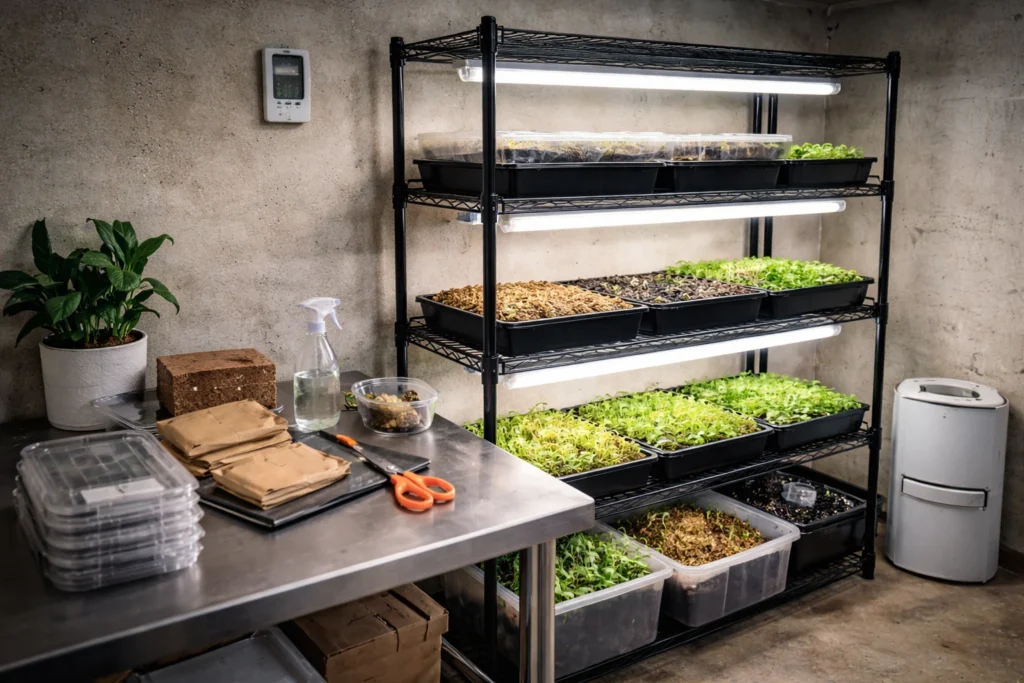
When starting, it’s wise to keep things small. This allows you to learn the ropes of microgreens farming without the financial strain of a large operation. Starting from your home allows you to avoid the added expenses of renting commercial space, which can be especially beneficial during the initial stages of your business. The goal is to ensure that your operations are profitable before scaling up. You can always expand your operation as you gain experience and confidence in growing and selling microgreens.
Understanding the Space and Equipment Needs
You don’t need a large farm to start growing microgreens. A small room or basement can serve as a suitable growing area. The most important things to consider are proper lighting, air circulation, and space for your growing trays. You can set up vertically, which is an efficient way to maximize space in your home-based operation.
For equipment, you’ll need high-quality trays, a growing medium (soil or hydroponics), grow lights, and a space to store your trays. Many microgreens businesses start with a minimal investment in these supplies, which keeps initial costs low and manageable. Your setup can grow as you scale the business.
Investment and Profitability
When starting a microgreens business, expect to spend between $200-$500 for the basic setup. This will include the initial investment in trays, seeds, and lights. The return on investment can be quite quick, with revenue from selling microgreens ranging from $1,500 to $3,000 per month, depending on your setup and sales strategy.
The Business Model: Structure and Operations
Sales Channels
There are multiple ways to sell microgreens. You can start by selling directly to consumers via farmers’ markets or setting up a home delivery subscription service. Home delivery, in particular, is an effective way to create a steady stream of revenue. Offering a weekly delivery option to customers will make your business more predictable and reduce the risk of waste from unsold products.
Restaurants are also an excellent target for selling microgreens. They require high-quality, fresh produce for their dishes and will likely be willing to pay a premium for locally grown microgreens. Offering a variety of microgreens or curated “sampler” boxes could help establish strong partnerships with local chefs who are interested in experimenting with different flavors and garnishes.
Operational Efficiency
To keep your business running smoothly, creating efficient systems is crucial. Organizing your growing area, minimizing clutter, and separating your tray-making space from your growing area will help ensure cleanliness and efficiency. You should also use shelving and stacking systems to maximize space and prevent uneven watering, which can be detrimental to your crop’s growth.
Investing in a super rack (a rolling rack with multiple shelves) can significantly improve efficiency. It allows you to move trays quickly and easily, reducing the time spent walking between different parts of your operation. These small workflow improvements can add up to big time savings and improved productivity over time.
Product Offering
Consider offering mixed boxes of microgreens, which can cater to customers who want variety. A sampler box with popular microgreens such as radish, sunflower, and pea shoots could become a signature product for your business. This also makes it easier to market and sell, as customers are often more willing to buy a pre-assembled product rather than picking individual varieties.
Setting Up Your Growing System
Choosing the Right Growing Medium
For beginners, choosing the right growing medium is essential. Some growers prefer to use soil, while others opt for hydroponics or coconut coir. Soil is a cost-effective option and supports healthy growth for a variety of microgreens. It’s important to choose a medium that retains moisture without becoming too soggy, as this can lead to mold growth or root rot.
Trays and Containers
Using high-quality trays is an investment that will pay off in the long run. Sturdy trays that can withstand the weight of moist soil and growing microgreens are key. Using durable trays means you won’t need to replace them frequently, which can become costly. Also, using deep trays allows for better root growth, while shallow trays are suitable for faster-growing varieties.
As your business grows, you may consider expanding your tray collection and incorporating more advanced systems such as hydroponic setups or automated watering systems.
Environmental Conditions
Microgreens require specific environmental conditions to thrive. They need adequate light, temperature control, and good air circulation. Growing lights are necessary when natural light is insufficient. An optimal temperature range for microgreens is typically between 65°F and 75°F, though some varieties may have specific needs.
Humidity is another key factor. Too much moisture can lead to mold, while too little can cause dehydration and poor growth. Ensuring good ventilation in your growing area can help maintain the right humidity levels and prevent issues related to excess moisture.
Marketing and Branding Your Microgreens Business
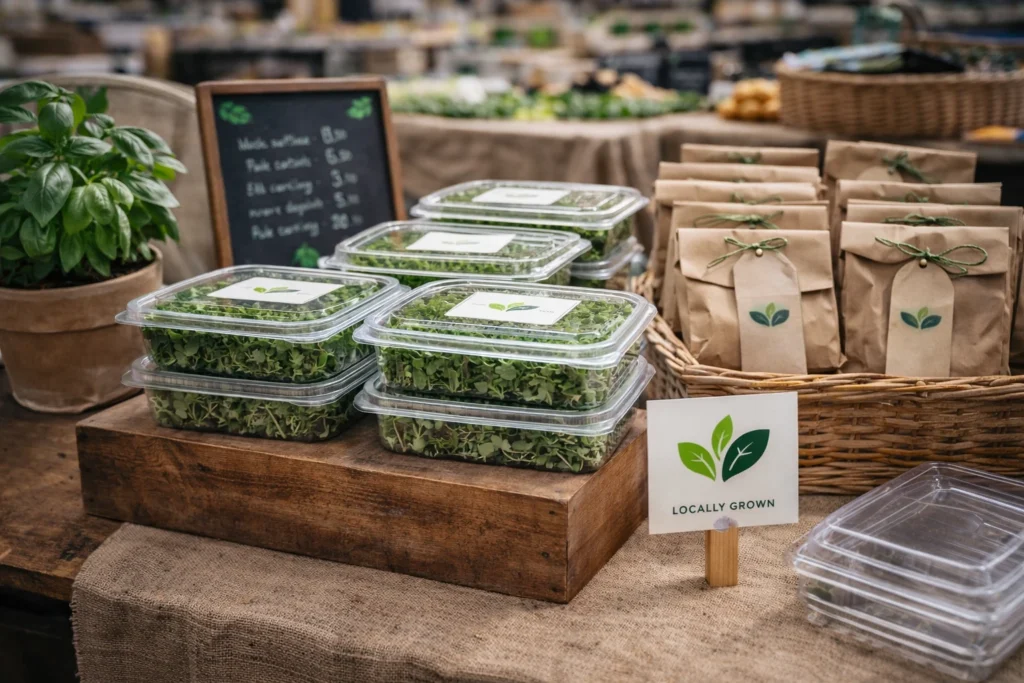
Creating a Strong Brand Identity
Branding is crucial in the microgreens business. It’s not just about what you sell; it’s about how you present your products to your customers. A strong brand identity focused on quality, sustainability, and freshness will resonate with consumers who are becoming more health-conscious. Emphasizing the local, organic, and eco-friendly nature of your business can help differentiate you from competitors.
Consider using your story in your marketing, whether it’s about your personal journey in starting the business or your commitment to sustainable farming practices. People want to support businesses they believe in, and telling your story will help build a connection with your audience.
Using Social Media for Marketing
Social media platforms like Instagram, Pinterest, and Facebook are powerful tools for marketing microgreens. These platforms allow you to showcase your product visually, which is essential for food-based businesses. You can post images of your microgreens growing, being harvested, or incorporated into meals. Additionally, providing educational content, such as recipes or tips on how to use microgreens, will engage your audience and build brand loyalty.
Educating Your Customers
Customers may not always understand how to use microgreens in their cooking. Offering tutorials, recipes, and product tips will help educate them and increase sales. You can include recipe cards with your deliveries or share instructional videos on social media. Providing value beyond just the product will help foster long-term relationships with your customers.
🌿 Recommended Microgreens Supplies |
Managing Finances: Budgeting and Pricing Strategies
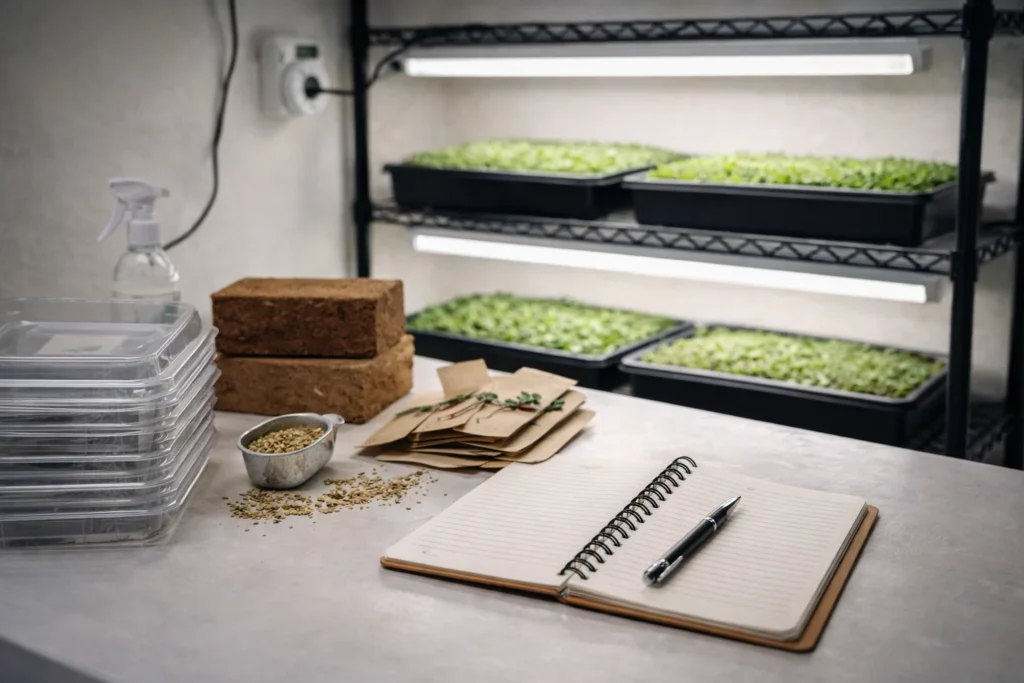
Understanding Your Costs
Managing finances effectively is a key component of building a successful microgreens business. When calculating your costs, you should consider both fixed and variable expenses. Fixed costs include rent (if applicable), equipment, utilities, and any licenses or certifications you may need. Variable costs will include the cost of seeds, soil, trays, fertilizers, and packaging materials.
In your first few months, you’ll want to keep your overhead costs as low as possible. Start small with a manageable inventory of seeds and equipment, and focus on building your customer base before expanding. As your business grows, you’ll need to assess whether additional space, staff, or equipment is necessary.
Pricing Your Microgreens
Pricing can vary depending on your location, your target market, and the varieties you’re growing. Generally, microgreens can be sold for around $20-$30 per pound at retail prices. For home delivery or subscription services, you can offer discounted rates, such as $15-$20 per pound. The key is to ensure that your pricing covers your costs and provides you with a profit margin, while also staying competitive in your local market.
Consider creating bundle deals for mixed boxes or subscription plans, which provide added value to your customers and help with consistent revenue. You can also factor in premium pricing for organic or hard-to-find varieties of microgreens.
Expanding Your Operations: Scaling Up Your Microgreens Business
When to Scale Your Business
As your microgreens business grows, you’ll start to think about scaling up. Signs that you’re ready to scale include consistent customer demand, the ability to meet orders on time, and steady revenue. Scaling might involve expanding your growing space, adding more trays, increasing your production capacity, or hiring additional help.
It’s important to grow your operations slowly and strategically to avoid overextending yourself too early. Start by expanding your product line or increasing your marketing efforts to attract new customers. Once you have a steady stream of income and operational systems in place, you can move to the next level.
Automation and Efficiency
As you scale, consider investing in systems that automate repetitive tasks, such as watering and lighting. Automated irrigation systems can save time and ensure consistency in your crops. Likewise, using a centralized ordering and payment system will streamline the customer experience and reduce the time spent on manual tasks.
Another consideration is improving your growing efficiency. You can start using vertical farming methods or hydroponic systems to maximize space and yield. By growing microgreens on multiple levels or using automated grow racks, you can significantly increase your output without needing a large space.
Legal Considerations: Compliance and Licenses

Licensing Requirements
Before you start your microgreens business, you’ll need to familiarize yourself with any local regulations and licensing requirements. The exact requirements will vary depending on your location, but at a minimum, you may need a business license, tax identification number (TIN), and possibly a food handling or safety certification.
For businesses that plan to sell microgreens at farmers’ markets or to restaurants, you may need a cottage food license or another form of food safety certification. These certifications ensure that you’re following safe growing practices, especially if you’re selling directly to consumers. Keep in mind that each state or country has its own regulations, so research local guidelines before starting your business.
Insurance and Liability
While microgreens are generally considered a low-risk crop, it’s still important to consider liability insurance for your business. If you’re selling directly to consumers or restaurants, having insurance will protect you in case there are any issues with the product, such as contamination or poor-quality crops. Insurance will give you peace of mind as you scale your business and interact with customers and suppliers.
Customer Acquisition and Retention Strategies
Building Customer Relationships
Customer acquisition is key to growing your microgreens business, but retaining customers is just as important. A strong, loyal customer base will provide you with consistent revenue, reducing the need for expensive marketing campaigns to constantly acquire new customers.
To retain customers, focus on offering exceptional service and creating a strong customer experience. Consistently deliver high-quality products, respond to customer inquiries promptly, and maintain transparency in your business practices. Personalizing your interactions, such as including a handwritten note or providing recipe ideas, can also build strong relationships.
Subscription Models for Microgreens
A home delivery subscription model is one of the best ways to ensure recurring revenue for your business. By offering weekly or bi-weekly deliveries, you can build a predictable income stream and create customer loyalty. Offering a discount or bonus product for long-term subscribers can also encourage customers to stick with your service.
Many businesses in the microgreens industry have found success with this model, as it simplifies the purchasing process for consumers. They don’t need to reorder every week—they know their fresh microgreens will arrive at their door regularly.
Partnerships with Local Restaurants
Forming partnerships with local restaurants is a highly effective way to expand your customer base. Microgreens are often used by chefs in salads, sandwiches, smoothies, and as garnishes for high-end dishes. By offering chefs high-quality, fresh microgreens, you can tap into a high-value market. Building strong relationships with chefs and restaurant owners is essential to keeping these partnerships going.
Consider offering discounts for bulk purchases or delivering every week to maintain a steady relationship with restaurant clients. Additionally, ask for feedback to ensure you’re meeting their needs and expectations.
Sustainable Practices and Environmental Responsibility
Why Sustainability Matters
Consumers are becoming more conscious of their environmental impact, and businesses that prioritize sustainability are more likely to succeed in the long run. For microgreens businesses, this means adopting environmentally friendly growing practices, such as using organic seeds, minimizing water usage, and reducing waste.
One way to stand out is by using compostable packaging or eco-friendly containers for delivery. Sustainable practices can also be a selling point when marketing your business, as customers are increasingly seeking out environmentally conscious brands.
Water Efficiency and Resource Management
Microgreens typically require a lot of water to grow, so finding ways to minimize water waste is essential. One solution is using hydroponic systems, which use less water than traditional soil-based growing methods. Alternatively, you can set up drip irrigation systems or rainwater harvesting systems to reduce your reliance on municipal water sources.
In addition to water, minimizing energy consumption is another area to consider. For instance, using energy-efficient grow lights and setting up smart temperature control systems will help reduce your environmental footprint and energy costs.
Marketing Your Microgreens Business
Building a Brand Identity
Your brand identity is more than just your logo—it’s how your customers perceive your business. For a microgreens business, your brand should reflect freshness, health, and sustainability. It’s crucial to develop a strong and clear message about what sets your business apart from competitors.
Think about your unique selling points—whether it’s the quality of your microgreens, your commitment to sustainable practices, or your exceptional customer service. These elements should be consistently conveyed across all your marketing materials, including your website, social media profiles, packaging, and even your delivery service.
Develop a brand voice that resonates with your target audience. A friendly, approachable tone will help attract customers who value transparency and high-quality products. Additionally, use colors, fonts, and imagery that evoke feelings of freshness and vitality.
Utilizing Social Media and Online Marketing
Social media is one of the most powerful tools available to promote your microgreens business. Platforms like Instagram, Facebook, and Pinterest allow you to showcase your products, share your story, and interact with customers.
Instagram, with its focus on visuals, is perfect for displaying the vibrant colors of microgreens. Use high-quality photos and videos to show off your crops, your growing process, and your happy customers. You can even post recipe ideas using your microgreens, as this can increase customer engagement and give them more value.
Pinterest is also a great platform for microgreens businesses, as many users search for healthy recipes and sustainable living tips. By sharing blog posts, recipe cards, and growing tips, you can drive traffic to your website and attract new customers.
Engaging with Local Communities and Farmers’ Markets
Being involved in your local community can significantly boost your visibility and customer base. Participating in farmers’ markets, local food festivals, and community events is a great way to meet potential customers and showcase your products.
Farmers’ markets are especially beneficial for microgreens businesses because customers can sample your products and experience their freshness firsthand. This can help you build relationships with local buyers and restaurant owners.
Local partnerships are another way to market your business. Collaborating with local chefs, health food stores, or wellness centers allows you to access a broader audience while also promoting your community’s local agriculture.
Overcoming Challenges and Common Pitfalls
Dealing with Overproduction and Wastage
One of the most common challenges in the microgreens industry is overproduction. If you’re growing more than you can sell, you risk wasting valuable resources like soil, seeds, and water.
To avoid overproduction, start by understanding the demand for your microgreens and adjusting your growing plans accordingly. Tracking customer orders and sales data can help you forecast future demand more accurately and prevent overplanting. Additionally, consider implementing a just-in-time production system, where you only grow what you need for a specific week or delivery.
You can also minimize waste by selling smaller batches or offering sample packs to customers. If any crops are left unsold, find ways to repurpose them—such as offering discounted or “seconds” for composting or providing them to local food banks.
Managing Customer Expectations
Another challenge in the microgreens business is managing customer expectations, especially when it comes to delivery times, crop quality, and product availability. To ensure customer satisfaction, communicate clearly and consistently about any delays, quality issues, or shortages. Setting realistic expectations from the outset will help you avoid misunderstandings and build long-term customer trust.
For example, if there’s an issue with crop failure or delayed delivery, proactively inform your customers and offer solutions, like a discount or a free product. Additionally, be transparent about the availability of different microgreens, as some varieties may have seasonal limitations.
Managing Supply Chain Disruptions
Microgreens are highly perishable, so it’s crucial to maintain a reliable supply chain. This includes sourcing high-quality seeds, soil, and packaging materials from trusted suppliers. However, supply chain disruptions, like delays in seed delivery or changes in supplier pricing, can affect your operations.
To mitigate risks, work with multiple suppliers to ensure you have backup options in case of a shortage. It’s also wise to have an extra stock of essential supplies, like seeds and trays, to buffer against unexpected delays.
Technology and Tools for Streamlining Operations
Using Software for Inventory Management
As your microgreens business grows, keeping track of inventory manually can become cumbersome and error-prone. Investing in inventory management software is a great way to streamline your operations. Tools like Square, QuickBooks, or specialized farming apps can help you track seed inventory, sales, and deliveries.
These tools can also automate many of your accounting processes, making it easier to calculate expenses, profits, and taxes. By using these systems, you can reduce human error, improve financial tracking, and focus more on the strategic growth of your business.
Implementing Automation for Growing and Harvesting
When scaling your business, automation can play a crucial role in improving efficiency and reducing labor costs. Automated systems for watering, lighting, and temperature control can save you significant time and effort while ensuring consistent growing conditions for your microgreens.
Automated irrigation systems, for example, can ensure that your crops receive the right amount of water at the right time, reducing the risk of overwatering or underwatering. Similarly, automated lighting systems can help regulate day/night cycles, especially if you’re growing indoors or in controlled environments.
Additionally, investing in tools like seeders and harvesters can make your processes more efficient, allowing you to handle larger volumes with less manual labor.
Setting Up an Online Store and E-Commerce Platform
Having an online store is essential for expanding your reach and enabling customers to place orders directly. Setting up an e-commerce platform such as Shopify, WooCommerce, or Etsy can help you manage sales, payments, and deliveries more efficiently.
An online store allows you to showcase your products, offer bundles or subscription models, and easily track customer orders. By integrating with your social media platforms, you can drive traffic to your store and increase sales.
Ensure that your website is mobile-friendly and easy to navigate. Offering convenient payment options, such as credit cards and mobile wallets, can also improve the customer experience.
Long-Term Growth and Diversification
Expanding Product Offerings
As your microgreens business becomes established, you might consider diversifying your product offerings. Aside from fresh microgreens, you can offer microgreens-based products such as powders, juices, and even dried microgreens for use in cooking and smoothies.
Another avenue for diversification is creating ready-to-eat products, such as microgreens salads or pre-packaged salad kits. These products are especially appealing to customers looking for convenience and can command a higher price point.
You can also consider offering seeds or starter kits for home growers, which can help you tap into the DIY market. This diversification can help you mitigate risks by providing multiple revenue streams.
Franchising or Licensing Your Brand
Once your microgreens business has a solid foundation and brand presence, franchising or licensing your business model can be a profitable way to scale. By offering franchise opportunities, you allow others to replicate your successful business model, which can lead to increased brand awareness and larger market share.
Licensing your brand, on the other hand, allows you to retain ownership of your business while letting others use your name and expertise to run microgreens operations in different locations. This approach is less complex than franchising and allows for more flexibility.
Financial Planning and Budgeting
Creating a Detailed Budget
A detailed budget is essential to managing your microgreens business, especially when you’re starting. Budgeting allows you to keep track of your expenses and ensure you’re staying within your financial limits. A good budget should include both fixed and variable costs.
Fixed costs are recurring expenses that don’t change month-to-month, such as rent (if you’re leasing a space), utilities, and software subscriptions. Variable costs fluctuate, including the cost of seeds, soil, packaging, and delivery expenses. Be sure to also allocate some funds for unexpected costs, like equipment breakdowns or supply shortages.
A solid budget also helps you track the profitability of each product you offer. For example, you might find that certain types of microgreens, such as sunflower or radish, have higher margins due to lower production costs or higher demand. Knowing this helps you make informed decisions about what to grow and sell.
Cost Analysis and Pricing Strategy
Pricing your microgreens is one of the most important decisions you’ll make for your business. Your pricing should reflect the quality of your product, your target market, and the costs involved in production. Consider doing a cost analysis to calculate the cost per tray of microgreens, including seeds, soil, labor, packaging, and overhead costs.
Once you have your cost per tray, determine your desired profit margin. Generally, microgreens businesses aim for a markup of 50%-100%, depending on your market and business model. You can also experiment with different pricing strategies, like offering subscription models or bulk pricing, to increase customer retention.
It’s also helpful to research what competitors in your area are charging, but avoid underpricing just to be competitive—this can undermine your profit margin and hurt your business in the long term. Instead, focus on offering value through high-quality products and excellent customer service, which justifies your pricing.
Tracking Cash Flow and Profit Margins
Cash flow is crucial for the survival and growth of your business. Regularly track your cash flow to ensure you’re bringing in enough money to cover your expenses. You can do this by using accounting software like QuickBooks or Xero to monitor your inflows and outflows.
Keep an eye on your profit margins and identify areas where you can cut costs or increase efficiency. For example, if you find that you’re spending a significant amount on packaging, look into more cost-effective alternatives or explore bulk buying options to reduce unit costs.
Legal Considerations and Compliance
Choosing the Right Business Structure
When starting your microgreens business, it’s important to choose a legal structure that fits your goals. The most common structures for small businesses are sole proprietorship, partnership, and limited liability company (LLC). Each structure has its own benefits and drawbacks, so it’s worth consulting a legal advisor or accountant to determine which is best for your situation.
- Sole Proprietorship: Simple and inexpensive to set up, but offers no protection from personal liability.
- LLC: Provides liability protection for personal assets and can be beneficial for growing businesses. An LLC also offers flexibility in terms of taxes.
- Partnership: If you plan to work with a partner, this structure allows shared responsibilities but also shared liabilities.
A solid legal structure helps establish your credibility with customers and suppliers and can protect your personal assets from business-related risks.
Obtaining Necessary Licenses and Permits
In most locations, you’ll need to obtain licenses and permits to legally run a food-based business. This may include local business licenses, health department certifications, and food handling permits.
In some states or countries, microgreens are considered a food product, which may require additional food safety inspections. Make sure to check with your local government to find out what specific permits are required for your area.
It’s also important to comply with any regulations regarding packaging, labeling, and marketing, especially if you plan to sell your microgreens to restaurants or grocery stores. Accurate labeling, including ingredient lists and nutritional information, is crucial to avoid legal issues.
Insurance Needs for Your Business
Running a business comes with inherent risks, from equipment breakdowns to liability issues. To protect yourself, it’s a good idea to invest in business insurance. General liability insurance, for example, covers legal costs if someone gets injured or becomes sick after consuming your products. Additionally, you might want property insurance to cover your equipment and inventory in case of theft, fire, or natural disasters.
Scaling Your Microgreens Business
Expanding Your Product Line
As your microgreens business grows, consider expanding your product offerings to attract a wider customer base. Aside from growing a variety of microgreens, you can also offer microgreens-based products like powders, dried greens, or fresh salads and snacks. These products can be marketed as health-conscious alternatives, catering to a growing demand for nutritious food options.
Another idea for expansion is offering DIY kits for customers who want to grow their own microgreens at home. This product line can tap into the home gardening trend and provide a new revenue stream for your business.
Increasing Production Capacity
If your business is ready to scale, you might need to increase your production capacity. This could involve moving into a larger facility, upgrading your equipment, or automating certain aspects of your operations, such as watering and lighting systems. With a larger production capacity, you can serve more customers and take on bigger orders, whether from local restaurants, grocery stores, or direct-to-consumer channels.
You may also need to hire additional staff to help with tasks like planting, harvesting, and packaging. As your business grows, you’ll have more tasks to manage, so delegating will help ensure everything runs smoothly.
Exploring New Markets
As your business gains a solid foothold in your local community, consider exploring new markets to further grow your customer base. Expanding beyond your local area can help you increase sales and build your brand. You can offer nationwide shipping for your microgreens or look into local farmers’ markets in other cities. Building an online store or using delivery subscriptions can also broaden your reach.
Expanding your distribution network by partnering with local health food stores, restaurants, or grocery chains can significantly increase your sales. Building these partnerships takes time and requires establishing trust, but it can be a long-term growth strategy for your business.
Evaluating and Adjusting Your Business Plan
Tracking Performance and Adjusting Goals
Once you’ve been operating for a while, it’s important to regularly evaluate your performance. Look at your sales data, customer feedback, and financials to assess where you are and whether you’re meeting your goals.
Set clear metrics and key performance indicators (KPIs) to track your success. These could include monthly sales growth, customer acquisition rates, profit margins, and customer retention rates. By evaluating your progress regularly, you can make data-driven decisions about your marketing strategies, pricing, and production levels.
Adapting to Market Trends and Consumer Demands
The microgreens market, like any industry, is constantly evolving. Staying ahead of trends and being responsive to consumer demands is crucial for long-term success. Keep an eye on changing food trends, health movements, and sustainable practices to adjust your product offerings accordingly.
For instance, as more consumers become interested in plant-based diets and sustainable eating, you can adapt by highlighting the environmental benefits of microgreens and the nutritional advantages they provide. Additionally, staying on top of the local food movement and urban farming trends can help you position your business as an innovative player in the agricultural space.