
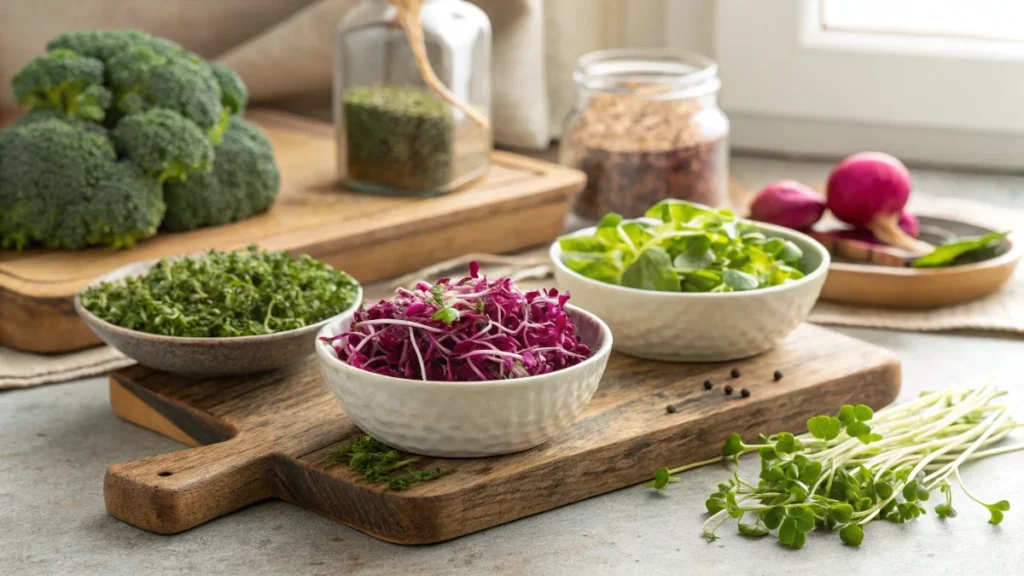
Looking to calm your digestion and support a resilient microbiome without overhauling your meals? Microgreens for gut health deliver concentrated vitamins, antioxidants, polyphenols, and gentle fiber in a few fresh bites.
Research shows microgreens can contain four to forty times the nutrient levels of mature greens, with red cabbage microgreens rich in vitamin C and vitamin E, and broccoli microgreens supplying sulforaphane that supports normal inflammatory balance.
Pea shoots, mustard, radish, and fenugreek microgreens add variety, flavor, and prebiotic compounds your gut bacteria love. In this guide, you will learn the best microgreens for gut health, how much to eat, simple ways to use them daily, and smart tips for sourcing and growing at home.
Why Microgreens Are a Gut Health Shortcut
Microgreens pack concentrated nutrition into a tiny serving, which makes them perfect when you want real results without huge plates of salad. Several lines of research have reported nutrient concentrations that are four to forty times higher than those found in mature vegetables. Red cabbage microgreens, for example, have shown up to forty times more vitamin E and six times more vitamin C than mature red cabbage, while cilantro microgreens contain about three times more beta carotene than mature cilantro. These nutrients help repair oxidative stress in the intestinal environment and support normal immune signaling along the gut wall.
Cruciferous microgreens such as broccoli, kale, and red cabbage bring sulfur-based compounds that support detoxification pathways and cellular defense. Sulforaphane from broccoli sprouts and broccoli microgreens is frequently highlighted for calming inflammation and supporting normal DNA maintenance inside cells, including those that form the gut lining. Polyphenols in a wide variety act as prebiotic-like substrates that beneficial microbes can use, and they also modulate inflammatory signals that affect comfort and regularity. With this nutrition density, you only need small amounts added to meals to support your daily fiber and phytonutrient goals.
Key ways microgreens support the gut
- Antioxidants such as vitamin C, vitamin E, and carotenoids help neutralize free radicals generated by diet and stress.
- Sulfur compounds from crucifers support liver enzymes that process byproducts and reduce the burden on the gut.
- Polyphenols and essential fatty acids in certain seeds and oilseed microgreens contribute to a healthy mucosal barrier.
Microgreens vs Sprouts for the Gut
Sprouts and microgreens are different growth stages and are managed differently in the kitchen. Sprouts are germinated seeds grown in jars or similar vessels. They grow and are rinsed in water, and you eat the entire sprout with the seed coat and tiny root attached. This wet method and the presence of the seed surface increase the chance of bacterial contamination if handling is not perfect.
Microgreens grow in shallow trays with a growing medium and light. You harvest the stem and leaves above the medium and discard the roots. This reduces contact with wet seed coats and lowers contamination risk compared with typical jar sprouting. The growth window for microgreens is short. Many varieties are ready between seven and twenty-one days. Some crucifers can reach the cutting stage in about five days under good conditions. The result is a safer, more flavorful, and more colorful way to add living greens to meals.
What this means for gut health
Choosing microgreens gives you the benefits of young plant nutrition with a lower handling risk profile. You also get photosynthesis-driven compounds that are not present in early sprouts at the same levels, including higher concentrations of vitamins and carotenoids that support the gut lining.
How Microgreens Help Your Microbiome
The intestinal ecosystem thrives on plant diversity, antioxidants, and gentle fibers. Microgreens deliver all three in a compact form. Vitamin C and vitamin E regenerate antioxidant defenses inside intestinal cells. Carotenoids such as beta carotene add another layer of oxidative control. This matters because oxidative stress can disturb the tight junctions that maintain barrier function.
Cruciferous microgreens supply glucosinolates that convert to isothiocyanates such as sulforaphane. These compounds activate cellular defense pathways and support normal inflammatory tone in the gut environment. Polyphenols from red cabbage, radish, amaranth, basil, and other varieties feed select microbes that produce short-chain fatty acids. Those metabolites help nourish colon cells and reinforce barrier integrity. Oilseed microgreens such as flax, chia, sunflower, and rapeseed contribute essential fatty acids that are important for the mucus layer that protects the intestinal surface.
Metabolic balance also touches the microbiome. Lab work with fenugreek microgreens has shown a twenty-five to forty four percent increase in cellular glucose uptake, which points to better handling of post meal sugars. More stable glucose responses generally favor a healthier microbial profile and less inflammatory signaling.
Best Microgreens for Gut Health
Core daily picks
Broccoli microgreens and sprouts
Broccoli brings sulforaphane, which supports detox enzymes and normal inflammatory responses. This is regularly cited for immune resilience and for supporting healthy tissues that include the intestinal lining and the endothelium of blood vessels. A small daily serving, such as one to two tablespoons on warm dishes or blended into a smoothie, is a realistic starting point. Broccoli can be ready to harvest fast, often within five to seven days for young shoots.
Red cabbage microgreens
Red cabbage stands out in the data with very high vitamin C and vitamin E concentrations and abundant carotenoids. That antioxidant package is valuable for countering oxidative stress in the gut and for supporting collagen-rich tissues in the intestinal wall. The purple pigments also bring additional polyphenols that beneficial microbes can use.
Kale and other brassica microgreens
Kale, daikon, mustard, and related brassicas share the sulfur pathway benefits. Green daikon radish microgreens have been noted for especially high vitamin E. Use a mix throughout the week to broaden the polyphenol spectrum you feed your microbiome.
Metabolic and microbiome helpers
Fenugreek microgreens
Laboratory findings show a twenty-five to forty four percent rise in cellular glucose uptake. Better glucose handling reduces inflammatory spikes after meals and supports a stable gut environment. Fenugreek also brings bitter compounds that can stimulate digestive secretions.
Buckwheat microgreens
Buckwheat carries flavonoids and alpha-tocopherol along with a useful amino acid profile. The flavonoids serve as substrates for friendly microbes and contribute to antioxidant capacity in the gut.
Gentle, kid-friendly, and flavorful
Pea shoots
Mild and sweet, pea shoots are easy for children and for picky eaters. They contribute chlorophyll, vitamins, and tender fiber without strong heat or bitterness, which makes daily use simple.
Radish and daikon microgreens
Peppery notes provide a pleasant digestive wake-up. Start with smaller amounts in wraps or on eggs. The combination of vitamin E and polyphenols supports antioxidant status while adding variety to the plate.
Mustard microgreens
Ready in seven to ten days with a bright, pungent profile. Use modest portions to keep flavors balanced while still gaining the glucosinolate benefits.
Serving Size and How to Use Them Every Day
Consistency beats perfection. Add a small handful or one to two tablespoons to meals you already make. Warm dishes help soften stronger flavors and can improve tolerance for those new to crucifers. Try broccoli or red cabbage in soup just before serving so the greens stay vibrant. Fold fenugreek into warm lentils or dals so the aromatic compounds mellow. Use pea shoots in sandwiches and wraps for a gentle crunch. Add radish in thin ribbons to avocado toast for color and a peppery lift.
For smoothies, pair stronger greens with tropical fruit such as mango or pineapple to keep flavors balanced. Combine microgreens with cultured foods like yogurt, kefir, kimchi, or sauerkraut to layer living microbes with the polyphenols and vitamins those microbes love. Aim to rotate varieties through the week so your microbiome sees a wider range of plant compounds. Store your clamshells or harvests cold and dry, and use them within a few days for maximum vitamin and polyphenol retention.
🌿 Recommended Microgreens Supplies |
Freshness, Sourcing, and Why It Matters
Fresh microgreens hold their edge in vitamins, carotenoids, and delicate polyphenols that support a comfortable gut. Store-bought clamshells can sit for days in cold cases, which slowly reduces sensitive nutrients such as vitamin C. By contrast, greens harvested the same day deliver brighter flavor and a higher antioxidant payload for the intestinal lining.
You can locate microgreens in the produce section next to sprouts. If you want peak nutrient density, ask a local grower about harvest days or consider a simple subscription so trays are cut the morning of delivery. Many small farms offer weekly or biweekly plans, which means you rotate varieties without extra shopping. When buying, ask how the grower raises the crop.
Soil-grown trays often rely on compost and coco peat with nutrients already present, while hydroponic growers add diluted nutrients to the water. Either method can produce excellent greens. What matters is clean handling, a cool chain from harvest to home, and minimal time between cutting and eating.
Practical sourcing checklist
- Look for crisp stems and vivid color with no slimy patches.
- Choose containers with minimal condensation to avoid excess moisture.
- Plan to use each box within three to four days for the best vitamin retention.
Grow Your Own for Peak Potency
Growing at home gives you the shortest farm-to-fork path, which is ideal for gut-focused nutrition. Broccoli can reach the snip stage in about five to seven days. Mustard often needs seven to ten. Many other microgreens are harvested between seven and twenty-one days. A shallow tray, a lightweight mix of compost with coco peat, clean seed, and regular watering are enough to get started. Children enjoy the process, which also increases the odds they will eat the greens they helped grow.
Research comparing growing media has noted that the substrate can influence both yield and nutrition. Trials that compared materials like coconut fiber, jute, vermiculite, foam, and soil blends found that soil plus well-finished manure produced both higher yields and richer nutrient profiles. That does not mean other media are poor. It suggests that a living medium can add trace minerals and support robust phytochemical development. If you prefer hydroponics, ask your nutrient supplier for food-grade formulations and follow dilution guidance. In either case, provide light once seeds germinate since photosynthesis helps build carotenoids and vitamins that benefit the gut.
Home growing tips that matter for the gut
Rinse tools and trays before each planting to keep microbes in balance.
Harvest with clean scissors and refrigerate immediately to preserve vitamin C.
Cut just before meals when possible to capture the highest levels of delicate antioxidants.
One Week Starter Plan
This plan introduces variety while keeping prep simple. Adjust portions to taste. Most people do well with a small handful or one to two tablespoons at a time.
Day one
Broccoli in a warm soup just before serving. The gentle heat releases aroma without wilting the leaves.
Day two
Pea shoots layered into a sandwich or wrap for crunch and mild sweetness that kids accept easily.
Day three
Red cabbage sprinkled over grain bowls or tacos for color and a lift in vitamin C and vitamin E.
Day four
Fenugreek is folded into warm lentils or dals. Lab data shows a twenty-five to forty four percent increase in cellular glucose uptake, which supports steadier post meal responses.
Day five
Radish or daikon on avocado toast in thin ribbons for a peppery accent and notable vitamin E.
Day six
Mustard whisked into a quick yogurt sauce for roasted vegetables. Use a modest amount for balance while gaining glucosinolate support.
Day seven
Blend a small portion of broccoli or kale microgreens into a smoothie with mango or pineapple to keep the flavor gentle and friendly.
Quick Evidence Snapshots to Anchor Claims
- Microgreens often contain four to forty times the nutrient concentrations found in mature vegetables.
- Red cabbage microgreens have shown up to forty times more vitamin E and six times more vitamin C compared with mature red cabbage.
- Cilantro microgreens contain about three times more beta carotene than mature cilantro.
- Fenugreek microgreens increased cellular glucose uptake by twenty-five to forty four percent in laboratory settings.
- Green daikon radish microgreens have been noted for especially high vitamin E.
- Oilseed microgreens such as flax, chia, sunflower, and rapeseed provide essential fatty acids that support mucosal health.
Cautions and Smart Use
Microgreens are potent, which is why small servings work. If you are sensitive to cruciferous vegetables or to sulfur-based medications, begin with a teaspoon and build slowly while rotating varieties. Those new to peppery greens can start with pea shoots and red cabbage before adding radish or mustard. Keep containers cold and dry. Avoid pooling moisture, which can lower quality. Use within a few days to capture fragile vitamins and carotenoids that support the gut barrier.
Remember that these greens complement an overall plan. Pair them with fiber-rich meals, restful sleep, movement, and stress management for the healthiest microbiome. If you manage a medical condition, integrate microgreens as part of your care plan and consult your clinician about any interactions, especially if you take medications that rely on sulfur pathways.