
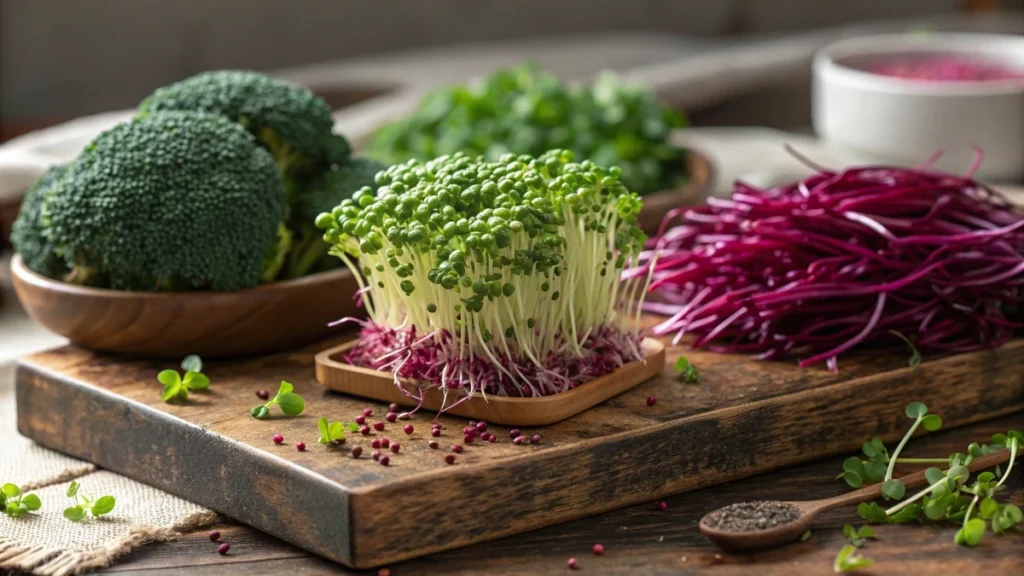
Microgreens earn their place in a daily routine because a small serving delivers a concentrated wave of vitamins, antioxidants, and plant compounds. Early growth channels energy into young leaves, which is why certain varieties contain many times the micronutrients found in full-grown vegetables.
Across the research cited in your sources, you will see ranges such as five times higher for broad vitamin and phytonutrient content and up to forty times higher for specific nutrients, depending on the crop. This is practical nutrition you can sprinkle on a bowl or blend into a smoothie without changing your whole menu.
Why this matters for real life
A handful of microgreens can raise vitamin C and E intake, add carotenoids like beta carotene, lutein, and zeaxanthin, and bring helpful minerals into the mix. Brassica types such as broccoli and red cabbage also provide isothiocyanates associated with detox support through cellular defense pathways. The result is better coverage for immune health, eye and skin support, and everyday recovery with very little effort.
What Makes a Microgreen Best for Health
Not every tray ranks the same. The best choices hit several targets at once.
Clear criteria
- Nutrient density per gram
Look for varieties repeatedly measured with high levels of vitamins C, E, and K, along with carotenoids. Red cabbage microgreens are a classic example with large multiples over mature leaves. - Bioactive compounds with evidence
Brassica microgreens contain isothiocyanates that activate protective pathways. Polyphenol-rich foods like mustard and kohlrabi add flavonoids and phenolic acids to the picture. - Consistent findings across crops
When multiple analyses highlight the same leaders, such as red cabbage, cilantro, daikon radish, and amaranth, those are reliable anchors for a weekly rotation. - Daily usability
Flavor and texture matter for adherence. Mild greens work in smoothies and grains. Peppery or nutty greens finish soups and proteins. - Availability and growability
Trays that germinate fast, harvest in a week, and stay crisp in the fridge make the habit stick.
🌿 Recommended Microgreens Supplies |
Microgreens vs Sprouts vs Mature Vegetables
Microgreens are harvested after the cotyledons open, and the first true leaves begin to form. They grow in light and build chlorophyll and antioxidant systems. Sprouts are germinated seeds grown without light and are prized for their enzyme activity and easy digestion. Mature vegetables offer volume, fiber, and water, yet often with a lower concentration of certain vitamins per gram.
What the numbers tell you
Red cabbage microgreens have been measured with about six times more vitamin C, twenty times more lutein and zeaxanthin, forty times more vitamin E, and two hundred sixty times more beta carotene than their mature counterpart. Lettuce microgreens have shown higher minerals such as calcium, magnesium, iron, manganese, zinc, and selenium, along with lower nitrate content than mature lettuce.
For context on the stage of growth, radish sprouts by weight can show very large jumps over mature radish for vitamin A and some fats and minerals. The take-home is simple. Early growth concentrates specific nutrients, and the exact advantage depends on the crop and the compound you care about.
Practical handling for maximum value
Cut close to mealtime because vitamin levels drop as cut surfaces sit. Keep heat exposure brief. Use strong-flavored greens as a garnish on warm dishes and keep mild greens for smoothies and bowls.
The Top Science-Backed Microgreens and Their Key Benefits
Broccoli microgreens for detox support and inflammation control
Broccoli microgreens deliver isothiocyanates that activate the NRF2 pathway, which governs antioxidant and detox responses. People who target sulforaphane specifically often look to the sprout form because it can reach twenty to fifty times the sulforaphane level of mature broccoli, and typical targets mentioned are forty to sixty milligrams per day, which corresponds to roughly one hundred to one hundred forty grams of the sprouted form. For an everyday routine, broccoli microgreens still bring the same family of compounds with a friendlier taste and easy plate use. Pairing with warm dishes at serving time keeps sensitive vitamins intact.
Red cabbage microgreens for heart markers and antioxidant density
This is the headline microgreen for sheer nutrient concentration. Measured values include about six times more vitamin C, forty times more vitamin E, and two hundred sixty times more beta carotene than mature leaves, along with a large bump in lutein and zeaxanthin. In controlled feeding for animals on high-fat diets, red cabbage microgreens were linked with lower circulating LDL, reduced liver cholesterol esters and triglycerides, and lower inflammatory cytokines. For readers, this translates into a smart default tray when the goal is antioxidant coverage and support for cardiovascular markers.
Green daikon radish microgreens for vitamin E and eye support
Daikon radish microgreens stand out as a top source of vitamin E among the tested group and also contribute lutein and zeaxanthin that the eyes use for protection against oxidative stress. The flavor adds a clean peppery edge, which works well on eggs, broths, and grain bowls. If you want skin and eye benefits with a crisp taste, this is an easy win.
Cilantro microgreens for carotenoids that support skin and vision
Cilantro microgreens bring about three times more beta carotene and approximately eleven times more lutein and zeaxanthin than mature cilantro. Beta carotene supports retinol status, while lutein and zeaxanthin concentrate in the macula. The gentle herb note disappears in smoothies, which makes cilantro a good pick for people who want carotenoids without a spicy bite.
Garnet amaranth microgreens for bones and immunity
Garnet amaranth delivers about four times more vitamin K and eleven times more vitamin C than its mature counterpart in the reported measurements. Vitamin K supports bone mineralization and normal clotting, while vitamin C supports collagen formation and immune readiness. The magenta color also elevates plate appeal, which increases the odds you will actually use it every day.
Mustard, purple kohlrabi, and mizuna for broad polyphenol diversity
Advanced profiling identified roughly one hundred sixty-four polyphenols across a set of Brassica microgreens that included purple kohlrabi, red cabbage, red and purple mustard, and mizuna. These include anthocyanins, flavonol glycosides, phenolic acids, and other families that contribute to antioxidant and anti-inflammatory activity. Rotating one of these trays keeps your polyphenol intake varied.
Red sorrel, green basil, pea tendrils, and peppercress for targeted vitamins
Red sorrel and peppercress rank well for beta carotene. Green basil and pea tendrils contribute vitamin K with milder flavors that suit families and picky eaters. Use these when you want specific vitamins without a strong radish-like finish.
Choose by Goal: Which Microgreen Fits You Best
Use this map to build a weekly rotation that meets real needs.
| Vitamin C and E, beta carotene, and polyphenols are associated with better lipid profile.s | Best microgreens | Key nutrients and compounds | Easy ways to use |
|---|---|---|---|
| Detox and inflammation support | Broccoli microgreens plus a rotating mustard or kohlrabi tray | Isothiocyanates and related Brassica compounds that activate cellular defense | Finish warm rice bowls and soups at the table |
| Heart and cholesterol markers | Red cabbage microgreens | Vitamin C and E, beta carotene, polyphenols associated with better lipid profiles | Tuck into wraps and grain salads for color and crunch |
| Eye and skin health | Cilantro, daikon radish, red sorrel | Lutein, zeaxanthin, beta carotene, vitamin E | Blend into smoothies and sprinkle on eggs |
| Immune readiness and antioxidant coverage | Red cabbage, amaranth, basil | Vitamins C, E, and K plus polyphenols | Mix into chopped salads right before serving |
| Bone support | Amaranth, basil, pea tendrils | Vitamin K with supporting vitamin C | Add to pasta bowls and roasted vegetables at plating |
How to Get the Most from Microgreens
Microgreens deliver the best value when you protect their delicate vitamins and carotenoids. Cut them close to mealtime because nutrient levels fall as cut surfaces sit. Keep them raw or add at the very end of cooking so heat sensitive vitamin C and E stay intact. Use mild greens in smoothies and bowls. Keep the spicy trays as finishing toppers for eggs, soups, tacos, and grain salads.
If you blend them, pair stronger greens with fruit or yogurt to balance the slight bitterness that some varieties naturally carry. Store rinsed and dried microgreens in a breathable container lined with a towel. Replace the towel when damp so leaves stay crisp. Rotate colors across the week because different pigments signal different phytonutrients. Red and purple brassicas add anthocyanins. Bright greens often add lutein and zeaxanthin.
Simple pairing ideas that protect nutrients
Add red cabbage microgreens to warm dishes at serving time for vitamin C and beta carotene. Use daikon radish microgreens on avocado toast or eggs for vitamin E and eye-supportive pigments. Stir cilantro microgreens into a citrus slaw so the acid supports iron absorption from the rest of the plate.
Growing at Home: Freshness and Savings
Homegrown trays give you control over harvest timing and quality. Most microgreens are ready in seven to ten days, which means you can cut right before eating and avoid the nutrient decline that happens when cut leaves sit. The resource footprint is small compared with growing to full heads. You are harvesting in days rather than months and watering a shallow tray rather than a large plant.
There is also a cost advantage. Even when using small seed packets, the savings compared with store purchases can be significant. In one example, with a common sprouting crop, the saving was about thirty percent using a small four-ounce seed pack, with larger savings when buying in bulk. Microgreens follow the same logic because the seed cost per tray drops quickly when you buy larger bags.
Choose clean seed from trusted suppliers. Keep trays in bright light so chlorophyll and antioxidants develop fully. Rinse tools and trays well. Harvest with a clean pair of scissors and refrigerate promptly if you are not eating them right away.
A simple home setup
Keep two or three shallow trays on a shelf near a bright window or under a small LED panel. Sow thinly so air can move between stems. Water from the bottom so leaves stay dry and tidy. Stagger sowing by three to four days so a fresh tray comes ready as the current one runs out.
Keep It Real: Balanced Expectations
Microgreens support good nutrition and can move daily numbers in a helpful direction. They are not a cure for disease, and they do not replace medical care. Some findings come from animal models, which do not translate directly to human outcomes. Nutrient multiples depend on the crop and the compound measured. Red cabbage microgreens have shown large jumps for vitamin C, vitamin E, beta carotene, and macular pigments relative to mature leaves. Lettuce microgreens have been measured with higher minerals and lower nitrates than mature lettuce.
Growing conditions shape the numbers. Light, harvest timing, and storage all matter. That is why cutting close to the plate and keeping leaves raw or barely warmed is such a reliable habit. Taste and texture matter for consistency. Peppery types keep savory meals lively. Mild types disappear into breakfast bowls and smoothies so the routine sticks.
Quick Start Plan: A Weekly Health Rotation
Build a rotation that covers detox support, heart markers, immune readiness, and eye health without much thought.
Core four for the week
- Broccoli microgreens for brassica isothiocyanates are linked with the cellular defense pathway.s
- Red cabbage microgreens for vitamin C, vitamin E, beta carotene, and macular pigments
- Daikon radish microgreens for vitamin E and a clean peppery finish
- One rotating tray for targeted needs, such as cilantro for carotenoids or garnet amaranth for vitamin K and vitamin C
How to use them each day
Add a small handful to lunch and dinner as a finisher. Tuck red cabbage microgreens into wraps and grain salads. Top soups and eggs with daikon radish microgreens. Blend cilantro microgreens into a smoothie if you want carotenoids without heat. If your focus is sulforaphane, include the sprouted form of broccoli alongside your microgreens because the sprout stage can reach much higher levels of that specific compound.
Keep sowing on a three to four day rhythm so fresh trays come ready every week. This simple cadence delivers consistent antioxidants and vitamins while staying affordable and easy to maintain.