
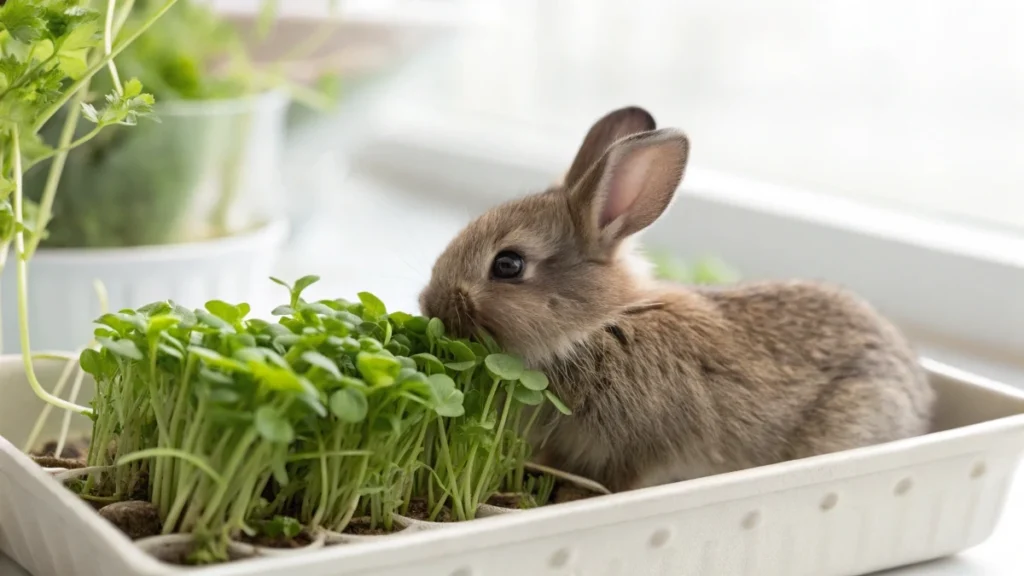
Microgreens for Rabbits deliver concentrated nutrition and variety to a daily salad. These tender greens can contain about forty times the nutrient density of mature plants, reaching harvest in roughly seven days when grown in shallow trays with moist potting mix.
Start a new tray every three days to keep a consistent supply, so one feeds as another is nearly ready. Safe choices include radish and broccoli greens, wheatgrass and ryegrass, plus herbs such as basil and cilantro.
Serve as a supplement alongside hay and rotate with two or three other leafy options each day to broaden nutrients.
Introduce new greens gradually and avoid unsafe species such as tomato, rhubarb, potato,o and iceberg lettuce to protect digestion while keeping the menu interesting.
Why Choose Microgreens for Rabbits
Microgreens for Rabbits make sense for both nutrition and practicality. Young greens concentrate vitamins and minerals during their first days of growth. In the source material above, it is noted that these tender greens can contain about forty times the nutrient density of their mature counterparts, and they are also higher in minerals. That concentrated profile lets you add a lot of value to the daily salad without serving a huge volume.
There is also a clear convenience benefit. A tray of daikon radish microgreens was grown in about seven days. By starting one tray and then sowing a second tray three days later, you create a steady rhythm. When the first tray is eaten, the second is already on the way. That simple rotation keeps fresh greens coming all week.
Rabbits often find the taste appealing. In the examples above, rabbits readily ate radish microgreens. Because these greens are tender,r they are easy to chew and mix well with other leafy items. They are also simple to grow at home, which means you can keep them free of pesticides and serve them fresh.
Best Microgreens for Rabbits
Brassica choices that rabbits usually enjoy
Radish microgreen,s including daikon, are a proven favorite and reach harvest size fast. Broccoli microgreens fit well, too. The same family shows up as safe leaves in the other material, such as broccoli leaves for mature plants,s which supports the choice to use their microgreen form.
Grasses that suit a rabbit’s diet
Rabbits can eat grasses. Wheatgrass is a practical option to grow at home, and a little can be offered from time to time. Ryegrass also appears on the safe list. These grassy microgreens add variety and mimic natural foraging.
Herbs in small fresh sprigs
Common culinary herbs are suitable for rabbits. Basil, cilantro, dill, thyme, rosemary, and sage are all mentioned as good daily greens. Their microgreen stage provides the same plants in a tender form with a bright aroma.
Leafy greens that translate well to microgreens
Romaine-type lettuces and loose-leaf lettuces are considered good everyday greens. Dandelion leaves rank highly as long as the plants are grown without pesticides. Peppery spring greens such as arugula and watercress are also acceptable. Growing these as microgreens delivers the same plants in a soft juvenile stage that many rabbits like.
Microgreens to Limit or Avoid
Limit the high oxalic acid choices.
Some plants are healthy but concentrated in oxalic acid. Serve these as part of the mix rather than the whole serving. The guidance from the material is to keep them to about one-third of the daily leafy greens. This group includes kale, spinach, mustard greens, parsley, and Swiss chard. Their microgreens should be treated with the same caution. Include them for var,iety but balance them with lower oxalate greens.
Avoid plants that are unsafe for rabbits.
A few plants should be kept off the menu entirely, even in microgreen form. Iceberg lettuce is discouraged because it offers little nutrition and contains a compound called lactucarium, which can contribute to digestive problems over time if fed often. Tomato leaves and stems are mildly poisonous, so tomato microgreens are not appropriate. Rhubarb leaves and rhubarb are unsafe and can cause diarrhea or worse in large amounts. Potato leaves, stems, and roots are not suitable,e and even the tubers are too starchy for a rabbit diet. If you are unsure about a plant,nt do not serve it until you have confirmed it is safe.
Growing Microgreens for Rabbits at Home
Prepare the tray
Use a shallow tray with drainage and fill it with regular potting mix. The medium should be moist but not wet. Too much water leads to soggy conditions that plants do not like.
Sow the seed
Evenly sprinkle the seed over the surface. The examples above used radish and a broccoli blend, which both perform well. After sowing, mist lightly so the surface is damp.
Create gentle pressure and darkness.
Place an empty tray on top as a lid and add a little weight, such as a few small items. This presses seeds into the medium and helps them sprout evenly. Keep the tray in a protected place such as a greenhouse or a quiet corner.
Germination window
After about four to five days, ys you can peek. Sprouts will look pale since they have not seen light yet, but the important sign is that most of the seed has germinated. Remove the cover at this stage.
Green up and grow on
Move the tray into the light. The seedlings will turn green and grow quickly. Radish in the example reached harvest in roughly seven days. Many common types are ready between day seven and day ten.
Keep the harvest continuous.
For a steady supply, start a new tray every three days. With that cadence,e one tray is feeding time, another is almost ready, and a third is sprouting. This simple sequence supports a consistent addition of Microgreens for Rabbits across the week.
🌿 Recommended Microgreens Supplies |
Feeding Guidelines for Rabbits
Microgreens for Rabbits are a supplement to the main diet,t which remains grass hay. Use microgreens as part of the daily leafy greens rather than a replacement. Variety matters. Aim to offer three or four different leafy greens each day so the overall mix covers a broader range of nutrients. Microgreens fit naturally into that rotation.
Introduce any new plant gradually and watch for normal stool and appetite. The high oxalic acid group should make up no more than one-third of the daily leafy greens. That point applies to both mature leaves and their microgreen equivalents. Keep unsafe plants out entirely as noted above.
One practical way to serve microgreens is to mix a handful from the tray with established safe greens such as romaine, dandelion, basil, il cilantro, or wheatgrass. Because microgreens can be more concentrated,d they go a long way even in modest amounts. Growing at home lets you keep them free of pesticides and offer them fresh which supports good eating habits.
Nutritional and Health Benefits
Microgreens for Rabbits deliver a lot of nutrition in a small serving. When these young greens are harvested after a short growing period, od they hold a concentrated mix of vitamins and minerals. The material above notes that tender greens can reach about forty times the nutrient density of their mature versions,ons and they are also higher in minerals. That concentration helps you enrich the daily salad without increasing the overall portion size.
Concentrated nutrition in a small serving
Because microgreens are gathered early in their growth, they channel energy into leaves rather than stems. This is why a tray of radish greens that takes about seven days to grow can meaningfully upgrade a rabbit’s bowl. The vivid flavor also encourages good eaters. In the examples above, the rabbits happily ate radish greens straight from the tray, which makes it easier to deliver those nutrients day after day.
Variety strengthens the overall diet.t
The guidance for leafy greens is to offer three or four different kinds each day. Rotating plants in this way widens the range of vitamins and minerals your rabbit receives. Microgreens fit perfectly into that plan because you can grow many safe species at home and change the mix week to week. A handful of broccoli greens one day and a handful of radish or herb greens the next keeps the menu interesting while staying within safe choices.
Freshness and consistency
Short grow times support freshness. A simple rhythm works well. Start one tray, then sow a second tray three days later. By the time the first tray is eaten, the second is ready or nearly ready. You can keep a third tray sprouting under cover for four to five days before it goes to light. This cadence keeps nutrients at their peak and gives you reliable access to tender greens across the week.
Fits within a balanced feeding plan
Leafy greens are an important part of a rabbit’s routine alongside hay and pellets. Microgreens are best used as a supplement within that leafy portion. They bring concentrated nutrients and bright flavors while allowing you to stay aligned with daily portions that suit your rabbit’s size and needs.
Precautions and Safety Tips
Microgreens for Rabbits follow the same safety rules as the full-sized leaves of those plants. If a plant is on the everyday list in the material above, its microgreen version is generally suitable. If a plant needs limiting or is unsafe in leaf form, then its microgreen form should be limited or avoided in the same way.
Limit high oxalic acid plants.
Some greens are nutritious but concentrated in oxalic acid. Keep these to about one-third of the daily leafy portion. The group includes kale, spinach, mustard greens, parsley, and Swiss chard. Their microgreens should be treated with the same caution. Use them as part of a mixed plate rather than the whole serving.
Keep unsafe plants out entire.ly
A few plants are not appropriate for rabbits and should not be grown or served as microgreens. Iceberg lettuce offers little nutrition and contains lactucarium, which can contribute to digestive trouble with frequent feeding. Tomato leaves and stems are mildly poisonous,uso tomato greens are not suitable,ble even though the ripe fruit can be offered occasionally as a treat. Rhubarb and its leaves are unsafe and can cause diarrhea in large amounts. Potatplantspl, ants, including leaves, stems, and roots,s are not suitable, and the tubers are too starchy.
Avoid chemical exposure
Only use greens from areas that are free of pesticides and fertilizers that are dangerous to rabbits. This point appears repeatedly in guidance about gathering dandelion and other leaves. Growing at home makes it easier to control inputs so your trays stay clean and safe.
Serve as part of a mixed plate.
Microgreens should not replace the core, which is grass hay. Fold small handfuls into the leafy portion of the bowl alongside safe everyday choices such as romaine, daikon, basil, cilantro, or wheatgrass. Keep the daily rotation of three or four types to support a broad nutrient profile while staying within safe boundaries.
Watch the plant identify closely
If you are unsure whether a pl,, ant is safe, do not serve it until you confirm. The same caution applies to microgreens because they are the very saman earlier in a younger stage. When you stick to plants already identified as suitable, you gain the nutritional boost of microgreens while protecting your rabbit’s health.