
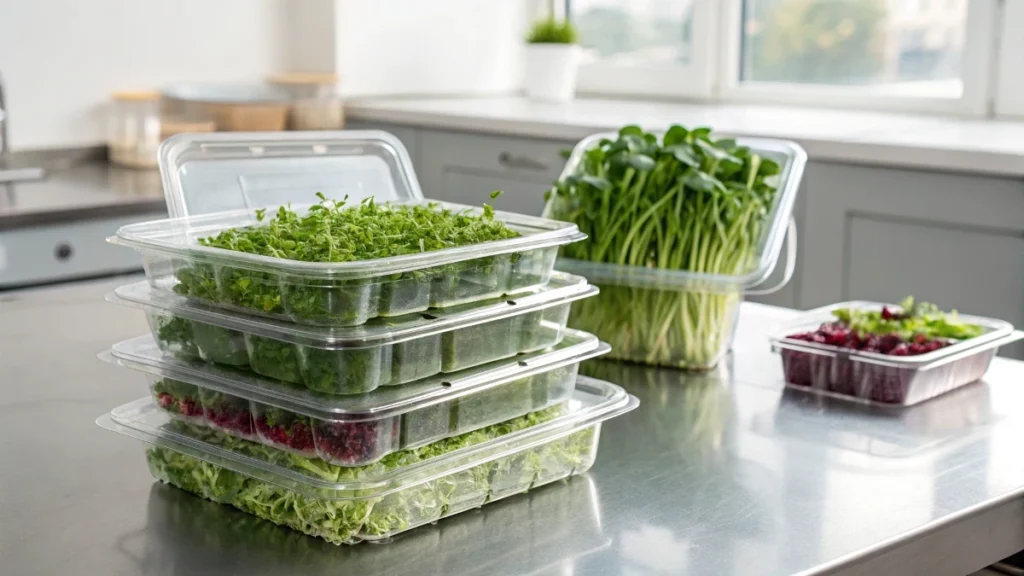
Choosing the right microgreens packaging can make or break freshness, presentation, and profit. In 2025, customers expect crisp leaves, crystal-clear visibility, and sustainable choices—without driving up your cost per unit.
This guide cuts through the noise with honest, human-tested reviews of the best packaging for microgreens, from rigid clamshell containers to sturdy deli-style boxes and compostable options for eco-minded markets.
You’ll learn which sizes protect pea shoots and sunflowers, how to prevent condensation, and what labels help your brand look premium.
Every product reviewed includes a direct Amazon link beneath it for fast buying. Let’s build packs that look great, travel safely, and sell out. Batch after batch, every week.
Our Top Picks
1) Smygoods Clear Plastic Flat-Top Hinged Container (Pack of 25)
Why it works for microgreens: Clear, rigid walls show off color and freshness. The flat lid stacks neatly in coolers and chef fridges, so deliveries stay tidy. Dimensions around 9 3/8″ × 6 3/4″ × 2 3/16″ suit typical 2–4 oz retail packs of broccoli, radish, or mixed blends without squashing tender leaves.
What stands out
- Flat, label-friendly top (perfect for brand + harvest date)
- Easy open/close hinge
- Stable stacks for markets and route deliveries
Keep in mind
- It’s disposable plastic, not compostable
- If you overfill, delicate leaves can press against the lid
Best for: General retail packs, chef tastings, mixed microgreens.
2) Compact Hinged Clamshell for 1.5–3 oz Packs
Why it works: Smaller footprint keeps lighter cuts (arugula, broccoli, mizuna) looking “full” instead of sparse. Great when cooler space is limited.
What stands out
- Tidy presentation for small SKUs
- Less shifting inside, which helps reduce bruising
Keep in mind
- Too snug for pea shoots or sunflowers
- Watch condensation in very cold fridges if there’s zero venting
Best for: 1.5–3 oz retail packs; home delivery boxes.
🌿 Recommended Microgreens Supplies |
3) Roomy Salad-Style Hinged Clamshell (Extra Headroom)
Why it works: More air space for fluffier greens. If you sell 4–6 oz pea shoots, sunflower, or amaranth blends, the extra headroom reduces matting and lid rub.
What stands out
- Better protection for long stems
- Strong shelf presence for premium packs
Keep in mind
- Occupies more cooler space
- Slightly heavier for market totes
Best for: Pea shoots, sunflowers, and mixes with loft.
4) Tamper-Evident Hinged Container (Retail-Ready)
Why it works: Built-in safety tabs reassure customers and retail partners. Helpful for shared fridges, co-ops, and third-party delivery.
What stands out
- Clear tamper indicators
- Stacks neatly for display cases
Keep in mind
- Slightly slower to pack compared with simple hinges
- Overfilling can stress the tabs
Best for: Grocery shelves, office canteens, and cafes.
5) Compostable PLA Hinged Box (Eco-Forward Choice)
Why it works: Clear, compostable presentation for eco-minded markets and CSAs. The clarity still shows product quality while aligning with sustainability branding.
What stands out
- Compostable material
- Easy talking point with green-first shoppers
Keep in mind
- Heat-sensitive; avoid hot cars and direct sun
- Can warp under heavy stacking—handle gently and keep cold
Best for: Farmers’ markets, subscription boxes with eco positioning.
6) Rectangular Deli-Style Container + Separate Lid (Thicker Walls)
Why it works: Thicker sides protect against side pressure in transit—useful for courier routes or stacked catering orders. Lid snaps on securely, and portions are easy to weigh.
What stands out
- Stronger wall than many clamshells
- Easy to portion by weight; neat label face
Keep in mind
- Slightly less “display” aesthetic than a hinged clamshell
- Adds a step (lidding) at packing time
Best for: Wholesale to restaurants, meal-prep kits, and bulk packs.
7) Slim, Low-Profile Hinged Clamshell (Space Optimizer)
Why it works: Shallow profile packs tightly in coolers and chef fridges. Ideal when volume and route efficiency matter more than headroom.
What stands out
- Maximizes cooler capacity
- Fast labeling on the flat top
Keep in mind
- Less internal air volume; watch for condensation
- Not ideal for very fluffy greens
Best for: Fast-moving mixes and garnish blends.
Buying Guide: How to Choose the Right Microgreens Container
1) Material: PET vs PP vs PLA
- PET: Crystal-clear, widely used, rigid; great for visual appeal and stacking.
- PP: Slightly more flexible; common in deli-style boxes that lid tightly.
- PLA (compostable): Eco-friendly and clear but heat-sensitive. Keep cold and avoid heavy stacks.
Bottom line: For chefs and retail, clarity sells. If your market values sustainability, offer a PLA option and handle it gently.
2) Size & Headroom
- Fine micros (arugula, broccoli, kale): compact clamshells keep packs looking full and minimize sliding.
- Fluffy stems (pea shoots, sunflower): size up to avoid matting and lid rub.
- Test with your actual cut weight; the ideal box looks full without compression.
3) Venting & Moisture Control
- Microgreens hold surface moisture after washing/spinning. Light venting helps prevent fogging and “sweating.”
- Chill greens fully before sealing. Packaging warm greens is the fastest way to condensation.
4) Labeling & Branding
- Use a flat top or smooth face for a clean brand label, weight or volume, harvest date, and storage note.
- Keep label placement consistent across SKUs for a premium, “lineup” look.
5) Stacking & Transport
- Flat-top clamshells stack well for markets and deliveries.
- Choose deli-style + lid when couriers or tall stacks add side-pressure risk.
6) Cost vs. Positioning
- Track cost per packed unit so your pricing stays profitable.
- If you sell in eco-focused settings, a compostable box can justify a small premium.