
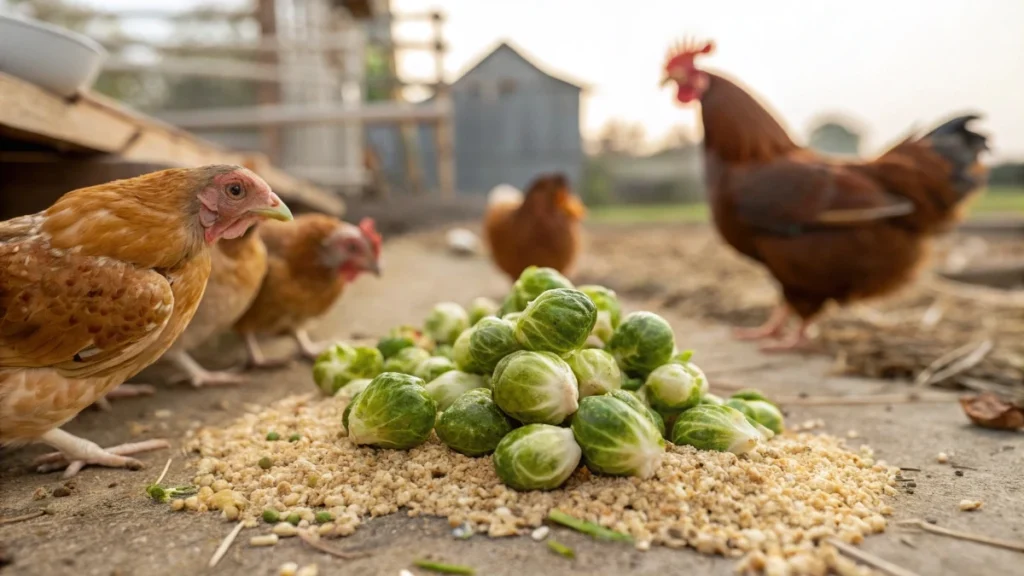
Can Chickens Eat Brussel Sprouts? Safe Benefits & Risks

Can Chickens Eat Brussel Sprouts? Safe Benefits & Risks

Yes, chickens can eat Brussels sprouts and most flocks really enjoy them once they figure out how to peck them apart. The key is how much you offer and how you prepare them. Think of Brussels sprouts as a nutrient rich side dish rather than the main meal. Your birds still need a solid base of balanced feed or whole grains, with vegetables and scraps sitting on top of that as extras.

When you ask can chickens eat Brussels sprouts you are really asking two things. First, are they safe. Second, are they useful. Brussels sprouts belong to the same family as cabbage and broccoli, which many keepers already give to their chickens without trouble. As long as the sprouts are fresh, plain and offered in sensible amounts they make a safe treat that can support health rather than harm it.

The effort is worth it because small changes in nutrition can show up in egg quality, general energy and how well birds cope with stress. In the same way sprouted grains bring more vitamins and enzymes than dry seeds, fresh green vegetables like Brussels sprouts can lift a diet that might otherwise lean too heavily on one type of feed.

How Brussels Sprouts Fit Into a Chicken’s Natural Diet

In nature a chicken spends its day scratching, pecking and sorting through a mixture of seeds, green plants, insects, roots and fallen fruits. When we keep chickens in a yard or run, it is easy for their diet to slide toward a bowl of dry feed and a few scraps. Brussels sprouts help bring some of that natural variety back.

They fit neatly into the green part of a chicken diet. The leaves and compact heads are full of plant compounds, vitamins and fiber that support the gut and immune system. When you offer chopped sprouts along with sprouted grains you are very close to what a free ranging bird would choose on its own. The grains stand in for seeds and young grasses. The sprouts give concentrated greens in a small space.

Because Brussels sprouts are part of the brassica family, you can treat them much like cabbage, kale or broccoli. They are not a complete feed on their own, yet they make a smart piece of the larger puzzle when you combine them with whole grains, occasional sprouted mixes and good quality base feed.

What Makes Brussels Sprouts Nutritious for Chickens

Key Vitamins, Minerals and Antioxidants

Brussels sprouts bring a focused blend of nutrients that can support laying hens and growing birds. They contain vitamin C, vitamin K, folate and a mix of B vitamins, along with minerals such as potassium and manganese. Chickens do not have the exact same needs as humans, yet these nutrients still matter at flock level.

Vitamin C is especially interesting. During the sprouting process of grains, the level of vitamin C rises sharply compared to the dry seed. The same pattern holds for young green tissues in general. When you feed a bird a leafy vegetable like Brussels sprouts you are giving that extra hit of vitamin C and other antioxidants that do not show up in dry feed alone. Some studies on germinated seeds suggest that sprouts can have up to several thousand times more active enzymes and antioxidant compounds compared to the original unsprouted seed. That principle helps explain why green foods feel so supportive for birds under stress from cold, confinement or molting.

Brussels sprouts also provide carotenoids and other plant pigments. These compounds may play a role in brighter egg yolk color when combined with other good feeds and foraging. While commercial layer feed already targets basic vitamin levels, using real food like Brussels sprouts and sprouted grains helps round out the micronutrient picture in a natural way.

Fiber, Water Content and How They Affect Digestion

Another quiet benefit of Brussels sprouts lies in their structure. The heads and leaves are rich in fiber and water. When chickens peck at finely chopped sprouts they are not just getting vitamins. They are also taking in bulk that supports healthy movement through the digestive tract.

Dry grain and pellets can be quite dense. In contrast, fresh vegetables have a high moisture content and softer plant fiber. A mix of both types of food keeps the crop and gizzard working smoothly. The birds grind the vegetable material along with grain, which can support better breakdown and absorption of nutrients from the rest of the diet.

That said, too much of any brassica at once can cause loose droppings or temporary gas, for birds as well as for people. This is not a reason to avoid Brussels sprouts, but a reminder to keep them in balance. When paired with sprouted grains that contain boosted enzymes and more digestible starches, the whole meal becomes easier on the gut than a sudden large serving of raw brassica alone.

Benefits of Feeding Brussels Sprouts

Immune Support and Better Egg Quality

A well fed hen lays better eggs. It shows up in shell strength, yolk color and overall consistency. Brussels sprouts offer vitamins, minerals and antioxidant compounds that support the immune system and the subtle chemistry behind egg production.

The idea is similar to what happens when you sprout grains before giving them to your flock. In those sprouted mixes, enzymes wake up and antioxidant levels multiply compared to the original dry seed. When you feed those sprouts to chickens you are concentrating nutrition into a smaller volume of food. Fresh Brussels sprouts act as another source of these protective plant compounds. Even though they are not sprouted seeds in the strict sense, they still represent a young, vigorously growing stage of the plant, and that is where nutrient density tends to peak.

Over time, a flock that gets thoughtful extras like sprouts and greens often shows better resilience through stress, sudden cold or minor health challenges. You may also see steadier lay in younger hens and improved shell quality compared to birds kept on plain dry feed and very little fresh matter.

Increased Foraging Behavior and Enrichment

Brussels sprouts are not only about nutrients. They are also a form of enrichment. When you toss a whole or halved sprout into the run, chickens naturally gather around it, peck at it, tug at leaves and compete gently over pieces. This kind of activity keeps birds mentally engaged and reduces boredom.

You can amplify this effect by hanging a cluster of sprouts from a string or placing chopped sprouts over a shallow tray of sprouted grain. Birds have to work a little, scratch, and sort, just like they would do on real pasture. This movement promotes better muscle tone and circulation and can lower the chances of bad habits like feather picking that often arise in dull environments.

Enrichment is one of the least measured yet most important aspects of flock health. A bowl of dry feed is quick. A mix of feed, Brussels sprouts and sprouted grains gives them something to do and something to explore, especially during long winter days.

Useful Winter Nutrition When Pasture Is Dead

Winter is when Brussels sprouts really shine for chickens. In many climates, pasture fades, insects disappear and even hardy weeds slow down. Birds that free range in warm seasons suddenly find themselves on bare soil or frozen ground. At the same time, their bodies need steady nutrition to cope with cold and short daylight.

Home grown or store bought Brussels sprouts can fill a piece of that gap. They store well after harvest and stay firm and crisp in cold conditions. When you chop and offer them through the week you are basically sharing a bit of green season during months when there is nothing to forage.

The effect is even stronger if you combine sprouts with simple sprouted grains. Soaked wheat, millet or sunflower seeds that have been allowed to germinate in a bucket or on a tray transform from hard dry seeds into soft, enzyme rich green feed. When you scatter those in a chicken yard and protect some areas so the grain can green up, you create patches of living pasture right where your birds can reach them. Adding chopped Brussels sprouts to that routine makes winter feeding both nutrient dense and varied without needing complex systems.

Risks, Limits and Precautions

Gas and Digestive Upset From Too Many Brassicas

Brussels sprouts belong to the same family as cabbage, kale and broccoli. These vegetables can cause gas and loose droppings if a bird suddenly eats a lot in one go. Chickens have a robust digestive system, yet they still react to abrupt diet changes and very large portions of rich foods.

If you notice wetter droppings, a mild sulfur smell or birds looking slightly off after a heavy Brussels sprout day, it is a sign to cut back. Treat sprouts as a side dish rather than a bulk feed. The same logic appears with sprouted grains. Although sprouted seeds are more digestible and contain more enzymes and antioxidants than their dry form, they are still best given as a regular small portion, not as the full diet. Balance keeps the gut calm and the birds active.

Introducing Brussels sprouts gradually allows the microbes in the digestive tract to adapt. Chop the sprouts into small pieces, mix them with a familiar treat such as a handful of sprouted wheat or peas, and watch how your flock responds over a week or two.

Goitrogen Concerns and How to Keep It Safe

Brassica vegetables contain natural plant compounds that can interfere with iodine use in the body when eaten in very large amounts over a long period. In theory, this could affect the thyroid. In practice, most backyard flocks that receive Brussels sprouts as an occasional treat will never reach that level.

The main safety rule is variety. Rotate Brussels sprouts with other vegetables, greens and sprouted grains. Make sure your chickens still consume most of their calories from balanced feed or a well planned whole grain ration. Sprouting grains before feeding increases bioavailable nutrients and helps make that base ration more complete without relying too heavily on any one vegetable family.

If your birds already struggle with thyroid or laying issues under veterinary care, it makes sense to discuss brassica treats with a professional and keep portions small. For a healthy flock, a few servings of Brussels sprouts each week, in modest amounts, sit well within a safe range.

Unsafe Add Ons: Seasonings, Oils, Spoiled Scraps

Brussels sprouts by themselves are usually safe. Problems begin when they come wrapped in human recipes. Many leftover dishes include salt, garlic, onion, rendered fats, creamy sauces or heavy oils. These can place excess strain on a chicken’s liver and kidneys and may upset the gut.

Always separate plain sprouts from your own plate before adding butter, salt or sauces. Offer only the plain cooked or raw sprouts to the flock. If leftovers have been sitting at room temperature for many hours, or you see any signs of mold, fermentation or slime, keep them out of the coop entirely. The same caution applies to sprouted grains. Soaked seeds that develop a bad odor that is sharply rotten rather than mildly tangy, or show fuzzy growth, should not be fed.

Freshness is the rule. Use your nose and common sense. If you would not feel comfortable eating it yourself in simple form, do not give it to your chickens.

Raw vs Cooked Brussels Sprouts

When Raw Works Best

Raw Brussels sprouts keep all their natural vitamin C, folate and plant enzymes intact. When you chop them into thin slices or small chunks, chickens can easily grab and tear pieces away. Raw feeding works especially well when you combine sprouts with other fresh items or sprinkle them across a tray of sprouted grains so the birds encounter a variety of textures.

Raw sprouts encourage more chewing and pecking which supports gizzard strength. The fiber is fully present, which helps bulk up droppings and slow digestion just enough for better nutrient absorption from the rest of the meal. For most healthy adult birds, small servings of raw chopped Brussels sprouts a few times a week are a fine choice.

You can also feed the outer leaves that you remove while cleaning sprouts for your own kitchen. These thinner pieces are easy for birds to handle and reduce waste. Just make sure there is no sign of rot or deep yellowing, since off leaves suggest storage damage or age.

When Lightly Cooked Sprouts Are Safer or Easier

Some birds struggle with very dense, raw Brussels sprouts, especially older hens or breeds with small beaks. In those cases, lightly cooking the sprouts until just tender can make them easier to peck apart and digest. Gentle steaming softens the fibers without washing away too many minerals.

Cooking can also reduce the sharpness that some birds find off putting at first. You may find that a flock ignores raw sprouts but eagerly eats them once they have been lightly cooked and cooled. This is also a good option if you already cooked plain sprouts for your own meal and have unseasoned leftovers.

Remember to let cooked sprouts cool fully before serving. Avoid any added salt, oils, spices or sauces. Keep portions similar to raw serving sizes, and continue to offer other fresh foods and sprouted grains alongside them so Brussels sprouts are one part of a broader feeding plan, not the only interesting item on the menu.

Safe Serving Sizes and Frequency

How Much an Average Bird Should Eat

When you are working out how much Brussels sprout a chicken can eat, think in terms of a small handful for several birds rather than a whole bowl for each hen. A good starting point is to offer the amount you can hold in one cupped hand to a group of four to six birds. That might be two or three medium sprouts finely chopped or a similar volume of loose leaves.

Treat foods in general should sit around ten percent of the daily intake for most backyard flocks. The rest needs to come from balanced feed or a well planned whole grain and sprouted grain ration. Dry feed or whole seed gives the core protein, energy and essential nutrients, while Brussels sprouts and other greens add variation and extra vitamins.

Watch how quickly the flock finishes the sprouts. If the pieces disappear in a few minutes and everyone still eats their normal ration, the amount is probably fine. If they leave regular feed in the tray and wait for more treats, you know the balance is off. The goal with Brussels sprouts for chickens is to enrich the main diet, not to replace it.

How Often to Include Brussels Sprouts Without Causing Imbalance

Brussels sprouts sit comfortably in the rotation two or three times a week for most flocks. You might choose certain days for brassicas such as cabbage, kale and sprouts, and other days for different vegetables, fruit scraps or sprouted grains. This simple rhythm prevents any single vegetable family from dominating the fresh portion of the diet.

Frequent but modest servings are better than rare huge piles. When you feed a sensible amount several times through the week, the gut has time to adapt, and the flock enjoys steady access to green food. This pattern matches the way many keepers offer sprouted grains as well. Soaked and sprouted wheat, millet or peas can be scattered most days in small quantities. Brussels sprouts can slot into the same pattern, especially in cold months when forage is poor.

If you ever notice repeated loose droppings, sulfur smell or birds backing away from regular feed, ease off for a week and then reintroduce smaller portions. A gentle, consistent schedule helps you get the benefits of Brussels sprouts for chickens without tipping the wider diet out of balance.

How to Prepare Brussels Sprouts for Chickens

Best Ways to Chop or Break Down Whole Sprouts

Whole Brussels sprouts are dense and round, which makes them hard for some birds to tackle, especially smaller breeds. Cutting them into more manageable pieces turns them into a flock friendly treat. Start by slicing each sprout in half from top to base. For larger sprouts, cut each half into thin slices so you end up with shreds and small chunks. This creates many edges and softer surfaces that chickens can easily grip with their beaks.

You can also crush sprouts slightly with the flat side of a knife or the bottom of a mug before chopping. The goal is not to puree them but to break the tight structure so leaves separate. Once loosened, it becomes effortless for birds to tear sections away. Mixing these pieces with a small tray of sprouted grains, such as germinated wheat or peas, encourages natural scratching and sorting behaviour.

If you have strong, curious hens, you can occasionally offer a whole sprout hung from a string. They will take turns jumping and pecking at it, which gives extra exercise. Still, most of the time, finely chopped pieces are safer and more inclusive, especially for younger or less assertive birds in the flock.

What to Do With Leaves, Trimmings and Stems

One advantage of feeding Brussels sprouts to chickens is that you can use almost every part. Outer leaves that you peel away in the kitchen are excellent chicken food as long as they are fresh and not slimy. Rinse them to remove soil, then tear them into strips. These softer leaves are often the first pieces birds go for because they are easy to grasp and chew.

Small stems attached to each sprout can also be used if you slice them very thin. Larger woody stalks from the garden are best chopped into short sections and split lengthwise so birds can nibble at the softer inner tissue. Over time, what they do not eat will dry and break down into the bedding.

If you grow Brussels sprouts yourself, you can share older plant parts in stages. First give the loose leaves that surround each sprout. After harvest, you can cut the main stem into pieces and offer them gradually along with other scraps. In this way you turn what might have been compost into a steady stream of chicken treats while still feeding the soil later with any leftovers.

Pairing Brussels Sprouts With Sprouted Grains for Better Nutrition

Why Sprouted Grains Offer High Levels of Enzymes and Antioxidants

Sprouted grains and Brussels sprouts work beautifully together because they share one powerful feature. Both represent a living, growing stage of plant life. When a dry seed is soaked and begins to germinate, enzymes wake up and complex stores of starch and protein are converted into forms that are easier to digest. Some research on germinated seeds shows that sprouts can hold up to several thousand times more active enzymes and antioxidant compounds than the original dry seed.

This explosive rise in enzyme activity is part of what makes sprouted grains so valuable for chickens. Instead of feeding a rock hard kernel that passes through the gut quickly, you offer a soft, living sprout that is brimming with active chemistry. Chickens benefit from this in the same way they benefit from fresh green plants, with better absorption of nutrients and an extra layer of protection against stress.

Brussels sprouts for chickens then become one more member of this living food group. While they do not come from the grains you sprout, they still deliver rich vitamin C, plant pigments and supportive compounds when fed fresh. Combining both lets you build a feed routine that leans on growth and vitality rather than only on static, dry inputs.

Simple Outdoor Sprouting: Soaking Grain, Spreading It, Letting It Green Up

One practical way to add sprouted feed to Brussels sprout days is to use a simple outdoor method. Instead of relying only on dry bagged feed, you can soak whole grains in a bucket, then let them germinate directly in the chicken yard.

Many keepers find waste grain or blow off wheat from local mills at a very low cost per pound. This can be combined with seeds such as white millet and sunflower in ratios that favour the cheaper grain, for example two parts wheat to one part each of millet and sunflower. Cover the mix in a bucket with clean water, ideally rainwater, and leave it to soak overnight. The next day the grain will be softer and may even have a light tangy scent that hints at gentle fermentation, a sign that activity has begun.

From here, you simply scatter the soaked seed over organic material in the chicken run. Old leaves, sawdust, wood chips, waste hay and partially broken down bedding are all suitable. Chickens will eat some of the softened grain right away. You can then use your hands or a fork to tuck some of the seed under the surface. Protected by this layer of carbon material, the grains will send out roots and shoots, creating little mats of green that birds can graze once they emerge.

If you want deeper patches of green, you can cover certain areas with a crate, bucket or a ring of wire mesh for a few days. This keeps birds off long enough for the sprouts to stand up like small pasture. When you remove the cover, the flock rushes in and grazes the area, after which you can either let it regrow or start the process again in another spot.

Easy Indoor Jar Sprouting for Winter Feeding

For keepers who want more control or who live where outdoor sprouting is difficult in winter, jar sprouting indoors is an easy companion to Brussels sprout treats. All you need is a glass jar, a mesh lid or simple screen secured with a band, and a small amount of seed.

Two tablespoons of seed such as a spicy salad blend, peas or mixed brassica seeds can eventually fill an entire quart jar with tender sprouts. The process is simple. Place the seed in the jar, cover it with water, and let it soak for eight to twelve hours. In the morning, drain thoroughly through the screen. From that point, rinse the seeds twice a day. Each time, add water, swirl gently to wet all seeds, then pour the water out and leave the jar at a slight angle so remaining drops can escape.

Keep the jar at normal room temperature, on a counter or windowsill. There is no need for heat mats or grow lights. Within about three days, tiny white roots appear. Over the next few days, green shoots and small leaves develop. Aim to feed the sprouts when they measure between one eighth of an inch and about two inches long. This is when nutrient density is at its highest. If they grow a bit beyond that because life gets busy, they are still safe and hens will gladly eat them.

One note is that some seeds, such as arugula, tend to create a gel like coating during soaking that clogs screens and traps water. These are better used in soil based microgreen trays rather than in jar sprouting. Grains, peas and many salad mixes do very well in jars and drain cleanly when rinsed.

How to Mix Chopped Sprouts Into Sprouted Grain to Boost Variety and Micronutrients

Once you have both Brussels sprouts and sprouted grains ready, combining them into one offering is straightforward. Place a small mound of sprouted grain on a tray or shallow pan, then scatter finely chopped Brussels sprouts over the top. The grains provide energy, enzymes and tender roots. The sprouts bring concentrated vitamins, minerals and extra texture.

As chickens scratch and peck through the mix, they naturally select a varied mouthful of seed, shoots and green plant material. This mimics grazing behaviour where they would find seeds, small plants and insects all in the same area. Over time, such a mix can become a central part of your answer when people ask can chickens eat Brussels sprouts in a way that actually benefits them.

You can adjust the ratio based on how the flock responds. In cold weather, you might lean a little more toward grain for extra energy while keeping a steady layer of chopped Brussels sprouts and other greens in the mix. In mild seasons with good pasture, you can reduce the grain a bit and treat the sprouted mix with Brussels sprouts as an occasional high interest supplement.

Age and Flock Specific Guidelines

Feeding Sprouts to Chicks vs Adult Hens

Chicks have smaller beaks, faster growth and more delicate digestion than mature hens. They can enjoy Brussels sprouts in tiny amounts once they are several weeks old and eating confidently, but the pieces must be extremely small. Finely minced leaves or very thin shreds work best. Always serve these alongside an appropriate starter feed so the sprouts function as a minor extra, not a main food.

Sprouted grains for chicks should also be offered with care. Very young birds can struggle with long roots or dense mats of sprouted seed. For them, it is safer to begin with very short sprouts, where the white root has just emerged and the seed coat is still intact. Scatter a small amount over their normal crumble and watch carefully to confirm they handle it well.

Adult hens have a stronger gizzard and a more settled gut community. They are usually able to handle chopped Brussels sprouts and well grown sprouted grains without difficulty, as long as you introduce them gradually. For these birds, you can move more quickly to the one eighth to two inch sprout range and larger pieces of Brussels sprout, always keeping treats to a sensible fraction of the diet.

Differences for Laying Hens, Meat Birds and Older Birds

Laying hens are converting nutrients into eggs on a regular schedule. They benefit from the extra vitamins, minerals and antioxidants found in Brussels sprouts and sprouted grains. For them, these foods can support shell quality, yolk colour and overall stamina. Just keep an eye on calcium and protein intake by making sure their main layer feed or base ration stays front and centre.

Meat birds grow rapidly and often have a different body shape and activity level. A little Brussels sprout and some sprouted grain can still provide enrichment and micronutrients, but treat levels should be even more controlled so as not to dilute the high protein ration they need. Offer small portions once or twice a week, chopped very well, mainly as a boredom breaker.

Older birds sometimes have slower digestion and may have lost some beak sharpness or jaw strength. For them, lightly steamed Brussels sprouts that are fully cooled and cut into soft pieces may be easier to manage than raw chunks. Sprouted grains that have reached a tender stage, without thick woody roots, will also be kinder to their system. Adjust texture and quantity based on how quickly they finish the treats and whether you see any sign of discomfort.

Practical Feeding Examples

A Simple Weekly Treat Routine That Includes Brussels Sprouts

To make all of this real, it helps to imagine an ordinary week with a flock of backyard hens. You might keep the main feed available every day, then layer Brussels sprouts and sprouted grains at specific times. For example, on two days each week, you could soak grain overnight in a bucket and scatter the softened seeds in the run the next morning, tucking some into leaves or bedding so they can sprout in place.

On one or two of those days, bring out a cutting board and finely chop several Brussels sprouts. Sprinkle the pieces over the soaked grain in a tray, or toss them in the same area where you spread the seed. On other days, you might offer different vegetables, a small pan of kitchen peelings that are safe and plain, or a handful of garden weeds you know are edible for chickens.

In this way, the question can chickens eat Brussels sprouts becomes part of a wider pattern. They are simply one of several fresh items that appear on a predictable rhythm, making your feeding routine more interesting for the birds and more satisfying for you.

How to Rotate Veggies, Garden Scraps and Sprouted Grains Safely

Rotation keeps everything safe and sustainable. You can divide your fresh offerings into a few families. Brassicas such as Brussels sprouts, cabbage and kale make one group. Leafy greens and herbs form another. Root trimmings, peels and certain fruits make a third. Sprouted grains stand beside these as a separate but related category.

Across a typical week, choose one item from one or two groups each day, always in modest amounts. One day might feature sprouted grain with chopped Brussels sprouts. Another might bring a little chopped carrot and beet greens. A third could offer sprouted peas in a tray, and so on. Garden surplus and safe kitchen scraps can slot into these categories as seasons change.

By keeping variety high and amounts steady, you limit the risks associated with any one type of food while building a richer nutritional base. Chickens get used to a wide range of textures and flavours, which can strengthen their resilience. Brussels sprouts for chickens then become not a single special event, but part of a thoughtful, ongoing approach to flock care that combines whole grains, sprouted feed, vegetables and a good quality base ration.

Leave a Comment

Your email address will not be published. Required fields are marked *