
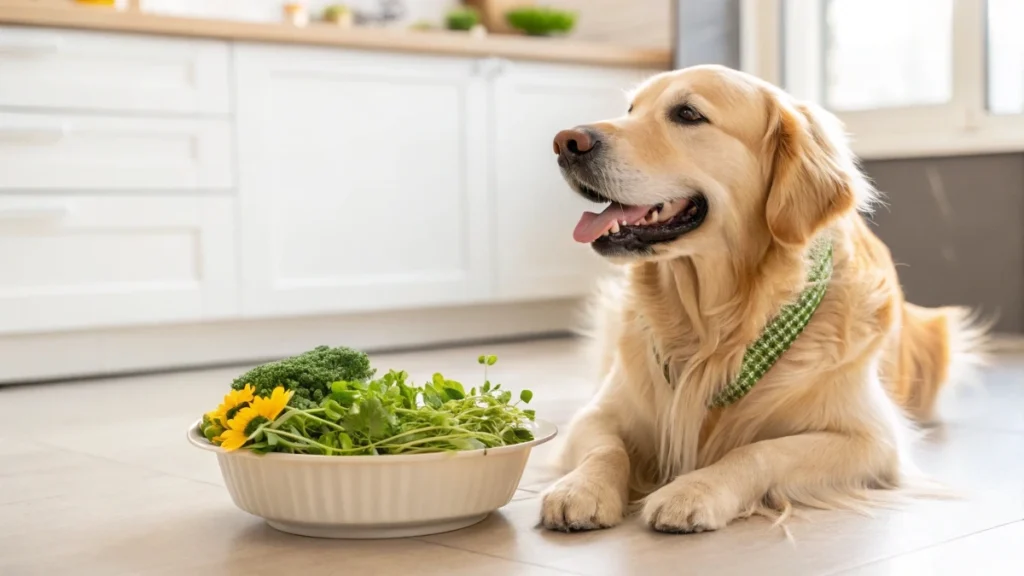
Can dogs eat microgreens? Yes, healthy adult dogs can enjoy small amounts as a fresh topper. Microgreens are the tender seedlings of vegetables and herbs. They are picked when the first true leaves appear.
At this stage, some vitamins and antioxidants can be more concentrated than in full-grown plants. That makes a tiny sprinkle a smart way to add nutrition without many calories. Keep it simple.
Serve plain with no salt or oil. A few types are not safe for dogs, which I list below. The goal is variety in tiny portions while the main diet stays complete and balanced.
Why microgreens are good for dogs
Concentrated vitamins and plant compounds
Early growth packs energy into young leaves. Broccoli and other crucifer seedlings contain helpful compounds such as sulforaphane precursors. Many microgreens provide vitamins A, C, E, and K along with carotenoids. A little goes a long way. This is ideal for a dog that needs nutrients but not extra calories.
Gentle fiber and water content
Most microgreens are high in water and provide a small amount of fiber. This can help a dog feel satisfied at mealtime. Chop the greens very finely so they mix evenly and are easy to digest. If your dog is sensitive, start with a pinch and increase slowly.
Taste variety and enrichment
Dogs enjoy new aromas and textures. Rotating two or three dog-friendly microgreens keeps meals interesting without changing the core diet. This is a simple enrichment that most pets accept well when portions stay tiny.
How many microgreens can dogs eat?
The ten percent rule
Treats and add-ins, including microgreens, should not be more than ten percent of daily calories. At least ninety percent should still come from a complete and balanced dog food. This keeps nutrients in the right range while allowing a safe variety.
Practical portions by body weight
Use these caps for all treats in a day. Microgreens are very low in calories, but the cap matters once you add other snacks.
- Toy dog about 3 kilograms. Up to 20 treat calories per day.
- Small dog, about 5 kilograms. Up to 30 treat calories per day.
- Medium does,g about 10 kilograms. Up to 50 treat calories per day.
- Large dog about 25 kilograms. Up to 100 treat calories per day.
- Very large dog,og about 40 kilograms. Up to 140 treat calories per day.
For microgreens alone, start smaller than you think. A pinch for toy and small dogs. One half teaspoon for medium dogs. One teaspoon for large dogs. Mix into the meal and watch the stool. If loose, cut the amount in half.
Feeding frequency and prep
Two or three times per week suits most healthy adults. Rinse the greens, pat them dry, and chop them very fine. Serve plain. Do not add oil, salt, dressings, garlic, onions, or spices. Introduce one new microgreen at a time so you can see how your dog responds.
🌿 Recommended Microgreens Supplies |
Top 10 dog-friendly microgreens and what they offer
Each option includes key nutrients, a simple serving idea, and a safe starter amount. Keep total treats under the ten percent cap.
1. Broccoli microgreens
What they offer. Vitamins A, C, and K with sulforaphane precursors for cellular support.
How to serve. Finely chop and blend into wet food or moistened kibble.
Starter amount. A small pinch for toy and small dogs. Up to one teaspoon for large dogs.
2. Kale microgreens
What they offer. Vitamin K and carotenoids that support normal blood and eye health.
How to serve. Mix a few clipped strands into the meal.
Starter amount. A small pinch. If gas occurs, reduce by half.
3. Pea shoot microgreens
What they offer. Gentle flavor, plant protein, and fiber that many dogs accept.
How to serve. Chop the tender tips and stir them into the food.
Starter amount. One pinch for small dogs. One half teaspoon for medium dogs.
4. Sunflower microgreens
What they offer. Vitamin E and folate support skin and coat.
How to serve. Mince well to avoid stringy bits.
Starter amount. One quarter teaspoon for small dogs. One half to one teaspoon for larger dogs.
5. Lettuce microgreens
What they offer. Mild taste with high water content for sensitive stomachs.
How to serve. Sprinkle a small amount over wet food.
Starter amount. A light pinch for any size as a first trial.
6. Cilantro microgreens
What they offer. Vitamin K and a fresh aroma that some pets enjoy.
How to serve. Finely mince a few leaves and mix into food.
Starter amount. A tiny pinch because the flavor is strong.
7. Basil microgreens
What they offer. Polyphenols and a calming scent.
How to serve. Mince two or three small sprigs and blend them into the meal.
Starter amount. A tiny pinch for small dogs. One quarter teaspoon for large dogs.
8. Parsley microgreens
What they offer. Vitamin K and fresh breath benefits.
How to serve. Mince very finely and use it rarely.
Starter amount. Only a pinch. Avoid in dogs with kidney disease, a history of stones, or pregnant dogs.
9. Arugula microgreens
What they offer. Calcium, magnesium, and a peppery aroma.
How to serve. Mix a very small amount into food.
Starter amount. A tiny pinch, then assess acceptance.
10. Wheatgrass microgreens
What they offer. Chlorophyll and antioxidantshaveh a clean taste for many pets.
How to serve. Snip a few strands or add a few drops of fresh juice to food.
Starter amount. A few clipped pieces only. Too much can loosen stools.
Microgreens to avoid
Allium family seedlings
Do not feed onion, garlic, leek, or chive microgreens. These can damage red blood cells and may lead to anemia. Symptoms can include weakness, pale gums, fast breathing, red or brown urine, and collapse. Seek veterinary care at once if you suspect exposure.
Spicy and high oxalate greens
Radish and mustard seedlings can upset the stomach in sensitive dogs. High oxalate greens are not a good choice for dogs with a history of urinary stones. If your dog has any urinary issues, choose mild options like lettuce or pea shoots and speak with your veterinarian before adding new foods.
How to serve microgreens safely
Choose and prepare with care.
Pick fresh microgreens that look crisp and vibrant. Avoid any tray with a sour smell or slimy spots. Rinse gently under cool water to remove soil and residues. Shake off excess water and pat dry with a clean towel. Chop very finely so the pieces blend into the food and are easy to digest. Serve plain with no oil, salt, garlic, onions, or dressings.
Simple serving methods that dogs accept
Sprinkle a pinch over wet food so it distributes evenly. Stir into a small spoon of plain pumpkin or unsweetened yogurt and then fold that mix into the meal. Press a tiny amount into a lick mat mash made from your dog’s regular food. Blend a few snipped strands with warm water to make a light slurry and pour a teaspoon over kibble to boost aroma.
Storage and freshness
Keep microgreens cold in the refrigerator. Line a container with a dry paper towel to absorb moisture and cover loosely so they can breathe. Use within three to five days for the best quality. If the greens wilt, darken, or smell off, discard them. Do not leave prepared mixes at room temperature.
H3: Portion troubleshooting
If stools become soft, cut the amount in half and give the gut two or three days to settle. If gas or burping appears, rotate to a gentler option such as lettuce or pea shoots. Introduce only one new microgreen at a time so you can see what agrees with your dog.
When to avoid microgreens or talk to your veterinarian
Life stage and health status
Puppies under twelve weeks should not get add-ins without guidance. Dogs with pancreatitis, chronic vomiting, diarrhea, or inflammatory bowel disease need a tailored plan before any new foods.
Kidney and urinary concerns
Dogs with kidney disease or a history of urinary stones should avoid high-oxalate greens and parsley. Keep hydration steady and ask your veterinarian before you try any plant add-ins.
Thyroid and crucifer intake
Crucifer seedlings, such as broccoli and kale, are fine in tiny amounts for healthy dogs. If your dog has thyroid disease, keep portions very small and consistent and review the plan with your veterinarian.
Medicines and interactions
Greens rich in vitamin K can affect certain anticoagulant medicines. If your dog takes prescription drugs, confirm safety before you add microgreens.
Warning signs that mean stop.
Stop immediately and call your veterinarian if you see repeated vomiting, persistent diarrhea, marked lethargy, pale gums, red or brown urine, trouble breathing, or collapse.
Quick FAQs
Can dogs eat microgreens every day?
Small amounts are safe for many healthy adults, but you do not need them daily. Two or three times a week is a balanced pattern that keeps total treats within the ten percent rule.
Are microgreens better for dogs than regular vegetables
They are different. Microgreens can deliver concentrated vitamins and phytonutrients in a tiny portion. Mature vegetables bring more fiber by volume. For dogs, a light sprinkle of microgreens is an easy way to add nutrition without many calories.
Can dogs eat wheatgrass?
Yes, in tiny amounts. Snip a few strands or add a few drops of fresh juice to the meal. Too much can loosen stools.
What should I do if my dog eats onion or garlic microgreens
These are unsafe for dogs. Contact your veterinarian at once, especially if you see weakness, pale gums, fast breathing, or red urine.
How should I start
Begin with a pinch of a gentle option like pea shoots or lettuce. Mix it into food. Watch the stool for two days. If all looks normal, you can try broccoli or sunflower next, still in tiny amounts.