
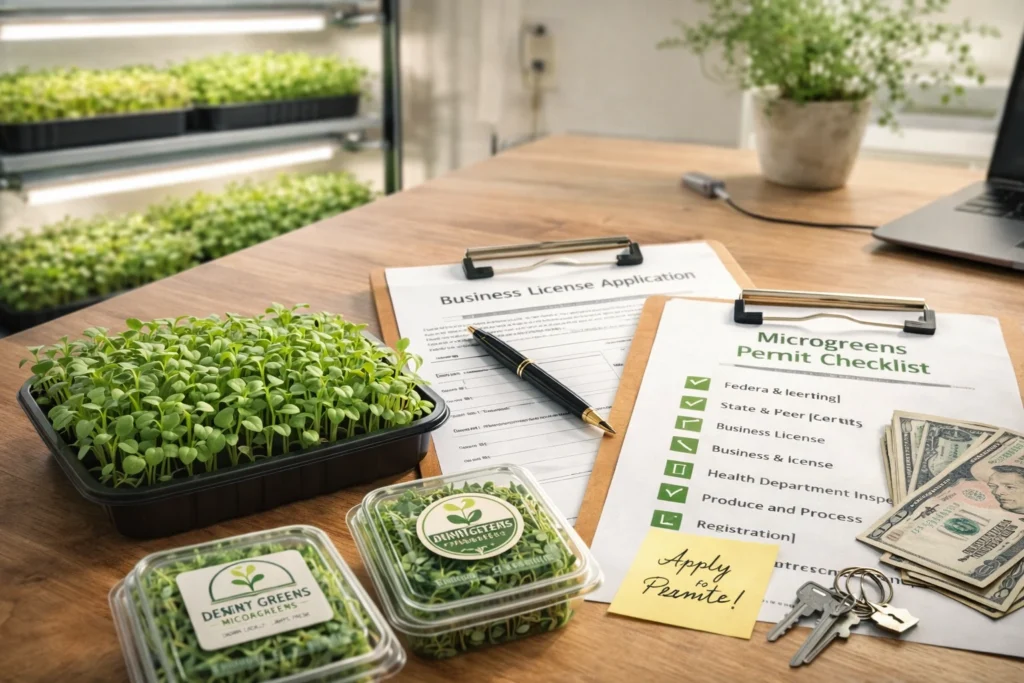
Selling microgreens can be a rewarding business venture, but it’s important to understand the legalities and requirements that might apply, depending on where you live and how you plan to sell. Whether you’re just getting started or looking to expand, understanding licensing and permits is crucial. Let’s break down the key aspects.
Quick Answer: Do You Need a License?
In many cases, you do not need a license to sell microgreens, especially if you’re starting small and selling directly to consumers. If you grow living trays, sell only a single harvest cut, and sell directly to people (either through home delivery or local sales), licensing requirements may not apply.
However, things change if you expand your business or begin wholesaling. If you start processing beyond the basics, such as washing or mixing microgreens, or if you begin selling through intermediaries (such as a retailer), you might need a license or permit.
What Does “Licensing” Actually Mean?
Understanding the distinction between licenses, permits, certifications, and insurance is essential when starting a microgreens business. These are terms that may seem similar but have very different meanings and requirements.
- Licenses: A license typically refers to the official authorization required to conduct business legally. This could include registering your business with the state or obtaining a food safety license. A license often becomes necessary when you are selling products that are considered regulated or have additional processing beyond basic farming.
- Permits: Permits often come into play if you plan to sell in certain venues, such as farmers’ markets or wholesale to other businesses. A permit ensures that your operation complies with local food safety laws and zoning regulations.
- Certifications: Certifications, such as GAP (Good Agricultural Practices), are often voluntary but can help build credibility. They show that your farm meets specific standards related to food safety and hygiene. Certifications like these may not be required for small businesses, but they could be necessary if you want to expand into more professional markets.
- Insurance: While not a license or permit, liability insurance is often recommended. It helps protect your business from potential risks, especially if you’re handling food products.
United States: Understanding Licensing Requirements
In the United States, licensing requirements can differ significantly from state to state, and sometimes even from city to city. Generally, the rules depend on how you plan to sell your microgreens and what type of processing you’re doing.
For example, if you’re growing living trays of microgreens, you might not need a license at all. Many states do not require permits for businesses that sell produce as long as they don’t engage in food processing. This was the case for many microgreens growers who confirmed that living trays and single-cut harvests don’t require specific permits if sold directly to customers.
If you are selling directly to consumers, such as through home delivery or local sales, then you may not need to deal with complex licensing or permits. However, if your business grows and you start to wholesale (selling to restaurants or distributors who then resell your products), the licensing requirements could change. Wholesale typically involves more regulations, and you may need a permit to sell your microgreens to larger establishments like restaurants or grocery stores.
It’s also important to check your state’s Department of Agriculture for any local rules. Some states require a food safety license or certifications like GAP to sell at farmers’ markets, while others may have looser regulations for smaller operations. These nuances are why it’s vital to research your state’s specific guidelines.
Certifications vs. Licenses: What’s the Difference?
It’s essential to differentiate between certifications and licenses, as both impact your business in different ways.
- Good Agricultural Practices (GAP) certification is often voluntary but can be required for specific markets. GAP certification is a way to show that your farm follows industry best practices related to food safety, sanitation, and traceability. The certification process typically involves inspections and the documentation of practices like proper sanitation procedures, safe storage conditions, and the use of sanitized tools and equipment. While not required by all markets or restaurants, obtaining GAP certification can give your business an edge when trying to enter more professional or larger-scale markets, such as high-end restaurants or large grocery chains.
- On the other hand, a license is something more official and usually involves a government body granting you the right to conduct business within certain rules or regulations. While licenses can apply to selling microgreens, certifications like GAP are generally aimed at ensuring your practices meet food safety standards, even if they aren’t mandated by law.
Insurance and Risk: Should You Get It?
While not always legally required, product liability insurance is an important consideration. You may not be processing high-risk foods, but accidents do happen, and it’s better to be covered. Insurance helps protect your business if something goes wrong, such as food contamination or an allergic reaction to your product.
For instance, one example discussed in the content shared above was FLIP insurance, which is a product liability insurance company for microgreens businesses. They offer coverage for around $300 per year, which can provide you with $1 million per incident, up to $2 million over the lifetime of your policy. This is relatively affordable considering the potential risks involved in handling food products.
In general, microgreens are considered low-risk compared to other produce, such as dairy or meat. However, following best practices for sanitation, proper labeling, and offering a quality product can go a long way in minimizing the need for insurance claims.
Thresholds and Exemptions: When You Might Be Exempt
In some states, businesses that earn less than $20,000 annually may be considered exempt from certain licensing and regulatory requirements. If your microgreens business falls within this threshold, you may find that local authorities are less concerned with enforcement. For example, in one case, the speaker from the shared transcript mentioned that small-scale businesses earning less than $20,000/year did not need to worry about many of the regulations that apply to larger, commercial growers.
However, even if you’re earning below that amount, it’s important to check the specific rules in your state. Some regions may still require specific permits or licenses, even for small businesses.
Direct Sales vs. Wholesale: Why It Matters Legally
When selling microgreens, the legal requirements can change depending on whether you’re selling directly to consumers or engaging in wholesale.
- Direct-to-consumer sales: This is the simplest model and usually comes with the fewest regulatory hurdles. Selling microgreens directly to people, whether through home delivery, local sales, or even setting up an online store, generally does not require special licenses as long as you aren’t doing more complex processing like washing or mixing your greens. It’s simply about growing and selling.
- Wholesale sales: On the other hand, if you start selling to businesses, such as restaurants or grocery stores, the situation changes. Wholesale involves more steps in the supply chain, and you may need a food safety permit, especially if your product is repackaged or processed in any way. If you are selling your product to be resold or incorporated into another business, you need to be aware of these regulations.
Additionally, certain markets or larger operations may require certifications like GAP to demonstrate that you meet food safety standards, even for wholesale.
🌿 Recommended Microgreens Supplies |
Farmers Markets vs. Other Channels: Licensing Implications
Farmers’ markets can be a great way to gain exposure and sell directly to consumers, but they come with their own set of challenges and licensing implications. While selling at a farmers’ market may seem like the perfect way to start your microgreens business, it can require specific permits and certifications that you might not need when selling directly to consumers through other channels.
Farmers’ Markets: What You Need to Know
If you’re planning to sell at a farmers’ market, you may need to check with the local market organizers or local health departments to ensure you meet all their requirements. For instance, in some areas, vendors must provide proof of business registration or have a food safety permit to ensure that the products sold meet health standards.
In some regions, markets may require you to comply with GAP standards. These standards help ensure that your farming practices are safe, hygienic, and of a high enough standard to provide consumers with safe food. This can include basic measures such as sanitation of your growing area, proper storage of produce, and correct labeling.
However, farmers’ markets have some benefits that make them a popular option. You have direct access to consumers, which means you can receive immediate feedback and build a loyal customer base. Additionally, if you are selling a product like microgreens, which often has a high perceived value, farmers’ markets can provide a place where people who care about quality and sustainability are likely to purchase your product. The downside, however, is the time and effort involved in setting up and tearing down booths, especially if the weather doesn’t cooperate or if the foot traffic is low.
Other Sales Channels: Direct Sales, Restaurants, and Grocery Stores
If you decide to bypass farmers’ markets and aim for a more scalable business model, there are alternative sales channels that may not require the same licensing and effort.
- Direct-to-consumer sales, like online orders or local subscriptions, often don’t have the same restrictions as selling at afarmers’s market. You’ll need to ensure that your products are labeled and stored properly, but generally, these channels involve fewer regulatory hoops to jump through. By offering weekly subscriptions or deliveries to your local area, you can build a more consistent customer base and reduce the reliance on unpredictable sales events likfarmers’rs markets.
- Restaurants often represent another lucrative avenue. Many chefs are looking for high-quality, local, and organic ingredients to elevate their dishes, and microgreens are a perfect fit. Restaurants, particularly those that focus on farm-to-table cuisine, may not require a food safety license for purchasing microgreens directly from local growers. However, you might be required to follow local health codes and have consistent product quality, which could be backed up by certifications like GAP. In many cases, chefs appreciate reliability and consistency more than complex licenses.
- Grocery stores present a more challenging option. They require professional-grade packaging, labeling, and may expect suppliers to adhere to specific food safety standards. While you may not need a license to sell directly to consumers at a store, larger grocery chains or health food stores may require more official documentation and business registration to ensure compliance with food safety and health regulations.
Labeling, Sanitation, and Packaging: The Non-Negotiables
While you may not always need a specific license to sell microgreenseveral non-negotiable practices ensure your business operates legally and ethically. These practices often involve things like sanitation, product labeling, and packaging.
Sanitation
Good hygiene practices are essential in the microgreens business. Even though the product itself is relatively low-risk, contamination can happen if you don’t maintain clean growing and harvesting environments. To minimize any risks, it’s crucial to:
- Clean your growing trays and tools regularly.
- Ensure your harvesting knives are sanitized each time you use them.
- Store microgreens in clean, cool environments to prevent spoilage.
Maintaining these practices doesn’t just protect your product; it helps you build a trustworthy reputation and can potentially prevent foodborne illnesses that could harm your business.
Product Labeling
Proper labeling is vital for any business selling food products. While specific regulations might differ by region, at a minimum, your labels should contain:
- Your farm name and contact information.
- Product name (e.g., “Pea Shoots” or “Mixed Microgreens”).
- Best-before date to ensure freshness.
- Weight/size of the product.
- Ingredient list if you sell mixed greens or value-added products.
These labels are not only a legal requirement in many regions but also serve as a great marketing tool to show your professionalism and commitment to quality.
Packaging
Packaging is another area where compliance is key. The most common packaging for microgreens is clear clamshell containers (typically 4 oz sizes), which allow consumers to easily see the product. The packaging should be clean, attractive, and professional to appeal to both consumers and potential buyers, such as restaurants and grocery stores.
A Simple Compliance Checklist
If you’re unsure about whether you need a license or permit to sell microgreens, use this checklist to help guide you through the process:
- Living trays: If you’re selling living trays (unharvested microgreens), you typically do not need a license. This is generally true unless your state has specific food safety rules in place.
- Harvesting once: If you are cutting the microgreens only once (not processing further) and selling directly to consumers, you typically don’t need a license, though it’s good to check local regulations for exceptions.
- Wholesale/Reselling: If you plan to sell to resellers or distribute your microgreens to other businesses, you will likely need additional permits, such as a food safety permit or business registration.
- GAP certification: Consider obtaining Good Agricultural Practices (GAP) certification, especially if you plan to sell to restaurants, grocery stores, or enter markets that require higher standards of hygiene and food safety.
- Get insured: While not mandatory, product liability insurance (such as FLIP) is recommended to protect your business from potential legal claims.
- Sanitation and labeling: Maintain strict sanitation protocols, and ensure all products are labeled with essential information, including your farm name, product name, best-before date, and any other required info.
Red Flags That Usually Mean a License is Needed
Certain activities may trigger the need for a license or permit. These include:
- Processing beyond a single cut: If you wash, mix, or package microgreens in a way that adds complexity to the product (e.g., pre-packed salads), you may need a food safety permit or license.
- Wholesaling: If you sell to a distributor or retailer who will then resell your product, this often requires additional regulatory steps, including business registration and possibly a food safety license.
- Selling at large-scale retailers: When selling to grocery stores or larger institutions, packaging, labeling, and even certifications like GAP may be required to ensure product safety and consistency.