
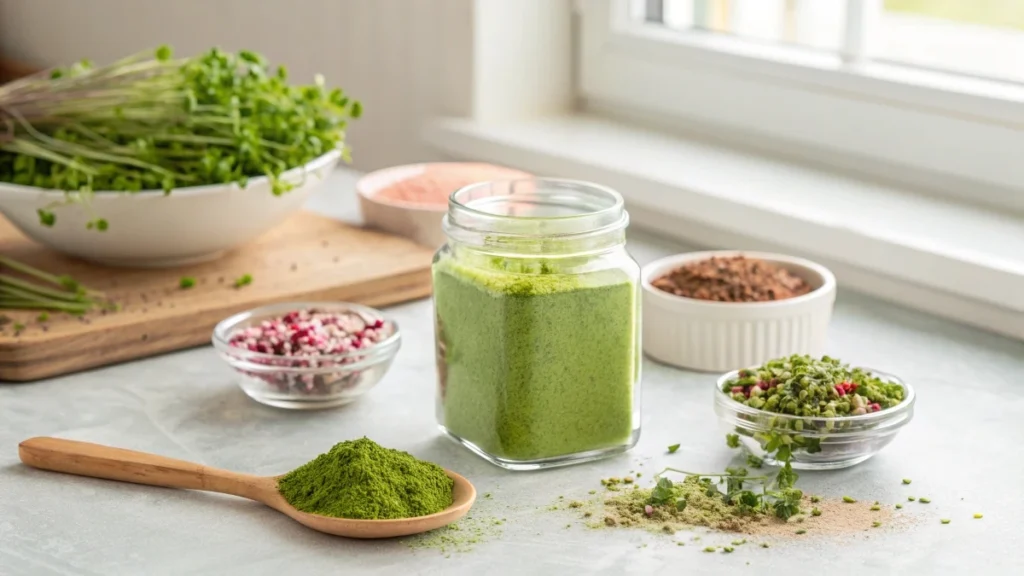
Freeze-dried microgreens have become a quiet revolution in the way people store and consume greens. They are tiny, nutrient-rich plants that have been preserved by removing moisture at low temperatures, keeping their enzymes and vitamins intact. Once dried, they stay shelf-stable for months without losing color, texture, or flavor.
Many home growers now use freeze drying as a way to capture the nutritional peak of their harvest and turn it into a fine powder for smoothies, soups, or supplements. Because the process happens at subzero temperatures, nutrients such as vitamins C, K, and antioxidants remain far more stable than in traditional drying.
From a practical standpoint, freeze drying solves a common problem in microgreen growing—short shelf life. Fresh greens last barely a week in the fridge, while freeze-dried greens can last for a year or longer when stored properly. This long preservation time has made them popular among small farmers, nutrition-conscious families, and anyone seeking to make their own superfood powders at home.
Why Microgreens Are Ideal for Freeze Drying
Microgreens are naturally nutrient-dense, which makes them excellent candidates for freeze-drying. Studies and grower data show that these small plants can contain anywhere between three and forty times more vitamins and minerals than their mature versions. Because of this density, even a spoonful of microgreen powder can deliver as much nutrition as a large serving of vegetables.
Microgreens grow extremely fast—most reach harvest size within 10 to 14 days. The short growing cycle allows for continuous batches indoors, no matter the season. When combined with freeze drying, this means you can grow, harvest, and store nutrient-packed food every two weeks, all year long.
The compact growing setup is another reason microgreens fit freeze drying so well. A standard 10×20 tray under a grow light or sunny window can produce enough greens to fill a full freeze-dryer tray. This makes it both efficient and space-saving.
Best Microgreen Varieties and Flavor Profiles
Certain microgreens freeze-dry better than others due to their texture and moisture content. Among the most reliable are broccoli, radish, turnip, pea shoots, wheatgrass, and mixed salad greens.
- Broccoli: Mild and earthy with high sulforaphane, known for its antioxidant benefits.
- Radish: Adds a subtle peppery flavor, great for spice blends or soups.
- Turnip: Gentle and neutral taste that mixes well into powders.
- Pea Shoots: Slightly sweet and soft, making them perfect for smoothies.
- Wheatgrass: Classic choice for green juice lovers, rich in chlorophyll and folate.
- Salad Mixes: Balanced flavor that works in both savory and sweet recipes.
Using multiple varieties in a batch not only balances flavor but also increases the range of nutrients. For example, mixing broccoli (rich in vitamin K) with pea shoots (high in protein and fiber) creates a more complete nutritional profile in your final powder.
🌿 Recommended Microgreens Supplies |
Harvesting and Preparation Before Drying
The perfect harvest time for microgreens is when they have developed their first set of true leaves. This stage gives maximum nutrition without the fibers toughening up. Use a clean, sharp knife to cut just above the soil line, taking the entire stem but leaving the roots behind.
Because most homegrown microgreens are raised in controlled indoor spaces, rinsing is not always necessary before drying. Skipping the rinse helps prevent added moisture that can extend drying times or affect texture. If you do rinse, pat them dry thoroughly.
Once harvested, greens should be spread out quickly to preserve freshness. Keeping them covered or pre-freezing them in trays helps lock in color and nutrients before the freeze-drying cycle begins.
Step-by-Step Freeze Drying Process
The freeze-drying process begins with pre-freezing your greens. This can be done by placing them directly on Harvest Right-style trays or by blending them with a small amount of water into a smooth paste to fit more material per tray.
Once frozen solid, the trays go into the freeze dryer. The typical cycle for microgreens lasts about 12 hours, depending on the machine and load size. During this process, ice crystals inside the greens sublimate—turn directly from solid to vapor—leaving behind dry, crisp plant matter.
The result is feather-light microgreens that maintain their structure and vivid green color. One practical note is that cruciferous greens, such as broccoli, can release a strong sulfur smell while drying. This is normal and can be managed with a thorough cleaning of the dryer afterward.
How Much Powder Can You Expect
Freeze-dried microgreens shrink dramatically once dried, condensing their nutrition into a fraction of the space. A real-world batch of five trays typically reduces to about one and a half cups of fine powder once ground. Individual trays of single crops yield very lightweight results: roughly 0.5 ounces for pea shoots, 0.5 ounces for wheatgrass, and around 0.3 ounces for radish or turnip per tray.
Another example shows that two full 10×20 trays of broccoli microgreens can become only a small handful of powder. This concentration is what makes freeze-dried microgreens ideal for capsules and supplements—a tablespoon of powder can equal several handfuls of fresh greens.
Turning Freeze-Dried Greens into Powder and Capsules
Once the microgreens are fully dried, they become crisp and brittle. A simple coffee grinder or compact blender will grind them into a fine, smooth powder within a few minutes. Using a funnel designed to fit your tray size helps transfer the material neatly into jars or grinders.
The powder can be stored in airtight glass jars or resealable bags for convenience. Some people prefer to keep two types of storage—one for daily use in cooking and one for capsule filling. Filling size 0 or 00 capsules is a common method for making daily “green pills.” Each capsule typically contains the nutrition of a large handful of fresh greens, making it easy to take on the go.
The same powder can also be stirred into smoothies, soups, sauces, or even baked goods. Because freeze-dried microgreens dissolve well, they add nutrients without altering texture.
Storage and shelf life for freeze-dried microgreens
Proper storage is what turns a short-lived harvest into a long-lasting pantry staple. Freeze-dried microgreens should feel crisp and dry all the way through. Store them in airtight containers away from light and humidity. Two practical options work very well. Mason jars with tight lids for everyday scooping and vacuum-sealed Mylar bags with oxygen absorbers for long-term backup. Keep jars in a cool cupboard rather than near the stove. Label each container with the variety and the date so you can rotate stock.
Shelf life depends on dryness and packaging. In normal home conditions, a sealed jar of freeze-dried microgreens can keep its quality for many months. Mylar with oxygen absorbers extends that further. Whole shards look pretty in a jar, but powder is more convenient and less fragile. If you plan to use capsules or smoothies often, grind the whole batch at once and store the finished powder. Open only one small jar at a time so the rest stays untouched.
How to tell your batch is dry enough.
Rub a leaf between your fingers. It should crumble instantly with no leathery spots. Break a thicker stem. It should snap cleanly with no bend. If you are unsure, return the tray for a finishing run. Fully dry greens store better and hold flavor longer.
Everyday ways to use freeze-dried microgreens powder
The simplest way is to stir a teaspoon into a smoothie at breakfast. The powder dissolves well and does not leave grit. Tomato soups, noodle broths, and stews take a tablespoon without changing texture. Sprinkle a small pinch over eggs or grain bowls for a quiet nutrition lift. Fold into salad dressings and pesto to boost greens without adding bulk.
Some varieties have distinctive flavors that help in cooking. Radish powder adds a gentle peppery note to savory dishes. Pea shoot powder is slightly sweet and blends into fruit smoothies that kids enjoy. Wheatgrass powder brings a classic green taste to juices. Mixed salad powders are balanced and work in almost anything.
Green shots are another option. Stir a small scoop into a glass of cold water or citrus water and drink it at once. Reactions vary. Some people like the fresh green taste. Others prefer to chase with juice. Capsules are the no-taste route for those who want daily consistency without blending.
Dehydrating microgreens vs freeze drying microgreens
Both methods preserve greens, and both can fit a home kitchen. They differ in equipment cost, texture, and moisture removal.
What dehydrating looks like in practice
A basic dehydrator set on the lowest herb or spice setting dries microgreens in about four to five hours. The leaves should crumble like dried parsley when finished. A coffee grinder turns the dried leaves into a fine powder in two to three minutes. Dehydrating is affordable and easy to repeat in several short rounds if you have extra trays of greens. Gentle low heat helps protect color and flavor. Many home growers report that when done carefully, dehydrated microgreens retain impressive nutrition.
What freeze-drying looks like in practice
Freeze drying removes moisture by sublimation rather than heat. Trays are often pre-chilled and covered until a full load is ready. Typical cycles for microgreens finish in about twelve hours. The result is very light, crisp greens that powder instantly and store for a long time. Brassica varieties can release a strong aroma during drying. Plan to clean the chamber and drain thoroughly afterward.
Which one fits your goals
Choose dehydrating if you want the lowest upfront cost, shorter sessions, and quick powders for seasoning and smoothies. Choose freeze drying if you want maximum dryness, the best shelf stability, delicate structure, and very light powders that pack densely into jars and capsules. Many kitchens use both. Dehydrate small overflow batches during the week and run a full freeze dryer load when several trays are ready.
Quality, safety, and taste notes for freeze-dried microgreens
Work clean from seed to jar. Use fresh seed, clean trays, and a tidy grow area. Harvest at the first true leaf stage and move greens to trays promptly. In clean indoor setups, many growers do not rinse before drying in order to avoid extra surface water. If you do rinse, dry thoroughly with towels and air before loading.
Broccoli is famous for its strong sulfur smell during drying. This is normal for brassicas. Ventilate the room and clean the machine well after the batch. Drain water promptly because the defrost water can smell sharp.
Taste is personal. Adults often describe powders as fresh or earthy. Kids usually prefer pea shoot blends or smoothies that include fruit. Start with small amounts and adjust. In cooking, a teaspoon disappears into sauces and soups. In drinks, colder water and citrus help the flavor feel brighter.
Zero-waste and sustainability tips
Nothing needs to be thrown away. Spent roots and growing medium are perfect for a worm bin. Worms turn the leftovers into rich castings for future trays. Trimmings can go to backyard chickens if you keep poultry. Powder cuts food waste by transforming surplus trays into an ingredient that lasts. Store powder in compact jars so it takes up little space on pantry shelves. Planning batches around your family meals keeps production steady and avoids overgrowth.
FAQs
Can you freeze-dry your microgreens?
Yes, you can freeze-dry microgreens at home, and it’s one of the best ways to preserve their nutrients for months. The process removes moisture at very low temperatures, protecting vitamins and antioxidants. Harvest at the first true leaf stage, spread evenly on trays, and pre-freeze before starting a cycle of about twelve hours.
Once crisp and dry, store them in airtight jars or Mylar bags with oxygen absorbers. Varieties like broccoli, radish, pea shoots, and wheatgrass work especially well and can stay shelf-stable for up to a year.
How to use freeze-dried microgreens?
Freeze-dried microgreens are simple to use. Grind them into powder and add to smoothies, soups, eggs, or sauces for instant nutrition. Their mild flavor blends easily—radish adds gentle spice, while pea shoots taste subtly sweet. You can also fill capsules with the powder for quick daily supplements or mix a spoonful into water or juice for a fast green boost. They dissolve easily and keep their nutrition long after fresh greens fade.