
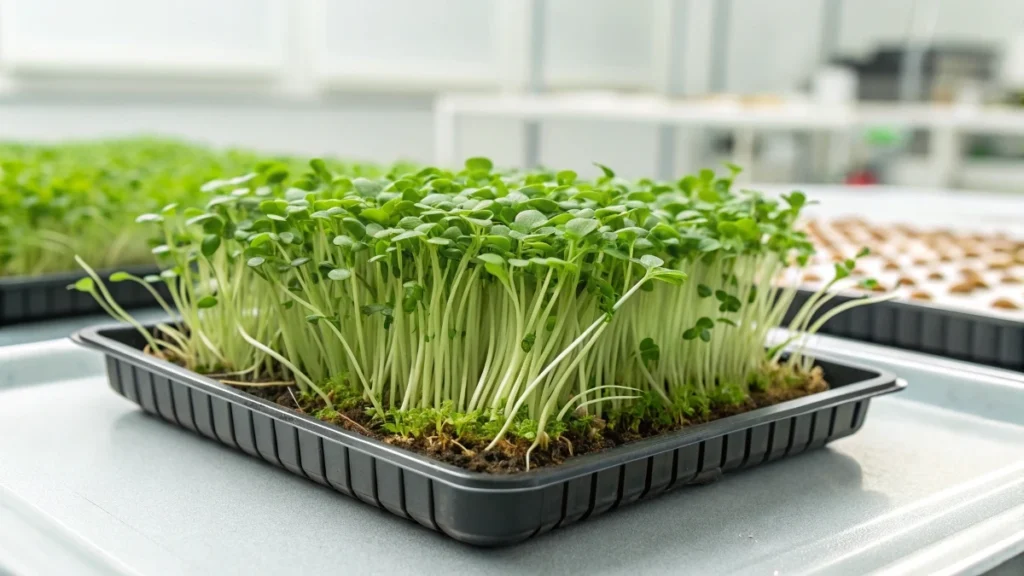
Bok choy microgreens are one of the easiest and most rewarding crops you can grow at home. Known for their mild cabbage flavor, crisp stems, and delicate peppery finish, they are ready to harvest in as little as 7 to 10 days.
These tiny greens are packed with essential vitamins like A, C, and K, along with calcium, magnesium, and iron, making them a nutrient-dense addition to everyday meals.
Whether you are looking to boost the freshness of salads, garnish a steaming bowl of ramen, or add crunch to toast, bok choy microgreens deliver flavor and health benefits.
With simple equipment, minimal space, and consistent results, anyone can enjoy growing and cooking with these versatile greens.
Why Grow Bok Choy Microgreens
Nutrition and flavor you will actually use
Bok choy microgreens bring a mild cabbage taste with a light peppery note and a crisp bite. Growers repeatedly call out the crunchy stems and gentle flavor, which makes them easy to add to meals without overpowering other ingredients. They are naturally rich in vitamins A, C, and K along with useful minerals, and because you harvest young plants, you get a tender texture with concentrated fresh taste.
Fast results and low hassle
This crop moves quickly. With a compact method, you can reach harvest in about seven days. With a slightly longer blackout and a careful drying routine,e you can harvest around day ten. Both timelines are proven by experienced growers and give you flexibility based on your setup and schedule.
Yield and real-world pricing
Seed use is modest, and the return is solid. One proven approach uses about 20 grams of seed for a standard 10×20 tray. Another method uses about one ounce,e which is roughly 28 grams for the same tray size. Harvests range widely with technique and light. A careful seven-day grow can reach roughly 8 to 12 ounces from a 10×20 tray seeded at about one ounce. A more conservative sowing rate with a ten-day schedule produced around three retail packs at two ounces each, which is six ounces from a tray. Pricing depends on location and market. Adirect-to-customerr model has worked at 6 dollars for two ounces and 10 dollars for four ounces. Another grower reports common retail in the range of 3 to 4 dollars per ounce. Those numbers help you decide how to position your crop locally.
Scales from the windowsill to the system
The same seed can serve tiny home containers, standard microgreen trays, and even hydro. You can start densely like microgreens on rockwool, then move the rooted blocks into an ebb and flow bed filled with clay pebbles. That approach grows baby bok choy clusters for continued harvests. Roots easily thread through rockwool and hold together as a transplantable mat.
Growing Bok Choy Microgreens Step by Step
Materials you actually need
Use untreated bok choy seed. Plan for 20 grams to 28 grams per 10×20 tray. For media, coco coir works on its own. A half-and-half blend of organic potting soil and coco coir also works well since the blend holds moisture without becoming water resistant. Avoid extra fine seed starting mixes that contain lots of perlite or vermiculite since they can resist wetting and slow even germination. Use a 10×20 tray with no holes nested inside a tray with holes, plus a mister or spray bottle. A shaker jar helps you spread seed evenly. For hydro starts, use rockwool cubes and clay pebbles. Keep a sharp knife for harvest.
Sowing and initial watering
Fill the tray with two to two and a half scoops of coir or your soil blend and level it carefully. Lightly firm the surface without compacting. Mist the surface so seeds stick where they land. Spread the seed as evenly as you can. A spice shaker makes this simple and prevents clumps. Avoid pushing density beyond the proven rates. Overcrowding traps humidity, reduces airflow, and invites damping off. After seeding, mist enough to carry the crop through the entire covered period. The goal is a single thorough misting, so you do not need to reopen the tray to water again until blackout or light.
Covered germination
Cover the seeded tray to block light and add gentle pressure. A second tray flipped upside down works well. You can stack four to six trays to add uniform weight and save space. Leave the tray alone for about two to three days. This hands-off window is important because it lets roots set without temperature swings and without extra moisture pooling from frequent checks.
Blackout for height and strength
When you lift the weight, the surface should show even sprouting. Now give the crop a tall blackout dome or a high tray so shoots can stretch. Two days in darkness encourage the stems to reach for light, producing a harvestable height without becoming weak. Many growers see pak choi respond especially well to this stage.
Into the light and simple watering
Move the tray to ba right light on day six if you follow the longer schedule or immediately after the shorter covered period if you follow the seven day plan. Expect pale yellow at first, which turns green within about a day. Rotate trays daily if sunlight comes from one side to prevent leaning. Water from below by lifting the crop tray and adding a small measured amount to the reservoir. One cup is often enough for a tray that still feels slightly moist. Let the medium guide you rather than a fixed calendar. Some growers alternate plain water and a mild nutrient solution every other day. Others use plain water only. Both work since pak choi is forgiving at the micro stage.
Harvest window and handling
Harvest at day seven for a fast crop or at day ten for thicker stems and a fuller canopy. Before cutting, ensure the canopy is dry. If the center looks damp, increase airflow for part of the day and hold off on watering. Cutting wet greens shortens shelf life in the container. Use a sharp knife and cut about one-quarter inch above the medium so you avoid bits of coir or soil. Do not rinse if your crop is clean since washing reduces shelf life. If seed coats linger, a gentle shake over a bowl lets debris fall away. Expected harvest depends on sowing rate, light, and schedule. Plan for six to twelve ounces per 10×20 tray within these methods.
🌿 Recommended Microgreens Supplies |
Tips for Best Results
Seed density and airflow
Stay within the 20 to 28 gram range per 10×20 tray. Heavier sowing creates a crowded canopy that stays wet. That is the fastest way to run into damping off, even with a fan nearby. If you want more product, add another tray instead of pushingthe density.
Moisture management
Give a generous initial mist so the covered phase runs on its own. Once you uncover the light, bottom water lightly and watch the weight of the tray. Keep the canopy dry the day before harvest. If the center feels humid, run airflow over the shelf and skip watering that morning.
Small handling habits that pay off
Label trays clearly with crop and sow date. Stack trays during the weighted period to save space. When returning trays to shelves, avoid snagging tall neighbors to prevent breakage. If you sell, package in clean food-grade containers, and consider a small humidity absorber to slow condensation. A real-world setup used two-ounce packs at 6 dollars and four-ounce packs at 10 dollars, which also saves labels and time.
Hydro extensions
If you want to grow past the micro stage, start densely on rockwool and top with a thin layer of coir for even moisture. Rinse away loose coir before moving the rooted blocks. Place the cluster into an ebb and flow bed filled with clay pebbles. Raise the water level during placement, then settle pebbles around the block. Multiple plants can share the same system alongside greens like Swiss chard and even tomatoes.
Easy Recipes with Bok Choy Microgreens
Ramen bowl finisher
Cook your favorite ramen or noodle soup. Ladle into a bowl and scatter a generous handful of bok choy microgreens on top right before serving. The hot broth softens the greens slightly while keeping the stems crisp.
Crunchy egg and avocado toast
Toast thick bread, spread ripe avocado, add a soft-boiled or fried egg, then pile on bok choy microgreens. Finish with a pinch of salt and a squeeze of lemon. The greens give a fresh bite that balances the richness.
Ten-minute skillet stir fr.y
Warm a little oil in a pan. Sear sliced mushrooms and thin strips of bell pepper. Turn off the heat and toss in a big handful of bok choy microgreens with a splash of soy and a few sesame seeds. The residual heat wilts the greens just enough.
Peppery salad mix
Combine bok choy microgreens with radish microgreens and a few sunflower shoots. Add sliced cucumber and a light vinaigrette. The mix brings crisp texture with a gentle mustard note and stays tender.
Green smoothie add-in
Blend spinach or mango with yogurt or a plant milk. Add a small handful of bok choy microgreens and blend again. You get a mild brassica note and extra freshness without bitterness.