
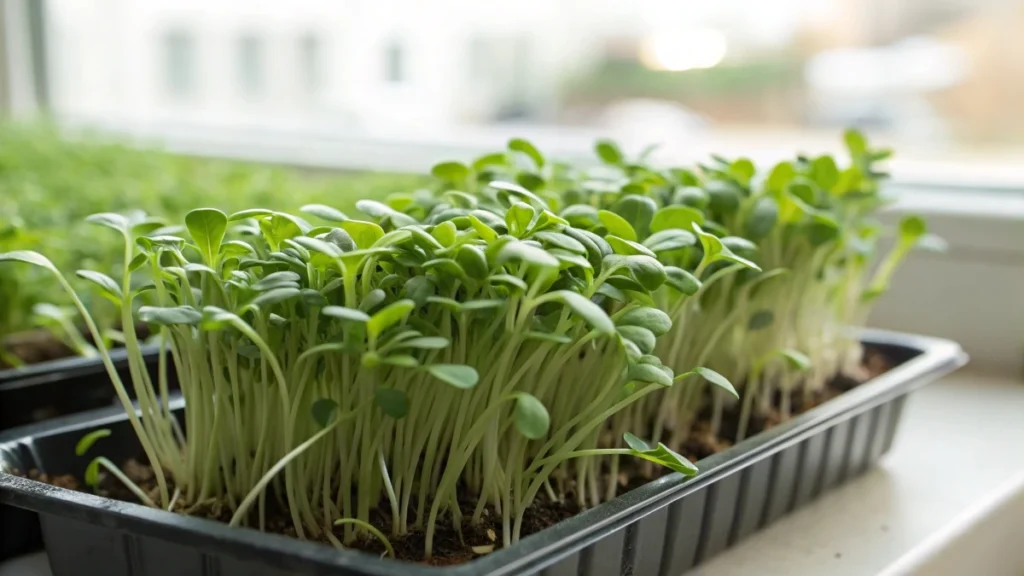
Borage microgreens come from Borago officinalis, a traditional herb admired for its star-shaped blossoms in striking shades of purple and blue. As young seedlings, they develop a mild fragrance similar to tamarind and a crisp taste often compared to cucumber or guava. This unique flavor makes them a welcome addition to salads, sandwiches, or smoothies, while the visual beauty of their soft green leaves adds appeal to the plate.
For those who enjoy growing fresh food at home, borage microgreens are an engaging crop. They display clear growth stages that can be observed day by day, from the first cracks in the soil on day five to the leafy, harvest-ready greens around day twelve. Their journey involves steady care, but with simple steps, anyone can enjoy a rewarding harvest in less than two weeks.
Nutritional Benefits of Borage Microgreens
Rich in Essential Vitamins and Minerals
Borage microgreens are valued for their dense nutritional content. They provide vitamins A, C, and E, all of which play an important role in supporting immunity, skin health, and cell repair. These greens are also a natural source of calcium, magnesium, and potassium, minerals that contribute to bone strength, muscle function, and balanced hydration.
Gamma Linolenic Acid and Antioxidants
One feature that sets borage apart is its content of gamma linolenic acid (GLA), a type of omega-6 fatty acid that has been associated with reduced inflammation and improved cardiovascular function. Combined with flavonoids and other antioxidants, borage microgreens help combat oxidative stress and protect the body from free-radical damage.
Benefits for Skin and Appearance
Regular use of borage microgreens in meals may support skin hydration and reduce visible signs of aging. The balance of vitamins, essential fatty acids, and antioxidants is often highlighted for its role in maintaining youthful, moisturized skin. This is one reason why many health-conscious eaters choose borage as a daily green.
Taste Profile That Enhances Meals
Beyond nutrition, the flavor of borage microgreens makes them easy to include in the diet. Their tamarind-like aroma and cucumber-style taste create a refreshing base for light dishes. You can add a handful of freshly cut shoots to a salad or sandwich without needing heavy dressings, making it effortless to integrate these greens into everyday meals.
Growing Borage Microgreens at Home
Materials You Will Need
To start growing at home, you need borage seeds, a planting tray or small round cups, quality potting soil, a fine mist spray bottle, and a watering can.
A firm cover for blackout and a small weight placed on top will help during the germination phase. Large tweezers can be handy for fixing clumps of seedlings once they emerge.
A good starting point for seed amounts is 2.5 grams for a small cup or 5 grams for a tray. In some cases, 7.5 grams of seeds in a tray has been shown to yield enough for about three meals.
Preparing the Seeds
Soak the seeds in water for 8 to 12 hours overnight. After soaking, drain the water and place the seeds on tissue paper for about 30 minutes so the surface moisture is absorbed. This step prevents the seeds from sticking together when they are sprinkled. Once soaked, the seeds swell to about twice their size and develop a gel-like coat, which is completely normal.
Preparing the Soil
Fill the container with about one inch of soil, then smooth and gently press it to create an even surface without compacting it. If the soil feels dry, spray lightly with water until it feels cool and slightly moist to the touch.
Sowing the Seeds
Scatter the soaked seeds evenly across the soil, making sure they do not overlap. If you notice areas that are too crowded, use your fingers to spread them out. Mist thoroughly to help the seeds settle. For borage, it is important to cover the seeds with a thin layer of soil. Trials without soil cover result in slow germination and twisted seedlings. Spread the soil evenly over the seeds, press lightly, mist again, then place the cover on top and add a small weight.
Daily Care and Growth Timeline
Germination Stage: Days 1 to 4
Keep the tray covered and check daily for moisture by feeling the soil. On days three and four,r you may not see any change above the surface, but as long as the soil feels cool and moist, the seeds are developing well. Mist lightly if the surface appears dry.
Early Growth: Days 5 to 6
By day five, the soil surface begins to crack as sprouts push upward. By day six, you will see clear germination. At this point, remove the cover and place the tray in bright light to encourage upright growth. Begin using a gentle watering can instead of relying only on misting.
Seedling Development: Days 7 to 9
On the seventh and eighth days, stems become taller and lean toward the light. Rotate the tray daily so the plants remain straight. Continue watering regularly. If any seedlings ride up on others or clump together, gently separate them and place them back into the tray with tweezers. Some growers follow a pattern of 30 seconds of watering followed by 10 seconds of misting on the lid before returning the tray to the rack.
By the ninth day, leaves begin to appear, similar in shape to sunflower seedlings. The plants look visibly stronger each day.
Strengthening Stage: Days 10 to 11
At this point, the tray looks dense, and the leaves are thick with soft hairs. The aroma becomes more pronounced, fresh, and slightly tangy. Roots extend deep into the soil and produce visible root hairs, which are a normal and healthy feature. Continue to water consistently and rotate the tray toward the light.
Harvest Stage: Day 12
By day tw, elve the canopy is full, the stems are tall, and some seedlings may show a small third leaf. This is the perfect time to harvest. The greens are crisp, fragrant, and ready to enjoy.
Harvesting and Storing Borage Microgreens
Harvest with clean scissors, cutting just above the soil line. If any seedlings look pale or misshapen, remove them as you go. Many growers taste these right away and describe the flavor as light cucumber with a delicate scent.
Rinse the harvested greens in cool water and allow them to drain thoroughly. Proper drying improves storage life, so let them shed surface moisture before refrigerating. A tray without drainage holes can still produce a firm root mat that clings well to the soil, making harvest neat and easy.
One example shows that planting 7.5 grams of seed provides about tmeals’meals worth of greens, giving you a practical reference for planning. Store harvested shoots in the refrigerator, where they will keep for four to six days if kept dry. Use them fresh in salads, sandwiches, or blended drinks for the best flavor and texture.
🌿 Recommended Microgreens Supplies |
Easy Recipes with Borage Microgreens
Fresh Salad with Borage Microgreens
A simple way to enjoy borage microgreens is in a fresh salad. Their cucumber-like flavor blends naturally with other crisp vegetables such as cucumber, lettuce, and bell pepper. A light vinaigrette made with olive oil and lemon enhances the refreshing quality of the greens. Because of their hair and delicate leaves, they add both texture and a subtle fragrance that makes the dish feel vibrant.
Smoothie Booster
Borage microgreens can also be blended into smoothies. Their guava-like undertone pairs well with fruits such as pineapple, apple, or mango. Adding a handful of rinsed shoots into a morning smoothie provides vitamins A, C, and E as well as minerals like magnesium and potassium without altering the sweetness of the drink. The mild tamarind-like fragrance adds an unusual but pleasant note.
Sandwich and Wrap Filler
The crisp bite of borage microgreens makes them ideal for sandwiches and wraps. Replace traditional lettuce with a layer of fresh borage greens for a lighter texture. They work particularly well in vegetarian sandwiches with roasted vegetables, or in a simple cucumber and cream cheese wrap, where the flavors complement each other beautifully.
Edible Garnish
Borage microgreens are not only nutritious but also visually appealing. Use them as a garnish for soups, grain bowls, or grilled fish. Their star flower heritage links naturally to decorative culinary use, and even in the seedling stage, the tender leaves elevate presentation. A small pinch on top of warm dishes gives contrast in both color and aroma.
Tips, Troubleshooting, and Common Mistakes
Preventing Clumped Seedlings
Borage seeds swell after soaking and can easily stick together. If they clump on the soil surface, seedlings may pile on each other. To avoid this, spread the soaked seeds on tissue paper for thirty minutes before sowing so they separate more easily. If clumps still form during growth, gently separate them using tweezers and reposition them in the tray.
Encouraging Straight Growth
Borage seedlingslight-sensitiveitive and will bend strongly toward the brightest source. To maintain straight stems, rotate the tray daily. This practice ensures that the microgreens remain upright and uniform, which is especially important if you plan to use them for presentation or commercial purposes.
Ensuring Successful Germination
Some growers find that seeds germinate slowly or unevenly when they are left uncovered. Always apply a thin layer of soil after sowing. This helps retain moisture and improves the appearance of the seedlings as they emerge. Without this cover, seedlings may grow twisted or sparse.
Moisture Balance
Watering is a frequent concern. Too much water can leave the soil soggy and encourage poor growth, while too little can dry out the surface and stop germination. The soil should feel cool and moist to the touch but never waterlogged. Early stages benefit from misting, while later growth responds well to a gentle watering can.
Recognizing Healthy Roots
During growth, you may notice white fuzz around the root zone. This is a sign of healthy root hairs, not mold. These hairs help the seedlings absorb moisture and nutrients. If the tray smells fresh and earthy, the fuzz is normal and should not be mistaken for a problem.