
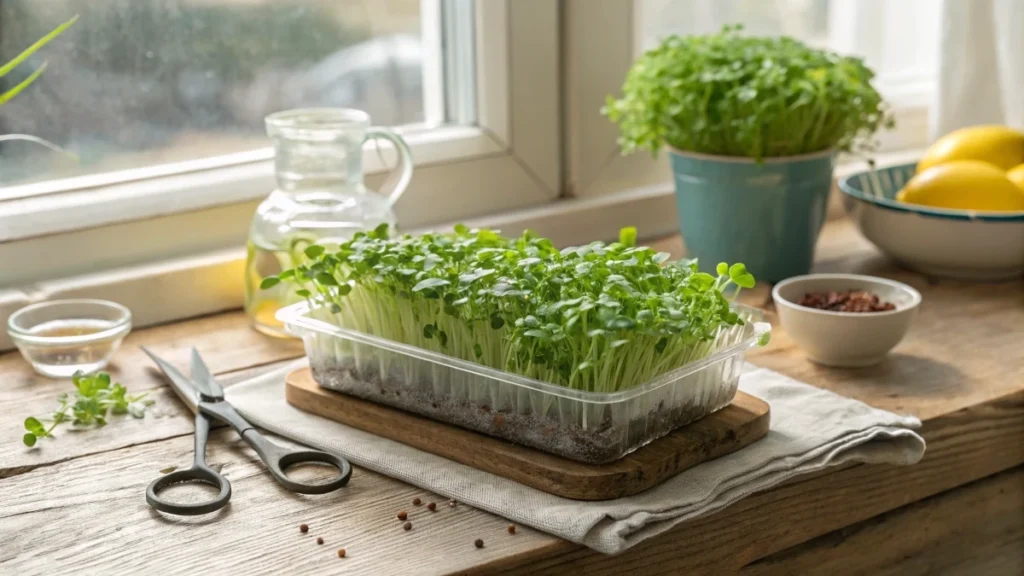
Mizuna microgreens are fast-growing Japanese mustard greens that bring a mild peppery flavor and a wealth of nutrition to everyday meals.
Easy to grow indoors in small containers, mizuna seeds germinate in just a few days and are ready to harvest within one to two weeks, making them one of the most rewarding microgreens for beginners and experienced growers alike.
Rich in vitamins, minerals, and beneficial plant compounds, mizuna microgreens can be enjoyed fresh in salads, sprinkled over eggs or pizza, stirred into warm dishes, or even used to brighten cocktails.
Learn how to grow, harvest, and enjoy these flavorful greens at home with simple steps and tasty recipes.
What Are Mizuna Microgreens And Why Are They Great
Mizuna microgreens are the very early stage of a Japanese mustard green. At this stage, the plants are compact and tender yet already full of flavor. The taste is a gentle mustard note with a light spice that shows up and then fades, so it brightens food without taking over. In Japan, mizuna is a normal green. In western kitchens, it shows up often in restaurants because it brings a clean bite and a pretty leaf shape.
Growing them at home is quick and simple. Seeds can move from sowing to harvest in about one to two weeks, depending on temperature and light. That short timeline is one reason people love them. Another reason is cost. Buying small containers of microgreens can be pricey, while a tray at home gives you frequent harvests for very little money. Early growth relies on energy stored inside the seed, so you get a concentrated package of nutrients before the plant asks much of the soil.
Quick Facts You Can Trust
Germination speed
With the common dark-start method, seeds usually crack and push up in about three to four days. One grower sowed on the twentieth of the month and saw strong activity by the twenty-fifth, which is day five. When warmth is steady, you can expect visible sprouts around day three.
Harvest window
Cutting typically begins around day seven through day ten when the canopy fills in. If you prefer a slightly more developed leaf and a bit more bite, you can keep growing toward the two-week mark. At that point, the first serrations of true leaves begin to show.
Storage and handling
Rinse gently and thoroughly after harvest. A practical routine is a short soak followed by three rinses and then careful drying. A salad spinner works well. When you plan to store the harvest, do not water the tray right before cutting. Plants that are fully turgid at harvest do not keep as long. Dried well and kept cold, microgreens hold for about seven days.
Light and moisture
After the dark start, move trays to bright indirect light. Keep the medium evenly moist but never soggy. Slightly on the dry side is safer than wet. Daily checks prevent swings that stress the crop.
Cost and convenience
An egg carton or any shallow container with holes is enough to get started. This is a low-cost way to keep a steady supply at home compared with frequent store runs.
What You Will Need
A shallow container with drainage. Many people use an egg carton since it is on hand and easy to poke holes in the bottom so water can drain.
A light, fluffy potting mix or a seed starting mix. The goal is an airy medium that lets tiny roots move freely.
Mizuna seed. You can also experiment with related brassicas such as arugula and radish in nearby trays to compare growth and flavor.
A way to water gently, such as a spray bottle or a small watering can with a fine rose.
A lightproof cover for the first few days. The closed lid of an egg carton or a loose cover over a tray keeps things dark during the sprouting phase.
Clean scissors or a sharp knife for harvest.
🌿 Recommended Microgreens Supplies |
Step By Step From Sowing To Harvest
Prepare the container
Poke several holes in the bottom for drainage. Set the base in a tray or on a plate so excess water has somewhere to go.
Fill and level
Add the light mix and level it with your hand. Do not compact it. The seed needs air in the root zone.
Sow and cover
Scatter seed densely across the surface. This crop tolerates close spacing well. Cover with a very thin layer of the same mix. The goal is simply to keep light off the seed until it wakes up.
Water and keep dark
Moisten the surface gently. Close the lid or place a light-blocking cover on top. Set the container in a warm spot for about three days. Check moisture daily and mist as needed so the surface never dries out completely.
Move to light
Once you see green tips, remove the cover and place the container in bright indirect light. Avoid harsh midday sun during the first days out of darkness.
Grow on with steady moisture.
Keep the medium evenly moist. It is better to be a touch dry than wet. In a water culture setup, reduce the water level after sprouting sothe roots are not sitting too deep.
Harvest cleanly
When the surface looks like a soft green carpet, usually around day seven through day ten, cut just above the mix. If you plan to store the harvest, do the cut in the morning or evening and avoid cutting right after watering. Remove any bits of mix that cling to stems.
Wash and store
Soak briefly, rinse three times, dry completely, and refrigerate. Stored this way, the greens keep for about a week.
Timing Guide That Matches Real Growth
Day zero
Sow on a leveled, moist surface. Cover lightly and keep in the dark.
Day three to day four
Germination kicks in. You will see bent necks and then small green tips. Uncover and give bright indirect light.
Day five
Seedlings stand up and begin to thicken. Some mustard relatives are already flavorful at this point, although most people let mizuna fill in more.
Day seven to day ten
Ideal cutting window for a tender texture and a clear mustard note. This is when the tray looks full and even.
Around two weeks
Serrated true leaves begin to show,w and stems are a little longer. Flavor is a bit more pronounced and resembles the mature plant more closely.
🌿 Recommended Microgreens Supplies |
Flavor And Varieties You Might Grow
Mizuna delivers a clean mustard tone with a light spice that does not linger. It is easy to pair with food because it brightens without shouting. Two commonly seen selections behave a little differently as they mature.
Red Streak tends to be cut young, so you mostly see the round seed leaves during the first week to ten days. It brings that quick pop of mustard and a tender bite at the classic micro stage.
Miss America shows the characteristic jagged leaf edges as you grow closer to two weeks. Stems get a little longer, and the look hints at the mature plant you see in bunches at markets in Japan.
For the table, think in two directions. Use very young greens for a soft texture and a subtle mustard lift. Grow a few days longer when you want a bit more structure and a slightly stronger note. Both styles work in salads with a lemon-forward dressing, on top of proteins like tofu or meat, over mushrooms, on eggs, pizza, or sandwiches, and even as a fresh accent in an herb-focused cocktail such as a gin smash. Mixing mizuna with arugula or radish microgreens gives you a nice balance of heat and tenderness across the plate.
Pro Tips And Troubleshooting
Keeping the medium slightly on the dry side is safer than keeping it wet. Consistent moisture helps seedlings stand up quickly, but soggy trays slow growth and invite problems. Check daily and mist or water gently so the surface never dries out fully during the first few days.
Use a dark cover for the first three days. This helps seeds crack and push evenly. Once you see green tips, move the tray into bright indirect light. Avoid harsh midday sun in the early phase.
If you plan to store your harvest, time the cut either in the morning or in the evening and avoid cutting right after watering. Plants that have just taken up water do not keep as well and may soften in the container.
Harvest with a clean knife or scissors and watch your fingers. Cut just above the medium to keep debris out of the harvest. If a piece of medium clings to a stem, trim it away.
Know the difference between healthy root hairs and mold. Fine, fuzzy white hairs along roots are normal and show that the plant is reaching for moisture and nutrients. True mold will mat across the surface and smell off.
In water culture or very wet systems, lower the water level after sprouting so the roots are not sitting too deep. This simple change helps the young plants breathe and push faster.
Decide on your harvest style. You can cut a full tray at once for meal prep, or you can snip as needed across several days. Some growers leave trays to regrow after a light cut. Others take a single dense cut and replant for the next cycle. Both approaches are workable if your schedule and recipes differ week to week.
Stretch Your Seeds With Transplanting
After a main crop,t there are often sturdy leftover seedlings. Instead of tossing them, lift the strongest stems and space them into a larger container. Give them fa resh mix and light, then grow them on to baby leaf or even to full size. This approach turns a single sowing into two harvest types. You enjoy a quick batch of tender microgreens and later a second round of larger leaves with that familiar serrated mizuna look. As plants size up, pot them on again so roots have room. Keep the same steady routine of bright light and even moisture.
Nutritional Benefits
Early growth draws on energy stored inside each seed. That is why these tiny plants pack a lot into a small bite. Growers consistently highlight microgreens as a nutrient-dense choice that fits easily into everyday meals. The Brassica family, which includes mizuna, mustards, bok choy, and cabbage, is widely valued for its beneficial compounds. One grower noted the deep red pigments in giant red mustard and linked those pigments with protective plant compounds. While the exact numbers vary by species and growing conditions, the practical takeaway is clear. Eating a variety of young brassicas brings color, flavor, and meaningful nutrition to the plate without much effort. Because mizuna grows from sowing to harvest in about seven to ten days and sometimes up to two weeks, you can keep a steady rotation and add fresh greens to meals several times a week.
Good handling preserves quality. A brief soak followed by three thorough rinses and complete drying gives you clean leaves that stay crisp. Stored in the refrigerator after a dry harvest, mizuna microgreens hold for about seven days. That window makes weekly sowings a simple habit for reliable nutrition at home.
How To Use Them In Everyday Cooking
Mizuna microgreens slip into meals without crowding other flavors. The taste is a gentle mustard note with a light spice that lifts a dish and then steps back. For raw uses, think salad bowls and grain bowls where lemon-forward dressing flatters their brightness. For warm dishes, fold them in right before serving so they wilt slightly but keep their fresh edge.
They shine on proteins such as tofu or meat and on mushrooms, where the peppery snap balances richness. They bring life to eggs at breakfast and finish pizzas and sandwiches with color and lift. They even play well with drinks. In herb-focused cocktails such as a gin smash, a handful muddled with cucumber brings a faint savory heat that keeps the sip interesting.
Mixing mizuna with arugula or radish microgreens gives a spectrum of textures and heat levels. Younger mizuna harvested around day seven to day ten is tender and mild. Trays grown for two weeks show serrated true leaves and a slightly stronger note. Use both styles depending on the dish.
Recipes
Lemon Forward Mizuna Micro Salad
Ingredients
- 4 generous handfuls mizuna microgreens
- 1 small cucumber, sliced thin
- 1 avocado, sliced
- 2 tablespoons fresh lemon juice
- 1 teaspoon lemon zest
- 1 teaspoon honey
- 2 teaspoons olive oil
- Salt and cracked pepper to taste
Steps
- Place mizuna, cucumber, and avocado in a large bowl.
- Whisk lemon juice, zest, honey, olive oil, salt, and pepper until smooth.
- Toss gently so the greens stay fluffy.
- Taste and adjust salt or lemon to keep the dressing bright.
- Serve immediately.
Why it works
- A citrus-heavy dressing matches mustardy greens.
- The acid keeps the bite lively while the low oil keeps the salad light.
Miso Mushroom Rice Bowl With Mizuna Topper
Ingredients
- 2 bowls of warm cooked rice
- 2 cups sliced mushrooms
- 1 tablespoon neutral oil
- 1 tablespoon white miso
- 1 tablespoon soy sauce
- 1 teaspoon rice vinegar
- 1 teaspoon grated ginger
- 1 cup mizuna microgreens
Steps
- Heat oil in a skillet and cook mushrooms until browned.
- Stir miso with soy sauce, vinegar, and ginger until smooth.
- Pour mixture over mushrooms and cook for 1 minute.
- Divide rice into bowls and spoon mushrooms on top.
- Add a handful of mizuna microgreens just before serving so they wilt slightly.
Why it works
- Savory mushrooms need a clean finish.
- Mizuna adds a light mustard snap that balances umami.
Eggs And Greens Breakfast Tartine
Ingredients
- 2 slices of crusty bread, toasted
- 4 eggs, soft scrambled
- 1 tablespoon butter
- 1 cup mizuna microgreens
- Sea salt and pepper
- Optional: shaved Parmesan
Steps
- Melt butter over low heat and softly scramble eggs until just set.
- Pile eggs on toast and season with salt and pepper.
- Top with a mound of mizuna microgreens.
- Sprinkle Parmesan shavings if desired.
Why it works
- Creamy eggs cushion the light spice of mizuna.
- The greens add freshness without heaviness.
Gin Cucumber And Mizuna Smash
Ingredients
- 2 ounces gin
- ½ small cucumber, sliced
- A small handful of mizuna microgreens
- ¾ ounce fresh lemon juice
- ½ ounce simple syrup
- Ice
Steps
- Muddle cucumber and mizuna in a shaker until fragrant.
- Add gin, lemon juice, simple syrup, and ice.
- Shake well and strain over fresh ice.
- Garnish with a pinch of mizuna.
Why it works
- Herbaceous gin pairs with the faint mustard heat of mizuna.
- Creates a refreshing savory edge with chef-style flair.