
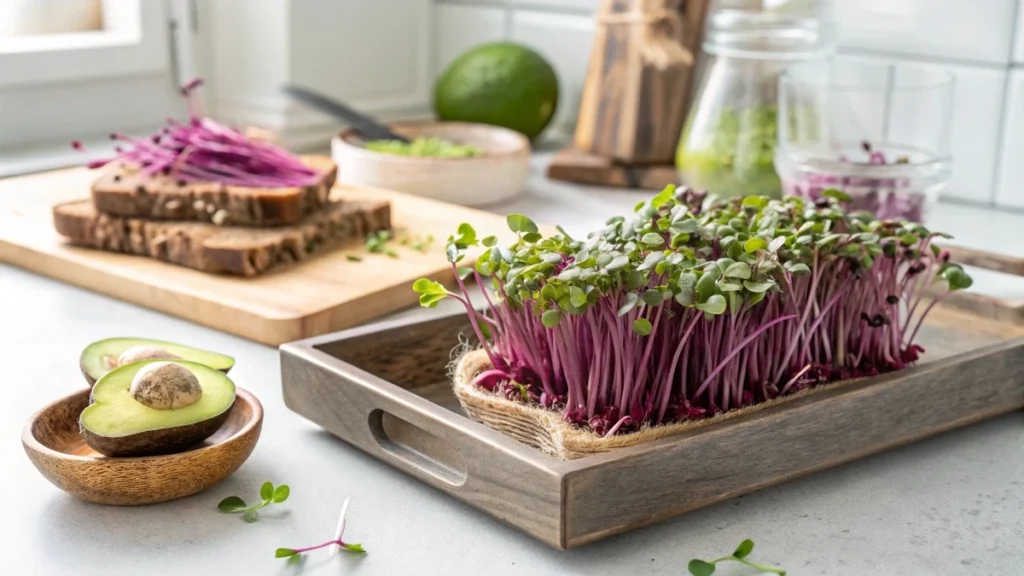
Growing purple radish microgreens at home is one of the fastest and most rewarding ways to enjoy fresh food every week. These vibrant greens are ready to harvest in just 7 to 10 days, bringing crisp texture, bold flavor, and striking purple color to your kitchen.
Unlike mature radishes, the microgreen stage is packed with concentrated nutrients, with some studies showing up to 40 times more vitamins and minerals.
Rich in vitamins A, C, and K along with iron and anthocyanins, they support immunity, digestion, and overall wellness. Best of all, they require very little space or equipment.
With just a tray, soil, and light, you can grow nutrient-dense microgreens indoors year-round. This guide covers their health benefits, step-by-step growing methods, and simple recipes you can try today.
Health Benefits of Purple Radish Microgreens
When you grow purple radish microgreens at home, you are producing one of the most nutrient-dense foods available. Studies and growers alike report that radish microgreens contain up to 40 times more vitamins and minerals than the mature root vegetable. This means you can enjoy a concentrated source of nutrients in a small handful.
Purple radish microgreens are rich in vitamins A, C, and K, as well as iron and essential phytonutrients. The purple pigmentation comes from anthocyanins, plant compounds linked to better heart health and anti-inflammatory effects. Their natural sulfur compounds, which give radishes their peppery taste, also support detoxification and digestive balance.
Because they are low in calories yet high in nutrition, purple radish microgreens fit perfectly into weight management, immune support, and clean eating plans. By harvesting them young, you capture their highest nutritional value along with their tender texture and bold flavor.
Choosing the Right Purple Radish Variety
Not all purple radish seeds are the same, and your choice affects yield, flavor, and cost. In side-by-side growing trials, seven varieties of radish microgreens were compared.
Triton Purple is one of the best performers. With just 1.4 ounces of seed per tray, it produced around 12 ounces at harvest. It has purple stems, green leaves, and a mild radish flavor, making it ideal for high yields at home.
Rambo Purple is the budget-friendly option. It delivers around 8 ounces per tray, yet the seeds cost far less than premium varieties. The deep purple stems and leaves make it a visual favorite, and it’s often chosen by beginners for value and reliability.
Sango Purple produces striking purple leaves and stems with a slightly spicier bite. It grows slower than Triton or Rambo, averaging 8 ounces per tray, but it stands out in appearance.
Red Volcano is unusual because it grows faster than most purple types. It produces about 10 ounces per tray and combines the benefits of purple coloring with the growth rate of pink-stemmed radishes.
Hong Vit is the premium choice. It tied Triton Purple with about 12 ounces per tray but comes with a higher seed cost. Tasters noted that its thicker stems give a more satisfying crunch, which may justify the price for special markets.
For most home growers, the best starting points are Triton Purple for yield and Rambo Purple for value.
Supplies You Need at Home
You do not need a large garden to grow radish microgreens successfully. With a few affordable supplies, you can start producing your own fresh greens indoors.
Seeds
Choose high-quality radish microgreen seeds such as Triton, Rambo, Sango, or Volcano. Buying by the pound lowers the cost per tray.
Growing trays
Shallow 10×20 trays are the standard. Use one tray with drainage holes nested inside a solid tray for bottom watering. A third tray or lightweight cover is used during the germination stage.
Growing medium
A fine potting mix or coco coir works best for even growth. Some growers use hydroponic systems with water reservoirs or grow mats. Soil-based systems generally produce more reliable results, while mats require careful moisture control since radish seeds are larger and thirstier.
Watering tools
A fine mist sprayer helps with seeding, while a watering can is useful for bottom watering once the seedlings are established. Radish microgreens need more water as they grow, so consistent moisture is essential.
Lighting
LED grow lights ensure strong and even growth. In tests, trays under dual light setups performed better than those under single lights, especially at the edges. If you do not have grow lights, a sunny windowsill can work, but expect slightly slower growth.
Weights
A small brick or weight on top of the germination cover helps press the seeds into the soil and ensures even sprouting.
🌿 Recommended Microgreens Supplies |
Step-by-Step Guide: How to Grow Purple Radish Microgreens
Seeding (Day 0)
Fill your tray with soil, level it, and pre-moisten. Spread about 1.4 ounces of radish seed evenly across the surface. Pay more attention to the edges than the center to prevent overcrowding. Mist lightly with water.
Germination (Days 1–3)
Place a cover tray on top with a weight to press the seeds down. Stack up to six trays if you are sowing multiple. Leave them in a dark space for three days without watering. Seeds will sprout and begin to push up the cover.
Under Lights (Days 3–7)
Once the seedlings lift the tray, move them under the grow lights. Water from the top only on the first day. Afterward, switch to bottom watering by filling the solid tray with about one cup of water per day. As the canopy thickens, increase the amount to meet their higher demand.
Harvest (Days 7–10)
Do not water for 24 hours before harvest. This keeps the leaves dry and improves storage life. Cut the microgreens cleanly above the soil with scissors or a sharp knife. One tray should yield 8 to 12 ounces, depending on the variety. Harvest directly into a container and refrigerate immediately.
Storage and Use
Stored dry, purple radish microgreens last several days in the refrigerator. They retain their crisp bite and color best when used fresh in meals.
Common Growing Challenges and Solutions
When you grow purple radish microgreens at home, most issues come down to watering, light, and density. Knowing how to prevent problems will save you time and improve yields.
Moisture problems
One of the most common issues is damping-off disease, which occurs when seedlings are too crowded in the middle of the tray. To prevent this, spread seeds more evenly toward the edges and avoid overseeding the center. Always bottom water after day three so the leaves stay dry,y and disease pressure stays low.
Hydroponic difficulties
Radish seeds are larger than many microgreens, and they need more moisture. Grow mats tend to dry too quickly for radishes, especially if the tray is not covered during the first days. A simple solution is to keep mats sealed in a clear bag for the first four to five days. Once leaveare s open, remove the cover and move them under lights to avoid mold. In stainless steel reservoir systems, water can turn cloudy after a few days because of root activity. Changing the water and adding a small amount of food-grade peroxide keeps roots white and healthy.
Uneven growth
Lighting plays a major role. In one side-by-side trial, trays under dual grow lights had uniform growth, while those under a single light had weaker edges. If your trays grow unevenly, rotate them daily or invest in a wider light that covers the whole tray.
Harvest issues
Harvesting while the greens are wet can lead to poor storage and spoilage. The simple solution is to skip watering during the last 24 hours before cutting. Harvest into a container and refrigerate immediately for the best shelf life.
Health Benefits in Everyday Use
Adding purple radish microgreens to your meals is an easy way to boost daily nutrition. They are loaded with vitamins A, C, and K, along with iron and natural plant antioxidants. Their purple pigments, anthocyanins, are linked in research to reduced inflammation and improved circulation. Because they contain up to 40 times more nutrients than mature radish, a small handful can meaningfully raise your nutrient intake.
They also support digestion thanks to compounds that stimulate the gut and help balance the microbiome. Their sharp, peppery flavor comes from sulfur-based compounds that are also known for their detoxifying qualities. For people focused on weight management, radish microgreens add bulk, crunch, and flavor with very few calories.
The fact that they are harvested in just 7 to 10 days means you can enjoy living food on your plate every week without relying on store-bought greens. Freshness equals better taste and more nutrition.
Easy and Delicious Recipes with Purple Radish Microgreens
Purple radish microgreens are versatile in the kitchen. Their sharp bite and vivid color make them suitable for both everyday meals and elegant plating. Here are some practical ways to enjoy them.
Microgreen salad
Combine radish microgreens with spinach, arugula, and lettuce. Toss with olive oil, lemon juice, and cracked pepper for a refreshing side salad.
Avocado toast
Top whole-grain toast with mashed avocado, sprinkle sea salt, and cover with a handful of radish microgreens. The peppery greens add crunch and spice.
Microgreen smoothie
Blend radish microgreens with pineapple, apple, and ginger. Their sharp flavor balances the sweetness of fruit and delivers a nutrient-dense drink.
Egg dishes
Scatter microgreens over scrambled eggs, omelets, or frittatas just before serving. The heat of the eggs releases the radish aroma while keeping the greens crisp.
Stir-fry garnish
Add microgreens as a final garnish over vegetable stir-fries or noodle bowls. They brighten up the dish with color and spice without wilting down like cooked greens.
Cost and Value Considerations
When choosing which radish variety to grow, consider both seed cost and yield. In yield comparisons, Hong Vit and Triton Purple topped the list with about 12 ounces per tray. Red Arrow and China Rose produced around 10 ounces. Rambo and Sango produced about 8 ounces.
Now factor in seed prices. Red Arrow and China Rose are inexpensive and offer strong returns per tray. Rambo, while lower yielding, is also affordable and visually appealing with full purple color. Hong Vit delivers a premium experience but costs more per pound of seed. Sango is also higher priced but slower to grow, which makes it less cost-effective unless you need its unique look.
For most home growers, the best balance of cost and production comes from Triton Purple, Red Arrow, and China Rose. These provide consistent yields at reasonable seed prices. If you want a premium choice for presentation or customer demand, Hong Vit is worth considering.