
Quinoa has earned global recognition as one of the most nutritious foods, and in recent years, it has found a growing place in Indian kitchens. Known both as a seed and as microgreens, quinoa offers versatility that goes far beyond a simple grain substitute.
Cooked quinoa is light, fluffy, and rich in complete protein, while quinoa microgreens are crisp young shoots that add freshness and extra nutrients to salads, raita, and poha-style dishes.
A single cup of cooked quinoa provides around 201 calories, 8 grams of protein, and 5 grams of fiber, making it a smart choice for weight management, diabetes-friendly meals, and vegetarian diets. With its naturally gluten-free profile and low glycemic index, quinoa is suitable for all age groups.
This guide explores how to grow quinoa microgreens, their nutrition, benefits, and practical Indian recipes you can prepare at home.
Difference Between Quinoa Seeds and Quinoa Microgreens
Quinoa seeds and quinoa microgreens serve different purposes in the kitchen. The seed is cooked like rice and comes in white, red, and black varieties. White quinoa is the mildest in taste and the easiest to cook, making it ideal for beginners. Once cooked, quinoa is light, fluffy, and slightly nutty in flavor.
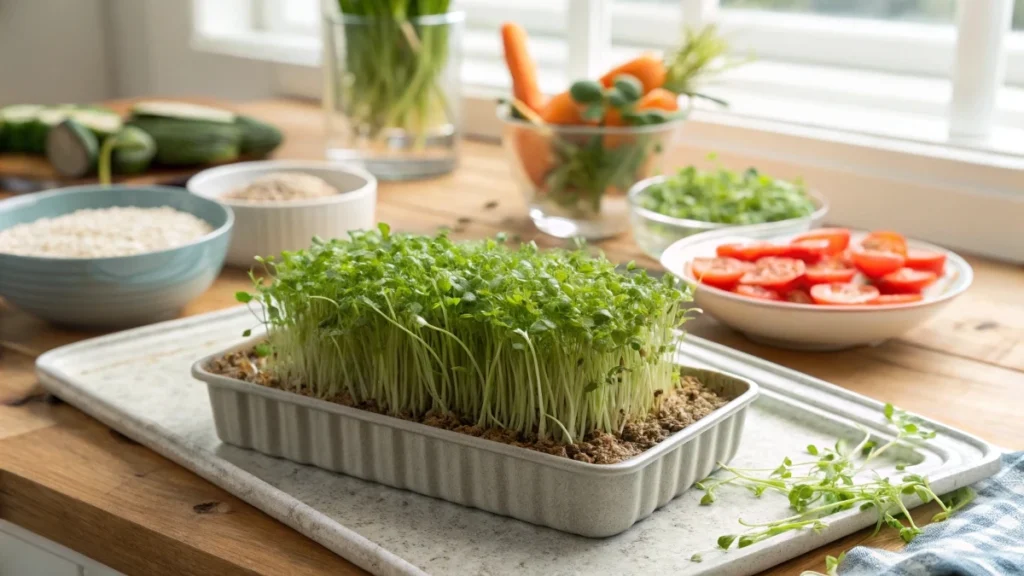
Quinoa microgreens, on the other hand, are the young seedlings of the plant, harvested at about one to two inches in height after 7–12 days of growth. These microgreens are crisp, delicate, and rich in nutrients. They are best used as toppings for salads, raitas, and grain bowls, or as a garnish over hot dishes just before serving.
While the seed provides bulk carbohydrates, complete protein, and dietary fiber, quinoa microgreens offer fresh taste, color, and added micronutrients. Together,r they bring balance to Indian plates by combining satiety with freshness.
Quinoa Nutrition Facts
Understanding quinoa nutrition is essential for including it in a balanced diet. A one-cup serving of cooked quinoa, about 150 grams, provides approximately:
- 201 calories
- 8 grams of protein
- 5 grams of fiber
- 4 grams of fat
Quinoa is one of the few plant-based foods that contains all nine essential amino acids, which makes it a complete protein source. This is particularly important for vegetarians who often struggle to get high-quality protein.
The grain is also a source of magnesium, potassium, and beneficial fatty acids. With its low glycemic index, quinoa is suitable for meals that support steady blood sugar levels. When combined with vegetables and sprouts, it becomes a filling yet healthy base for weight-loss recipes, diabetic-friendly dishes, and everyday Indian meals.
Health Benefits of Quinoa and Quinoa Microgreens
Supports Weight Management
Quinoa is rich in protein and fiber, both of which promote satiety and help reduce overeating. Eating a quinoa-based salad or poha-style dish can keep you full for longer and support weight-loss goals.
Gluten-Free Alternative
Quinoa is naturally gluten-free, making it an excellent choice for those with gluten intolerance or celiac sensitivity. It can easily replace rice or wheat-based dishes in Indian meals.
Helps Regulate Blood Sugar
Because of its low glycemic index, quinoa does not cause sharp spikes in blood glucose. This makes it a smart addition for people managing diabetes when eaten in moderation.
Heart and Gut Health
Quinoa contains soluble fiber that supports cholesterol control. It also aids smooth digestion and relieves constipation. When paired with curd or sprouts, quinoa-based raita and salads can improve gut comfort and regularity.
Suitable for All Ages
Quinoa is highlighted as beneficial for vegetarians, children, and even pregnant women under medical guidance. Its nutrient-dense profile makes it a versatile food that adapts to many dietary needs.
How to Grow Quinoa Microgreens at Home
Growing quinoa microgreens is simple and requires minimal equipment.
Step 1: Preparation
Select plain raw quinoa seeds (not roasted or seasoned). Prepare a shallow tray with drainage holes and fill it with a clean growing medium such as cocopeat or fine potting soil.
Step 2: Soaking and Sowing
Soak the quinoa seeds in water for 4–8 hours. This softens the outer layer and speeds germination. Drain well and spread the seeds evenly across the moistened tray. Press lightly so the seeds make contact with the medium. Mist with water.
Step 3: Germination
Cover the tray with a lid or another tray to create a dark environment for 2 days. Maintain humidity by misting once or twice daily without flooding.
Step 4: Growing
After sprouts appear, remove the cover and place the tray in bright indirect light. Continue misting daily. Within 7–12 days, the greens will reach 1–2 inches tall.
Step 5: Harvesting
Cut the quinoa microgreens just above the soil with clean scissors. Let them dry briefly on a clean cloth, then refrigerate in a breathable container. They keep fresh for 3–5 days.
Microgreens are best enjoyed raw in salads, raita, and as garnishes for warm dishes. Always use clean equipment and potable water to maintain food safety.
🌿 Recommended Microgreens Supplies |
How to Cook Quinoa Perfectly
Quinoa requires proper rinsing and soaking to remove saponins, natural compounds that give bitterness and may cause discomfort if not washed out.
Stovetop Method
Use one part quinoa with two parts water. After rinsing, bring the mixture to a boil, then lower the flame. Cook for 10–15 minutes until water is absorbed. Turn off the heat, cover, and let it rest for 5 minutes. Fluff with a fork. Properly cooked quinoa looks translucent, with a small spiral tail visible.
Pressure Cooker Method
Warm a little oil, stir in the rinsed quinoa until a popping sound appears, then add one and a half parts water for each part quinoa. Cook on low-medium heat until one whistle. Let it rest before opening.
Seasoning Tips
Quinoa absorbs flavors beautifully. For Indian meals, temper with mustard seeds, curry leaves, and chilies for a poha-style dish. For lighter plates, mix quinoa with lemon juice, rock salt, and microgreens for a refreshing bowl.
Using Quinoa Microgreens in Everyday Indian Meals
Quinoa microgreens are versatile and can be added to many Indian recipes. Their mild earthy taste and crunchy texture make them an ideal garnish and nutrient booster. They work well sprinkled over dal and rice, stirred into raita, or as a topping for warm khichdi and poha-style quinoa.
They also add freshness to wraps, sandwiches, and grain bowls. A handful of microgreens with lemon juice and rock salt can instantly lift a simple salad. Because they are harvested young, they are tender enough to eat raw, but can also be added at the end of cooking warm dishes to retain their crispness.
Quinoa Microgreens Recipes
Quinoa Microgreens Salad
Cook one cup of quinoa until light and fluffy. Add half a tomato, half a carrot, and half an onion, all finely chopped. Mix in half a bowl of sprouted moong dal, a handful of fenugreek microgreens, and spring mix leaves. Dress with the juice of half a lemon, one teaspoon olive oil, a pinch of black pepper, and rock salt. Toss well. This salad is high in protein, fiber, and vitamins, and makes an excellent low-calorie lunch or dinner.
Quinoa Microgreens Raita
Whisk one cup of curd until smooth. Stir in half a cup of cooked quinoa. Add finely chopped green chili, mustard microgreens, roasted cumin, red chili powder, and salt to taste. Optional ingredients include roasted peanuts, dry fruits, or a pinch of sugar. This raita is cooling, rich in probiotics, and pairs well with chapati or paratha.
Quinoa Microgreens Poha-Style
Heat two teaspoons of oil in a pan. Add mustard seeds, curry leaves, and chopped onion. Stir in green or red chilies. Add one cup of green peas and salt, cooking until tender. Mix in one to one and a half cups of cooked quinoa. Finish with a generous handful of microgreens and a squeeze of lemon. This preparation tastes familiar to traditional poha but is lighter and packed with protein and fiber.
Quick Quinoa Bowls
For weight management, combine quinoa with cucumber, tomato, onion, coriander, lemon juice, and microgreens. For higher protein, add sprouts, roasted chana, or tofu along with microgreens and a drizzle of olive oil. Both options are filling and nutrient-dense.
Buying Quinoa Seeds and Cost
Quinoa is now available in many Indian supermarkets and online platforms. Raw white quinoa is the easiest to cook and best suited for growing microgreens. Packaged quinoa seeds can cost anywhere from ₹100 to ₹1000 per kilogram, depending on quality and source. Organic and imported brands usually fall at the higher end of the range.
For microgreens, it is essential to choose raw, unprocessed seeds. Avoid roasted or ready-to-eat variants because they will not sprout. When buying online, look for product descriptions that confirm the seeds are suitable for sprouting or growing.
Frequently Asked Questions
Can I grow microgreens from store-bought quinoa?
Yes, if the quinoa is raw and unprocessed. Some packaged seeds germinate well, but others may have reduced sprouting rates. Testing a small batch first is wise.
What is the difference between white, red, and black quinoa?
White quinoa cooks fastest and has the mildest taste. Red and black varieties take slightly longer and taste earthier. Starting with white quinoa is recommended for both cooking and sprouting.
Is quinoa suitable for diabetics?
Quinoa is low glycemic, meaning it causes slower rises in blood sugar compared to refined grains. When paired with vegetables and protein, it is a smart option for diabetic-friendly meals.
Can children and pregnant women eat quinoa?
Yes, quinoa is often recommended as a nutritious option for all ages. The complete protein profile and minerals such as magnesium and potassium make it beneficial. However, individual medical guidance should always be followed.
One-Week Quinoa Starter Plan
Day 1: Quinoa microgreens salad with lemon and sprouts.
Day 2: Quinoa microgreens raita with chapati and sabzi.
Day 3: Quinoa poha with peas and curry leaves.
Day 4: Quinoa salad bowl with cucumber, onion, and microgreens.
Day 5: Quinoa and sprouted moong bowl with roasted chana.
Day 6: Quinoa raita with jeera powder and microgreens.
Day 7: Quinoa poha with microgreens garnish and lemon.