
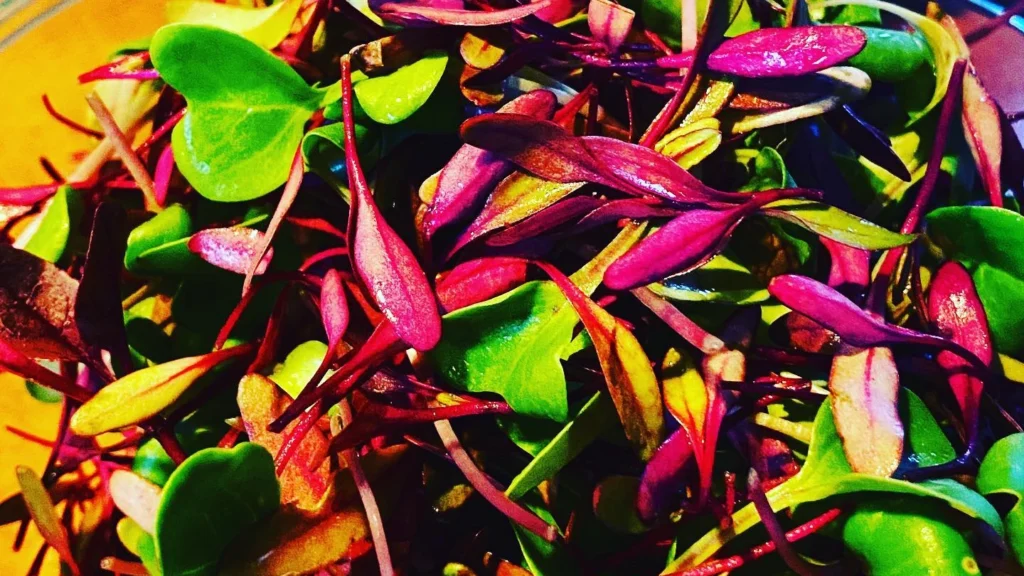
Growing Radish China Rose microgreens at home is one of the easiest and most rewarding ways to bring fresh, nutrient-rich greens to your kitchen. Known for their vibrant pink stems and crisp, peppery bite, these microgreens are ready to harvest in as little as 7 to 10 days.
They are packed with vitamins A, B, C, E, and K, along with calcium, magnesium, iron, and up to 30–35 percent plant-based protein, making them a powerhouse addition to salads, sandwiches, and smoothies.
Even beginners can achieve great results with minimal equipment, just a tray, good-quality seeds, water, and light. This guide walks you step by step through everything you need to know, from seed preparation to harvest and storage, so you can enjoy fresh and flavorful China Rose microgreens right from your own home.
What Are Radish China Rose Microgreens
Radish China Rose microgreens are young seedlings of the radish plant harvested when the first leaves open. Unlike sprouts that are grown entirely in water inside a jar, microgreens are grown on a shallow layer of medium and cut just above the surface for eating.
China Rose is a unique variety with light pink stems and broad green leaves. The taste is sharper than many other radish microgreens, delivering a peppery bite that adds character to salads, sandwiches, or stir-fry toppings. When compared to other radish types, China Rose offers a middle ground between affordability and strong flavor.
Trials with seven radish varieties showed that China Rose produced consistent harvests of around ten ounces per tray. It also matured faster than purple varieties such as Sango and Rambo, which typically need an extra day or two under the lights. This makes China Rose a reliable choice for beginners who want fast results without sacrificing taste.
Benefits of Growing Radish, China Rose Microgreens
There are many reasons why China Rose radish microgreens are popular with home growers.
Flavor and texture: They have a spicy, peppery taste and a crisp stem. In taste comparisons, China Rose ranked spicier than Red Arrow and Rambo but less overwhelming than some mustard greens. The kick is noticeable but pleasant, which makes it a favorite garnish.
Quick harvest: With a germination period of three days in the dark and four to six days under light, your crop can be ready in seven to ten days. Growers who maintain excellent watering and lighting have reported harvestable trays as early as day seven.
Value for money: China Rose seed is affordable compared with premium varieties such as Hong Vit or Sango. Despite being less expensive, it produces reliable yields of nearly ten ounces per tray. A grower in the UK bought a pack of organic China Rose seeds for about eight to nine pounds and successfully grew a lush tray in ten days.
Nutritional content: Radish seedlings contain vitamins A, B6, C, E, and K, along with minerals like calcium, iron, magnesium, phosphorus, potassium, and zinc. Educators also note that sprouts from radish seeds can contain thirty to thirty-five percent protein by dry weight, making them one of the richest plant-based sources available in this form. These nutrients combine with antioxidants and chlorophyll to provide a fresh and healthy addition to your meals.
Ease of growing: The routine is simple. All that is required is consistent moisture, a good medium such as coco coir, and a bright light source. Unlike crops that need several weeks to mature, radish microgreens are ready in days, which makes them an excellent choice for beginners.
Supplies You Need
To grow China Rose radish microgreens at home, you will need a few simple supplies.
Seeds: Purchase organic China Rose radish seeds from a trusted supplier. Options include True Leaf Market and The Dant Republic. Start with smaller packets until you are confident with your seeding rate and conditions.
Tray system: Use a three-tray setup. The bottom tray has no holes and holds water. The middle tray has slits or mesh and contains the growing medium and seeds. The top tray has no holes and serves as a cover during germination.
Growing medium: Coco coir is highly recommended because it retains water evenly and keeps stems clean. Fill the tray almost to the top and smooth the surface so that it is level.
Watering tools: A fine mist sprayer is best for the first three days to avoid disturbing the seeds. After germination, switch to bottom watering by pouring water into the base tray so the medium absorbs it. Start with about half a cup of water per session and increase as the plants grow thicker.
Weight for germination: A cover tray with a brick or similar weight of around fifteen pounds helps the seedlings anchor and ensures even growth during the first three days.
Lighting: Bright grow lights encourage strong stems and vivid pink coloring. One grower noted that dual light bars provided better edge-to-edge growth compared to single bars, which sometimes left the edges slower.
Optional sprouting kit: If you want to try sprouting instead of microgreens, a jar with a mesh lid and a stand to keep it at an angle is all you need. Some growers also use blackout sleeves to keep the sprouts pale and tender.
🌿 Recommended Microgreens Supplies |
Step-by-Step Growing Process
- Prepare the tray: Moisten the coco coir until it is damp but not soggy. Fill the growing tray almost to the top and level it out. Place this tray inside the bottom tray.
- Measure and sow seeds: Weigh out about thirty grams of China Rose radish seeds for a standard 10×20 tray. Spread the seeds evenly across the surface. The goal is to create a uniform carpet without overcrowding.
- Mist and cover: Spray the seeds with water to moisten the surface. Place a no-hole tray on top and add a weight of around fifteen pounds. This helps the seedlings push against resistance and develop sturdy stems.
- Germination period: Leave the tray covered for three days. Mist lightly morning and evening to maintain moisture. During this stage, the roots will anchor into the medium,m and the seedlings will push up under the weight.
- Move to light and begin bottom watering: On day four, remove the cover and weight. At this stage,e you should see pale stems that will turn pink under the light. Start watering from below by pouring about half a cup of water into the bottom tray. Slide the inner tray gently to ensure the water spreads evenly.
- Maintain moisture and growth: From day four until harvest, water from below twice daily. Increase the amount of water as the plants grow thicker. Keep the medium moist but not waterlogged. Provide bright, even light to all parts of the tray.
- Harvest: Between day seven and day ten, cut the microgreens just above the medium using a sharp knife or scissors. Avoid cutting too low, which can bring pieces of the medium into the harvest. A typical tray yields around ten ounces. In well-managed conditions, harvests can be even higher, as shown in mixed radish trays that reached over 580 grams.
- Optional jar sprouting: If you use a sprouting jar instead of trays, soak the seeds for eight to twelve hours, then rinse and drain two to three times daily while keeping the jar at a forty-five-degree angle for airflow and drainage. Sprouts are typically ready in six to eight days. One grower reported that twenty grams of seed produced 230 grams of sprouts in this method.
Flavor Profile and Uses
Radish China Rose microgreens are known for their peppery bite. In side-by-side comparisons with other radish types, China Rose stood out as one of the spicier varieties. Growers often describe the flavor as a pleasant heat that hits quickly without being overwhelming. It is spicier than Rambo radish and Red Arrow, and often slightly stronger than purple types like Sango.
The stems are tender yet crisp, and the light pink coloring adds visual appeal to any dish. The spice can vary slightly depending on harvest timing and growing conditions, but most trays deliver a consistent radish flavor that is both fresh and bold.
Culinary uses are wide-ranging. A handful of China Rose microgreens works well as a garnish on salads, grain bowls, or soups. They pair beautifully with eggs and avocado on toast, can be added to wraps and sandwiches for a peppery crunch, or even blended into smoothies for extra nutrition. Some growers also mix China Rose with milder microgreens to balance the flavor while keeping the color contrast.
Storage Tips
Once harvested, proper storage is important for keeping China Rose radish microgreens fresh. Because the stems hold moisture, they can spoil quickly if stored in airtight containers without ventilation.
The best method is to use a breathable container with a paper towel lining at the bottom. The paper towel absorbs extra moisture, keeping the greens crisp. If the towel becomes damp, replace it with a fresh one. Growers report that under these conditions, China Rose microgreens can last between two and five days with optimal freshness. In some cases, if refrigerated properly in ventilated containers, they can last close to a week.
If you grow them as sprouts in a jar, the same principle applies. After harvest and rinsing, store them in containers with airflow and moisture absorption. A simple option is a vegetable cellulose bag, which allows the greens to breathe while preventing excess humidity from building up inside.
For the best flavor and nutrition, it is always recommended to enjoy the harvest as soon as possible rather than storing it for long periods.
Cost, Yield, and Value
One reason many growers choose China Rose radish microgreens is their excellent balance between cost, yield, and taste.
Seed cost is relatively affordable compared with premium radish types. In one example, organic China Rose seed was purchased for around eight to nine pounds in the UK, enough to produce several trays of microgreens. By contrast, premium seeds like Hong Vit or Sango can cost significantly more per pound, often over thirty dollars.
Yield for China Rose averages around ten ounces per tray in controlled tests. While Hong Vit and Triton Purple sometimes produced up to twelve ounces per tray, the price of those seeds was much higher. China Rose offers strong yields at a fraction of the cost, which makes it an attractive choice for home growers and even small-scale sellers.
Value comparison among seven radish varieties showed that China Rose produced a spicy and flavorful crop at a yield similar to Red Arrow, which is also inexpensive. Rambo, although cheaper, produced slightly less per tray, while Sango, though spicier, delivered smaller yields and was much more expensive.
When you consider flavor, yield, and affordability together, China Rose stands out as one of the best overall radish microgreens for home growing.
Common Mistakes and Tips
While China Rose radish microgreens are simple to grow, beginners often encounter common mistakes. Knowing these in advance helps ensure success.
Overseeding: Using too many seeds leads to overcrowding. Overcrowded trays restrict airflow, causing mold and uneven growth. Sticking to about thirty grams of seed per 10×20 tray ensures good density without issues.
Improper watering: Cutting corners on watering is another problem. During the germination stage, forgetting to mist twice daily can dry out seeds, reducing germination rates. After day four, watering too much from the bottom can oversaturate the medium, creating soggy roots. Too little water leads to bitterness and weak stems. Aim for steady moisture, not puddles.
Cutting too low at harvest: Some growers cut too close to the medium. This pulls pieces of coconut coir or soil into the harvest, making it messy and harder to clean. The right approach is to cut slightly above the medium line with a sharp knife or scissors.
Uneven lighting: In side-by-side tests, trays under single grow lights had slower growth on the edges compared to those under dual lights. If you notice uneven height, adjust your lighting so that the entire tray receives equal intensity.
Waiting too long to harvest: If left too long, microgreens can develop a bitter flavor. It is best to harvest between day seven and day ten while the cotyledons are still tender and bright.