
Looking to add a splash of color and a burst of nutrition to your meals without much effort. Growing red cabbage microgreens at home is one of the easiest and most rewarding ways to do just that.
These tiny greens grow fast, taste amazing, and are packed with vitamins that support your immune system and overall health. In just a few days, you can go from seed to harvest right on your kitchen counter.
They are incredibly versatile,e too. You can toss them in fresh salads, blend them into vibrant juices, or sprinkle them on your favorite dishes for a crisp, flavorful finish. This guide will walk you through the growing process, the benefits, and tasty ways to enjoy every bite 🌱💜🥗
What Are Red Cabbage Microgreens?
Red cabbage microgreens are the tender, young seedlings of the red cabbage plant (Brassica oleracea var. capitata f. rubra), typically harvested within 7 to 14 days after germination. These miniature greens are far more nutrient-dense than their mature counterparts and serve as flavorful, visually appealing garnishes or additions to meals. Despite their small size, they offer concentrated flavor and a powerful nutritional punch.
Unlike sprouts, which are grown in water and consumed as seed, root, and shoot, microgreens are grown in soil or a growing medium and are harvested above the medium, excluding roots. This distinction makes them both safer for consumption and more versatile in culinary use. They are also not to be confused with baby greens, which are grown for a longer period and harvested at a more developed stage.
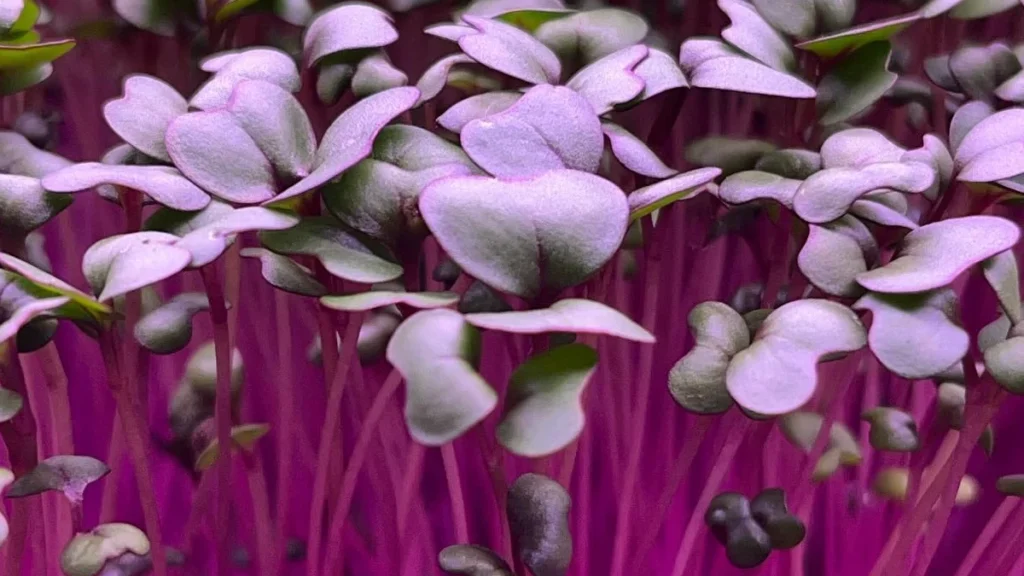
Red cabbage microgreens are especially prized for their vivid purple and green coloration, which adds vibrancy to salads, sandwiches, and even drinks. The intense coloration is due to high levels of anthocyanins, powerful antioxidants also responsible for the deep hues in berries and grapes.
In controlled indoor grows, such as those demonstrated by growers using hydroponic trays or fabric-lined screens, red cabbage microgreens emerge with strong root hairs and lush, upright growth. Their compact size and rapid growth cycle make them a favorite crop for home growers and commercial microgreen farmers alike.
Health Benefits of Red Cabbage Microgreens
Red cabbage microgreens are often referred to as “nutritional powerhouses” — and for good reason. These tiny plants concentrate an impressive array of vitamins, minerals, and phytochemicals into every bite, offering health benefits that far surpass the mature version of red cabbage.
Scientific analyses have shown that red cabbage microgreens can contain up to 6 times more vitamin C and as much as 69 times more vitamin K than fully grown cabbage. Vitamin C plays a critical role in immune defense, while vitamin K supports blood clotting and bone health.
One of the most striking health-related features of red cabbage microgreens is their abundance of anthocyanins, the plant pigments that give them their vivid purple coloration. These compounds have been linked to reduced inflammation, better cardiovascular health, and potential anti-cancer effects. Studies show that anthocyanins help neutralize free radicals, thereby protecting cells from oxidative stress.
In one of the growth tests, despite having the lowest yield, the microgreens grown in plain water were observed to have the most intense flavor, with one grower noting, “It had a lot of flavor… POW, it kick[ed] me in the tongue.” This suggests a possible link between minimal nutrient supplementation and a stronger expression of phytonutrients like glucosinolates, which are known for their cancer-fighting properties and are highly concentrated in the Brassica family.
Red cabbage microgreens also support detoxification, particularly liver function, due to their sulfur-containing compounds. Their mild peppery flavor makes them not only nutritious but also palatable to a wide range of people, including children and picky eaters.
In terms of texture and taste, they were described as “awesome… with a hint of spice,” confirming that they are not only beneficial but enjoyable to consume.
🌿 Recommended Microgreens Supplies |
How to Grow Red Cabbage Microgreens
Growing red cabbage microgreens is straightforward, making it accessible even for beginners. It requires minimal equipment, and within two weeks, you can harvest a nutrient-rich crop ready to enhance your meals.
Materials Needed
You’ll need a shallow growing tray, ideally one without drainage holes, if you’re using a hydroponic method. Another tray with holes can be used if you opt for soil or coco coir. The growing medium should be finely textured and sterile; coco coir is highly recommended due to its water retention and clean handling. You’ll also need a spray bottle for misting, a dome or blackout cover, a small weight (such as a brick or another tray), and red cabbage microgreen seeds, ideally 20 grams per tray, as used in multiple grow trials.
Step-by-Step Process
Day 0: Seeding and Setup
Start by filling your tray evenly with the growing medium. Mist the surface lightly. Evenly distribute the red cabbage seeds on top, ensuring good coverage without overcrowding. Mist again to keep the seeds moist, then place a tray or cover over the seeds and add weight. This encourages strong root anchoring and promotes uniform germination.
Day 1–3: Germination Phase
Keep the tray in a dark, warm area. The added weight helps the roots dig deep into the medium. During this time, mist the seeds once or twice daily. Red cabbage seeds germinate quickly, and by Day 3, you may start to see tiny shoots and white root hairs emerging—often confused with mold, but they are entirely normal and healthy.
Day 4–6: Blackout Phase
Remove the weight and flip the cover upside down to create a blackout dome. This forces the microgreens to stretch toward light and develop height. Bottom watering can begin at this stage by adding water to the lower tray to prevent damping off or fungal issues.
Day 7–13: Light Phase
Expose the microgreens to indirect sunlight or use full-spectrum grow lights. Continue bottom watering daily. By Day 10 or so, red cabbage microgreens typically reach their optimal harvest height of 3–4 inches, showing deep purple stems and lush green-purple cotyledons.
From one grow documented in detail, a tray seeded with 45 grams produced a harvest of 610 grams (21.5 oz or 1.34 lbs). That’s an impressive yield considering the minimal space and time investment.
Nutrient Comparison: Water vs Hydroponic Feeds
A direct side-by-side comparison of four growing methods revealed clear differences in yield, coloration, and taste, depending on the type of nutrient used.
All trays were started with 20 grams of red cabbage seed, grown in coco coir, and followed identical light and blackout schedules. The only variable was the nutrient solution added starting from Day 5.
The control tray, watered only with filtered water, yielded 255 grams. Although it produced the lowest weight, it stood out for having the most intense flavor, described as “really pleasant” and “a lot of flavor… really kicked in.”
Ocean Solution, a mineral-based hydroponic nutrient, delivered the highest yield at 331 grams. The microgreens were taller, fluffier, and more uniform, with a vibrant but slightly shorter purple coloration on the stems. The taste had a mild spice, described as “crunchy, juicy… pretty good.”
Master Blend came close at 323 grams, with a slightly deeper green hue on the cotyledons. Its flavor was noted as stronger than Maxi Grow but still not as pungent as the water group. Visually, it looked nearly identical to Ocean Solution.
Maxi Grow yielded 299 grams, with strong purple coloration up the stems, making it the most aesthetically striking. Despite the visual appeal, the flavor was considered weak and lacking in the expected brassica pungency.
The findings suggest that growers need to strike a balance based on their goals. If flavor and intensity matter most, plain water might be ideal. For volume and market appeal, nutrient-fed trays like those grown with Ocean Solution offer superior yields without a significant compromise in flavor.
How to Harvest and Store Red Cabbage Microgreens
Harvesting
Red cabbage microgreens are typically ready for harvest between Day 10 and Day 13, depending on light intensity, temperature, and growing medium. The optimal time to harvest is just after the cotyledons (first leaves) have fully expanded and before the appearance of the first true leaves. This window ensures peak flavor, nutrition, and visual appeal.
The ideal height for harvesting is around 3 to 4 inches. At this stage, the greens exhibit a striking contrast of deep purple stems and vibrant green-to-purple cotyledons. One grower noted that harvesting just a day or two earlier, especially for nutrient-fed trays, might have preserved even more flavor intensity, similar to the plain water group.
To harvest, use clean, sharp scissors or a serrated knife. Cut just above the medium line to avoid contamination. Be careful not to disturb the root zone, as soil particles or growing media fragments can spoil the product and shorten its shelf life.
Avoid washing microgreens unless necessary, especially if grown hydroponically or in sterile coco coir. If you must wash them, do so gently using cold, clean water, and dry them thoroughly using a salad spinner or by blotting them on paper towels.
Storage
Red cabbage microgreens, when stored properly, can last up to 7–10 days in refrigeration. Here are some best practices for maximizing freshness:
- Dryness is key: Any moisture can cause spoilage. Ensure the greens are dry before storing.
- Storage container: Use airtight containers or clamshells lined with a dry paper towel to absorb humidity.
- Refrigeration temperature: Ideal storage temperature is 2°C to 4°C (35°F to 39°F).
- Avoid ethylene exposure: Keep them away from ethylene-producing fruits like apples and bananas, which accelerate spoilage.
Freshly harvested red cabbage microgreens maintain their crispness and nutritional value best when consumed within the first 4 to 5 days. They also retain color well, making them excellent for garnishes or vibrant dishes even after refrigeration.
Delicious Red Cabbage Microgreens Recipes
Red cabbage microgreens are not only a nutritional powerhouse but also a culinary delight. Their mild spice, crunch, and visual vibrancy allow them to complement a wide variety of dishes—from juices to gourmet meals. Below are several unique and tested ways to use them effectively.
1. Red Cabbage Microgreen Smoothie (Immune-Boosting Juice)
Inspired by the winter immune-boosting soup made with mature red cabbage, this juice leverages the same antioxidants but in a raw, high-bioavailability form.
Ingredients
- 1 cup red cabbage microgreens
- 1 apple
- ½ cucumber
- ½ lemon (peeled)
- 1 small piece of ginger
- 1 cup cold water or coconut water
Instructions
Blend all ingredients until smooth. Strain if desired. The result is a beautifully colored juice rich in vitamin C, polyphenols, and digestive enzymes, perfect for winter wellness.
2. Rainbow Microgreen Salad
A refreshing way to enjoy the raw flavors and textures of red cabbage microgreens.
Ingredients
- 1 cup red cabbage microgreens
- ½ cup shredded carrots
- ½ avocado, cubed
- ¼ cup diced cucumber
- 1 tbsp sunflower seeds
- Dressing: olive oil, lemon juice, honey, salt
Instructions
Toss all ingredients together and drizzle with dressing. Serve immediately for a crunchy, flavorful salad that’s high in antioxidants and healthy fats.
3. Red Cabbage Microgreens & Apple Slaw
Building off the apple pairing seen in the cabbage soup recipe, this slaw is sweet, tangy, and crisp.
Ingredients
- 1 cup red cabbage microgreens
- 1 green apple, julienned
- 1 tbsp honey
- 1 tbsp apple cider vinegar
- ½ tsp caraway seeds (optional)
Instructions
Combine microgreens and apple slices. Whisk honey and vinegar together and drizzle over slaw. Sprinkle caraway seeds for a nod to traditional cabbage flavors.
4. Microgreen Pesto Spread
A twist on classic basil pesto with the peppery complexity of red cabbage microgreens.
Ingredients
- 1 cup red cabbage microgreens
- ¼ cup walnuts or sunflower seeds
- 1 garlic clove
- 2 tbsp grated Parmesan
- 3 tbsp olive oil
- Salt to taste
Instructions
Blend all ingredients until smooth. Use on toast, pasta, or as a dip for roasted vegetables. The anthocyanins stay intact in this raw, vibrant condiment.
5. Topping for Creamy Red Cabbage Soup
In a warm soup preparation from one of your videos, fresh dill and crème fraîche were used for garnish. Add red cabbage microgreens as a topping to elevate the immune-boosting dish further.
Application
Once the soup is ladled into bowls, swirl in crème fraîche, sprinkle dill, and finish with a small handful of fresh red cabbage microgreens. Their raw texture adds complexity and a visual pop to the cooked dish.
6. Open-Faced Microgreen Sandwiches
Quick, nutritious, and aesthetically beautiful.
Ideas
- On rye bread with hummus and pickled onions
- On avocado toast with lemon zest
- On goat cheese with roasted beet slices
The combination of earthy, sweet, and tangy flavors is enhanced by the subtle spice of the red cabbage microgreens.