
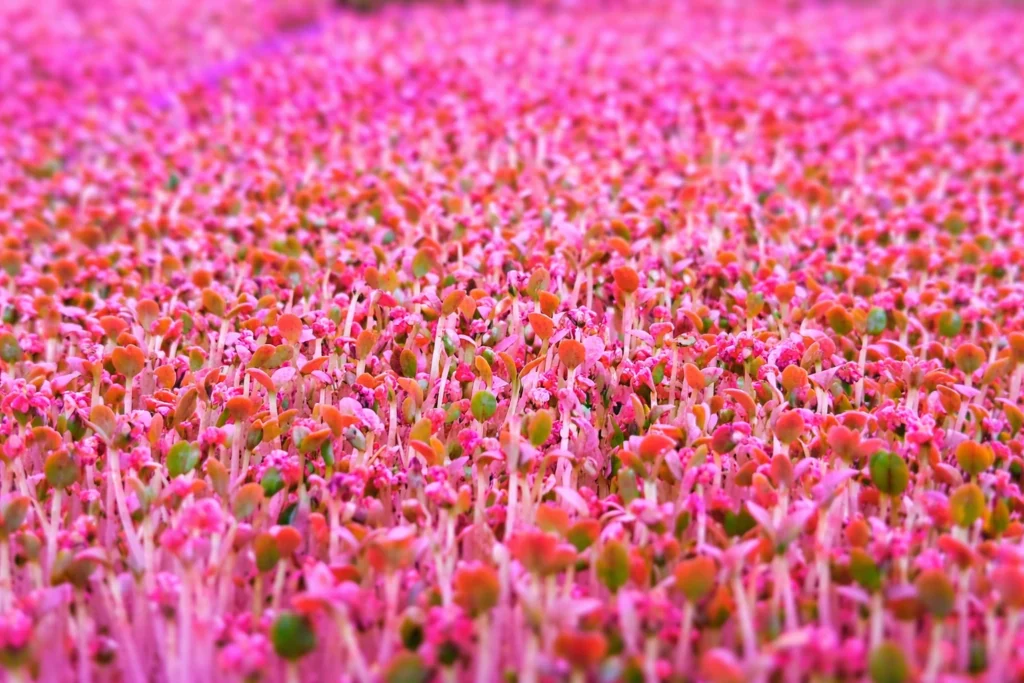
Red clover microgreens are tender, nutrient-rich greens that bring a mild nutty flavor and a burst of freshness to everyday meals. They grow quickly indoors with little space and very little equipment.
With only seeds, clean water, and consistent care, you can enjoy a full harvest in about one to two weeks. These microgreens are packed with vitamins, minerals, and natural compounds that support energy and immune health.
Their bright taste complements salads, sandwiches, smoothies, and warm dishes. Growing red clover microgreens at home is a simple and sustainable way to add fresh living food to your diet while experiencing the satisfaction of nurturing your own mini garden year-round.
Red Clover Microgreens vs Sprouts: What is the Difference
Microgreens and sprouts start from the same seed, yet the growing path is different. Sprouts are grown in a jar with water and airflow and are eaten whole at an early stage. You consume the tender stems and the first tiny leaves. They are juicy and light, which suits smoothies and sandwiches. The full cycle is short. With a good rinse routine two or three times per day and a jar kept at an angle for drainage, you can reach a full jar in about five to seven days.
Microgreens grow in a shallow tray filled with a fine medium such as coconut coir. You harvest by cutting above the surface, so you do not eat the medium. They are grown under light and with bottom watering once roots are active. The growth window is longer than the sprouts. A strong tray can be ready in about thirteen days when the first true leaves begin to appear, and the color turns a healthy green. The flavor is slightly deeper, and the stems hold shape on warm dishes.
Choose sprouts when you want the fastest harvest and minimal equipment. Choose microgreens when you want plate-ready garnishes with more structure and a slightly richer taste. Both options offer clean flavor and high freshness when grown with careful moisture and airflow.
Supplies at a Glance
Tray-Based Microgreens
You need a shallow tray with holes that nests into a second tray without holes. A fine-textured growing medium, such as coco coir or a sterile seed starting mix, works best because small clover seeds need even support. A mister is helpful for the first watering. A second tray turned upside down acts as a blackout dome, which helps the canopy gain height before it goes under light. A simple rack or a bright area with steady ventilation supports strong stems.
Coco Coir Kitchen Method
Coco coir is clean and easy to hydrate. Add boiling water to the dry block and allow it to cool to room temperature before use. This approach reduces surface issues and makes a loose, fluffy bed that holds moisture without becoming soggy. A clear humidity lid keeps the surface moist for the first few days, then you remove it once germination is visible. A bright window or a basic light is enough for a small kitchen grow. Bottom watering is recommended as soon as the roots knit the medium.
Jar Sprouting
A half-gallon glass jar is the right size for household use. Use a split ring with a fine mesh screen. Red clover seeds are small, so a double layer of plastic screen or fine stainless mesh prevents seeds from slipping out during rinses. A simple stand holds the jar at about forty five degrees, which allows water to drain while seeds remain evenly moist. Use clean, unchlorinated water for rinsing.
🌿 Recommended Microgreens Supplies |
Seed Density and Prep with Practical Ranges
Even coverage is the first skill to master. In trays, you want a single layer of seeds with tiny gaps so that emerging roots and stems do not tangle into dense mats. A shaker helps distribute small seeds evenly and prevents piles that dry out at the edges and stay too wet in the center. After sowing, press lightly for contact or dust a very thin veil of coco coir over the seeds. The goal is contact without burial.
For jar sprouting, the amount matters for airflow and drainage. Thirty grams, which is roughly two tablespoons of red clover seed, is well suited to a half-gallon jar. This amount fills the jar nicely by the end of the cycle without choking airflow. Soak the seed for four to eight hours. Do not exceed twelve hours because extended soaking can stress the seed and encourage off odors. After soaking, drain well and begin a rinse routine two or three times per day. Keep the jar at a consistent angle so water never pools at the lid.
If you plan to reuse coco coir for later microgreen cycles, process it with boiling water and let it cool fully. This practice refreshes the medium so roots have a clean start.
Method 1: Tray-Based Red Clover Microgreens Day by Day
Day zero prepare and sow
Nest a tray with holes inside a tray without holes. Fill with coco coir that has been hydrated and cooled. Level the surface and tamp lightly so it is firm but springy. Distribute seed in a single even layer using a shaker so corners and edges receive the same attention as the center. Mist until the surface is evenly moist. Set a second tray upside down on top to create a blackout dome that gives the canopy room to stretch. Place the set on a rack out of direct drafts.
Day one to day two, early signs
Lift the dome to check moisture. If any seeds adhere to the lid, gently tap them back onto the surface. You should see the first signs of germination by the end of this window. Keep the surface moist with a fine mist. Avoid soaking since saturated media limit oxygen at the root.
Days three to five, rooting and cotyledons.
Roots begin to anchor. In some trays,s you will notice threads reaching the drainage holes. This is the signal to shift your focus toward bottom watering. Add water to the lower tray and allow the upper tray to draw moisture through capillary action. The surface stays drier, which protects stems from lodging and reduces surface issues. Keep the blackout dome in place during this period so the canopy gains height and remains tender.
Day five to day seven blackout for height
Continue with the inverted dome. This creates a soft ceiling that encourages upright growth without wind stress. Check edges. If they dry sooner than the center, increase the frequency of bottom watering and verify that fans are not aimed directly at the tray. Stems will lengthen, and cotyledons will enlarge. Color will be pale at first,t which is normal before exposure to light.
Day seven to day eight move to light
Remove the dome and place the tray under steady light with gentle airflow. Switch fully to bottom watering. Keep the lower tray supplied with enough water to moisten the medium without leaving standing water for long periods. The canopy will shift from pale yellow to a clear green within a day as chlorophyll builds.
From day nine to day twelve, build strength.
Maintain a regular bottom watering schedule. Many growers find that twice daily checks work well. The canopy should look even with minimal gaps. If you see dry edges, increase the water level briefly during each bottom watering so the corners wick moisture effectively. True leaves begin to appear, which signals that the harvest window is near.
Day thirteen: harvest and store
Harvest when the first true leaves are visible, and the color is vibrant. Use clean shears and cut just above the surface so no medium is included. Spread the harvest on a dry towel to remove surface moisture, then pack into an airtight container. Store in the coldest part of your refrigerator. With careful handling, the greens stay fresh for about one week.
Method 2: Coco Coir Kitchen Microgreens
Set up and hydration.
Coco coir gives red clover a clean start. Break the dry block into a bowl and pour boiling water over it. Let it cool completely so the surface never feels warm to the touch. Fluff the coir with your hands and press it into a shallow tray with holes. You want a level cushion that is firm enough to hold seeds on top but still springy to the press. Fill a second tray without holes with a small amount of water and keep it nearby for later bottom watering.
Sowing and early humidity
Scatter seed evenly so the surface shows tiny gaps between seeds. Press gently for contact or add a whisper-thin veil of coir so the seeds touch the medium without being buried. Mist just until the top glistens. Place a clear humidity lid over the tray and set it in a warm spot out of direct sunlight. The lid holds moisture for the first few days and prevents crusting on the surface.
First signs and transition to light
Check daily. As soon as you see uniform sprouting, remove the lid to restore airflow. Move the tray to a bright window or place it under a simple light. Start bottom watering by pouring a small amount of water into the reservoir tray and letting the upper tray wick what it needs. The surface stays drier, which protects stems and keeps the canopy clean.
Grow out and timing
Keep a steady rhythm. The coir should never sag with water, yet should not crack from dryness. With this approach, a kitchen grow reaches a first cut at about two weeks. Stems feel crisp, and the color turns from pale to a healthy green once the light is steady.
Reusing the medium
After harvest, remove plant matter from the coir. Pour boiling water through the medium and allow it to cool and drain. This refreshes the bed for another round and helps you keep a tidy cycle in a small space.
Method 3: Jar Sprouting Red Clover
Equipment and seed amount
Choose a half-gallon glass jar with a split ring and a fine mesh screen. Red clover seed is small, so a double-layer plastic screen or a fine stainless mesh helps keep seeds inside during rinses. Use about thirty grams of seed, which is roughly two tablespoons. This amount fills the jar nicely by the end of the cycle while still leaving space for airflow.
Soak and rinse rhythm.
Rinse the dry seed a couple of times to remove dust. Soak for four to eight hours. Do not go past twelve hours. Drain well and begin a rinse routine two or three times each day. After each rinse, leave the jar at about a forty-five degree angle so the last drops drain away while the seeds remain evenly moist.
Moisture management through the stages
On the first nights some growers keep the jar horizontal on the counter in indirect light so the seeds retain a trace of moisture during the critical start of germination. Once tiny roots appear and the seeds bulk up, move the jar to a vertical stand for stronger drainage and better air exchange. Always use clean, unchlorinated water. A practical routine is to fill the jar fully during a rinse, let it sit for a couple of minutes while you step away, then drain and return it to the stand.
Timeline yield and finish
Expect white roots within a day. By forty eight hours, the mass swells and tangles softly. Around three and a half days, the first small leaves show a hint of green. By five to seven days, the jar is full and ready to eat. A tablespoon and a half of seed often yields around four cups of fresh sprouts.
Cleaning before storage
Tip the sprouts into a bowl of water and loosen the mass gently with your hands. Seed hulls float and can be poured off with the rinse water. Repeat until the surface looks clean. Drain well so storage does not trap excess water.
Watering Light and Airflow Essentials
Watering that supports the structure.
For trays begin with misting and move to bottom watering as soon as roots anchor. The reservoir should contain just enough water to wick upward without creating standing water for long periods. Corners often dry sooner than the center, so make sure they wick properly by rotating trays and giving brief, deeper wicks when needed.
For jars, the angle is the heart of the method. Keep the jar tilted so no water pools at the lid. A full soak during rinses followed by thorough drainage keeps tissues turgid without inviting off odors.
Light that builds color without stress
Keep young trays out of direct sunlight until they are ready. Once you remove the humidity lid, place them under steady light. Color shifts from pale to vivid green within a day when the light is right. For jars, indirect light supports gentle greening of the first leaves while preserving a tender bite.
Airflow that prevents issues
Give trays gentle air movement. If the edges dry too fast, the fan is too direct. If condensation persists under a humidity lid after sprouting, remove the lid and increase circulation. For jars, the mesh lid and the angled position provide airflow. Do not cap a storage container tightly after harvest since sprouts and microgreens need to breathe even when chilled.
Troubleshooting and Practical Tips
Dry edges on trays
Edges dry faster because they lose moisture on two sides. Increase the frequency of bottom watering and rotate the tray so air does not always hit the same side. Briefly raise the water level during a wick to help corners catch up.
Seed piles and bare zones
Tiny seeds can form mounds that stay wet in the center and dry on the rim. Use a shaker for an even spread. After sowing, tap the tray sides and lightly press so every seed touches the surface.
Off smells and slime in jars
These signs point to poor drainage or long soaks. Shorten the soak window to within four to eight hours. Rinse more consistently. Maintain the forty-five degree angle and give a longer drain after each rinse.
Slow color and weak stems
Give more light and steady airflow. In trays, switch to full bottom watering as soon as roots appear so stems are not disturbed by surface wetness. In jars, increase the thoroughness of each rinse and drain to refresh oxygen around the roots.
Over-soaking risk
Long soaks above twelve hours overwhelm the seed and invite problems. If a soak accidentally runs long, discard that batch and start fresh rather than trying to rescue it.
Harvest Cleaning and Safe Storage
Microgreens from trays or coco coir
Harvest at the first true leaves when the stand looks even and bright. Cut just above the surface with clean shears. Spread the harvest on a dry towel for a few minutes so any surface moisture flashes off. Pack in a clean airtight container and refrigerate. With gentle handling, they keep for about a week.
Sprouts from jars
Rinse, float off seed hulls, and drain well. Lay sprouts in a shallow container lined with a slightly damp paper towel. Cover loosely or use a lid with small vents so air continues to move. A light mist every few days keeps them lively. Properly handled sprouts keep up to ten days.
Reuse and sanitation
Clear plant matter from trays after harvest. If you plan to reuse coco coir, pour boiling water through it and let it cool before the next sowing. Wash jars, screens, and stands with hot soapy water and allow them to air dry fully. Clean tools and steady habits protect flavor and texture across every cycle.