
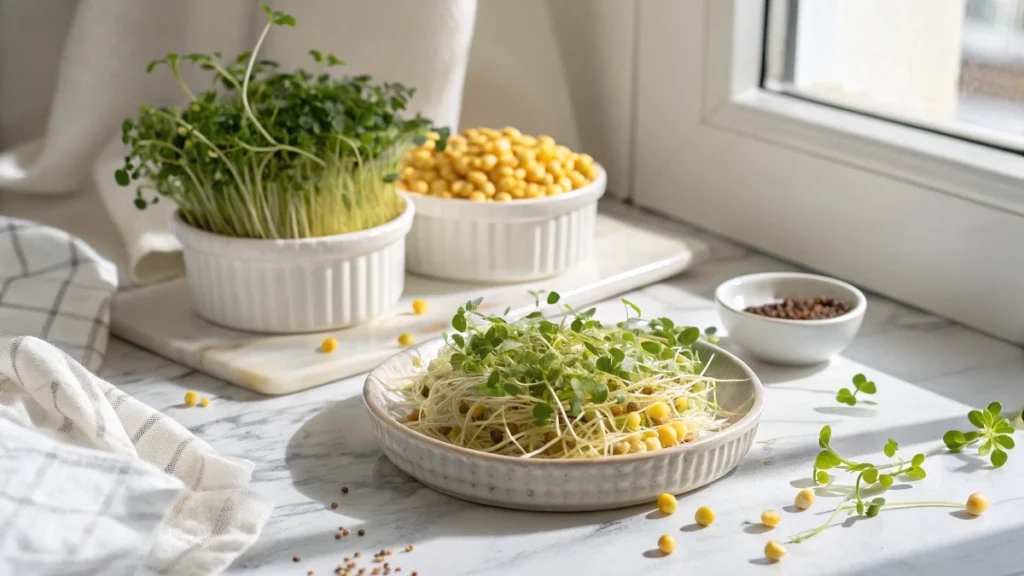
Learn how to grow yellow microgreens at home with clear steps, real yields, and simple recipes. This guide covers yellow pea microgreens, popcorn shoots kept yellow through blackout, and peppery mustard greens. You will see seed prep, soaking times, tray choices, bottom watering versus reservoir methods, and when to bring crops to light.
Expect practical numbers such as 250 grams of pea seed per tray, day seven harvests for popcorn around 140 to 150 grams, and day nine pea harvests with higher yields from bottom watering. We will also explore coco coir, mesh trays without medium, and moisture control that prevents mold.
Finish with quick dishes that highlight sweet popcorn shoots, crisp pea tendrils, and fresh mustard leaves.
What Yellow Microgreens Mean and Why Grow Them
Yellow microgreens can mean two different things in real kitchens and grow rooms. First are crops that are naturally sold as yellow varieties, such as yellow peas or yellow mustard. Second are crops that are intentionally kept in darkness so they stay yellow and taste sweeter. Popcorn shoots are the clearest example of this second approach since they are kept dark from start to finish to maintain a delicate color and a gentle flavor.
The attraction is simple. You get fast harvests, distinct flavor profiles, and visually striking plates. Popcorn shoots bring a sweet and grassy note in about one week when grown in full blackout. Yellow pea shoots offer a tender pea flavor with good crunch when grown for roughly nine days. Mustard microgreens deliver a lively pepper note and are ready in about one to one and a half weeks. These differences come from how each crop is handled during the early days of growth, including soak time, blackout use, and watering style. Because the timelines are short, you can schedule sowings to match meals or market days and rely on concrete benchmarks such as seed weight per tray and expected fresh weight at harvest.
Quick gear and supplies
Trays and lids
A standard 10 by 20 tray format keeps measurements consistent. Mesh trays work well for methods that avoid a growing medium, such as the pea test below. Solid trays pair well with coco coir or similar mixes. A loose-fitting lid or blackout dome lets you control darkness for stretching and for color.
Growing media
You have two workable paths based on the data points here. For peas, you can skip a medium and sow straight onto a mesh tray. For popcorn and mustard, a fine medium such as coco coir or a light potting blend gives even moisture and supports uniform growth. The mustard mix used here was about sixty percent coco peat and thirty percent compost with added perlite for air.
Watering tools
A measuring cup helps you repeat volumes exactly. Bottom watering is featured across these crops, so steady volumes matter. A spray bottle helps you keep the top surface evenly moist during germination.
Nutrients
Mild nutrient is optional and crop-specific. Popcorn benefited from a switch to a gentle nutrient labeled 2 0 3 in the back half of its short window. Peas and mustard grew well under simple water management when the media choice and watering style were dialed in.
Blackout weight
A flat weight or an extra tray placed on top keeps seeds in close contact with the surface for the first few days. This improves germination and gives a more even stand, which directly affects harvest texture and yield.
🌿 Recommended Microgreens Supplies |
Seed prep and general steps
Soak times and seeding.
Large seeds such as peas and popcorn were soaked for twelve hours before sowing. This single step was consistent and effective across both crops. After soaking, peas were seeded at two hundred fifty grams per tray and popcorn at two hundred grams per tray. Mustard seed is tiny and was surface sown without a soak. Coverage matters for these small seeds. Use only a very thin layer of mix on top so sprouts are not held back. If emergence looks slow on day two or three, gently remove a bit of cover to free the shoots.
Moisture management
Even moisture without saturation is the thread that ties the methods together. During the early stacked or blackout period, misting is used to keep the seed layer from drying. Once roots reach the base, bottom watering takes over. For peas, the water need settled at about two and a half to three cups per day when bottom watering. With the reservoir style known as Kratky, the water level was simply topped up every two to three days. For popcorn under coco coir, the first half of the grow used plain water, then a gentle nutrient solution in the second half.
Purposeful blackout
Blackout has two jobs. It stretches stems for height in crops like peas when used for a limited window. It preserves a yellow color and sweeter taste in popcorn when used the entire time. In practice, that looked like three days of stacking with weight for peas, followed by about two more days under a blackout dome before going to light. For popcorn, it was four days weighted and three additional days under a dome with no light at all.
Timing the cut
You can plan harvests with confidence using the numbers here. Popcorn averaged about one hundred forty to one hundred fifty grams per tray at day seven. Peas were harvested at about day nine. Mustard was cut between day seven and day ten, depending on the container and spacing.
Method A: Yellow pea microgreens without a medium
The setup was tested
Seed weight was two hundred fifty grams per 10 by 20 tray with a twelve-hour soak. Seeds were spread directly onto a mesh tray with no medium. Two watering approaches were compared. One used a bottom watering tray that was refilled daily, and the other used a shallow reservoir that roots could grow into. Both trays received the same mild hydroponic nutrient. After seeding, the trays were stacked with a weight for three days. They then spent about two more days under a blackout dome to add height before moving to light.
Watering details that decided the result
Bottom watering settled into a once-per-day refill of about two and a half to three cups. Early in the run, more frequent checks were needed to prevent drying since there was no medium to hold moisture. The reservoir approach required much less attention because it was topped up every two to three days.
Growth observations
By day five, the bottom watered tray stood taller and, in fact, was almost too tall for the grower’s preference at that moment. The reservoir tray had strong roots but lagged in height. Once the reservoir tray was introduced to light, a dip in the canopy developed in the middle, which showed uneven growth under that method.
Yield and taste
At harvest, the bottom watered tray weighed four hundred twenty-six grams while the reservoir tray weighed two hundred ninety-seven grams. That is a difference of one hundred twenty-nine grams, which is about forty three percent more fresh weight for the bottom watered method. Flavor was very similar between the two. The bottom watered sample was described as slightly less bitter.
Practical takeaway
When peas are grown without a medium on mesh trays, daily bottom watering favors shoot development and total harvest weight. The reservoir approach built a beautiful root system but produced shorter tops and a lighter yield. If your priority is height and mass for pea flavor in salads and stir-ins, bottom watering was the clear winner under these conditions.
Method B: Yellow popcorn microgreens in full blackout
Set up and schedule
Popcorn was grown on coco coir at two hundred grams of seed per tray after a twelve-hour soak. Water came from the base. The first half of the grow used plain water, and the second half switched to a mild nutrient labeled 2 0 3. The entire grow was kept dark. Four days were followed by three days under a blackout dome.
What to expect at harvest
Harvest came on day seven. Two trays produced one hundred fifty-three grams and one hundred thirty-four grams. That gives a practical average of about one hundred forty to one hundred fifty grams per tray. The flavor was described as very sweet with a gentle grassy note. Because the crop never sees light, the color remains a bright yellow that reads beautifully on the plate.
Moisture and cleanliness
This crop asks for more attention to cleanliness than most. Constant darkness and the formation of tiny water beads on the shoot tips create a friendlier environment for mold. Airflow, careful watering, and clean tools make a big difference. A next step that was proposed for easier management is a very light top dressing of coco coir over the seeds at sowing. That thin cover can absorb surface moisture, reduce wet sheen on the seed layer, and make outbreaks less likely.
Why full blackout matters here
With popcorn, the goal is sweetness and a soft texture. Full blackout prevents green pigments from forming and helps keep the taste profile delicate. Bringing popcorn shoots to light will harden flavor quickly, which is the opposite of what most cooks want from this crop.
Method C: Mustard microgreens that are fast and forgiving
Media and sowing that worked well
A simple potting blend with about sixty percent coco peat and thirty percent compost plus perlite provided the right balance of water holding and air. Mustard seed was surface sown at a dense rate. Because the seed is tiny, only a very thin cover of mix was used. If you add more than that, emergence can stall. When that happened, a light scraping away of excess cover on day two or three immediately improved emergence.
Watering and daily care
Watering was gentle and directed to the sides to avoid disturbing the seed layer. The surface was kept moist but never soggy. By about day three, the tray formed a green carpet. Harvest came around day seven to day ten when grown as microgreens. The timing is flexible because the taste is good across that window.
Container choice and plant vigor
The container size changed the outcome. Plants in a small pot slowed after about two weeks because the roots filled the space and could not expand further. The same seed sown directly into soil beds produced taller shoots and bigger leaves in the same time frame. If you want a second cut, wider spacing helps. Dense mats will often regrow weakly, while lighter sowing can push a small second harvest.
Cutting and kitchen use
Cut above the surface with clean scissors and leave the roots in the media. This speeds up cleanup and can support limited regrowth. Mustard delivers a bright pepper note that pairs well with eggs, grains, and rich meats. Because the leaves are tender, you can finish hot dishes off the heat to keep flavor lively and texture soft.
Choosing your path
If your goal is height and weight with a clean pea flavor, choose yellow pea microgreens and use bottom watering. The once-daily refill of about two and a half to three cups supported steady shoot growth on a mesh tray without any medium. The same seed, grown over a small water reservoir, built a heavier root mass yet finished shorter and lighter.
If your goal is a sweet garnish with a striking yellow color in one week, choose popcorn shoots and commit to full blackout from start to finish. Four days under weight followed by three days under a dome kept the color bright and the flavor sweet with a gentle grassy note. Bring them to light, and the profile changes quickly.
If your goal is a quick peppery green with simple supplies, choose mustard. A light mix of coco peat with compost and perlite supports fast germination. These seeds want only a very thin cover. Growth is more generous in a bed than in a small pot because roots do not hit a wall as fast.
Care, sanitation, and troubleshooting
Moisture balance
Peas grown with no medium have no buffer to hold water. Early on, they need thorough misting so the seed layer does not dry. Once roots reach the base, a consistent bottom watering volume keeps the tray even from edge to center. With the reservoir method, the top layer can dry while roots dive to water below, which explains the shorter tops and the canopy dip that appeared in the center after moving to light.
Popcorn grown on coco coir prefers steady moisture from below. The crop stays in darkness and naturally forms tiny droplets on shoot tips. This combination creates a friendlier setting for mold, so clean trays, good airflow, and careful watering habits matter. A very thin top dress of coir at sowing can help by absorbing surface moisture and reducing wet sheen on the seed layer.
Mustard wants moisture without saturation. Water gently around the sides so the seed carpet is not disturbed. If emergence stalls on day two or three, the cover is likely too thick. Scrape a little off to free the sprouts and return to an even misting routine.
Blackout timing
Short blackout windows stretch peas to a pleasing harvest height. Three days under weight followed by about two more days under a dome provided consistent results before the move to light. Popcorn is different. It stays in blackout the entire time to protect color and sweetness. Mustard does not need a heavy blackout. A very light cover is enough to help germination and keep tiny seeds from drying.
Space and container choice
Mustard grown in a small pot slows by the second week as roots fill the volume. The same sowing in a garden bed pushes taller shoots and larger leaves in less time. If you intend to try for a second cut on mustard, give plants wider spacing. Dense mats will often regrow weakly.
Common signals and what they mean
A lopsided or dipped pea canopy suggests uneven moisture or light timing, something that was seen when the reservoir approach moved to light. A yellow popcorn tray that smells off or shows fuzzy spots is telling you to increase airflow, clean contact surfaces, and consider that thin coir top dress next time. Mustard that breaks the surface in clumps rather than a uniform carpet usually has too much cover or compaction on day zero.
Harvest, yield expectations, and storage.
Pea shoots on mesh without a medium were cut at about day nine. The bottom watered method reached four hundred twenty six grams of fresh weight, while the reservoir method reached two hundred ninety seven grams in the same window. That is a practical yield swing to keep in mind when planning kitchen prep or market packs.
Popcorn shoots on coco coir were cut at day seven. Two trays finished at one hundred fifty-three grams and one hundred thirty-four grams, which averages to roughly one hundred forty to one hundred fifty grams per tray. The grower noted they could have run two more days for extra mass, but the day seven harvest delivered the sweet and grassy profile they wanted.
Mustard was cut between day seven and day ten as a tender microgreen. Yield depends strongly on container size and spacing. The same sowing in a bed produced taller shoots and larger leaves than in a small pot in the same timeframe.
Store cut microgreens in a breathable clamshell lined with a dry paper towel. Chill promptly. Keep the lid closed except when portioning. This simple routine preserves texture and flavor through service.
For second cuts, mustard can regrow if left rooted, especially at a lighter density. Peas and popcorn are usually treated as a single cut because the stand is dense and the second flush is thin.
Benefits you can count on
Speed is the first advantage. Popcorn reaches the knife in about seven days. Peas are ready around day nine. Mustard can be on a cutting board between day seven and day ten. This predictability lets you schedule sowings to land on meal plans or market days.
Simplicity is the second advantage. Bottom watering once a day was enough for peas on mesh once roots were established. Popcorn used plain water early and a mild 2 0 3 nutrient late with no need to fuss with complex formulas. Mustard thrived in a straightforward coco peat and compost mix with perlite.
Yield per tray is clear. Bottom watered peas delivered four hundred twenty-six grams. The same seed on a reservoir finished at two hundred ninety-seven grams. Popcorn finished between one hundred thirty-four and one hundred fifty-three grams. These figures remove guesswork when you scale.
Flavor control is the third advantage. Full blackout keeps popcorn sweet and soft. A short blackout stretch pushes pea height without dulling the fresh pea taste. Mustard brings a clean pepper note that wakes up eggs, grains, and meats.
Mustard greens are also valued for iron and other minerals, which adds a nutrition talking point when you plate or sell them. If you want deep nutrition tables, we can add that later, but the practical kitchen wins above usually matter more to cooks and shoppers.
Easy recipes that show off yellow microgreens
Sweet yellow popcorn pasta finish
Cook your favorite long pasta until al dente. Warm a small skillet with butter and a ribbon of olive oil. Add a squeeze of lemon and a pinch of salt. Toss the hot pasta in the pan, then remove from heat and fold in one to two cups of popcorn shoots so they stay tender and sweet. Finish with grated cheese and black pepper.
Pea shoot and citrus salad
Segment one orange and collect the juice. Whisk the juice with olive oil and a pinch of salt to make a light dressing. Combine two cups of pea shoots with the orange segments and thinly sliced red onion. Dress gently and serve with toasted seeds or croutons. The pea flavor balances the citrus nicely.
Mustard microgreen egg toast
Soft scramble two eggs with a little cream and salt. Spoon over buttered toast. Pile on a full cup of mustard microgreens and finish with cracked pepper and a few drops of olive oil. The heat of the eggs softens the greens without dulling their peppery note.
Warm rice with pea shoots
Stir-fried rice off the heat can handle a generous handful of pea shoots. Fold one to two cups of finished garlic rice into a hot pan of finished garlic rice and cover for thirty to forty five seconds. The residual heat wilts the shoots just enough while keeping the fresh snap.
Creamy mustard dip
Mix a cup of thick yogurt with a small handful of finely chopped mustard microgreens, lemon juice, salt, and a grated garlic clove. Rest for ten minutes to let flavors marry. Serve with roasted vegetables or grilled chicken. The pepper note cuts through the richness beautifully.
Data notes used in this guide
The pea method without a medium used two hundred fifty grams of seed per 10 by 20 tray after a twelve-hour soak. Trays were stacked for three days and kept under a blackout dome for about two more days before going to light. Bottom watering settled at about two and a half to three cups once daily and produced four hundred twenty-six grams of fresh weight at harvest around day nine. The reservoir approach was topped every two to three days and produced two hundred ninety-seven grams with a center dip in the canopy after exposure to light.
Popcorn on coco coir used two hundred grams of seed per tray after a twelve-hour soak. The crop stayed in darkness for seven days, which included four days weighted and three days under a dome. Bottom watering used plain water early and a gentle 2 0 3 nutrient late. The two trays weighed one hundred fifty-three grams and one hundred thirty-four grams and tasted very sweet with a grassy note. Mold risk was higher due to constant darkness and bead formation on shoot tips, and a thin coir top dress was identified as a useful tweak for future runs.
Mustard used a potting blend of about sixty percent coco peat and thirty percent compost with added perlite. Seeds were surface sown with a very thin cover. Strong germination was visible by about day three. Harvesting as microgreens occurred between day seven and day ten. Growth in a small pot slowed by the second week due to root restriction, while direct sowing in a soil bed produced taller shoots and larger leaves in the same timeframe. Cutting above the surface allowed some regrowth when spacing was not overly dense.