
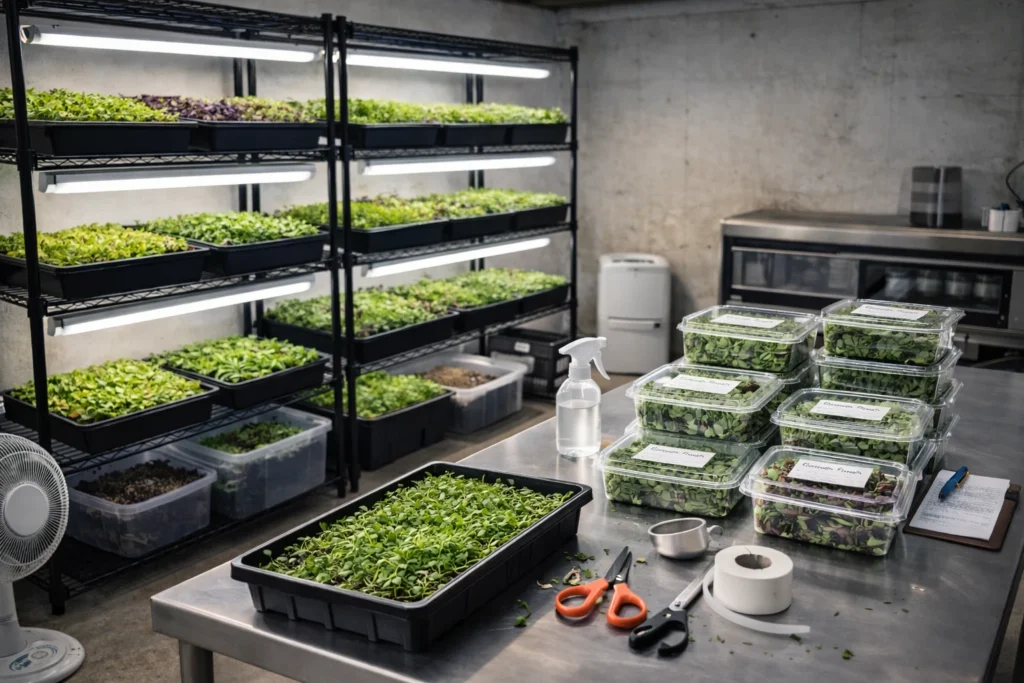
Starting a microgreens small business at home is one of the most affordable and rewarding ways to earn a steady income from limited space.
With just two racks and about thirty-two trays, you can produce nearly eight hundred dollars a week while serving local customers who value fresh, nutrient-rich greens.
This guide explains everything from startup costs and grow room setup to reliable crops, delivery models, and profit margins.
Whether you’re transforming a spare room or a basement corner, you’ll learn how to grow, package, and sell consistent, high-quality microgreens right from home.
It’s a practical, proven path for anyone ready to turn healthy living into a profitable small business.
What readers will get from this guide?
You will see the numbers that matter, such as revenue per tray and weekly targets. You will see a lean shopping list that avoids common overspending. You will learn how to set up a small room so crops stay consistent. You will know which crops sell first and how to package them. Most of all, you will understand how to keep the operation simple so it scales without chaos.
Understand the Business Math First
What one tray really earns
A standard ten-by-twenty tray commonly brings about twenty-five dollars in revenue when you sell the harvested microgreens directly to local buyers. Some varieties can earn a little more, but planning with twenty-five keeps your targets realistic. When you know the average revenue per tray, you can plan weekly planting and harvest blocks with confidence.
How to reach eight hundred dollars a week
Eight hundred divided by twenty-five equals thirty-two trays. That means you need to harvest and sell thirty-two trays each week. A typical wire rack holds twenty trays across its shelves. With two racks, you can stage and finish the thirty-two trays you need while keeping a few shelves free for germination stacks and workflow. Because microgreens turn over in about seven to ten days, you repeat this cycle weekly, and your cash flow stays steady.
The earnings per rack
Think of one full rack as a five-hundred-dollar weekly engine. Twenty trays on a rack at twenty-five dollars each brings about five hundred dollars a week. Three racks in a ten-by-ten space can produce roughly one thousand five hundred dollars per week once you have the customer base and the workflow to support it. This simple mental model helps you plan space and sales goals together.
How the bigger goal works
Three thousand dollars per week is not magic. It is roughly one hundred weekly customers with an average order of thirty to forty dollars. That level usually comes after you build one or more efficient delivery routes and keep churn low with good education and a consistent product. The math keeps you honest. Count trays. Count customers. Match planting to promised deliveries.
Startup Costs and Lean Setup
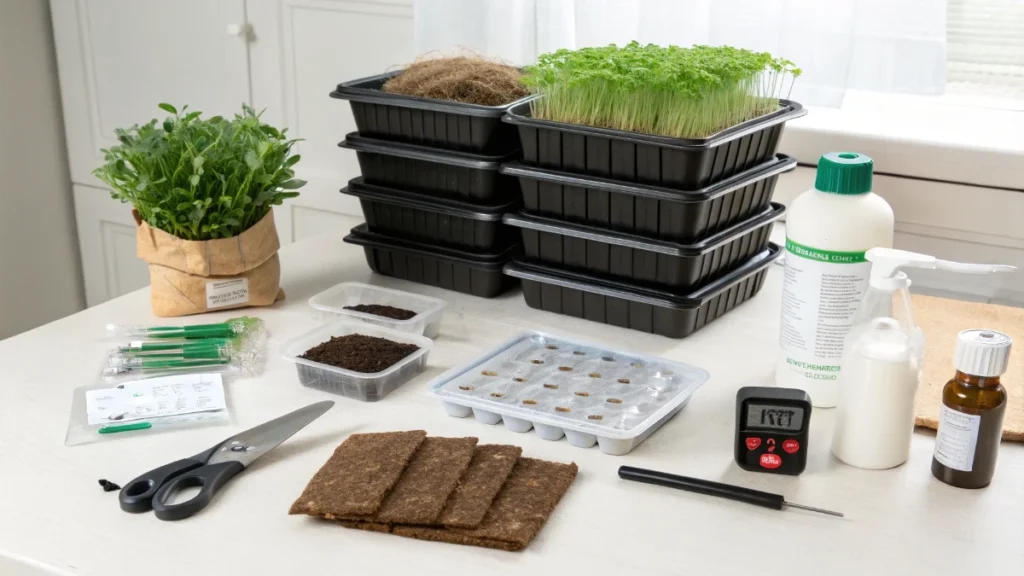
What to buy first and why
Two sturdy wire racks give you the shelf space for seeding, germination stacks, and finished crops. Heavy-duty trays are worth it because they do not flex, and you can carry two at a time when they are full and wet. Reliable LED shop lights, placed one per shelf, are enough to finish crops evenly. Choose a consistent grow medium and quality seed from trusted suppliers. Compostable clamshells and simple labels make your product shelf-ready and help your brand feel clean and local.
How much a lean start really costs
A careful setup can start around one thousand to one thousand two hundred dollars for racks, lights, trays, seed, medium, and packaging. Many beginners overspend and end up with nearly four thousand without better results. Start small. Buy only what serves the first thirty-two trays a week. Add more only when you have orders waiting.
Room layout that keeps you sane
Use a spare room or a basement corner. Keep the look congruent so every shelf and tray has a clear purpose. Place a small table for a tray making outside or away from the growing zone, so soil dust does not drift onto crops. Leave a simple path to move a wheeled rack or a super rack when you need to shuttle many trays at once. A good layout saves more time than fancy gadgets.
🌿 Recommended Microgreens Supplies |
Grow Room Fundamentals You Can Trust
Climate and consistency
Set the room so temperature and humidity stay stable. Consistency speeds learning and raises yield. Level every rack with a simple spirit level so water does not pool on one side of the tray. Uneven watering is a common cause of patchy growth and weak stems. Keep airflow gentle and even, so leaves dry after watering without stressing the crop.
Germination that prevents problems
Stack trays for germination rather than using humidity domes. Stacking saves space, keeps light out during the early phase, and reduces mold risk. When working with sunflower seed, a four-hour soak is a reliable starting point. Longer soaks often lead to soft seeds and lower germination. Log what you do in each batch so you can adjust with purpose.
Clean habits that compound
Separate dirty work from clean work. Do tray filling and seeding in one spot, and keep the growing shelves for living crops only. A simple paint edging tool scrapes benches quickly and helps you reset the room after harvest. Sanitize trays after each use. Label every tray with date and variety so nothing is guessed. The calm you feel from a clean room shows up in your crops.
Crops and Products That Sell
Start with four proven varieties.
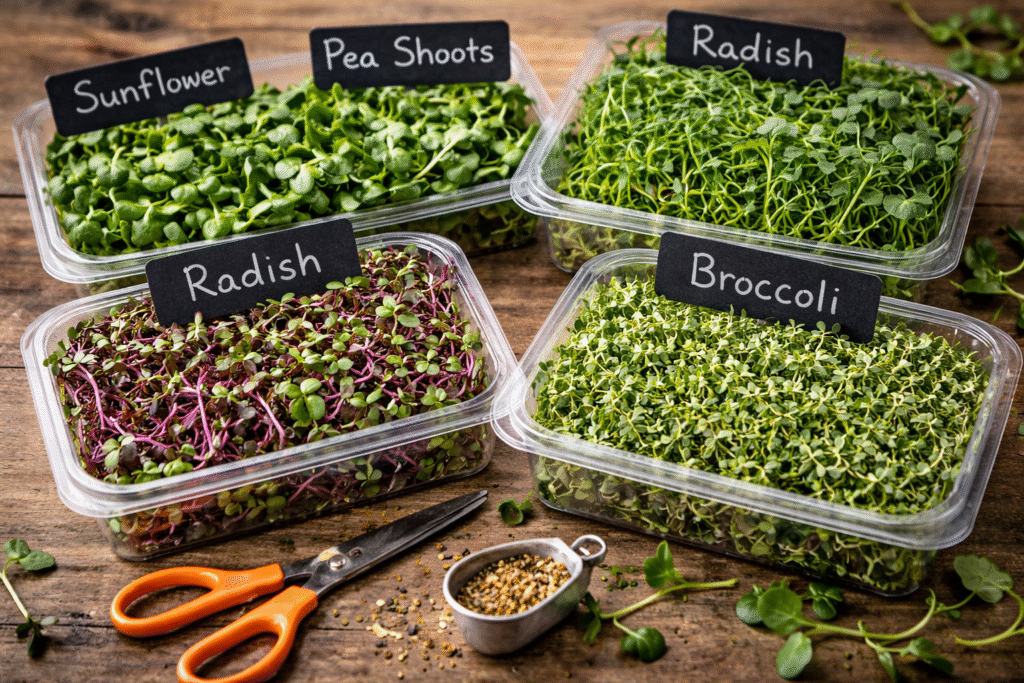
Sunflower gives a hearty crunch and broad appeal. Pea shoots bring sweetness and volume. Radish adds spice and color. Broccoli offers a mild flavor and strong nutritional story that resonates with health-minded buyers. These four have strong germination and predictable timing, which lowers stress while you are still refining your process.
Keep the menu small at first.
Limit your weekly offerings to a few core items until you can hit the same quality every cycle. A tight menu keeps seed costs and inventory simple and reduces waste. Once your trays are uniform and your customers are asking for more, add a new variety one at a time and watch how it moves.
Use a mixed box to lower waste and lift margins.
A preset sampler box often becomes the bestseller because it removes choice fatigue for new customers and helps them discover favorites. It also lets you balance harvests across varieties and move product that might otherwise sit. Present it as a weekly staple with simple usage ideas such as eggs, grain bowls, sandwiches, and smoothies. Clear labeling and a harvest date on each clamshell build trust and repeat orders.
Production Rhythm You Can Maintain
A weekly rhythm keeps the whole business calm and predictable. Seed on the same two or three days every week, so harvest and delivery land on set days. Microgreens prefer routine,s and so do customers. Stage germination stacks so that unstacking flows right into your lighted shelves with no gaps. Aim for a seven-to ten-day crop cycle depending on variety and room climate. The goal is steady waves of trays that mature together.
Daily care matters. Do a quick climate check each morning. Touch the medium to confirm moisture instead of guessing. Water evenly and allow leaves to dry with gentle airflow before lights go off. Give yourself a fifteen-minute sanitation reset at the end of each work block so the room starts clean for the next task. These small habits prevent mold, patchy stands, and last-minute scrambles.
Treat harvest like a production day. Chill clamshells and make labels ahead of time. Sharpen harvest tools and sanitize the table before the first cut. Harvest when crops are dry and cool, so texture stays crisp. Pack immediately and return the finished product to a dedicated fridge space. Keep a simple harvest log that records variety, tray count, yield, and notes about appearance or flavor. Over a few weeks, this log becomes your roadmap for better planning and higher yield per shelf.
A sample week that works
Plant on Monday and Wednesday. Unstack and light on Tuesday and Thursday. Harvest on Sunday for Monday deliveries or harvest on Thursday for Friday deliveries. This pattern creates predictable work blocks and gives you a full day for markets or outreach without neglecting the room.
Finding Customers the Smart Way
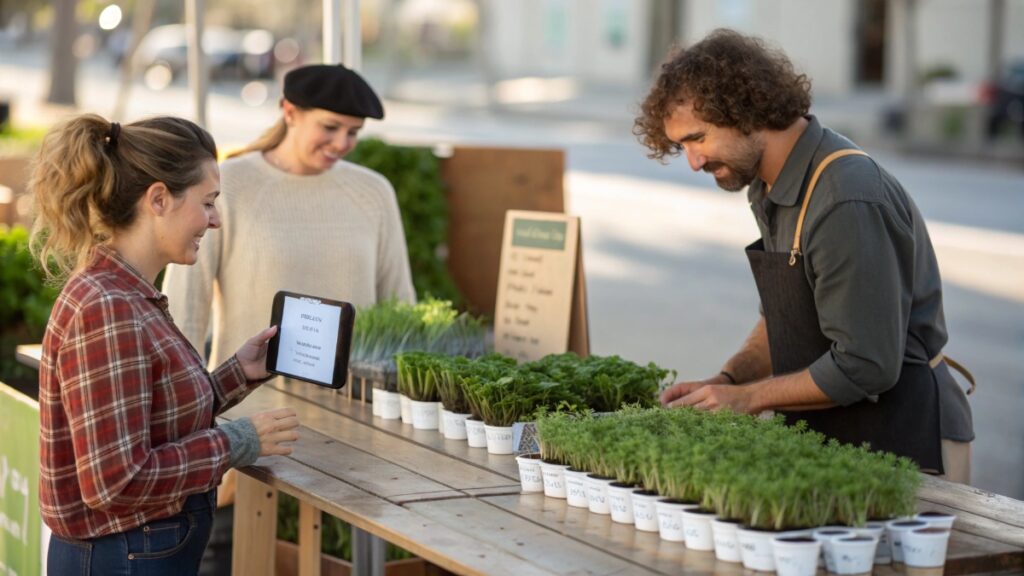
Start where your ideal buyers already gather. Farmers’ markets are a strong launchpad because visitors are local and already care about fresh food. You will learn fast there. Price tests are instant. Packaging feedback is honest. You hear the questions that block a sale, and you learn how to answer them in plain language. Many growers begin with one market and add a second or third for a short period to build awareness quickly. That early push lays the foundation for future subscriptions.
Collect emails and phone numbers with permission. A simple list turns one casual purchase into a conversation that lasts. Invite people to a weekly plan with an easy form. Let them pause any week and choose from the core varieties or the mixed box. Show them three ways to use each item so they actually finish their greens and come back for more.
Local stores and cafes can help fill in the week, but do not rely on one channel. A balanced mix of market sales and direct home customers makes the business resilient. When a store slows down, you still have your regulars. When market season changes, you still have a route. The transcripts make this clear. Diversification kept farms steady when one segment shifted.
Practice simple and confident selling.
Describe taste and texture first. Share one quick-use idea. Offer a mixed box as the easy choice for first-time buyers. Smile and ask if they would like to join the weekly plan. A kind ask often doubles your results.
The Subscription Delivery Model
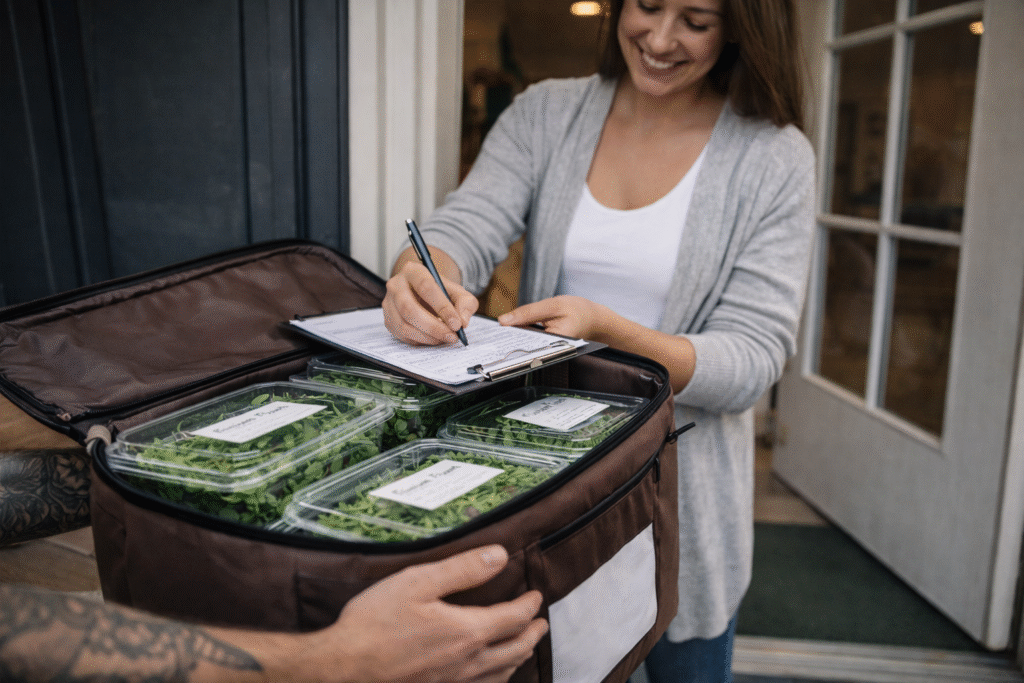
Subscriptions turn a busy hobby into a steady business. When people receive fresh greens on the same day each week, they build a habit. That habit keeps your trays moving and your planning accurate. Planting becomes simple math. Thirty-two trays per week support eight hundred dollars in weekly revenue at typical direct-to-consumer prices. As your route grows past one thousand dollars per week, it becomes efficient to split it into two routes by location. Shorter routes mean less driving and better use of your harvest window.
Basic automation removes friction. A reminder message the night before prompts customers to leave a cooler. A delivery message confirms drop off. Automatic billing at delivery keeps cash flow smooth and reduces bookkeeping time. These simple touches make the service feel effortless for the buyer and reduce missed deliveries for you.
Route design follows the same thinking as your grow room. Keep it lean and repeatable. Group neighborhoods. Choose one side of town for Monday and the other side for Thursday. Protect buffer time after each route for surprise add-ons or traffic delays. Over time, many farms build three or four tight routes that cover their region while keeping total drive time reasonable.
Keep churn low with education.
Send a short recipe card or a usage tip with every order. Teach how to pair greens with eggs, bowls, and sandwiches. When customers always know what to cook, they renew without being asked.
Pricing and Profit Guardrails
Price to reflect freshness, convenience, and nutritional value. A common direct price target is about twenty-five dollars per harvested tray when sold in consumer-sized clamshells. Some varieties and premium mixes can bring more, but plan with twenty-five to keep projections honest. Your margin lives in consistency. When yields are steady and waste is low, the price you set will hold without discounts.
Watch four simple numbers every week. Germination should be above ninety percent on your core crops. Yield per tray should be tracked in grams for each variety so you can see the effect of climate tweaks and seed lots. Waste should stay below five percent, so you are not planting more than you can sell. On-time delivery should sit above ninety-eight percent because reliability builds trust faster than any marketing line.
Guard your inputs. High-quality trays and lights last for years and remove headaches. Test a few seed suppliers early and settle on the ones that deliver uniform lots. Soak sunflower seed around four hours as a baseline. Longer soaks often reduce germination and lead to soft seed coats. Use compostable packaging to align with the values of the customers you meet at markets and to strengthen your brand story without changing your cost structure dramatically.
Plan for cash flow
Start with a lean setup of one thousand to one thousand two hundred dollars instead of pushing to four thousand before your first sale. Add a second rack only when orders are waiting. This sequence keeps you liquid and lets the business fund its own growth.
Operations and Systems
Write short procedures for the tasks you repeat. Tray preparation includes medium depth, seeding density, and water volume. Germination includes stacking weight and days until first light exposure. Harvest includes cut height, tool sanitation, and packing order. Delivery includes cold chain steps, route order, and proof of drop-off. Keep each procedure on a single page and update it when you learn something new.
Use simple tools that create speed. A wheeled super rack lets you move many trays at once and reduces steps between zones. A label printer with saved templates keeps clamshells consistent and quick. A painted edging tool clears benches in seconds, so you begin the next task with a clean surface. These choices save minutes every day, which add up to hours each week.
Keep the space clean and minimal. Remove anything that does not serve today’s work. Clutter slows hands and clouds thinking. When the room is quiet and organized, you notice small problems before they grow. You see a slightly dry corner or a tray that needs to be rotated on the shelf. That attention raises yields more than any gadget.
Metrics review as a weekly meeting
Set aside thirty minutes once a week to review germination, yield, waste, and deliveries. Compare notes to last week and write one small change to test. Only change one variable at a time. This habit turns your farm into a simple cycle of test, learn, and improve, which is how home growers reach two racks producing eight hundred dollars a week and later split routes toward larger goals with confidence.
Marketing That Feels Natural
Education makes selling simple. Most people buy again when they know exactly how to use what they bought. Share three fast ideas with every sale, such as eggs with sunflower shoots, a grain bowl with pea shoots, or a simple salad with radish and broccoli. A small card inside each clamshell turns one purchase into a weekly habit. Habits keep trays moving and keep your planting plan accurate.
Show up where local shoppers already care about fresh food. A regular table at the market builds trust because people can taste, ask, and see you handle food with care. Use those talks to learn which sizes move fastest, which mix people finish every week, and what price feels fair in your town. Collect emails and phone numbers with permission. Send a short note before market day and a friendly invite to a weekly plan. Keep the language plain and friendly. Make joining easy and pausing easier.
Tell a simple story online that matches your table in real life. Post one clear photo per crop with a short caption about taste and one use idea. Show clean shelves and labeled clamshells so people feel the order and care behind the harvest. Invite questions. Thank customers by name when they tag you. Local food travels on word of mouth. When a friend shows a fresh delivery on the porch, your next subscriber often appears.
Turn market buyers into weekly customers.
Offer a mixed box as the first step. It removes choice stress and lets new buyers discover a favorite. Keep pickup simple for the first week and then invite them to the home plan. The smoother the path, the higher the conversion. A reminder message the night before a drop off and an automatic note when the order is delivered remove friction and reduce missed handoffs.
The Real World Workload and Lifestyle Fit
This business is built on steady routines. Plants move at their own pace and expect you to keep up. Each day brings a short list. Check the climate. Water evenly. Unstack and place trays under lights. Look for small issues before they grow. Harvest days ask for a quiet room, sharp tools, clean benches, and a cool fridge. Delivery days ask for clear routes and simple proof of drop-off. When you respect these blocks, the week feels calm.
Time away is hard at the start. Weekly customers expect fresh greens on the same day. Finding cover is tougher than many expect. One grower cycled through more than ten helpers before finding a good fit. Plants are predictable. People are not. Plan around that fact. Keep your first months simple. Protect one day without production to rest. Add help only when your systems are clear, and your volume truly needs an extra set of hands.
The work is rewarding because your customers feel better and eat better. You will hear it often. That keeps motivation high on long days. The challenge is to keep the room lean so tasks never sprawl. When the space stays tidy, the work fits into a normal week and still leaves evenings for family.
Milestones and Timelines You Can Aim For
Begin with a skill sprint. Spend two to four weeks growing for yourself. Track germination, days to harvest, and yield per tray for sunflower, pea, radish, and broccoli. When you can repeat those results, you are ready to sell.
Aim for eight hundred dollars per week with two racks and thirty-two trays. This is a realistic first revenue goal that fits in a spare room. Use a simple plan for planting on two days and harvesting on one or two days. As your route reaches one thousand dollars per week, split it by geography to shorten drive time and protect quality.
Expect a lean start of one thousand to one thousand two hundred dollars if you buy only what you need. Some growers spent about four thousand dollars early and still broke even in about nine months once sales were steady. With clear systems and steady demand, year two can climb quickly. One early-stage farm reached about one hundred thousand dollars in revenue in the second year.
The wider market has strong tailwinds. Projections have put microgreens at one point four billion dollars by 2028, at about twelve percent annual growth. This does not replace the work, but it does mean your town likely has room for a careful local operator who delivers on time and teaches customers how to use what they buy.
Common Mistakes to Avoid
Buying gear for a dream setup before you have orders. Start with two racks, heavy-duty trays, reliable lights, and a small stock of seed and medium. Add only when customers are waiting.
Building a product around one buyer’s wish. A single chef can be enthusiastic one week and pass the next. Let the menu be driven by steady sellers in your town. Sunflower, pea, radish, and broccoli rarely sit.
Using humidity domes creates a mold problem. Stacking trays for germination is simpler and uses space better. Keep airflow gentle and the room clean.
Leaving racks out of level and watering unevenly. A small bubble level and a few minutes of adjustment prevent thin corners and weak growth.
Over-soaking sunflower seeds. Around four hours is a reliable baseline. Longer soaks often reduce germination and create soft seed coats.
Selling before you can grow with consistency. Learn to hit the same yield and look every week. Customers forgive small surprises once. They return for consistency.
Simple First Week Plan
Day one
Choose the room, map a clean flow, and list only what is needed for the first thirty-two trays. Order two wire racks, heavy-duty trays, LED shop lights, a steady grow medium, and seed for the four core crops. Add clamshells and labels. Measure shelf height so the lights sit well above the canopy without heating it.
Day two
Assemble racks and lights. Level each shelf. Set a small table outside the grow zone for tray filling. Place a fan so the airflow is gentle and even. Label a fridge shelf for the finished product. Prepare a grow log with fields for date, variety, seed weight, soak time, unstack date, harvest date, and yield.
Day three
Seed sunflowers and peas for the first block. Stack for germination with light weight on top so the seed contacts the medium well. Set reminders for daily checks. Record everything in the log. Keep the room clean and quiet.
Day four
Seed radish and broccoli for the second block. Repeat the same steps. Confirm the racks remain level. Check moisture by feel rather than by guess. Touch the medium and water only when it truly needs it. Begin a short list of tasks you repeat each day so nothing is missed.
Day five
Unstack the first block if the roots have gripped the medium and the stand looks uniform. Move under the lights. Set the fan to keep leaves dry after watering. Clean benches with a mild sanitizer. Use the paint edging tool to scrape any residue so the space resets fast.
Day six
Create a simple one-page order form for family and friends. Include the mixed box and the four single varieties. Offer pickup at a set time. Ask for honest feedback on taste, portion, and packaging. Save email and phone details with permission so you can invite them to a weekly plan later.
Day seven
Review your log. Adjust only one variable if needed. Prepare labels and practice a mock harvest on a small tray edge to test cut height and packing flow. This rehearsal makes the real harvest calm.
When to Add Help and How
Add help when the week feels full, even with clean systems. Start with clear roles. Seeding and harvest blocks come first. Delivery comes second after trust is built. Teach the why behind each step, so quality holds when you are not in the room. Run a short paid trial week to check fit and pace. Hire people you enjoy being around. You will share quiet hours and many small tasks. A good match lifts the whole farm.
Keep your customer mix balanced so a change in one channel does not shake the week. A steady line of home subscribers with a small set of stores and one market day makes cash flow smooth. With a full routeof nearlyr one thousand dollars per week, split by area, and give your helper one side. Shorter routes and clear lists keep service consistent.