
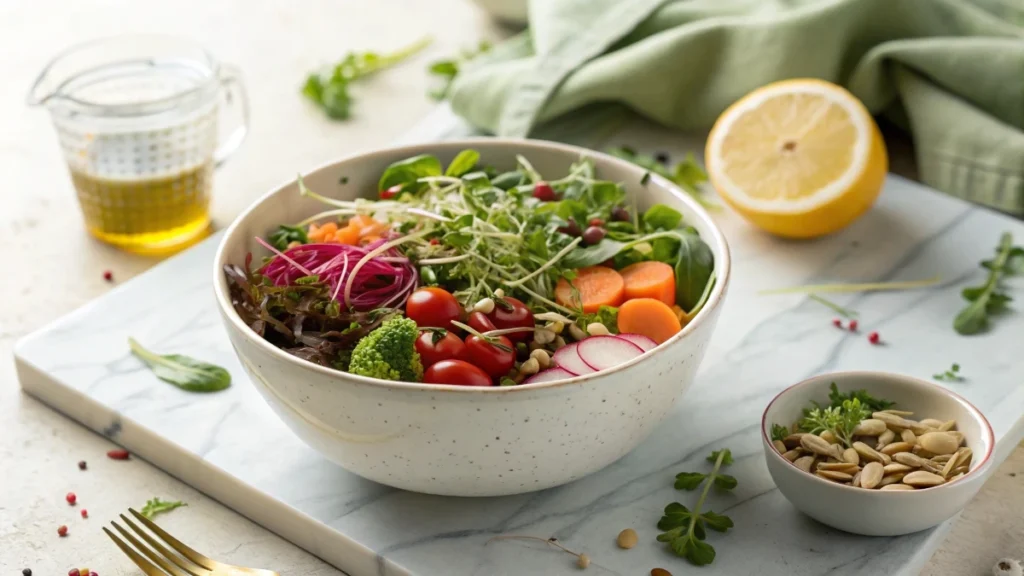
Micro herb salads bring vibrant flavor and nutrition to everyday meals. These tender greens are easy to grow, fast to harvest, and simple to use in balanced bowls that taste exciting.
In this guide, you will learn how to combine sunflower shoots, radish microgreens, broccoli greens, beet greens, lettuce sprouts, and garden cress with real food building blocks like tomatoes, cucumbers, carrots, almonds, pumpkin seeds, olive oil, and citrus.
We will also explore complete meal ideas that add protein-rich amaranth or quick pantry proteins, plus elegant restaurant-style plates with balsamic, warm mushrooms, and citrus segments.
Whether you cook for one or a crowd, micro herb salads deliver fresh color, great texture, and friendly nutrition year-round.
Nutritional Benefits of Micro Herbs
Micro herbs deliver concentrated nutrition in small portions. One grower in the materials above highlights a widely shared observation that certain varieties can contain roughly four to forty times the micronutrients of their mature counterparts. The exact multiple depends on species and growing conditions, yet the practical point is clear. A handful of young leaves can meaningfully raise vitamin and antioxidant intake without making a salad heavy.
Several makers emphasize vitamins commonly present in these tender leaves. Vitamin C supports immune function and collagen formation. Vitamin E helps protect fats in cell membranes. Vitamin K contributes to normal blood clotting. Beta carotene is a precursor that the body can convert to vitamin A. Minerals arrive through the greens themselves and also through common salad add-ons such as pumpkin seeds and nuts. Pumpkin seeds are frequently used because they contribute magnesium, zinc, copper, and selenium, along with a gentle crunch.
Absorption is as important as intake. Multiple recipes pair micro herbs with a small amount of healthy fats fat-solublele vitamins A, D, E, and K are better absorbed. Dressings across the examples usually use about a teaspoon of extra virgin olive oil or another unrefined oil per serving with lemon or apple cider vinegar and aromatics such as garlic or green chili.
Beyond general nutrition, the combinations above connect naturally to everyday goals. Garden cress appears in one bowl, where iron and traditional nourishment are priorities. Amaranth is cooked and added for those who want more protein with steady energy, including people thinking about thyroid balance, carbohydrate awareness, and routine strength. Radish is often used for its peppery lift, antioxidant-rich color, and ability to make a simple lemon and olive oil salad feel complete.
🌿 Recommended Microgreens Supplies |
Common Micro Herbs Used in Salads
Sunflower shoots
These bring a naturally nutty bite and a firm yet tender texture. They work in rustic bowls and in plated versions. In one example, they are clipped over lolla rossa and lettuce and finished with almonds, tomatoes, olive oil, and balsamic. In another, they crown a composed plate with warm mushrooms, citrus segments, cherry tomatoes, toasted walnuts, radish curls, and beet slices. Sunflower shoots can stand in for croutons when you want crunch without bread.
Radish micro herbs
These provide peppery heat and vivid magenta color. A simple everyday salad uses a lettuce base covered with sunflower and red radish micro herbs, finished with olive oil, smoked salt, and lemon. Another quick bowl mixes rainbow radish with broccoli, beet, et and pea shoots, plus a spoon of guacamole, pumpkin seeds, avocado oil, and lime to create a mildly tart and gently spicy profile. Radish is easy to grow on a windowsill and is often ready in about twelve days when kept evenly moist and harvested before a third true leaf develops.
Broccoli micro herbs
These suit cooks want mild flavor with high nutrient interest. They appear repeatedly in quick bowls and pair well with vinaigrettes as well as richer toppings. Because the taste is gentle, they let citrus and herb dressings shine.
Beet micro herbs
These contribute an earthy flavor and intense color. They show up in restaurant-style plates and in everyday mixes. The bright stems make even a simple salad look festive.
Garden cress micro herbs
These are grown at home on damp soil and are often ready to harvest around day seven. They deliver a light peppery taste and are valued in iron mindful plates. They pair especially well with cooked amaranth and a citrus-forward dressing. A common routine is to cover sown seeds for two or three days, then move to a bright windowsill and mist regularly.
Lettuce micro herbs
These create a gentle base when grown as a countertop bowl. A shallow container is sown with romaine and red butterhead seeds, then given six to eight hours of strong light at about sixty five to seventy five degrees Fahrenheit. Day six shows sprouts. Week two shows a full canopy. Around week three, the first selective snips begin. Because outer leaves are clipped and centers left intact, the bowl keeps producing.
Other flavorful accents
Wasabi and leek micro herbs add aromatic heat and allium notes in small amounts. Pea shoots add sweetness and volume. Mustard is a familiar option for a bolder bite.
Salad Building Blocks With Micro Herbs
Choosing a base
Two approaches work beautifully. Use classic leaves such as butter lettuce, lolla rossa, romaine, or spinach as a soft foundation. Or let a freshly grown bowl of micro lettuce serve as the base, so every bite brings tender young leaves. A very simple pattern appears in several examples. Start with a lettuce base, then cover generously with sunflower and radish micro herbs,s and finish with lemon and olive oil.
Adding vegetables
Cucumber brings clean crunch. Shredded carrot adds sweetness. Red onion contributes bite. Cherry tomatoes add acidity and juiciness. Thin beet slices add color and a mild earthy tone. These vegetables recur across preparations and perform the same balancing roles in every kitchen.
Bringing protein
Cooked amaranth is folded into the center of a plate so the salad eats like dinner. One reliable method is to simmer one-quarter cup of dry amaranth in three-quarters cup of water with one-quarter teaspoon of salt, cook covered for about fifteen minutes, stir, cover for five minutes more, then rest for five to ten minutes. Meal prepping a larger batch and chilling it makes assembly faster on weeknights. For a different path, flaked tuna or leftover chicken mixes in easily. Legumes also fit when keeping the meal plant forward.
Layering healthy fats and crunch
Roasted almonds appear in the Bengaluru example. Toasted walnuts complement warm mushrooms and citrus on an elegant plate. Pumpkin seeds are used in quick bowls and in nutrient-focused builds for selenium, magnesium, copper, and zinc. Small pieces of multigrain bread can provide a rustic crunch when desired.
Selecting cheese
Goat cheese is sometimes added as a light crumble. Parmesan shavings finish a plated salad. Cheddar can substitute when that is what is on hand. In each case, the cheese is a garnish rather than the center of the plate.
Dressing with intention
A fast approach uses lemon juice, extra virgin olive oil, and a sprinkle of smoked salt. Another common jar dressing blends olive oil, organic apple cider vinegar, sea salt, black pepper, garlic powder, and fresh chopped garlic. A light citrus dressing with about one teaspoon of olive oil per serving plus lemon, a little apple cider vinegar with the mother, black pepper, chopped green chili, and a small clove of garlic delivers brightness while supporting absorption of vitamins A, E, and K. Avocado oil with lime works well when a gently tart profile is desired. All of these dressings shake together in seconds.
Styles of Micro Herb Salads
Classic home bowls for any day
One home cook centers on fresh cut pea shoots and broccoli micro herbs with carrot, cucumbe,r and red onion, sometimes with a little goat cheese and a simple vinaigrette. Another everyday bowl starts with butter lettuce, then a generous blanket of sunflower and red radish micro herbs, finished with good olive oil, smoked salt, and lemon. These plates rely on very fresh greens to do most of the work and scale easily from one serving to family size.
Quick mixes for busy schedules
A weekday strategy uses a micro herb blend of broccoli, beet, sunflower, pea shoots, and rainbow radish. A spoon of guacamole goes on top, pumpkin seeds scatter over the surface, then avocado oil and lime finish the bowl. Protein, such as tuna or leftover chicken, can be added when available. Measurements are kept loose on purpose, so the salad comes together in a minute.
Grow your own and cut fresh.
A countertop lettuce bowl shows a practical indoor path. Sow densely in a broad container, give strong light each day, keep the medium evenly moist, and begin selective snipping around week three. Because only outer leaves are removed, plants continue to produce. This approach is satisfying for anyone who likes to eat greens that were growing moments earlier.
Restaurant style and plated
A Bengaluru dining room clips sunflower, radish, and beet micro herbs over lolla rossa and lettuce, adds roasted almonds and cherry tomatoes, dresses with olive oil and balsamic, and grates Parmesan at the end. A television kitchen builds an elegant plate with a balsamic swipe, warm oyster mushrooms tossed in a little butter and dried herbs, mandarin segments, cherry tomatoes, toasted walnuts, thin beet and radish, then finishes with sunflower micro herbs and small pieces of multigrain bread. These plates show how micro herbs move easily from casual bowls to refined presentations without losing freshness.
Functional bowls that feel like complete meals
A dinner plate in the materials above uses a center mound of cooked amaranth for protein and texture, a ring of chopped tomato, cucumber, carrot and onion for crunch and hydration, raisins for gentle sweetness, pumpkin seeds and cashews for minerals and healthy fats, a thatch of garden cress snipped just before serving, and a light citrus dressing that includes a teaspoon of olive oil and a little apple cider vinegar with the mother. The result is filling yet bright and well-suited to people seeking steady energy with thoughtful nutrition.
Growing Micro Herbs at Home for Salads
Containers and growing media
A clean clamshell from store-bought salad works well because the fitted lid helps hold moisture during germination. Some growers use two identical containers and poke holes only in the inner one so the outer one catches excess water. Others run a single container without holes and simply water it with more care. A shallow nursery tray that measures about five by five inches also works, and a single tray at that size comfortably serves two to three adults once clipped.
Regular potting mix produces reliable results. Coconut fiber is popular for tidy cutting and easy cleanup. If your potting mix has dried in storage, moisten it before sowing. A small sprinkle of worm castings blended into the top layer gives a gentle nutrient bump for longer projects such as countertop lettuce bowls.
Sowing and moisture
Broadcast seeds evenly across the surface. Radish and lettuce mixes can be sown densely so the canopy fills quickly. For lettuce bowls, blend the seeds into only the top few millimeters of soil so they sit just under the surface. Water to settle the seed without flooding. Garden cress benefits from a simple trick. Sprinkle on wet soil, cover with a damp kitchen towel for two to three days in a shaded spot, then move to bright light once most seeds have cracked. Lids can rest loosely over containers during the first days to hold humidity. Remove or prop the lid once stems appear so air circulates.
Light and temperature
Strong light keeps seedlings compact and flavorful. Aim for six to eight hours daily. A sunny windowsill is enough for quick crops such as radish and cress. Lettuce needs more intensity, so many people place bowls under a small grow light. Cool rooms suit lettuce and cress. A range of sixty-five to seventy five degrees Fahrenheit supports sturdy growth. If your space is warmer, increase airflow or move the containers to a cooler room.
Watering routines
If your container has no drainage, water slowly and stop before water collects at the bottom. A fine mist bottle is perfect during the first stage. After emergence, water until the medium is evenly moist but not soggy. A simple rhythm for radish in window light is a light watering every other day. Garden cress appreciates two light mistings daily in a warm kitchen. For lettuce bowls without drainage, check moisture daily and add only what is needed to rehydrate the root zone.
Fertilizing
Fast crops such as radish, sunflower, and cress finish so quickly that fertilizer is rarely needed. Dense lettuce bowls that will be clipped over several weeks can benefit from a very small pinch of slow-release vegetable food around week two. Water afterward to carry nutrients into the upper layer.
Growth timeline by crop
Garden cress moves from sowing to snipping in about seven days with regular misting and a bright sill. Radish sown on moist soil and kept in natural window light is commonly ready in about twelve days when watering is steady. Sunflower and pea shoots follow a similar quick rhythm. Countertop lettuce shows sprouts around day six, fills out by week two, and is ready for a first selective snip around week three.
Harvesting and handling
Harvest with clean scissors and cut just above the medium. When clipping pea shoots or broccoli greens in trays, cut close to the base while avoiding any fragments of medium. For lettuce bowls, snip outer leaves and leave centers in place so the plants continue to grow. Radish tastes best before a third true leaf forms. Waiting beyond that stage brings a slight bitterness and moves the crop out of the micro stage. Garden cress is fragile, so snip gently and use it immediately for the brightest taste.
After harvest and replanting
Used soil can go into a compost pile, so nutrients return to the garden. Stagger small sowings every few days to keep a steady supply. Many people transplant a few lettuce seedlings outdoors after the indoor bowl phase and let the rest continue as a cut-and-come-again crop on the counter.
Food prep notes
If you grow in a clean, inert medium and keep conditions tidy, you can often clip and serve without washing. If you grow in soil, a quick rinse and spin dry keeps grit out of the bowl. Dress lightly so leaves stay perky. A teaspoon or two of oil per serving supports the absorption of fat-soluble vitamins and keeps flavors rounded.
🌿 Recommended Microgreens Supplies |
Why Choose Micro Herb Salads
Nutrition in a small serving
Multiple makers in your materials point to the same theme. Young leaves can deliver far more micronutrients per gram than mature plants. A figure often repeated is four to forty times, depending on the variety and conditions. The exact multiple varies, but the kitchen lesson is clear. A generous handful meaningfully raises vitamin and phytonutrient intake without making the meal heavy. Pairing these greens with a little olive oil or another unrefined oil helps the body absorb vitamins A, E, and K. Seeds and nuts that often appear in these bowls add useful minerals such as magnesium, zinc, copper,r and selenium.
Flavor and texture that wake up a bowl
Sunflower brings a naturally nutty bite that stands in for croutons. Radish adds peppery sparkle and vivid color. Broccoli stays gentle, so citrus and herb dressings can shine. Beet greens taste earthy and make the whole plate look festive. Garden cress offers a light peppery lift that pairs beautifully with lemon and a little apple cider vinegar. Because each type has its own personality, you can tune blends to match the mood of the meal.
Speed and convenience for everyday life
Assembly is fast. One common pattern is to cover base leaves with sunflower and radish micro herbs, drizzle good olive oil, add fresh lemon, and finish with a pinch of salt. Another quick pattern uses a spoon of guacamole for creaminess, pumpkin seeds for crunch, a drizzle of avocado oil, and a squeeze of lime. Even the growing timeline respects busy schedules. Cress is ready in about a week, and radish follows in about twelve days. That means you can move from seed to salad within the same pay period.
Year-round access indoors
When outdoor beds slow, indoor bowls keep the habit going. A recycled salad container with a lid, a shallow tray on a windowsill, or a small light over a shelf is enough to produce leaves for clipping through cooler months. Lettuce bowls thrive with strong indoor light and cool rooms. Radish and cress are content on a bright sill. Fresh greens are available even when the garden is resting.
Adaptable to different goals
If you want a light plate, simple home-style bowls with a clean vinaigrette feel perfect. If you want a complete dinner that is still fresh, a plate with cooked amaranth in the center plus tomatoes, cucumber, carrot, onion, raisins, pumpkin seeds, cashews, and a thatch of garden cress delivers satiety with thoughtful nutrition. If you are setting a table for guests, composed plates with warm mushrooms, citrus segments, toasted nuts, thin beet and radish slices, and a few shavings of cheese look elegant while retaining the brightness of young greens.
Satisfying without heaviness
Healthy fats are present but measured. One approach keeps oil at about a teaspoon per serving and relies on citrus, vinegar, and fresh aromatics such as garlic or green chili for flavor. Another balances a small spoon of guacamole with plenty of greens and seeds so the bowl eats hearty without feeling heavy. These patterns make it easier to maintain weight goals while still feeling content after a meal.
Budget and sustainability
Seeds are inexpensive per serving, and the harvest arrives quickly. Reused containers become miniature gardens. After clipping, the medium can be composted to support outdoor soil. A small five-by-five tray can feed two or three people with very little waste. Growing what you need and cutting just before serving means fewer wilted greens in the refrigerator.
Family-friendly and entertaining
Micro herb salads are easy to customize at the table. Offer a small bowl of roasted nuts or pumpkin seeds, cherry tomatoes, a wedge of lemon, and a bottle of olive oil. Cheese can be optional, so everyone builds a plate that fits their preferences or needs. Bright colors from beet and radish micro herbs make the spread look inviting, whether you are cooking for one or sharing with friends.