
Tired of the same old breakfast routine? It’s time to add a burst of flavor and nutrition with microgreens. These tiny greens are big on benefits and take your morning meals to the next level.
Packed with antioxidants, vitamins, and fresh flavor, they turn simple recipes into something exciting. From quick omelets to toast with a twist, these ideas are all about making mornings easier and healthier without giving up taste.
You’ll love how fast these come together and how good you feel after. Perfect for busy mornings and lazy weekends alike, these recipes are full of color, crunch, and real goodness.
Say hello to fresher, faster, and healthier breakfasts 🌱🍳🥑✨
What Are Microgreens and Why Eat Them for Breakfast?
Microgreens are the young seedlings of vegetables and herbs, typically harvested just after the cotyledon leaves have developed and sometimes with the first set of true leaves. Unlike sprouts, which are grown without soil and consumed entirely, including the root and shoot, microgreens are cultivated in soil or a soil-like medium and are harvested above the root line. These delicate greens have become increasingly popular due to their intense flavors, vibrant colors, and surprisingly concentrated nutritional profiles.
In the context of breakfast, microgreens offer a versatile and nutrient-dense way to begin the day. Whether mixed into an omelet, blended into a pesto, or scattered on avocado toast, their small size belies their culinary impact. Many breakfast meals rely heavily on fats, starches, or proteins. Adding microgreens introduces a refreshing balance because they are light but packed with flavor, and they require no cooking or preparation beyond rinsing, making them ideal for fast-paced mornings.
One of the key reasons they are effective for breakfast is their digestibility. Since they are harvested young, their fiber is tender and less likely to cause bloating or discomfort, rt which is a welcome trait in early meals. In one omelet recipe, the cook emphasized using a brassica microgreen blend that includes broccoli, kale, and cabbage for its hearty yet mild flavor. Another example featured sunflower microgreens due to their larger leaf structure and nutty texture, which created a creamy pesto without the need for garlic or cheese.
These greens are not just about flavor. They act as functional food ingredients. Their ability to harmonize with eggs, grains, and healthy fats makes them suitable for various breakfast styles ranging from traditional Western omelets to plant-based toast toppings. Their visual appeal is also noteworthy. A home chef in Nairobi described how a microgreen garnish elevated a simple toast to restaurant-worthy presentation. When eaten first thing in the morning, microgreens bring freshness, life, and nutrients that prepare the body and mind for the day ahead.
Nutritional Highlights
Microgreens are often referred to as functional foods due to their extremely high concentration of essential nutrients. Scientific studies, including those from the USDA and university-led agricultural programs,s have confirmed that certain varieties of microgreens contain up to 40 times more vitamins and phytonutrients than their fully grown counterparts. These compounds include vital antioxidants such as vitamin C, vitamin E, polyphenols, and carotenoids.
Broccoli microgreens, featured heavily across various cooking methods, are particularly renowned for their rich content of sulforaphane. This compound has been linked to cancer prevention, detoxification, and cardiovascular health. When incorporated into something as simple as an omelet or pesto, these microgreens offer more than just a nutritional boost. They deliver bioactive compounds that support long-term wellness.
Red radish microgreens, used in the Zesty Kale-Radish Omelet recipe, bring a zippy, spicy edge along with a potent concentration of vitamin A and potassium. Sunflower microgreens, selected for pesto in one example, offer not only texture and flavor but also a generous serving of vitamin E and healthy fats. These greens are also high in chlorophyll, which aids in detoxifying the liver and improving oxygen flow to the brain, ideal benefits during morning hours.
Microgreens are inherently low in calories, making them excellent for those watching their weight or managing glucose levels. Because of their high fiber-to-volume ratio and their nutrient saturation, they promote satiety without heaviness. They are especially effective when paired with proteins like eggs or almonds. For example, in the featured pesto recipe, almonds provided the base fat and protein while microgreens offered freshness and vitamins, creating a complete and energizing meal.
One creator noted that children were more receptive to sunflower microgreen pesto than traditional pesto due to the absence of raw garlic, making the recipe more accessible for all ages. The versatility of these greens in adapting to different palates without compromising nutrient value is part of what makes them such an asset in the breakfast kitchen.
Common Microgreens Used in Breakfast Recipes
Several types of microgreens stand out for their flavor, texture, and compatibility with breakfast dishes. Among the most frequently used are:
Broccoli microgreens
Highly favored across various cooking methods, broccoli microgreens are a staple due to their mild earthiness and superior nutrient content. In one omelet recipe, the cook praised broccoli micros as his favorite, saying if he could only grow one type, it would be broccoli. This speaks volumes about its culinary flexibility and wellness appeal. These microgreens can withstand moderate heat, which means they maintain their integrity even when folded into warm omelets.
Sunflower microgreens
These were chosen as the base for a creative breakfast pesto. Their texture is crisp, and the leaves are much larger than those of other types. This bulkiness made them ideal for blending into a rich, nutty spread that was not only smooth but also naturally creamy. Sunflower micros are particularly effective in dishes that need body and crunch without overpowering flavor.
Radish microgreens
Red and white radish micros are peppery, vibrant, and ideal for dishes that need a bit of heat. A zesty omelet featured radish micros paired with red sorrel and arugula for a layered flavor profile that was spicy, sour, and fresh. These are especially useful for people who like bold breakfast flavors or who are replacing hot sauces with more natural heat.
Kale microgreens
Used both alone and in combination with others, kale micros deliver that classic earthy green flavor with a milder bite than mature kale. They are suitable for cooking or raw use. In one video, kale microgreens were mixed directly into the egg batter for an even nutrient distribution.
Brassica blends
Many breakfast cooks used microgreens blends consisting of broccoli, kale, cabbage, and mustard. These mixes bring out complexity without extra ingredients. One creator described how his blend could be cooked into or added fresh at the end for a layered texture. The heat-tolerance and flavor diversity make these mixes perfect for omelets, toasts, or frittatas.
These microgreens are not chosen at random. Each contributes a specific combination of nutrients, flavor tones, and textures, elevating simple breakfast staples into more sophisticated and nourishing meals.
Top Microgreens Breakfast Recipes (With Process and Insights)
Breakfast with microgreens does not require complex preparation. The examples shared across different sources show how everyday ingredients can be transformed into elegant, nutrient-rich dishes using simple techniques.
Microgreens Mushroom Omelet
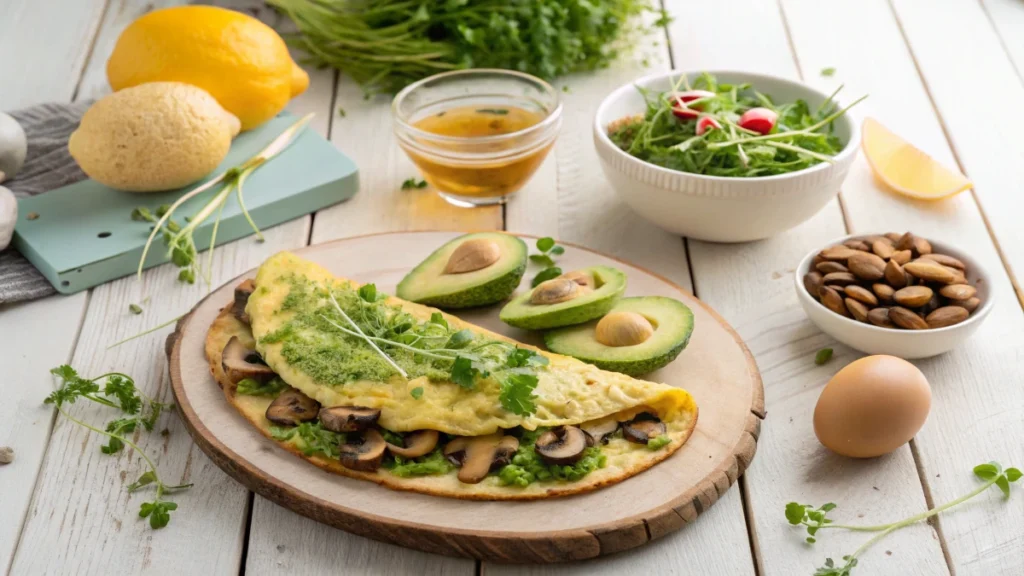
In this minimalist omelet recipe, mushrooms and microgreens take center stage. Mushrooms are sautéed gently, and fresh microgreens are folded in just before the eggs are closed over. This method preserves the vibrant greens and adds moisture and visual appeal. By avoiding high heat, the cook retains the delicate textures and prevents nutrient loss. The microgreens used appear to be a mix of arugula, mustard, and brassica.
Spinach and Garlic Microgreens Omelet
This version begins with sautéed chopped spinach and garlic in olive oil. The eggs, whisked separately, are added after the spinach is wilted to avoid overcooking. Once the eggs begin to set, a brassica microgreens blend is added to one side before folding. The creator highlights how broccoli microgreens tolerate some heat and maintain their crunch. Colby Jack cheese adds a creamy balance to the greens’ bite.
Zesty Kale-Radish Microgreens Omelet
This omelet incorporates kale microgreens directly into a half-whisked egg mixture, along with a splash of rice milk. Red radish, rocket, and red sorrel microgreens are added raw at the end for a dynamic contrast of sweet, sour, and spice. The omelet is cooked on the stove and then placed under a hot grill to finish, resulting in a fluffy and golden texture. Served with sourdough toast and a final sprinkle of microgreens, this breakfast combines rustic simplicity with elevated nutrition.
Sunflower Microgreen Pesto on Toast
Sunflower microgreens form the base of a unique breakfast pesto, combined with olive oil, lemon juice, and dry-roasted almonds. This raw blend creates a smooth and mildly nutty spread ideal for toast. The absence of garlic makes it child-friendly and less intense than traditional pesto. The chef suggests pairing it with tomatoes, avocado, or a poached egg and topping it with more microgreens for added texture and presentation. The recipe is ideal for meal prep and quick breakfasts.
Creative Microgreen Pesto Variations for Breakfast
Microgreens make an excellent, nutrient-rich base for pesto, offering a fresh alternative to traditional basil versions. One standout recipe uses sunflower microgreens, known for their larger leaves and nutty flavor. To prepare it, blend 3 cups of sunflower microgreens with 100 ml olive oil, ½ cup dry-roasted salted almonds, and the juice of half a lemon.
This variation omits garlic, making it milder and more suitable for children or sensitive palates. The almond skins add texture and visual interest, while the lemon provides a bright, refreshing finish. Because salted almonds are used, seasoning is adjusted only after tasting.
This pesto pairs perfectly with sourdough toast and works well under poached or fried eggs. It can also be topped with sliced avocado, tomatoes, or extra microgreens for added color and flavor.
Other creative twists include using kale, arugula (rocket), or radish microgreens, each bringing its own flavor—earthy, peppery, or mildly spicy. For nut-free versions, seeds like pumpkin or sunflower are excellent substitutes, and nutritional yeast can replace cheese for a vegan-friendly option.
Microgreen pesto keeps well in the fridge for several days, making it a quick, flavorful addition to breakfast routines.