
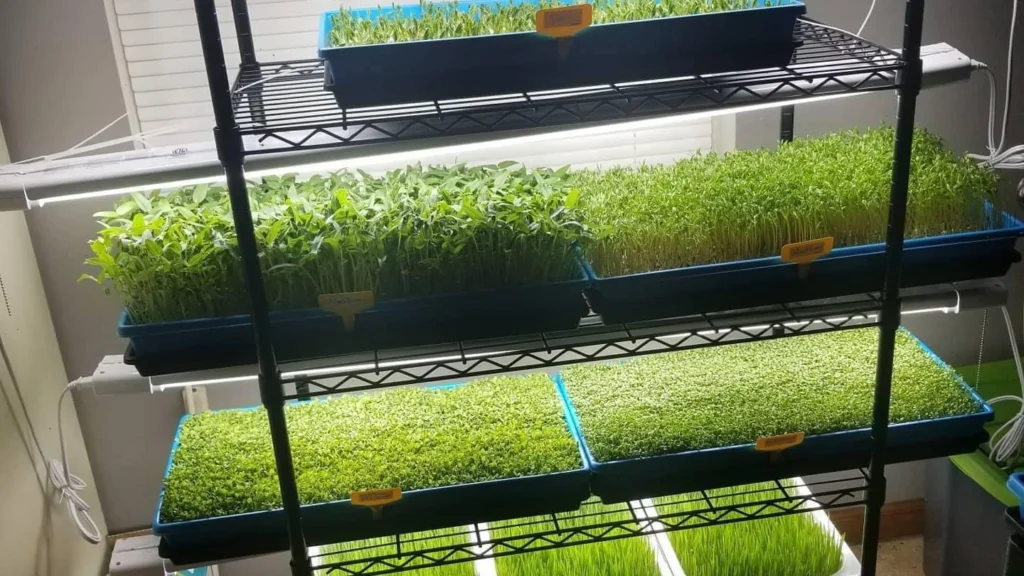
A one-rack microgreens business can realistically hit $1,000+ per month—but only if you run it like a simple system: consistent sowing, consistent harvesting, and consistent selling.
This article breaks down the numbers, the exact rack workflow, and the sales routine that makes a one-rack setup work (without turning your home into a messy farm).
The One-Rack Rule: Why Most People Don’t Hit $1,000/Month
Most beginners think the goal is “grow more trays.”
The real goal is to sell out every week.
Common reasons people stay stuck:
- They grow random varieties instead of best-sellers
- They harvest without pre-orders (then scramble to sell)
- They don’t standardize pack sizes (profit leaks quietly)
- They water inconsistently and lose trays to mold/damping off
- They don’t track what each tray actually earns
Fix those, and one rack becomes a small, dependable income engine.
What “1 Rack” Means (Realistic Capacity)
A typical “one rack” setup is:
- 4–5 shelves
- 2–4 trays per shelf (depends on rack width and light coverage)
A beginner-friendly target
- 12–20 trays total in rotation
This means while some trays are germinating, others are under lights, and others are nearing harvest.
You don’t need 40 trays to hit $1,000/month. You need a system that sells reliably.
The Simple Math to $1,000/Month
Let’s keep this honest and simple.
The revenue target
$1,000/month ≈ $250/week
Two easy ways to hit it
Option A: Retail packs (clamshells)
- Sell 85 packs/week at $3 = $255/week
- Sell 65 packs/week at $4 = $260/week
Option B: Restaurant/bulk + a few retail
- Sell one restaurant order at $120/week
- Plus 40 packs/week at $3.50 = $140/week
Total ≈ $260/week
You’re not chasing a fantasy number. You’re aiming for a steady weekly “sell-out.”
🌿 Recommended Microgreens Supplies |
The Best “One-Rack” Crop Plan (What to Grow to Sell Fast)
If your goal is income, start with varieties that:
- grow reliably
- yield well
- look good
- have a wide appeal
- don’t require extreme skill
Best sellers for a microgreens business (beginner-friendly)
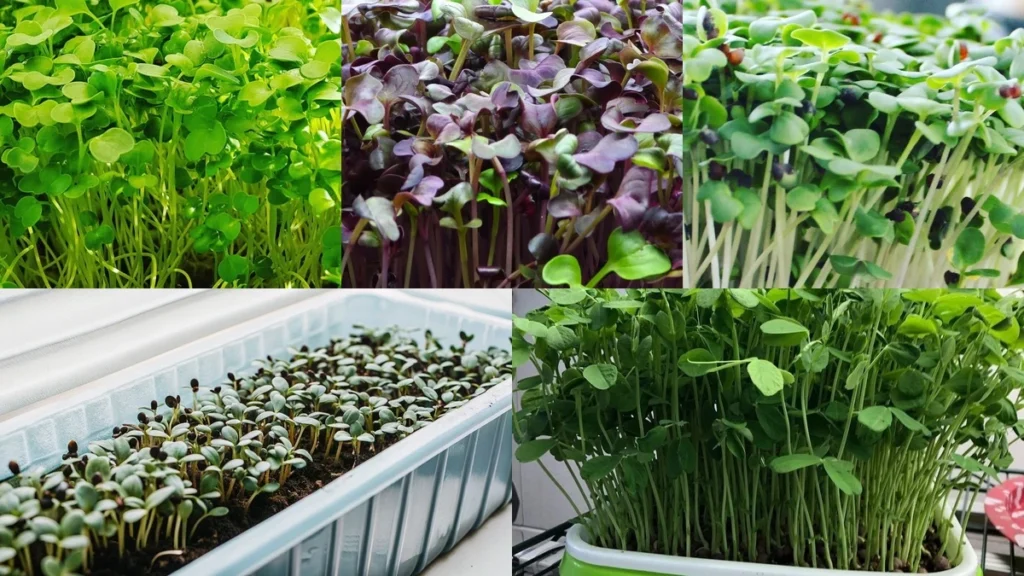
- Sunflower (big yield, crunchy, popular)
- Pea shoots (sweet, fast to move)
- Radish (fast, spicy, colorful stems)
- Broccoli (health halo; steady demand)
- Mustard (flavor punch; great in mixes)
A smart one-rack mix (example)
- 30% sunflower
- 25% pea
- 20% radish
- 15% broccoli
- 10% mustard/specialty color (optional)
This keeps you profitable and reduces “slow sellers.”
The Weekly Schedule That Makes One Rack Work
Consistency beats intensity. Here’s a schedule you can repeat weekly.
The simplest beginner schedule
Sow Days: Sunday + Wednesday
Harvest/Pack/Delivery: Friday (or Saturday morning)
This gives you rolling harvests and weekly cash flow.
Example weekly workflow
Sunday
- Sow 6–10 trays (depending on demand)
- Label trays with variety + date
Monday–Tuesday
- Check moisture
- Maintain airflow (fan)
- Avoid overwatering
Wednesday
- Sow another batch (4–8 trays)
- Prep packaging/labels
Thursday
- Confirm pre-orders
- Send reminder to customers (“Harvesting tomorrow—confirm qty?”)
Friday
- Harvest
- Pack dry and clean
- Deliver / meetups
Your goal is to make it boring (boring = scalable).
How Many Trays Do You Need to Hit $1,000/Month?
This depends on your pack size and variety yields, but here’s a grounded starting range.
Practical target
- 8–14 trays harvested per week can often support $250/week revenue
(Your results will vary by variety, density, and your portion size.)
If you’re new, don’t start at 14 trays/week. Start at 6–8, prove sales, then increase.
Pricing That Leaves Real Profit (Not Just Sales)
A microgreens business becomes stressful when you sell a lot but keep little.
A simple pricing method
Price each pack at 3× to 5× your direct cost (seed + medium + packaging).
Common pack formats
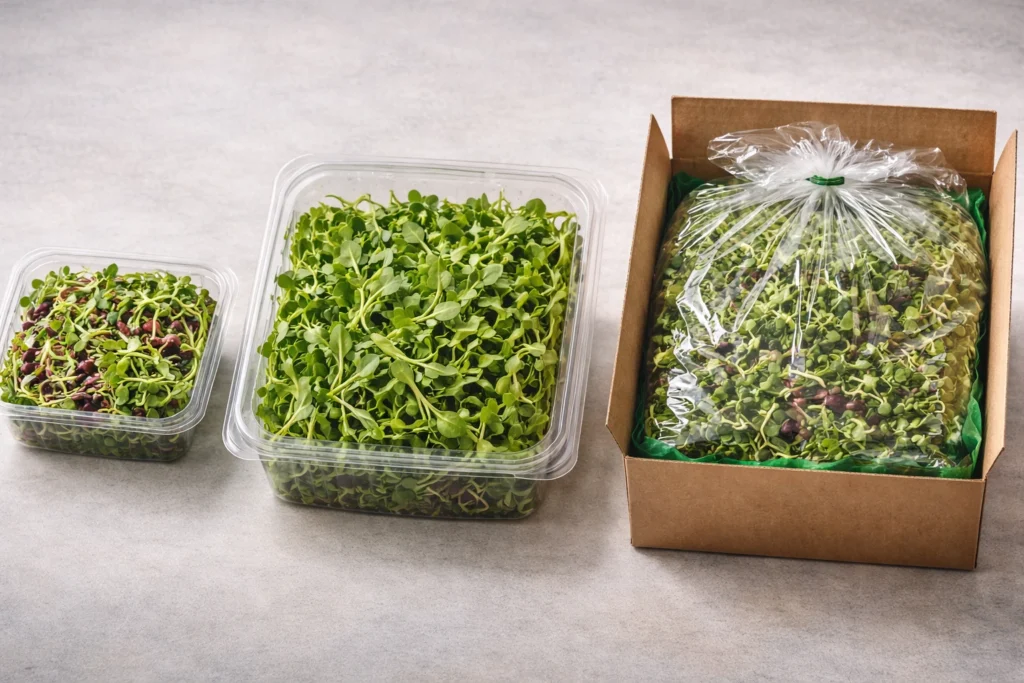
- Small clamshell (most popular for home buyers)
- Larger clamshell (meal-prep buyers)
- Bulk bag/box (restaurants)
Pricing tip that works
Offer “multi-pack” deals without destroying your margin:
- 1 pack = full price
- 3 packs = small discount
- 6 packs = best value
This increases order size and cuts your delivery time per dollar earned.
Packaging That Makes People Trust You
People buy with their eyes and their fear: “Is this clean? Is it fresh?”
Keep packaging simple
- Dry greens (don’t pack wet)
- Clean container (clamshell or food-safe box)
- Label with:
- variety
- weight (optional, but builds trust)
- harvest date
- your brand/contact
The “premium” move
Add: “Harvested within 24 hours” (only if true).
That line alone can justify higher pricing.
How to Get Enough Customers to Sell Out Weekly
You don’t need “followers.” You need repeat buyers.
Fastest beginner sales channels
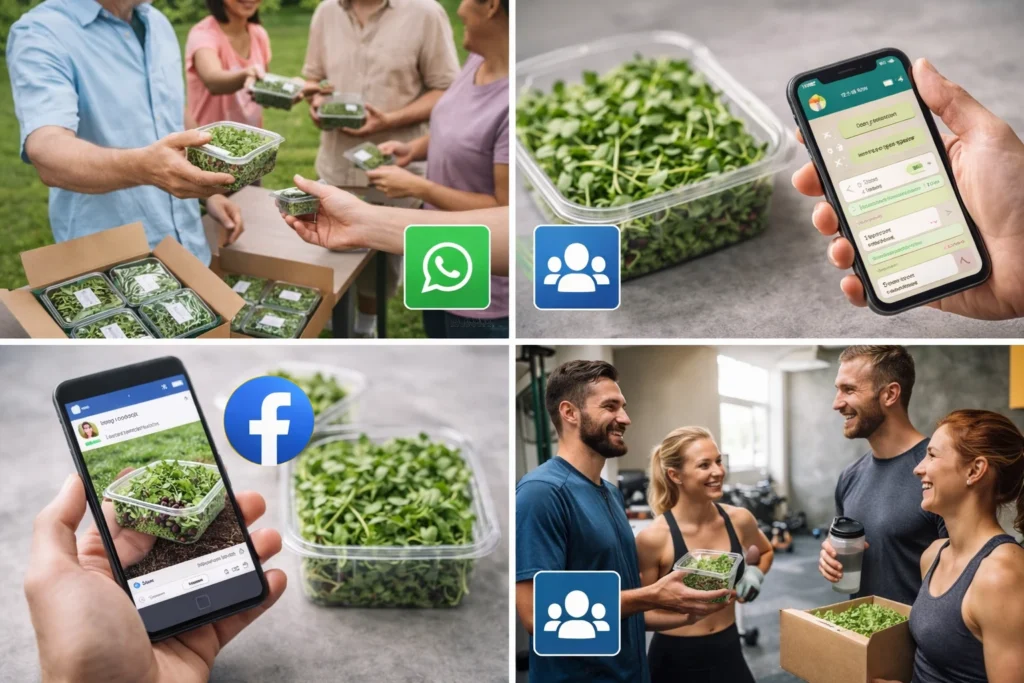
Local direct buyers
- neighbors, friends, family
- WhatsApp community groups
- local Facebook groups
- gym/fitness circles
Small businesses
- cafés
- salad bars
- meal prep services
- small restaurants (start with 1–2)
The offer that converts best
A simple weekly subscription:
- 2-pack weekly
- 4-pack weekly
- Family pack (6 packs)
Subscriptions turn your microgreens business into predictable income instead of “hope marketing.”
A Realistic One-Rack Profit Example
Numbers vary by country and market, so treat this as a model you can adjust.
Example goal
Sell 70 packs/week at $3.75 average
Revenue = $262.50/week ≈ $1,050/month
Example weekly costs (rough)
- Seeds + medium: $60–$120
- Packaging/labels: $20–$45
- Utilities/misc: $10–$25
Estimated costs = $90–$190/week
Estimated weekly profit (range)
- $262.50 – $190 = $72.50/week (low-margin scenario)
- $262.50 – $110 = $152.50/week (solid scenario)
That’s roughly $290–$610/month profit at this volume—unless you improve one thing:
The fastest way to raise profit
- Increase your average price slightly (even $0.25/pack helps)
- Reduce waste (mold/overwatering/late harvest)
- Increase subscription buyers (less selling time)
Many one-rack setups break $1,000/month in revenue quickly, and then profit grows as operations tighten.
Quality Control Basics (So You Don’t Lose Trays)
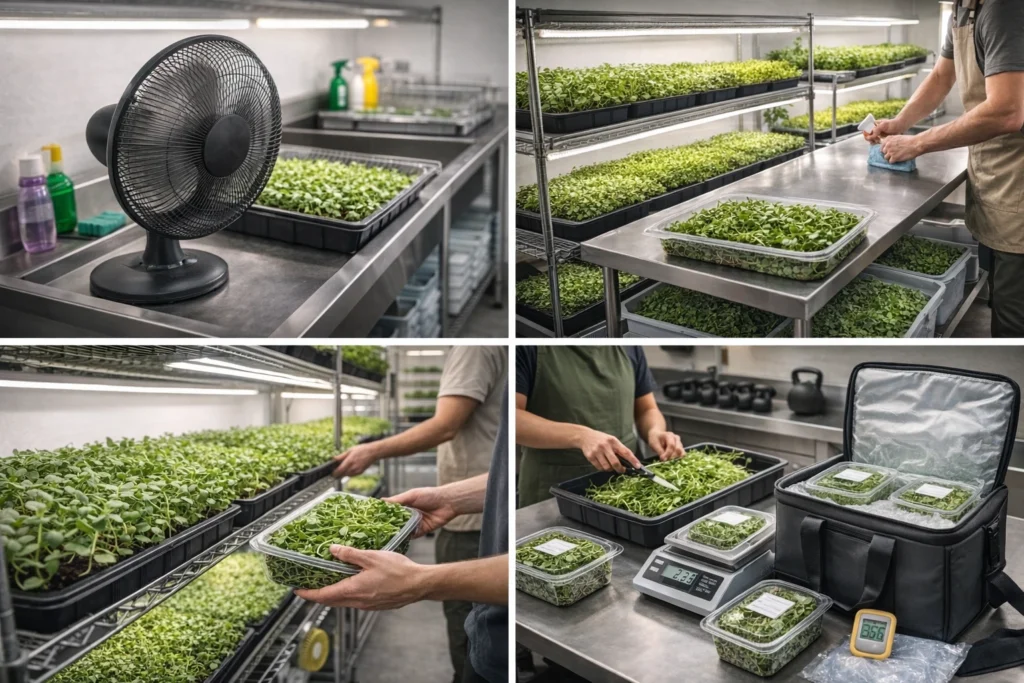
Prevent mold with these habits
- Use a fan every day (gentle airflow)
- Don’t soak trays constantly
- Keep the grow area clean
- Don’t overcrowd your rack (air needs space)
Harvest for shelf life
- Harvest when greens are dry
- Pack dry
- Keep cool immediately if possible
Shelf life improves when you treat harvest day like a “mini production day,” not a rushed chore.
A 14-Day “Earn $1,000/Month” Launch Plan
Days 1–3: Setup + first sow
- Build/clean rack area
- Set the lights on a timer
- Start with 6–8 trays
Days 4–7: Build buyers while you grow
- Message 20–40 local contacts
- Offer a “first harvest deal.”
- Collect pre-orders (don’t wait until harvest day)
Days 8–14: First harvest + repeat system
- Deliver first orders
- Ask every buyer: “Do you want this weekly?”
- Lock subscriptions
- Increase trays only when you have confirmed demand
Your first milestone is not $1,000/month.
Your first milestone is: sell out two weeks in a row.
FAQs
Can one rack really make $1,000/month?
Yes, in revenue, if you sell consistently. Profit depends on pricing, waste, and the efficiency of your workflow.
What’s the easiest microgreen to sell?
Usually, sunflower and pea shoots, then radish and broccoli. Your local market matters, so test quickly.
Should I sell to restaurants first?
Restaurants are great once you’re consistent. For most beginners, starting with direct buyers is a faster and easier approach.
How do I avoid oversupply?
Only scale trays when you have pre-orders or subscriptions. Grow to demand, not hope.