
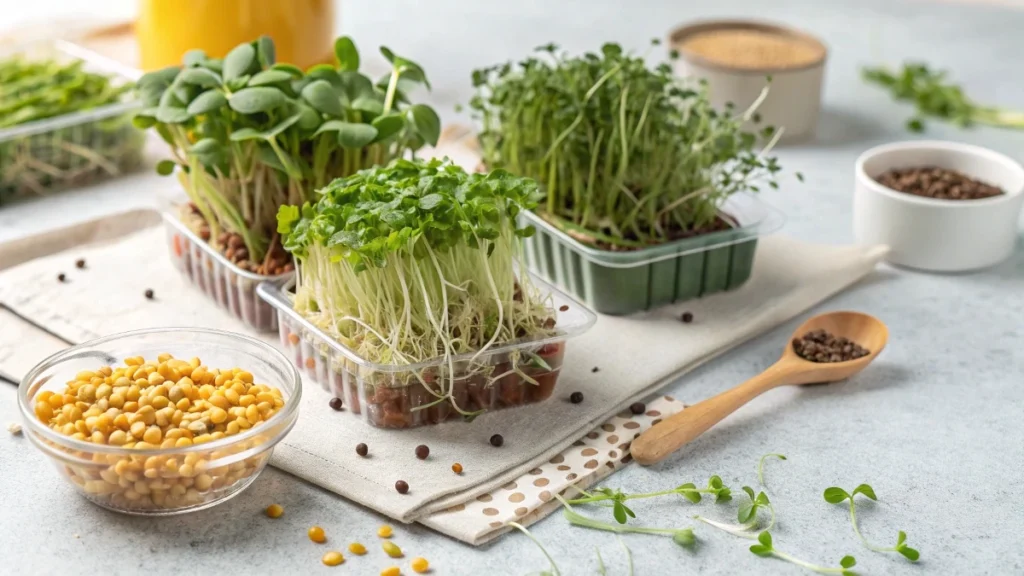
Looking for a clear answer on microgreens protein? This guide breaks down protein content by variety so you can choose greens that match your goals. You will see simple numbers per 100 grams and per cup, plus real serving tips that fit everyday meals.
Pea shoots and sunflowers often lead, while broccoli microgreens, kale, radish, and arugula add steady support with bright flavor. We also explain what counts as high-protein microgreens, how light and harvest day shift results, and how to pair greens with eggs, tofu, beans, and grains for complete amino acids.
From salads to smoothies, use this chart-driven approach to build satisfying plates and track measurable protein without guesswork. Growers get practical notes to boost consistency.
Why Protein in Microgreens Matters
Protein is one of the most valuable nutrients in a plant-based diet, and microgreens offer a fresh, compact source of it. Though they’re small, their protein content can rival or even exceed that of their mature counterparts when compared by dry weight. During early growth, the seed’s stored energy fuels the sprout, creating a concentrated form of nutrients—including amino acids, the building blocks of protein.
On a fresh weight basis, most microgreens contain between 2.5 and 6 grams of protein per 100 grams, depending on the variety. Pea shoots, sunflower, lentil, and chickpea microgreens usually lead the list, while brassicas like broccoli and kale provide moderate amounts along with other antioxidants and phytonutrients.
The importance of protein in microgreens extends beyond just numbers. They contain a balanced profile of amino acids such as leucine, lysine, and glutamic acid—important for muscle repair, enzyme production, and cellular health. When paired with complementary foods like eggs, tofu, grains, or yogurt, they help form complete protein meals. Adding a cup of pea or sunflower microgreens to a stir-fry or smoothie doesn’t just enhance taste—it gives your meal a nutritional edge.
How Protein is Measured
Protein levels in microgreens can be measured in several ways, and understanding the difference helps interpret results correctly. The most common method expresses protein as grams per 100 grams of fresh weight, making it easy to compare across foods. However, since microgreens are mostly water (often 85–95% moisture), their dry weight protein percentage can appear much higher—sometimes 25–35% of dry mass.
For everyday meal planning, the most practical metric is protein per cup. A loose cup of tender greens like broccoli microgreens usually weighs around 18–22 grams, while denser varieties such as sunflower or pea shoots can weigh 28–32 grams. That means a typical serving may provide roughly 0.5–1.8 grams of protein—a modest but meaningful boost in a balanced meal.
Environmental factors can also change readings. Protein levels rise slightly under strong light, consistent watering, and optimal temperatures (around 20–23°C). Harvest timing matters too. Microgreens picked a day later often contain slightly higher protein because their tissue has accumulated more plant solids and less water. For growers and consumers alike, consistency in harvest and weighing methods ensures reliable nutrition tracking.
Protein by Variety at a Glance
Different microgreens carry different protein levels depending on their plant family and growth pattern. Here’s a simplified view based on fresh weight averages and typical serving sizes:
| Variety | Protein (per 100g fresh) | Grams per cup (loose) | Protein per cup (approx.) |
|---|---|---|---|
| Pea Shoots | 3.5–5.5 g | 28–32 g | 1.0–1.8 g |
| Sunflower | 3.0–5.0 g | 28–32 g | 0.9–1.6 g |
| Lentil | 4.0–6.0 g | 25–30 g | 1.0–1.8 g |
| Chickpea | 4.0–6.0 g | 25–30 g | 1.0–1.8 g |
| Broccoli | 2.5–3.5 g | 18–22 g | 0.5–0.8 g |
| Kale | 2.5–3.5 g | 18–22 g | 0.5–0.8 g |
| Radish | 2.5–3.5 g | 18–22 g | 0.5–0.8 g |
| Arugula | 2.3–3.2 g | 15–20 g | 0.35–0.65 g |
| Clover | 3.0–4.0 g | 15–20 g | 0.45–0.8 g |
| Wheatgrass* | 3.0–4.0 g | — | Measured in juice form |
*Wheatgrass is consumed as juice, so protein is calculated per ounce rather than by cup.
Microgreens don’t compete with high-protein foods like beans or meats gram-for-gram, but their advantage lies in bioavailability and nutrient density. A small handful adds flavor, texture, and amino acids while complementing other foods that complete your protein intake for the day.
🌿 Recommended Microgreens Supplies |
High Protein Microgreens
What Counts as High Protein
For microgreens, a variety is considered high in protein when it delivers at least 3.5 grams per 100 grams fresh weight or 1 gram per cup. Since the water content is high, these levels are significant for such young plants. Crops from legume families—such as pea, lentil, and chickpea—naturally meet this standard because their seeds store more protein to support early growth.
Top Picks for Everyday Meals
- Pea Shoots: Mild, slightly sweet, and among the highest in protein.
- Sunflower Microgreens: Crunchy texture and nutty taste with solid protein content.
- Lentil Microgreens: Earthy and rich, great for plant-based dishes.
- Chickpea Microgreens: Firm texture and strong amino acid profile.
- Buckwheat Greens: Moderate protein but excellent for texture and tartness.
- Broccoli and Kale: Lower protein, yet valuable for variety and micronutrients.
Adding two cups of pea or sunflower microgreens to a salad can add 2–3 grams of protein, comparable to half a boiled egg—but with fiber and antioxidants included.
Grower Tips to Boost Protein
Maintain strong light exposure, around 14–16 hours daily, to promote thicker cotyledons and denser tissue. Keep the temperature stable at 20–23°C and avoid excess moisture to prevent soft stems. Harvest right when cotyledons open but before true leaves unfold fully, as that’s when protein concentration per gram peaks.
Building a Weekly Protein Box
A weekly protein box helps you rotate microgreen varieties and balance flavor, texture, and nutrition. Grow or buy:
- Two trays of legumes (pea or sunflower) for your protein base.
- One tray of brassicas (broccoli or kale) for extra vitamins.
- Optional mix of radish or arugula for zest and freshness.
Use one to two cups of legumes per meal, combined with a half cup of brassica greens. Store washed, dried greens in a breathable container at 1–4°C, and rinse just before use to keep crispness. Combine them with grains, hummus, boiled eggs, or tofu for well-rounded protein-packed meals throughout the week.
Deep Dives by Variety
Pea Shoots
Pea shoots are one of the most protein-rich microgreens available, averaging 3.5 to 5.5 grams of protein per 100 grams fresh weight. A loose cup generally weighs about 30 grams, giving you roughly 1 to 1.6 grams of protein per serving. Their mild sweetness and crisp tendrils make them incredibly versatile in both cooked and raw dishes.
Beyond protein, pea shoots supply vitamins A, C, and K, plus folate and fiber—making them an excellent nutrient bridge for vegetarian diets. They hold texture even when added to warm meals. Fold them into fried rice, omelets, or stir-fried noodles just before serving to preserve their bright green color and delicate crunch.
For growers, maintaining steady light intensity helps thicken stems and broaden cotyledons, raising yield and nutritional density. A harvest window between 10 and 14 days usually produces the best balance between tenderness and protein content.
Sunflower Microgreens
Sunflower microgreens are another top performer, providing around 3 to 5 grams of protein per 100 grams fresh, or roughly 1 to 1.5 grams per cup. Their firm texture, nutty flavor, and hearty stems make them perfect for sandwiches, tacos, and grain bowls. They blend well with citrus dressings, garlic, and herbs.
Sunflower seeds are naturally high in protein and healthy fats, and their microgreens inherit that richness. They also contain vitamins E and B6, along with magnesium and zinc. Together, these nutrients support muscle recovery and immune health—an advantage for people who follow plant-based diets.
To keep stems strong, use even seeding, good airflow, and avoid overwatering early in growth. Harvest when the majority of hulls have dropped, and the cotyledons are fully open. Chill immediately after cutting to preserve the crunch and prevent spoilage.
Lentil and Chickpea Microgreens
Lentil and chickpea microgreens deliver 4 to 6 grams of protein per 100 grams fresh, translating to about 1 to 1.8 grams per cup. They have a distinctive earthy taste with a firm bite, ideal for Mediterranean-inspired dishes. Mixed with lemon, olive oil, and parsley, they make a refreshing high-protein salad.
These legumes also offer a richer amino acid spectrum than many leafy greens, particularly in lysine—an essential amino acid often limited in cereal-based diets. Combined with grains or root vegetables, they complete a well-rounded vegetarian protein source.
Grow lentil and chickpea microgreens at moderate room temperatures with steady light exposure. Harvest early, usually within 6 to 9 days, before stems toughen. When cooked lightly or added to warm dishes at the end, they hold their texture and flavor beautifully.
Brassicas: Broccoli, Kale, Radish, and Arugula
Brassica microgreens such as broccoli, kale, radish, and arugula generally contain 2.5 to 3.5 grams of protein per 100 grams, or 0.5 to 1 gram per cup. Though not as protein-dense as legumes, they deliver exceptional phytonutrient diversity. Broccoli microgreens, in particular, are rich in sulforaphane, a compound studied for its antioxidant and detoxifying properties.
Kale microgreens provide additional calcium and vitamin K, which support bone health, while radish and arugula add a spicy or peppery note that balances the mildness of pea or sunflower bases. These greens work well as toppings for avocado toast, grain bowls, and soups.
For cultivation, maintain high light levels to encourage compact, firm cotyledons and reduce legginess. Harvest around 7 to 10 days, when leaves are fully open but before they yellow. Strong airflow and balanced moisture protect flavor and reduce microbial growth.
Clover and Alfalfa Microgreens
Clover microgreens provide around 3 to 4 grams of protein per 100 grams fresh, offering 0.5 to 0.8 grams per cup. They’re light, neutral in flavor, and mix easily into wraps and salads without overpowering other ingredients. Their smooth texture makes them a favorite for people who find radish or mustard greens too strong.
Nutritionally, clover microgreens deliver a clean balance of vitamins A, C, and K, alongside small but useful amounts of calcium and iron. They can extend the volume of a dish while adding a light protein boost—especially valuable in smoothies or as a garnish for grain bowls.
For the best texture, harvest at 6 to 8 days when the cotyledons are open and the stems are crisp. Store refrigerated in breathable containers and rinse only before serving to maintain freshness.
Wheatgrass
Wheatgrass is unique because it’s not typically consumed whole—it’s juiced. Its protein concentration ranges from 3 to 4 grams per 100 grams, but when juiced, nutrients become highly concentrated. Two ounces of wheatgrass juice can contain 1.5 to 2 grams of protein, along with enzymes, chlorophyll, and minerals.
Since wheatgrass is fibrous, juicing separates the indigestible cellulose and retains the soluble proteins and amino acids. For best results, consume juice fresh within a few minutes of pressing, as exposure to air reduces enzymatic activity. Wheatgrass pairs well with citrus or apple juice to balance its natural bitterness and enhance absorption.
Factors That Raise or Lower Protein Levels
Protein levels in microgreens depend on both genetic and environmental conditions. The main influencers are:
- Seed quality: High-germination seeds produce more uniform, nutrient-rich greens.
- Light intensity: Strong full-spectrum light boosts protein synthesis by improving photosynthetic energy use.
- Temperature: Ideal range is 18–23°C. Higher temperatures may cause rapid, watery growth, diluting protein content.
- Harvest timing: Microgreens harvested a day or two later often show slightly higher protein concentration due to increased solid mass.
- Moisture management: Consistent but moderate watering prevents tissue softening and preserves protein density.
- Air circulation: Gentle airflow keeps humidity in check, improving texture and shelf life.
By adjusting these conditions, both home and commercial growers can enhance nutritional value without changing seed type or fertilizers.
Practical Servings and Daily Targets
While microgreens aren’t meant to replace larger protein sources, they complement them well. A generous two-cup serving of pea or sunflower microgreens adds 2–3 grams of protein, along with fiber, chlorophyll, and antioxidants. When paired with grains, eggs, tofu, or lentils, they round out the amino acid profile of the meal.
For daily intake, adults typically need 0.8 to 1.0 grams of protein per kilogram of body weight. Using microgreens strategically helps fill gaps in lighter meals or vegetarian diets. They’re also an easy way to increase nutrient density without extra calories—especially beneficial for those watching their weight or recovering from illness.