
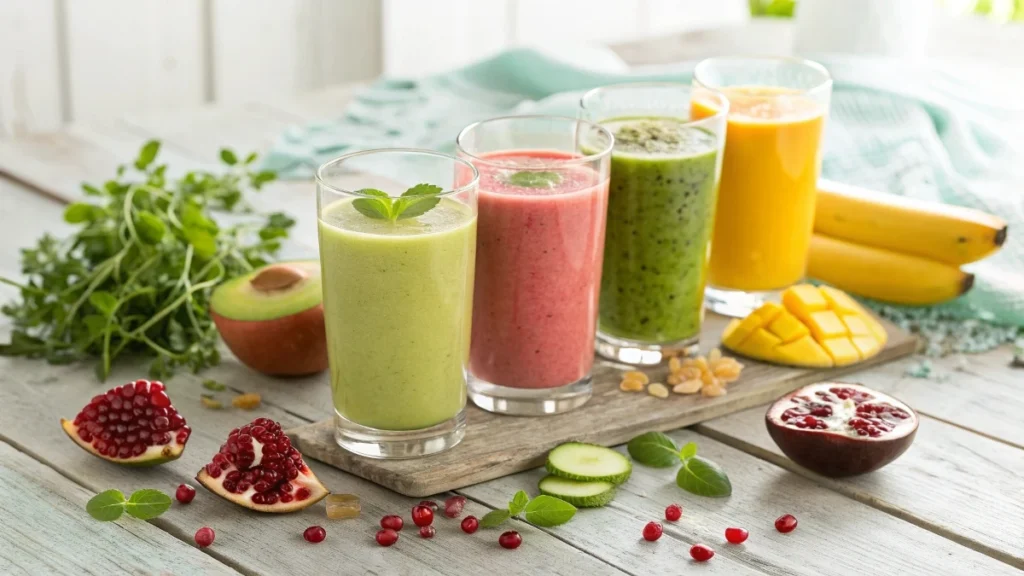
Blending microgreens into smoothies is one of the simplest ways to pack a full day’s nutrients into a single glass. These tiny greens carry up to eight times more calcium and about five times more vitamins A, C, and K than mature plants.
They also offer chlorophyll, enzymes, and plant-based proteins that strengthen immunity and improve digestion.
In this guide, you’ll learn why microgreens are so powerful, how to prepare them properly, and five delicious smoothie recipes that combine freshness, flavor, and real nutritional value.
Why microgreens belong in smoothies
Microgreens deliver a noticeable lift in vitamins and minerals compared with mature leaves. Arugula microgreens stand out in particular. They have about eight times more calcium than their mature form. They carry roughly five times more vitamins A, C, and K than the full-grown plant. They also bring about four times more calcium than iceberg lettuce. When you blend them with fruit, the peppery note softens, and the result tastes bright rather than sharp.
Young pea and sunflower shoots add gentle sweetness and crunch when eaten fresh, and they blend into a creamy drink without grit. Harvesting around ten days gives you tender tissue with concentrated flavor. Keeping apple skins in the blender preserves pectin, which supports fullness and a steadier energy curve. Not straining the drink lets the pulp stay in the glass, which means more fiber.
When you want hydration with minerals, coconut water and coconut flesh make an easy base. For mornings that need more staying power, oats, walnuts, and ground flaxseed bring fiber and healthy fats, so a single smoothie can carry you through several hours.
Smart prep and blending tips
Start with a simple order in the jar. Frozen fruit at the bottom helps create the vortex that pulls greens down. Liquids go next. Greens follow. If you use banana, add it last for creaminess. Lock the lid and begin on low speed. Move up to high and let it run for about one minute for a fine texture. If your machine has an extract or smoothie preset, you can use that.
Cut stringy items like celery into shorter pieces if your blender is modest. High-power jars will handle pea tendrils, sunflower shoots, and herb stems without wrapping. If you add coconut flesh, scrape it clean from the shell so the blend stays smooth. Always seat the lid firmly before you start.
If you are harvesting from an indoor garden, snip only what you need for that day and rinse gently under cool water. For pea shoots, leave the lower nodes on the plant so you can harvest a second time.
🌿 Recommended Microgreens Supplies |
Balancing sweetness, acidity, and creaminess
Ripe bananas and mango bring natural sweetness and thickness, so you can skip sugar. Dates add caramel notes and a silky body when blended with frozen fruit. Stevia leaf from an indoor garden can lift sweetness without calories.
Fresh lemon or lime balances heavier fruit blends and keeps color brighter for longer. Coconut water adds subtle sweetness along with electrolytes and works well when you want a lighter drink. Dairy or non-dairy milk makes a softer mouthfeel. Yogurt adds tang and protein. Oats bloom in the blender and give a milkshake feel without cream.
Recipes
Vitamix Coconut Microgreens Smoothie
Yield
Two tall glasses
Time
Ten minutes
Ingredients
Young coconut water from one coconut
Coconut flesh from the same coconut
One ripe banana peeled
Four kiwifruits, peeled or unpeeled to taste
One whole lime ends trimmed
One celery stick with leaves
One generous handful of baby spinach
One generous handful of mixed microgreens, such as broccoli or radish
Two cups of ice cubes
Instructions
- Pour coconut water into the blender jar. Spoon in the coconut flesh.
- Add banana, kiwifruits, lime, celery, spinach, and microgreens. Top with ice.
- Start on low speed. Ramp to high and blend about one minute until silky.
- Taste and add a little extra lime if you want more brightness. Serve cold.
Pro tips
If you enjoy texture, leave kiwi skins on for extra fiber and vitamin C.
The whole lime adds zest and acidity. If your blender is small, add just the peeled segments.
Nutrition highlights
Coconut water brings potassium and natural electrolytes.
Microgreens add concentrated vitamins.
Spinach and celery add folate and hydrating minerals.
Winter Pea and Sunflower Smoothie with Honeyberries
Yield
Two glasses
Time
Eight minutes
Ingredients
One pint of cold water
One cup frozen honeyberries or blueberries
One apple cored and chopped
One ripe banana
One generous handful of pea shoots, about ten days old
One generous handful of sunflower shoots, about ten days old
Instructions
- Add water and frozen berries to the jar and blend until the berries are fully broken down.
- Add the chopped apple and blend until smooth.
- Add pea shoots and sunflower shoots and blend until the greens disappear.
- Add the banana and blend briefly until creamy. Pour and enjoy.
Pro tips
If seed hulls cling to sunflower cotyledons, pick them off before blending for an even texture.
Harvest pea shoots above the lower nodes so you can return for a second cut.
Nutrition highlights
Pea shoots contribute plant protein and folate.
Sunflower shoots add zinc, magnesium, and B vitamins.
Berry anthocyanins support antioxidant intake.
Tropical Microgreens Smoothie with Mango and Dates
Yield
Two glasses
Time
Seven minutes
Ingredients
One frozen banana chopped
Half a frozen apple chopped
One mango peeled and sliced
Five pitted dates
One cup mixed microgreens
Juice from half a lemon
Half to one cup of cold water
Instructions
- Add frozen banana and frozen apple to the jar with a splash of water and blend until thick.
- Add mango, dates, and microgreens. Squeeze in the lemon juice.
- Blend until creamy. Thin with more water to your preferred consistency.
- Serve thick in chilled glasses.
Pro tips
Dates blend best when pitted and chopped. If your blender is small, soak dates in warm water for ten minutes first.
Lemon brightens the sweetness and keeps the color lively.
Nutrition highlights
Dates add potassium and natural sweetness.
Lemon provides vitamin C, which complements iron in greens.
Microgreens supply chlorophyll and a fresh herbal note.
Apple and Pear Arugula Microgreens Smoothie
Yield
Two glasses
Time
Six minutes
Ingredients
Two apples cut into chunks with skin on
Two pears, peeled and cut into chunks
Half a cup of pomegranate seeds
One to two teaspoons of fresh ginger juice
One to two teaspoons of lemon juice
One generous handful of arugula microgreens
Half to one cup of water
Instructions
- Add apples, pears, pomegranate, ginger juice, lemon juice, and water to the jar. Blend until smooth and pulpy.
- Add arugula microgreens and blend briefly until just incorporated.
- Do not strain. Pour and garnish with a few tender arugula leaves if you like.
Pro tips
Keeping apple skins boosts pectin for fullness.
Blend arugula lightly to keep its fresh peppery top note.
Nutrition highlights
Arugula microgreens offer about eight times more calcium than the mature leaves and about five times more vitamins A, C, and K. They also provide about four times more calcium than iceberg lettuce.
Pomegranate brings antioxidant polyphenols.
Ginger adds a gentle warmth that supports digestion.
Green Smoothie with Oats and Yogurt
Yield
One to two servings, depending on glass size
Time
Eight minutes
Ingredients
Two cups mixed indoor greens, such as mustard greens, basil, and a few stevia leaves
Six ounces plain yogurt or dairy-free yogurt
One cupof milk, almond milk, or oat milk
Three tablespoons rolled oats
A small handful of walnuts
One tablespoon ground flaxseed
One cup frozen strawberries
Instructions
- Place greens in the jar. Add yogurt and milk.
- Add oats, walnuts, and ground flaxseed.
- Top with frozen strawberries. Do not exceed your jar fill line.
- Blend using a smoothie or extract setting until very smooth. Serve at once.
Pro tips
Herbs like basil and cilantro pair well with berries and citrus. Use small amounts for aroma without overpowering the fruit.
Oats give body and make the drink satisfying for hours.
Nutrition highlights
Oats and flaxseed bring fiber and plant omega-3s.
Walnuts add healthy fats.
Mustard greens are rich in vitamin K and vitamin C.
Strawberries provide vitamin C and a bright flavor that balances greens.
Serving, storage, and make-ahead
Smoothies taste best right after blending when the texture is at its peak, and the aromas are lively. If you need to make them ahead, fill a cold jar to the top, add a little lemon or lime, close tightly, and refrigerate. Drink within twenty-four hours. If the mixture separates, shake or stir to bring it back together. For weekly planning, freeze fruit in measured bags and keep washed microgreens in a breathable container lined with a paper towel so your morning routine stays quick.
Safety and allergy notes
Rinse microgreens gently under cool water and spin them dry before blending. If you use nuts or dairy, confirm dietary needs for anyone you are serving and choose alt milk or seed butters when needed. For very young children and people with sensitive digestion, start with smaller servings and focus on ripe fruit and tender greens. If you harvest pea shoots, leave the lower nodes intact for regrowth and use clean scissors and a clean cutting board to avoid contamination.