You might think microgreens and sprouts are basically the same thing. Tiny greens that pack a punch. But here’s the twist.
They grow differently, taste different, and offer unique health perks that most people don’t know about. One grows in soil or a medium with light. The other thrives in water and shade. One has leaves.
The other doesn’t. And when it comes to nutrients, one clearly takes the lead. If you’ve been tossing both into your smoothies or salads thinking they’re interchangeable, it’s time to clear up the confusion. Knowing the real difference might just change the way you eat for good 🌱💪🥗
Definitions and Growth Stages
Sprouts and microgreens originate from the same seeds but represent different stages of a plant’s early development. The timing of harvest, method of cultivation, and parts of the plant consumed all contribute to how they are defined.
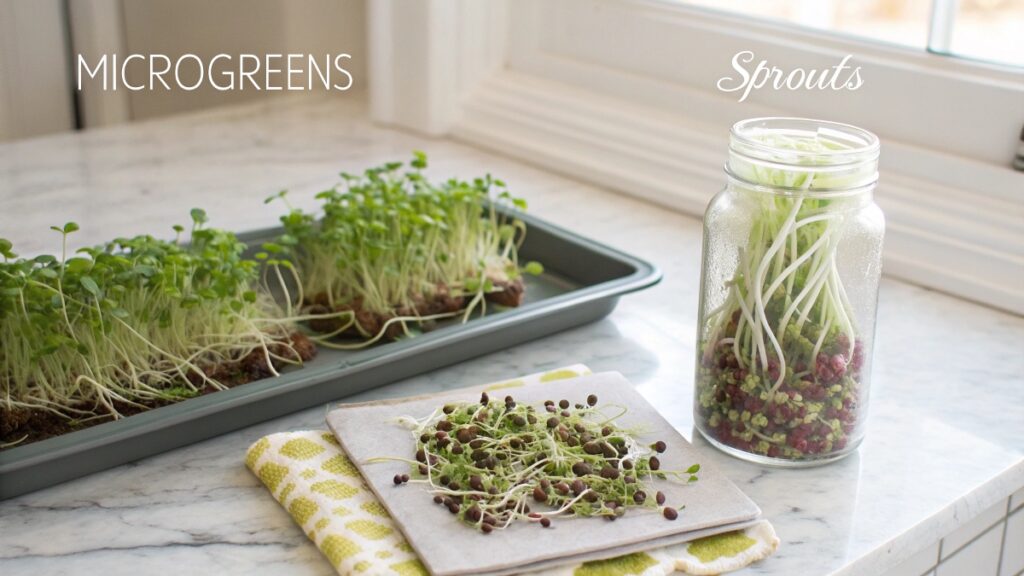
Sprouts are the earliest stage of plant growth. They are typically harvested three to seven days after the seed begins germination. The process involves soaking seeds in water for 24 hours to activate the enzymes needed for growth. After that, the seeds are rinsed and drained multiple times daily but are not exposed to light. Sprouts are grown in water without soil, and the entire plant is consumed, including the seed, root, and shoot. Because they are grown in darkness or very low light, they appear pale and have a tender texture.
Microgreens are slightly more mature and are harvested seven to fourteen days after germination. By the time microgreens are harvested, the cotyledons, or seed leaves, have fully developed and the first set of true leaves is starting to emerge. Unlike sprouts, microgreens are grown in soil or on a hydroponic mat and require exposure to light. Only the stem and leaves are harvested for consumption. Roots are not eaten and are typically discarded or composted.
This difference in maturity and growing medium results in significant variations in nutrient accumulation, flavor complexity, and safety characteristics.
Growing Methods
Both microgreens and sprouts can be grown indoors with minimal space and equipment, but their growing techniques differ in important ways.
Sprouts are the easiest to cultivate and require only a jar, a mesh lid or cheesecloth, and clean water. Seeds are soaked for about 24 hours to trigger germination. Following that, they are rinsed and drained two to three times daily. No soil or light is needed. They are typically grown in the dark or in low light environments. By Day 6 or 7, the sprouts are ready for harvest, and the entire plant is consumed.
Microgreens involve a more complex setup but offer more control and versatility. Seeds are soaked and then spread evenly over a growing tray filled with potting soil or a hydroponic growing medium. For the first few days, the seeds are covered to create a dark, humid environment that encourages uniform germination. Around Day 4 or 5, they are exposed to light to trigger photosynthesis. Watering is typically done from the bottom to prevent mold and leaf damage. Microgreens are ready for harvest around Day 10, when the cotyledons have fully expanded and true leaves begin to appear. Only the stem and leaves are harvested, while the roots remain in the growing tray.
While sprouts rely on constant moisture and darkness, microgreens require light, airflow, and more space to develop. These differences affect not only flavor and appearance but also nutrient composition and safety.
🌿 Recommended Microgreens Supplies |
Nutritional Differences
Though both microgreens and sprouts are nutrient-dense, the differences in their growing conditions and developmental stages result in significant variations in nutritional content.
Microgreens generally offer a broader spectrum of nutrients. Because they are exposed to light and undergo photosynthesis, they accumulate chlorophyll, carotenoids such as lutein and beta-carotene, and a wider array of polyphenols. Research from the USDA and various universities has shown that microgreens can contain four to forty times more vitamins and antioxidants than their mature plant counterparts, depending on the species.
Sprouts also boast a concentrated nutrient profile. During germination, enzymes are activated that break down antinutrients and increase the bioavailability of essential vitamins, particularly vitamins C, E, and some B-complex vitamins. Sprouts are particularly rich in enzymes and amino acids during the early stages of growth.
A major point of comparison is sulforaphane, a sulfur-containing compound found in cruciferous vegetables such as broccoli, kale, and radish. Sulforaphane has been shown to support detoxification, reduce inflammation, and protect against certain cancers. In this regard, broccoli sprouts are especially potent. Laboratory analysis has demonstrated that broccoli sprouts can contain twenty to fifty times more sulforaphane than fully grown broccoli. This makes them a powerful tool for those seeking specific therapeutic effects.
While microgreens also contain sulforaphane, their levels are generally lower compared to sprouts. However, microgreens compensate by offering higher levels of antioxidants derived from their exposure to light, making them more balanced nutritionally across a wider range of phytochemicals.
Safety and Sanitation
Food safety is a crucial factor when comparing microgreens and sprouts. The way they are grown directly influences their vulnerability to bacterial contamination.
Sprouts are grown in warm, humid environments, which are ideal conditions for the proliferation of harmful bacteria such as Salmonella, E. coli, and Listeria. Because the entire plant is consumed, including the seed and root, any pathogens that are present during the germination process remain in the final food product. The frequent rinsing required to keep sprouts moist adds another layer of risk, particularly if non-sterile water or equipment is used.
As a result, sprouts are considered higher risk by food safety agencies, especially for vulnerable populations such as pregnant women, older adults, and those with compromised immune systems. Even with careful home practices, sprouts have a short shelf life, typically three to five days, and must be refrigerated immediately after harvesting.
Microgreens present a significantly lower risk. Since only the stems and leaves are consumed, and they are grown in open-air environments with airflow and light, the risk of harmful bacterial growth is reduced. Watering is done from the base rather than the top, further decreasing moisture exposure on the edible parts. Growing trays and harvesting tools must still be sanitized, but overall, microgreens have a better safety profile. Properly stored microgreens can last up to 30 days in the refrigerator, particularly when kept dry and in breathable produce containers.
This fundamental difference in contamination risk often makes microgreens a safer choice for raw consumption, particularly in homes where meticulous hygiene may be harder to maintain consistently.
Flavor Profiles and Culinary Uses
Microgreens and sprouts offer distinct flavor experiences due to their differences in growth stages and environmental exposure. These differences make them suitable for a wide variety of culinary applications.
Sprouts tend to have a mild, fresh, and slightly nutty flavor. Because they are harvested before their leaves develop and before photosynthesis begins, their flavor remains neutral. Alfalfa sprouts are crisp and light, making them an excellent addition to sandwiches or cold dishes. Broccoli and radish sprouts carry a hint of pungency or sharpness but are still relatively subdued compared to their mature forms.
Microgreens, by contrast, are known for their intense and vibrant flavors. Exposure to light during their growth encourages the development of essential oils and other phytochemicals that define the mature plant’s taste. For instance, radish microgreens deliver a peppery heat similar to horseradish, while arugula microgreens are strongly peppery and pungent. Basil microgreens bring sweet and aromatic notes, and sunflower microgreens have a rich, nutty flavor.
Culinary uses reflect these differences. Microgreens are prized by chefs for both flavor and visual appeal. They are frequently used to finish soups, top gourmet pizzas, brighten salads, and enhance sandwiches with both flavor and texture. Their range of taste profiles makes them versatile for pairing with both savory and sweet dishes.
Sprouts are generally used for their texture and moisture. They are common in sandwiches, spring rolls, stir-fries, and noodle dishes, where they contribute crunch and volume without overpowering other ingredients. While less colorful or decorative than microgreens, their freshness still enhances many light meals.
Health Benefits
Sprouts and microgreens are both celebrated for their nutritional value, but the benefits they offer are shaped by their different growth stages.
Sprouts contain a wealth of enzymes that are activated during the early germination phase. These enzymes can aid digestion and improve the bioavailability of nutrients. This makes sprouts particularly beneficial for gut health and nutrient absorption. A standout among sprouts is broccoli, which is high in glucoraphanin. This compound is converted into sulforaphane, a powerful antioxidant known to support detoxification, reduce inflammation, and offer protection against several chronic diseases. Sulforaphane has been linked to enhanced liver function, cardiovascular protection, and even cancer prevention.
Microgreens also provide substantial health benefits, though their strengths lie in a broader spectrum of nutrients. Because they are harvested later than sprouts and grown under light, microgreens develop higher levels of vitamins and polyphenols. Studies show that red cabbage microgreens, for example, can lower LDL cholesterol and reduce liver inflammation in animal models. They are rich in vitamin C, vitamin K, vitamin E, lutein, and beta-carotene, making them powerful antioxidants that support immune health, skin repair, and eye function.
While sprouts may have higher concentrations of certain compounds like sulforaphane and enzymes, microgreens excel in their wide nutrient diversity. Regular consumption of either contributes to better metabolic function, oxidative stress management, and overall well-being.
Storage and Shelf Life
The shelf life of microgreens and sprouts is influenced by their moisture content and structural integrity. Understanding how to properly store them is essential for maintaining freshness and safety.
Sprouts are highly perishable. Their high water content and undeveloped plant structure make them vulnerable to spoilage. Under refrigeration, they typically last between three to five days. Because sprouts retain their roots and are often consumed whole, including the seed and root hairs, they are susceptible to bacterial growth if not rinsed and stored carefully. They should be kept dry in a breathable container and consumed quickly to avoid contamination.
Microgreens are more resilient after harvest. They are usually cut above the soil or growing medium, excluding the root, which reduces bacterial risk. Their shelf life can extend up to two to three weeks under proper conditions. When stored at low temperatures with good airflow and low humidity, microgreens stay fresh much longer than sprouts. A controlled environment with a temperature around four degrees Celsius is ideal.
Both sprouts and microgreens should be examined before use. Signs of spoilage include off odors, sliminess, or discoloration. Microgreens may wilt over time, while sprouts become mushy and develop an unpleasant smell when they deteriorate. Safe handling and refrigeration are key to preserving the quality and nutritional value of both.
Cost and Accessibility
There is a notable difference in cost and accessibility between sprouts and microgreens, particularly when comparing home cultivation to store-bought options.
Sprouts are among the most accessible forms of fresh produce. They require minimal resources for production and can be grown using simple materials such as glass jars, filtered water, and a mesh lid. No soil or artificial light is needed. This simplicity allows for continuous harvesting every few days at a low cost. Even in commercial production, the inputs are inexpensive, which keeps retail prices relatively low.
Microgreens demand more investment. Growing them requires trays, soil or a growing mat, access to sunlight or artificial grow lights, and more time for growth and harvesting. The process involves more labor, which contributes to higher costs. As a result, microgreens are sold at a premium in grocery stores and farmer’s markets. However, home-growing kits and hydroponic systems have made them more accessible in recent years.
While sprouts are more affordable and easier to produce, microgreens offer greater variety and higher returns in flavor and nutritional density. The choice often depends on budget, space, and the desired culinary application.
Suitability for Home Growing
Both microgreens and sprouts are popular choices for indoor gardening, but the experience of growing them at home differs in complexity and reward.
Sprouts are exceptionally easy to grow. They can thrive in nearly any indoor environment without the need for soil or sunlight. The only essentials are seeds, a jar or container, clean water, and a method for draining. They typically grow within three to five days, making them ideal for beginners or people with limited space. The minimal setup and short turnaround time encourage frequent harvesting and consumption.
Microgreens require a bit more attention and equipment. They need a flat growing surface such as a tray, a medium like soil or coconut coir, and access to light for photosynthesis. The growing process takes seven to twenty-one days depending on the plant variety. While the setup is more involved, the result is a visually attractive and flavorful crop. Those who enjoy gardening or culinary experimentation may find microgreens a rewarding addition to their routine.
From a practical standpoint, sprouts are more suited for rapid results with low input, while microgreens appeal to those seeking a higher level of customization and nutritional depth. Both can be grown indoors year-round with the right conditions.