
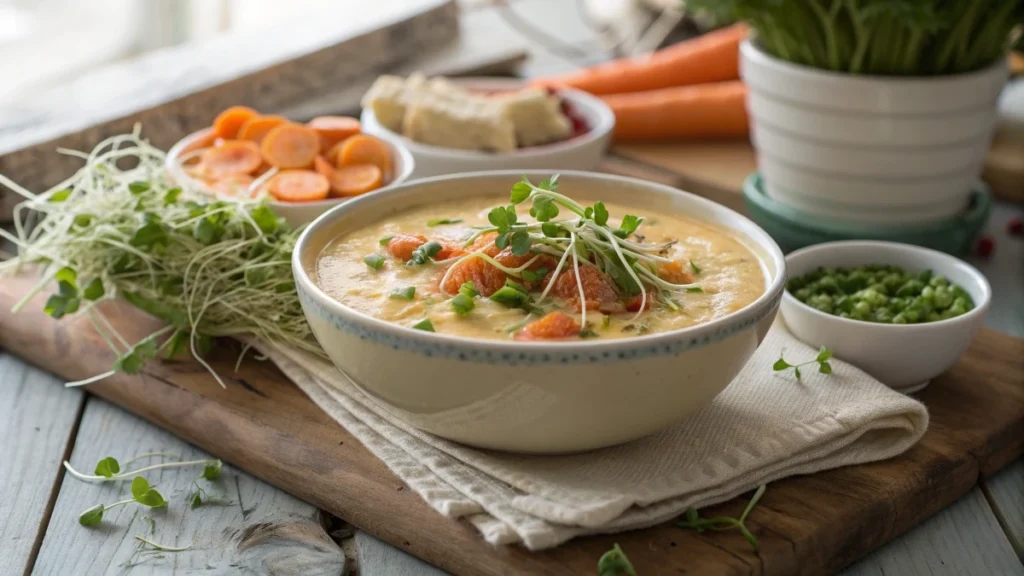
Soups made with microgreens are gaining attention for their fresh taste, creamy textures, and impressive nutritional benefits.
Microgreens are young edible greens harvested within 7 to 10 days of sprouting, and they can contain up to five times more nutrients than their mature counterparts.
Adding them to soups not only boosts vitamins and antioxidants but also enhances flavor with a vibrant, earthy freshness.
From creamy cheddar broccoli microgreen soup to hearty prawn and coconut milk broth, and even a vegan roasted carrot blend with mustard microgreens, these recipes highlight just how versatile they are.
By stirring microgreens in at the end, you protect delicate nutrients while creating delicious bowls that are healthy, satisfying, and full of character.
Why microgreens in soup
Microgreens are tender young greens harvested soon after sprouting. They bring bright flavor and concentrated nutrition to bowls of soup while keeping the texture fresh. Across the three recipes we are using here, there is a consistent rule. Add the greens at the end and avoid prolonged cooking. In the carrot recipe, the greens go in for a quick pulse in the blender. In the prawn and cheddar recipes, they are stirred in just long enough to wilt. This timing preserves color and aroma, and it helps retain delicate nutrients.
There are two clear health claims in the source material. First, there is a repeated statement that microgreens can offer about 5 times the nutritional value of their mature counterparts. Second, mustard microgreens are described as supportive for congestion relief and as having anti-inflammatory properties. While wording varies, the cooks treat these greens as a simple way to raise the nutrition of an everyday soup without making the recipe complicated.
A practical advantage is speed. Growing your own supply is presented as realistic for busy home cooks, with a harvest window of about 7 to 10 days on a sunny balcony. That short cycle aligns well with weekly meal planning and gives you a steady pipeline of fresh garnish for soups that are otherwise pantry-driven.
Core technique playbook
When to add the greens
Add right at the finish. You have two options shown in use. Blend the greens briefly into a hot puree so they integrate without long exposure to heat. Or fold them into a hot pot off the burner so they wilt from residual heat. Both methods keep flavors vibrant and avoid dulling.
Three base styles that work beautifully
Roasted and blended with coconut milk. Caramelized onion and roasted carrot are blended with water and coconut milk, then the greens are pulsed in at the end. The result is silky and vegan with gentle heat from chili flakes and warmth from garam masala and cumin.
Brothy with protein and coconut milk. Aromatics are sautéed, marinated prawns are cooked just through, microgreens are added very late, and coconut milk finishes the pot. The bowl is hearty and works as a weekend breakfast or lunch.
Roux and dairy with cheddar. A classic white sauce starts with one-quarter cup of butter and one-quarter cup of flour, then milk and chicken broth build the base. Vegetables simmer until tender. Broccoli microgreens wilt before a generous addition of aged cheddar.
Heat management
Keep the pot hot enough to meld flavors, but avoid a rolling boil once coconut milk or dairy are present. After the greens are added, think minutes or even seconds, not long simmering. This is especially important for the carrot puree, where only a quick pulse is used, and for the prawn soup, where the greens should smell fresh as they hit the pot.
Texture control
Choose your endpoint. Puree fully for a velvety carrot soup, or keep things rustic in the seafood bowl. In the cheddar soup, the greens can read a little stringy if left long. Two easy fixes are chopping the greens before adding or giving the pot a brief additional simmer to soften fibers without losing color.
🌿 Recommended Microgreens Supplies |
An ingredient guide that actually maps to the pots
Aromatics and fats
Coconut oil pairs with onion and chopped ginger in both the carrot and the prawn versions. Butter anchors the cheddar version because it is needed for the roux.
Spice and seasoning sets
Carrot base uses garam masala, cumin, salt, and chili flakes for gentle warmth. The seafood base leans on salt, pepper, lemon, green chilies, and a ginger, garlic, onion, and tomato trio for aroma and acidity. The cheddar base stays simple because the cheese provides depth, with seasoning adjusted at the end.
Liquid choices
Water plus coconut milk for the roasted carrot puree brings body without dairy. Coconut milk added at the finish in the seafood soup enriches the broth after the prawns cook. The cheddar pot uses two cups of chicken broth and two cups of milk to create a creamy but balanced base.
Measured building blocks from the kitchen
For the cheddar pot, you see one quarter cup butter and one quarter cup flour for the roux, two cups broth, two cups milk, around four cups broccoli microgreens, and about two and a half to three cups sharp cheddar. The pot simmers for about 20 minutes before the cheese goes in, and the total time is about 45 minutes. The seafood bowl uses a 30-minute prawn marinade with salt, pepper, and the juice of half a lemon. The carrot puree relies on caramelizing onions and roasting carrots before blending with coconut milk, then finishing with a short pulse of mustard microgreens.
Which greens were used
Mustard microgreens in the carrot puree for a peppery lift. Assorted microgreens in the seafood bowl, where freshness is key. Broccoli microgreens in the cheddar pot to echo the classic flavor pairing of broccoli and aged cheddar.
Technique deep dives
Roasted and then blended with coconut milk
Start by softening the onion and ginger in coconut oil. Add chopped carrots with garam masala, cumin, salt, and chili flakes. Roast in the pan until the carrots are tender and the onions caramelize. Cool slightly, then blend with a little water until very smooth. Pour in coconut milk and blend again for a glossy finish. Now add a generous handful of mustard microgreens and give only a quick pulse so the greens integrate but do not cook. This keeps the soup bright and preserves the peppery character of the greens.
Protein forward with a gentle finish
Marinate prawns for about 30 minutes with salt, pepper, and the juice of half a lemon. Build a base with coconut oil, ginger and garlic, onion, tomato, and green chilies. Season with salt, then add the prawns and cook just until pink and fragrant. Take the heat down and add microgreens so they only wilt from the residual heat. Finish with coconut milk and let the flavors come together without boiling hard. The bowl is rich enough for a morning meal and can accept chicken or mutton if you prefer.
Classic roux with broccoli microgreens and cheddar
Melt one quarter cup of butter and whisk in one quarter cup of flour until bubbly. Gradually whisk in two cups of milk and then two cups of chicken broth. In a second pan, soften the onion in a little butter, then add the celery and carrots. Combine everything in the main pot and bring to a gentle simmer. Stir in about four cups of broccoli microgreens. Let the soup simmer for about 20 minutes to marry flavors. Add two and a half to three cups of grated sharp cheddar and stir until fully melted. Expect a total cook time of around 45 minutes, with a thick and creamy result.
Three reference recipes you can cook tonight
Roasted carrot and mustard microgreen soup
Coconut oil, onion, and ginger lay the base. Carrots are roasted with garam masala, cumin, chili flakes, and salt until sweet and tender. The mixture is blended smoothly with water and coconut milk for a vegan bowl with body. Mustard microgreens are pulsed in briefly so the soup stays bright and peppery. Serve hot with toasted bread for contrast.
Microgreens, coconut milk, and prawn soup
Prawns rest for 30 minutes with salt, pepper, and half a lemon. Ginger and garlic are browned in coconut oil, then onion, tomato, and green chilies go in. Prawns cook quickly in this base. Microgreens are stirred in right at the end so they stay fresh. Coconut milk rounds the flavors and adds creamy richness. It is a satisfying breakfast or lunch and works equally well with chicken or mutton.
Cheddar broccoli microgreen soup
Begin with a roux of one-quarter cup butter and one-quarter cup flour. Whisk in two cups of milk and two cups of chicken broth for a smooth base. Add softened onion, celery, and carrot. Stir in about four cups of broccoli microgreens and let the pot simmer for around 20 minutes. Finish with two and a half to three cups of sharp cheddar. The result tastes like classic broccoli cheddar but with a fresh green note from the microgreens.
Flavor and pairing matrix in plain language
Mustard microgreens bring a lively bite that loves warm spices such as garam masala and cumin. They shine in coconut milk purees where chili heat can be tuned with a pinch of flakes.
Mild mixed microgreens are flexible. They sit comfortably beside seafood, citrus, and green chilies. A finish of coconut milk softens the edges without hiding the greens.
Broccoli microgreens echo the flavor of mature broccoli and pair naturally with cheddar. Onion, celery, and carrot provide the classic aromatic base, while chicken broth and milk carry the cheese. If the greens feel a bit fibrous, chop them before adding or give the soup a few extra minutes at a gentle simmer.
These pairings let you match the green to the base and to the mood. Choose coconut milk when you want dairy-free creaminess, choose a roux and cheddar when you want comfort, and choose a simple roasted puree when you want a clean canvas that lets the greens finish the bowl.
Texture, thickness, and simple fixes
Soup with microgreens can shift in texture depending on the base you choose. A roasted carrot puree will naturally be smooth and velvety after blending, but it can thicken too much once cooled. In that case, add warm water or coconut milk gradually while stirring. For the seafood broth with prawns, the danger is going too thin. If that happens, you can puree a small portion of the cooked vegetables with coconut milk and stir it back in, or let the pot simmer gently until the liquid reduces.
In the cheddar and broccoli style, the challenge is the opposite. The roux thickens as it cools,s and the cheese sets a heavy texture. To lighten it, stir in more warm broth or milk little by little. A stringy mouthfeel was noted when using whole broccoli microgreens. That can be softened by chopping them before adding, or by simmering a few minutes longer so the fibers relax. By managing thickness this way, you can keep each bowl creamy but not cloying, and you can preserve the freshness of the greens.
Nutrition forward notes
Microgreens are repeatedly described as richer in nutrients than mature plants. A figure that comes up is about five times higher nutritive value when compared with their full-grown versions. The science behind microgreens supports that idea as they contain concentrated vitamins and antioxidants during their early stage of growth.
Mustard microgreens are said to have specific properties. They are considered helpful in relieving congestion and are known for their anti-inflammatory character. This makes them a natural fit in a warm carrot-based soup where they balance sweetness with a peppery lift. Broccoli microgreens contribute the same beneficial compounds found in mature broccoli, such as sulforaphane, but in a compact form.
The cooks in these recipes always emphasize adding the greens at the end so these nutrients are not destroyed by long cooking. This small practice makes a big difference if you are trying to keep the nutritional edge that microgreens are grown for.
Swaps, variations, and scaling
Each recipe is flexible. The carrot puree can take on sweet potato or pumpkin in place of carrot if that is what you have. The spice blend can be adjusted with more chili flakes or a touch of turmeric.
In the seafood version, prawns can be replaced with chicken breast cut into small cubes or with mutton for a richer bowl. For a vegetarian approach, you can add cubes of firm tofu after marinating them lightly with lemon and pepper. Coconut milk can be swapped for dairy cream if you prefer.
The cheddar pot allows changes, too. Milk can be half and half for a richer base, and the amount of cheese can move between two and a half and three cups without affecting balance. If you want a lighter bowl, use less flour in the roux or blend in cauliflower along with the broccoli microgreens. These adjustments let you scale portions up for a family or down for a quick meal without losing the core idea.
Make ahead, storage and reheat.
The bases of these soups hold up well in the refrigerator. You can prepare the carrot and spice base, the seafood aromatic base, or the roux and vegetable base a day in advance. Store them in airtight containers and cool them quickly after cooking.
Microgreens are best stirred in fresh just before serving. If you have already added them, take care when reheating. Warm slowly on low heat and avoid boiling so the coconut milk or dairy does not split and the greens do not lose all texture. These soups will usually keep for two to three days chilled. For longer storage, freeze only the base without the microgreens and add a fresh harvest when you are ready to serve again.
Serving ideas
Bread is a natural companion. The roasted carrot puree pairs nicely with toasted sourdough or a seeded loaf that can absorb the silky soup. The seafood and coconut milk bowl works well with steamed rice or a simple flatbread, so it can anchor a complete breakfast or lunch.
The cheddar and broccoli bowl feels indulgent and works with baguette slices or crisp crackers for contrast. A fresh squeeze of lemon just before serving brightens the seafood version, while a sprinkle of chili flakes or cumin seeds toasted in oil can wake up the carrot puree. These finishing touches make the soups feel rounded and ready for the table.
Quick FAQ
Can I blend the microgreens completely? Yes, you can, especially in the carrot puree, where a quick pulse is common. However, blending them for too long can dull the flavor.
Do I have to use coconut milk? Not at all. The cheddar-based version shows how milk and broth make a creamy body. You can use cream, nut milk, or even yogurt stirred off the heat.
Can I grow my own greens? Yes. One recipe notes that microgreens can be ready for harvest within seven to ten days when grown in small trays on a balcony. This speed makes them practical for home cooks.
Can these soups be made lighter? Yes. Use fewer prawns or swap with vegetables, reduce the amount of cheese in the cheddar version, or thin with broth.
How long does it take to cook? The carrot version is relatively quick, the seafood version needs about half an hour for marinating plus cooking time, and the cheddar and broccoli version takes around forty five minutes start to finish.