
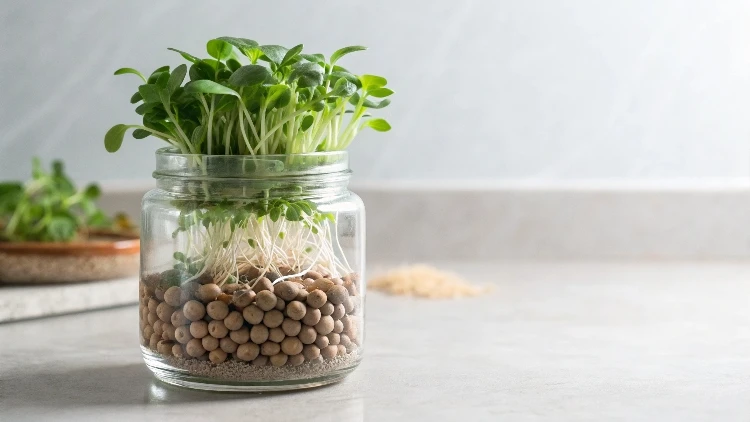
Stop growing microgreens in plastic and switch to glass containers for a cleaner, reusable setup. With shallow glass jars and clay pebbles,s also called LECA or Hydroton, you can raise greens on a windowsill or shelf.
Rinse the pebbles, fill the jar, and keep a thin pool of nutrient solution about one-half to three-quarters of an inch at the bottom. Seeds sprout after one to two days under a cover, then roots chase moisture through the pebbles. Top up with a turkey baster about twice daily and let indoor light or grow lights finish the job.
This method limits mess, reduces mosquito concerns, keeps algae in check, and delivers bigger harvests from the same seed.
Why switch from plastic to glass
Glass gives a reusable setup that avoids disposable trays and the repeat cycle of dumping and replacing grow media. It keeps the process neat since you can see the water level and root development through the sides. That visibility makes it easier to manage moisture with fewer surprises. Cost is friendly as well. Shallow glass jars were picked up at a discount bin for two for one dollar, which shows you do not need specialty gear to get started. Glass handles repeated use without warping, and pair well with clay pebbles that you can rinse and reuse over and over.
Cleaner workflow and easier monitoring
With glass, you can track condensation seed hydration and the level of nutrient solution at a glance. Because the container is rigid and non-porous, there is less lingering odor, and it wipes clean quickly. There are no drain holes to drip on shelves since this approach relies on a small pool of solution at the bottom rather than overhead watering.
Reuse that actually holds up.
Clay pebbles sit inside the jar and can be rinsed between runs. After harvest, the pebbles and roots can be swished in a bucket of water to separate. A short dry in the sun or any warm spot lets tiny root hairs flake off, so the media is ready for the next sowing. Some growers choose to sterilize with a mild hydrogen peroxide rinse or boiling, although this is optional. The important point is that both the container and the media are built for repeat cycles.
🌿 Recommended Microgreens Supplies |
The core method, in a nutshell using clay pebbles in glass.
This approach uses clay pebbles, also known as expanded clay, as the growing medium. The container is any shallow glass jar or dish. Drainage holes are not required because moisture wicks upward through the pebbles while roots grow downward toward the small water reserve. Feeding comes from a light nutrient solution, such as a simple mix of Masterblend with Epsom salt and calcium nitrate. Watering is from the bottom, so the canopy stays relatively dry, which limits mess.
How the moisture cycle works
A thin pool of nutrient solution sits at the base. The pebbles absorb and hold moisture. As seedlings form roots, those roots thread into the pebble layer and seek that reserve. Over time, the visible water appears to drop because roots occupy more volume, and the pebbles continue to hold moisture internally. The plants are not drying out, just using the stored water within the aggregate.
Materials checklist for glass container microgreens
Shallow glass jars or bowls are the heart of the setup. Lids or small plates help during the blackout period at the start. Clay pebbles need a thorough rinse before first use since they arrive dusty. A simple nutrient solution is used for every crop, which keeps the routine consistent. Seeds such as pak choi and arugula perform well, and you can expand to other fast varieties. A spray bottle is handy for surface misting in the first days. A turkey baster makes it easy to add small amounts of solution to the bottom without disturbing the seedlings. Basic household lights or a sunny kitchen window are enough for standard microgreens. If you plan to push growth into baby greens, then add purpose-built grow lights.
Cost and availability notes
You do not need matched sets or branded containers. Any shallow glass vessel will do. The example of two jars for one dollar from a discount bin shows that thrift finds are perfectly acceptable for this method.
Step-by-step setup
Prepare the clay pebbles.
Rinse the pebbles well to remove dust. This prevents clouding the water and keeps pores open for better wicking.
Build the moisture reservoir.
Add pebbles to the glass and pour in the nutrient solution so that a pool sits at the very bottom. The target depth is roughly half an inch to three-quarters of an inch. There is no need to flood the media. The goal is a shallow reserve that the pebbles can wick and the roots can reach.
Sow the seeds
Sprinkle seeds evenly over the pebble surface. Weighing is not required for this approach. Some seeds will fall between pebbles, and a few into the water. That is fine. As the level gradually drops, those seeds will also germinate and anchor.
Hydrate and cover
Mist the surface so seed coats soften evenly. Cover to keep the environment dark and humid for one to two days. This helps quick uniform sprouting. If the room lighting needs to be on for other plants, you can simply block most of the light across the tops. Perfect darkness is not required. Moisture and warmth are the priority.
Early growth and first check
Keep covered a little longer while roots extend into the pebble layer. If the tops look dry, give a light mist. You should soon see roots seeking the reservoir and shoots starting to lift.
Lighting and growth targets
For classic microgreens
A bright household fluorescent or a sunny kitchen window is enough to reach the tender harvest stage. This keeps the footprint small and the workflow simple. Expect a short run that focuses on flavor and freshness.
For larger baby greens
If you want more yield from the same seeds, continue the run under grow lights. The nutrient solution supports continued growth beyond the microgreen stage. The idea is straightforward. A seed holds enough energy to reach the early harvest size. By providing nutrients and stronger light, you let the plants keep building biomass, so you harvest more from the same sowing.
Practical placement
Indoors gives the best control since these jars do not have drainage. Outdoor placement is possible if covered from direct rain. Inside, you can cluster jars near other plants and still keep this method on its own moisture schedule.
Daily care and water level control
The routine is simple and consistent. Maintain a shallow pool of nutrient solution at the bottom of the jar. The range to aim for is about half an inch to three-quarters of an inch. A turkey baster makes topping up quick and precise. The typical cadence is to add a little solution twice a day. This keeps the wicking action steady without soaking the canopy.
What to expect as roots fill the jar
As roots occupy more space, the visible water line may seem lower even after a top-up. The pebbles are storing moisture, and roots are holding water within the matrix. Do not chase a deep pool. Stay with the shallow reserve and watch plant posture and color. If the surface foliage looks dry, give a light mist. Otherwise, let the wicking and roots do the work.
Why the shallow pool matters
A thin layer limits stagnant water issues and still provides dependable access for roots. It also reduces the chances of mosquito infestation since there is minimal open water once roots and pebbles fill the lower area. The plants receive a steady supply without the problems that come with standing water in deeper trays.
When to uncover and move forward
Keep the jars covered during the first stage, so seeds stay damp, and darkness encourages even sprouting. After one to two days, you will see the first signs of life. Do not rush to remove the covers yet. Give the seedlings a little more time so the roots can travel down into the clay pebbles. Look through the glass for white roots that are threading between the pebbles and pointing toward the water reserve. That is your cue to uncover.
Once the lids come off, keep a close eye on canopy moisture. If the tops look dry, a light mist is enough. Continue to rely on the shallow pool at the bottom for primary watering. At this stage, aim for steady growth rather than rapid changes. The goal is to have strong roots in the pebbles so the plants can self-sustain from the reservoir.
Signs you are ready to advance
Roots are clearly visible in the pebble layer
Seed husks are lifting, and leaves are beginning to open
Stems are strong enough to hold themselves upright after the cover is removed
Algae, mold, and mosquito questions
A light green film can appear on glass or pebbles in some jars but not others. That is algae. It is common in the air and may show up unpredictably. In short runs that last a week or two, this presence does not hinder the crop. People often confuse algae with mold. Mold usually brings fuzzy growth that climbs over seed coats and stems. Algae is a thin, slick layer on surfaces and is mostly cosmetic in this timeline.
Mosquito concerns are understandable with standing water. This setup keeps only a very shallow pool, and that space quickly fills with roots and pebbles. The result is very little open water. In cooler months, the risk is low. Warmer seasons may bring more activity outdoors, which is why an indoor location with covers during the early stage works well. Keep the pool shallow and consistent, and you are unlikely to see issues.
Simple practices that keep things calm
Maintain a pool depth of about one-half to three-quarters of an inch
Mist only when the tops look dry to avoid constant surface wetness
Keep jars indoors where airflow and temperature are stable
Harvesting, cleanup, and reuse
Harvest by cutting just above the pebble line. You get clean greens, and you leave the media in place for fast cleanup. To separate roots from pebbles, dump the contents into a bucket with water and give a thorough swish. Root mats loosen and float off easily. Pour the pebbles into a colander or onto a tray.
Dry the pebbles so tiny root hairs become brittle. A sunny windowsill, a dehydrator on low, or any warm, dry spot will do. Once dry, rub the pebbles between your hands, and the remaining bits flake off. Return the clean media to the jars for the next sowing.
Some growers choose to sterilize between cycles. A brief rinse with a mild hydrogen peroxide solution or a boil in water is common. The approach here shows repeated cycles by simply rinsing and drying, which works well for frequent sowings.
Why this cleanup works
Pebbles are inert and non-compacting, so roots do not cling once hydrated and swished.
Drying turns leftover rootlets crisp, so they release without scrubbing
Glass wipes clean quickly and does not hold odors
Timing and yield notes
Microgreens move fast. Expect a couple of weeks from sowing to a classic microgreen harvest, depending on variety and room conditions. The nutrient solution is not just for early growth. If you want more food from the same seeds, keep growing them into baby greens. Provide stronger light and maintain the same shallow pool. You will see leaves broaden and stems lengthen, which stretches the harvest window.
The idea is simple. A seed has enough internal energy to reach the microgreen stage. By supplying nutrients and reliable moisture, you invite the plants to keep building. That means more volume per jar without increasing seed use.
Practical timing cues
Ready for microgreens when the first true leaves open and the color looks rich
Ready for baby greens when leaves expand and stems thicken under grow lights
Seed picks mentioned and smart experimenting.
Pak choi performs beautifully in this setup. Arugula is another reliable choice with quick sprouting and strong flavor. The method is not limited to these two. Brassica mixes mustard, kale, and broccoli all respond well to moisture that wicks through clay pebbles.
Experiment in small jars so you can compare varieties side by side. Keep the routine the same across jars so the differences you see come from the seed rather than the care. Note which varieties give the canopy density you like and which ones respond best to an extended run toward baby greens.
How to run simple trials
Use equal jar sizes and equal seed coverage by eye
Hold the pool depth at the same level in every jar
Harvest one jar at the microgreen stage and let its twin continue toward baby greens
Practical tips and guardrails
Do not overthink measurements for this short cycle. A light nutrient mix, such as Masterblend with Epsom salt and calcium nitrate, works well and is the same mix used for other plants in this approach. Indoors is the easiest place to manage moisture since the jars do not have drainage. Outdoors can work if protected from rain and direct splashing.
Some seeds will tumble between pebbles, and a few may land in the water. That is fine. As the pool drops, those seeds also germinate and reach the surface. Keep the early stage dark with a cover, even if other lights are running in the same room. When in doubt, watch the plants. If the canopy looks perky and the color is good, you are doing it right.
Quick reminders for smooth runs
Rinse new clay pebbles well since they arrive dusty
Aim for a half to three-quarter inch pool and top up about twice daily with a turkey baster
Mist only on visual need rather than by a fixed schedule
Reuse pebbles after a swish in water and a full dry, and only sterilize if you want extra assurance