
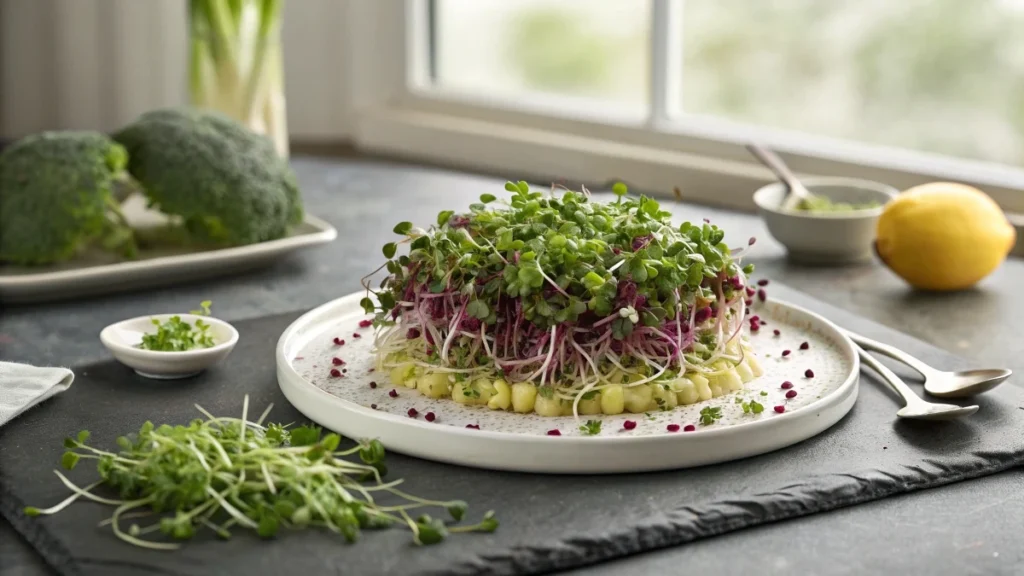
Want a fast way to stock your kitchen with food that supports calm, balanced inflammation? This anti-inflammatory microgreens list shows you the most useful varieties, what makes them special, and the easiest ways to eat them today.
Young greens concentrate antioxidants, polyphenols, and glucosinolates; for example, broccoli microgreens can deliver several-fold more glucoraphanin than mature florets, which your body converts to sulforaphane.
You will also see flavorful alliums rich in organosulfur compounds, color-rich leaves with betalains, and crunchy shoots that supply vitamin E and fiber.
Use this guide to build smart meals, pair oils and acids for better absorption, and store greens so they stay crisp. Save it now and start rotating a few handfuls each day.
- Broccoli microgreens
These tiny brassicas are prized for glucoraphanin, the stable precursor to sulforaphane. Young tissue concentrates it, so a small handful can deliver several-fold more glucoraphanin than the same weight of mature florets. Chop or chew well and give the greens a brief minute to sit before eating to let myrosinase do its work. A squeeze of lemon or a spoonful of yogurt-based dressing makes them easier to eat in larger amounts without wilting. Keep harvests cold and dry and use within four to five days for the best enzyme activity. For warm dishes, add them at the table so the heat does not blunt the effect. - Red cabbage microgreens
Red pigments signal anthocyanins alongside the usual crucifer glucosinolates. Anthocyanins help counter oxidative stress, while the glucosinolate family supports normal inflammatory signaling once myrosinase activates them. Early growth stages often show higher concentrations per gram than mature leaves, so color is a useful cue for potency. Slice finely for better release of enzymes and pair with apple or citrus so the tartness balances the brassica note. Store in a breathable box lined with a dry towel to prevent moisture buildup, which speeds quality loss. - Kale microgreens
Kale at the micro stage marries gentle flavor with concentrated phytonutrients. You get glucosinolates plus vitamin C and vitamin K in a form that blends easily into eggs, grains, or a bowl of beans. If you warm them, do it away from direct heat and stir them just before serving. This keeps texture and preserves delicate enzymes. For salads, salt lightly first, then dress with olive oil and lemon to soften the bite without crushing the leaves. Plan to harvest or buy small amounts often since nutrient-rich tissues lose pep when stored too long. - Arugula microgreens
Arugula brings a peppery lift from isothiocyanates such as erucin. That sharp note is more than flavor because it points to active compounds formed when cells are cut and exposed to moisture. You can stack the deck by chopping and waiting a minute before tossing with olive oil, cherry tomatoes, and a little sea salt. Use as a finisher for pizza or pasta, so heat does not mute the aroma. If you prefer a milder plate, mix half arugula with half pea shoots, which rounds off the spice without diluting the benefits.
🌿 Recommended Microgreens Supplies |
- Mustard microgreens
This is the spicy one. The heat comes from allyl isothiocyanate, which forms rapidly once the leaves are cut. That same reaction is linked with the support of normal inflammatory pathways. Because the flavor is bold, think of mustard micros as a seasoning rather than a base. Fold a small handful into a honey mustard yogurt sauce or layer them between toasted bread and roasted vegetables. The enzyme step happens fast, so a short rest after chopping is enough. Keep portions modest if you have a sensitive stomach. - Radish microgreens, including daikon and purple types
Radish micros are enzyme-rich and reliable. They bring abundant myrosinase, which helps convert glucosinolates into active isothiocyanates. That makes them excellent companions for other crucifers on your plate. A mix of half broccoli micros and half radish micros gives you both precursor and enzyme in one bowl. Expect a bright heat and crisp texture that stands up in slaws and noodle bowls. For ramen or soup, add at the table. Store unwashed in a lidded box with a dry liner and wash just before eating to keep the bite and color. - Garlic microgreens
Allium seedlings concentrate organosulfur compounds related to allicin formation. Crushing or chopping triggers the reaction, which is why a quick mince followed by a brief rest helps. You get aroma plus compounds that support normal immune and inflammatory balance. The flavor is friendlier than raw garlic cloves, so you can add more without overpowering a dish. Stir into yogurt with lemon and salt for a fast sauce over beans or grilled fish. If you use them warm, take the pan off the heat first to avoid dulling the fresh character. People on certain medications should consider the usual allium cautions and monitor tolerance. - Onion or leek microgreens
These bring quercetin along with their sulfur notes. Quercetin is a widely studied flavonol with roles in antioxidant defense. Micro stage leaves are tender and slightly sweet, which helps them disappear into grain bowls, omelets, and tacos. Slice across the grain to open more cells and release aroma. Vinegar or citrus brightens the sweetness and helps balance richer foods like avocado or salmon. Keep them very dry in storage since moisture quickly softens the thin leaves. Use within a few days for the best texture and aroma. - Cilantro microgreens
Fresh citrusy greens deliver polyphenols and terpenes such as linalool in a delicate package that shines raw. These compounds are volatile, which means heat sends them into the air instead of your mouth, so use cilantro micros as a final layer. A spoonful of cilantro micro salsa over beans or roasted vegetables lifts the whole plate without much salt. If you dislike soapy notes, blend a small amount with parsley micros and lemon, which softens that perception while keeping the benefits. Rinse gently and dry well because trapped water mutes the aroma. - Parsley microgreens
Parsley at this stage is bright and clean with notable apigenin and vitamin C. The combination supports antioxidant capacity while the flavor plays well with lemon, olive oil, and grains. Chop very fine for tabbouleh or sprinkle over soups after cooking. Because parsley micros are tender, they respond well to a short salt rest, which draws a little moisture and deepens the taste. People who track vitamin K intake for medical reasons should keep portions consistent day to day. Store flat in a shallow box to avoid bruising, which speeds yellowing.
- Basil microgreens
Sweet aroma signals eugenol and rosmarinic acid, both sensitive to heat and long storage. Chop gently, wait a minute for cell enzymes to work, then fold into olive oil so the fat carries flavor and phenolics. A small squeeze of lemon protects the green color and brightens the taste. Spoon over tomatoes, white beans, or grilled chicken at the table. Keep very dry and loosely packed with a paper liner. If you want a pesto, pulse briefly and serve right away since long blending warms and fades the fragrance. - Dill microgreens
Delicate fronds hold limonene-rich oils that disappear if heated. Use as a last layer on salmon, potatoes, or yogurt with lemon and salt. For a quick dressing, bruise lightly with a pinch of salt and a spoonful of olive oil to release aroma without tearing the leaves. A chilled container and low humidity slow wilting. If the flavor reads sharp, mix with parsley micros, which rounds the citrus edge while keeping the lift. - Celery microgreens
Crisp stems and leaves bring apigenin and luteolin with a clean, savory note. These are great for tuna salad, chicken salad, and crunchy wraps where you want a bite without a stringy texture. Mince finely and rest a minute before dressing so the flavor opens up. Pair with lemon and a touch of olive oil to help absorb fat-soluble compounds. Store unwashed and very dry since trapped moisture quickly softens the cells. People who monitor sodium can rely on celery micros to add perceived saltiness, so less salt is needed. - Fennel microgreens
Anethole gives a gentle licorice tone that wakes up citrus salads and roasted carrots. Slice across the stems to open more cells, then toss with orange segments and toasted seeds. A spoon of yogurt or a drizzle of olive oil helps carry aroma while keeping the plate balanced. Add at the end for warm dishes so the sweetness stays fresh. Keep in a shallow box to avoid compression marks that speed bruising. - Amaranth microgreens
The ruby color comes from betalains, which contribute to antioxidant capacity and also make plating easy since a small amount colors a whole bowl. Use as a vivid garnish on soups, tacos, and grain bowls where you want both hue and nutrition. Combine with lemon or another vitamin C source to support iron absorption from plants. If oxalates are a personal concern, keep portions modest and rotate with pea or sunflower shoots. Store cool and dark to protect pigments from light fade. - Beet microgreens
Betacyanins carry the beet color and mild earthy sweetness. They are best raw or barely warmed, so the color stays bright. Toss with goat cheese, walnuts, and a citrus dressing for a quick salad that uses the greens as both ingredient and garnish. Nitrate-rich beet family greens support normal blood flow in active people, so they work well on training days. Rinse gently right before serving and pat very dry to keep the leaves crisp. - Red spinach microgreens
Often from amaranthus types marketed as red spinach, these tender leaves share the betalain family with beet and amaranth, while tasting milder. They blend into smoothies without turning the flavor earthy, especially with pineapple or orange. For savory plates, slide into omelets off the heat so the color stays vivid. If your plan is a warm grain bowl, add after cooking with olive oil and lemon so the leaves soften slightly without losing shape. Keep portions balanced if you track oxalates and rotate with pea or sunflower shoots through the week. - Marigold microgreens
These bring lutein and zeaxanthin with a bright citrus-like snap. They shine in corn salads, seafood dishes, and creamy sauces that need a fresh top note. Pinch rather than chop to avoid bruising the thin tissues. If you enjoy a flavored salt, crumble a tiny amount with marigold micros and lemon zest over roasted vegetables at the table. Store away from strong-smelling foods since the delicate aroma picks up nearby scents. - Sunflower shoots
Thick cotyledons give a satisfying crunch along with vitamin E and a touch of plant protein. They make an easy base for a whole microgreen salad that feels like a meal. Toss with tahini, lemon, and toasted seeds for a complete bowl. Remove any stubborn hulls to protect the texture and keep digestion comfortable. Since the tissues are thicker, they tolerate light dressing earlier than most micros without wilting. Keep cold and dry, and use within four to five days for peak snap. - Pea shoots
Sweet tendrils bring vitamin C and carotenoids with a crisp bite. They love gentle heat, so a quick toss in a warm pan with olive oil and a little garlic off the heat gives a silky texture without loss of freshness. For raw plates, pair with arugula micros to round out peppery notes while adding volume. Cut just before eating to prevent the cut ends from weeping moisture into the bowl. If you cook them, stop as soon as the color deepens and serve right away. - Mung bean microgreens
Light flavor and clean crunch make these a flexible add-in for noodle bowls and salad rolls. They carry polyphenols and vitamin C that are best kept away from the stove, so add at the table or stir through warm dishes after the heat is off. Rinse gently and dry well, which keeps the texture snappy. If you are sensitive to raw legumes, start with small portions and pair with ginger or a light acid dressing. Use within three to four days since the thin stems soften quickly. - Rapeseed microgreens
Mild brassica leaves deliver sinigrin and related glucosinolates with a friendly flavor that fits slaws and grain bowls. For maximum effect, chop and let them rest a minute so myrosinase can activate. Combine with a small handful of radish micros, which are enzyme-rich to support conversion for the whole bowl. Apple, lemon, and a touch of olive oil make an easy dressing that balances the gentle cabbage note. Store very dry and avoid crushing the leaves, which reduces both aroma and snap.
| Often ten to forty times more glucoraphanin than in mature heads | Key actives | Data highlight | Best prep tip | Pairing suggestion | Storage note |
|---|---|---|---|---|---|
| Broccoli | Glucoraphanin to sulforaphane | Often ten to forty times glucoraphanin versus mature heads | Chop and wait one minute before eating | Lemon and yogurt dressing on grain bowls | Keep cold and dry and use within four to five days |
| Red cabbage | Anthocyanins and glucosinolates | Young leaves show higher polyphenols per gram | Slice finely then rest briefly | Apple and citrus in slaws and tacos | Breathable box with a dry liner |
| Kale | Glucosinolates and vitamins C and K | Early growth concentrates key compounds | Stir in off heat just before serving | Egg dishes and warm grains | Buy small amounts often for peak quality |
| Arugula | Erucin and related isothiocyanates | Enzyme activity rises after cutting | Chop and wait briefly then add oil | Finish pizza and pasta at the table | Keep very dry and use quickly |
| Mustard | Allyl isothiocyanate | Strong actives form fast once chopped | Treat as a seasoning and let rest briefly | Honey mustard yogurt sauce and sandwiches | Store dry and covered to slow pungency loss |
| Radish including daikon and purple | Isothiocyanates and abundant myrosinase | Pairs well with broccoli to boost conversion | Mix half radish with half broccoli | Slaws and ramen added at the table | Unwashed in a lidded box with a dry liner |
| Garlic | Organosulfur compounds related to allicin | Formation increases after chopping and resting | Mince and rest briefly before use | Yogurt lemon sauce over beans or fish | Keep cold and dry and use fresh |
| Onion or leek | Quercetin and sulfur compounds | Notable flavonols in young tissue | Slice across the grain to release aroma | Grain bowls omelets and soft tacos | Very dry storage to prevent softening |
| Cilantro | Polyphenols and terpenes such as linalool | Heat drives off aroma so keep raw | Use as a final layer | Salsa verde over beans or vegetables | Rinse gently and dry well before use |
| Parsley | Apigenin and vitamin C | Vitamin K present so keep portions consistent if needed | Chop very fine and salt briefly | Tabbouleh and soups after cooking | Shallow box to avoid bruising |
| Basil | Eugenol and rosmarinic acid | Very sensitive to heat and long storage | Fold into oil and serve fresh | Tomatoes white beans and grilled chicken | Keep dry and loosely packed |
| Dill | Limonene rich oils | Volatile oils fade with heat | Bruise lightly with a pinch of salt and oil | Salmon potatoes and yogurt dips | Chilled container and low humidity |
| Celery | Apigenin and luteolin | Adds perceived saltiness so less salt needed | Mince finely and rest a minute | Tuna salad chicken salad and wraps | Unwashed and very dry until serving |
| Fennel | Anethole | Sweet note holds when added at the end | Slice across stems to open more cells | Orange salads and roasted carrots | Shallow box to prevent bruising |
| Amaranth | Betalains | Pigments contribute to antioxidant capacity | Use as a vivid garnish | Bowls soups and tacos with a vitamin C source | Store cool and dark to protect color |
| Beet | Betacyanins and natural nitrates | Nitrate rich family supports normal blood flow | Keep raw or barely warmed | Goat cheese walnuts and citrus | Rinse just before serving and pat dry |
| Red spinach | Betalains | Mild taste blends well in smoothies | Add off heat for warm dishes | Omelets and grain bowls with lemon | Rotate if you track oxalates |
| Marigold | Lutein and zeaxanthin | Delicate citrus like aroma | Pinch rather than chop | Corn salads seafood and creamy sauces | Keep away from strong odors |
| Sunflower shoots | Vitamin E phenolics and plant protein | Thick cotyledons protect vitamin E | Remove hulls and dress early | Tahini and lemon for a full salad | Cold and dry and use within four to five days |
| Pea shoots | Vitamin C and carotenoids | Best raw or with gentle warmth | Quick toss off heat with olive oil | Pair with arugula and a touch of garlic | Cut just before serving for crisp texture |
| Mung bean | Polyphenols and vitamin C | Most benefits retained when raw | Rinse and dry and add at the table | Noodle bowls and salad rolls with ginger | Use within three to four days |
| Rapeseed | Sinigrin and other glucosinolates | Profile similar to mustard with milder taste | Chop and rest and mix with radish for enzyme support | Apple and lemon slaw with olive oil | Very dry storage and avoid crushing leaves |