
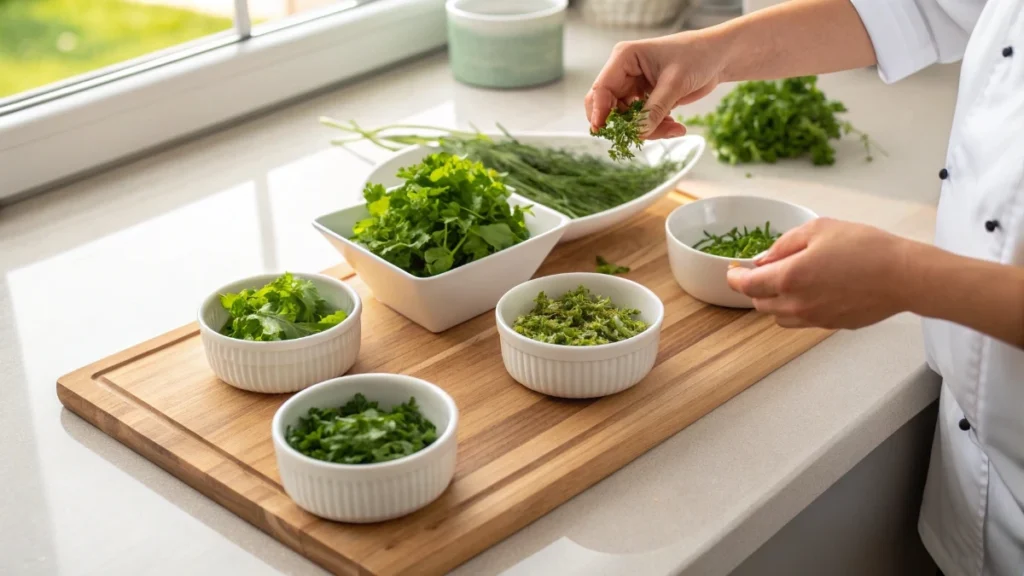
Curious about micro herbs? Here is a clear, practical guide to what they are, why they matter, and how to use them without wasting a single leaf. Micro herbs are young, aromatic herbs harvested early, usually within the first three weeks, when flavor is vivid, and the leaves are still delicate.
In this article, you will learn about micro herb benefits, how to store them at two to four degrees Celsius, and how to grow a fresh tray at home with a simple setup. You will also get quick micro herb recipes like basil pesto, dill yogurt, and shiso ginger dressing, plus pairing ideas for eggs, pasta, bowls, and seafood. Finish most meals with one to two tablespoons for a clean lift and bright color. Your kitchen will smell amazing.
What exactly are micro herbs?
A simple definition
Micro herbs are young versions of familiar culinary herbs grown for a short window and harvested soon after the first true leaves appear. Most varieties are cut somewhere between seven and twenty-one days. At this stage, the leaves are tender, the stems are fine, and the aroma is strong for the plant’s size.
They are not meant to fill a plate like salad greens. Think of micro herbs as a finishing tool. They add freshness, perfume, and a polished look with a small amount.
How micro herbs differ from microgreens and baby herbs
Microgreens are a wide category that includes many plants, like radish, broccoli, peas, mustard, and amaranth. Micro herbs sit inside that category, but the term usually refers to herb species such as basil, cilantro, dill, fennel, chives, parsley, mint, and shiso.
Baby herbs are older. They are cut later, have thicker stems, and often taste gentler. Micro herbs have a higher leaf-to-stem ratio and a lighter texture, which makes the aroma feel sharper and cleaner. In cooking, they behave like a final seasoning rather than a bulk ingredient.
Popular micro herb varieties
Here are some favorites and how they show up on the plate:
- Basil: sweet, clove-like, slightly anise, great with tomato, pasta, curry
- Cilantro: citrusy, bright, wakes up tacos, rice bowls, soups
- Dill: cool and grassy, perfect for fish, potatoes, yogurt sauces
- Fennel: soft licorice aroma, loves citrus and seafood
- Chives: clean onion flavor without harsh bite, ideal for eggs and cream
- Parsley: fresh and balancing, great with beans, mushrooms, roasted meats
- Mint: cooling and fragrant, works with fruit, desserts, and lamb
- Shiso: complex and layered, mint meets basil with a spiced edge, great for noodles and tofu
🌿 Recommended Microgreens Supplies |
Why chefs and home cooks love micro herbs
Big flavor from tiny leaves
Micro herbs can feel intense because aromatic oils sit close to the leaf surface and release quickly when you chop, pinch, or let them touch warm food. The plant has not invested energy into thick stems yet, so the leaf character shines.
This is why a small sprinkle can make food taste more complete. It also helps you rely less on salt, because aroma gives the brain a strong “this tastes finished” signal.
Visual appeal without effort
Micro herbs instantly add contrast. A pale omelet looks alive with green chives. Tomato soup pops with basil. A simple bowl of rice looks restaurant-ready with a little shiso on top. Height matters too, and micro herbs create a light, airy lift instead of a heavy pile of greens.
Easy pairing rules that rarely fail
If you are unsure, add micro herbs at the end and taste.
- Basil with tomato, mozzarella, peaches, pesto, pho, green curry
- Cilantro with lime, avocado, grilled corn, salsa, and lentil soup
- Dill with yogurt, cucumber, salmon, and potatoes
- Fennel with orange, scallops, and shaved fennel salads
- Chives with eggs, baked potatoes, sour cream, smoked fish
- Parsley with beans, mushrooms, roast chicken, lemon zest
- Mint with peas, watermelon, dark chocolate, iced tea
- Shiso with sesame, soy, noodles, tofu, sashimi
Nutritional and health benefits
Concentrated nutrition in small servings
Micro herbs are harvested early when the plant is rich in young leaf tissue. Many microgreen analyses show higher average concentrations of vitamins like A, C, and K and higher levels of carotenoids and polyphenols per gram compared with older leaves from the same plant species. The exact levels vary based on variety, light, seed quality, and harvest age.
The real benefit is practical. You add a small amount and still boost micronutrients without adding many calories.
Freshness matters for nutrient retention.
Micro herbs hold quality best when they cool down quickly after harvest. A home refrigerator set to two to four degrees Celsius slows respiration and keeps leaves firm. Most varieties stay enjoyable for three to seven days if moisture is controlled.
Real-world health impact
Micro herbs help you build flavor with aroma, herbs, and acidity rather than extra sodium. They also increase meal satisfaction. That matters more than people admit. When food smells bright and looks fresh, it is easier to stick to simple home meals.
If you have sensitivities, note herb families. Parsley, dill, and fennel are in the same family and can overlap for some people. Mint family herbs can be strong for those who react to intense aromatic oils.
Sourcing, storage, and handling
How to choose good micro herbs
Look for:
- crisp stems and vivid color
- leaves that feel dry, not wet or sticky
- minimal bruising
- no yellowing or compacted clumps
Transport them upright when possible so they do not get crushed.
Best way to store micro herbs at home
Use a shallow container lined with a dry paper towel to buffer humidity. Keep micro herbs in a loose layer, then close the lid without pressing the tops down. Store in the refrigerator at two to four degrees Celsius. Replace the towel if condensation builds.
Handling tips that protect aroma
Rinse only when needed and only right before using. Use a gentle stream of cold water, then air dry on a towel. Avoid soaking. Add micro herbs at the last moment on warm food so oils stay bright.
Growing micro herbs at home
A simple setup that works
You need:
- a clean tray
- a smooth, even layer of sterile medium
- quality seed
- a spray bottle or bottom watering tray
- a steady light source, such as an LED bar
- a small fan for airflow
Bottom watering helps keep stems dry, which reduces issues and improves texture.
Best starter varieties
If you want quick wins, start here:
- Basil for a strong aroma and easy use
- chives for tidy growth and forgiving care
- dill for fast fragrance
- cilantro, if you can be patient
Basil likes warmth. Cilantro prefers slightly cooler conditions and tends to take longer.
Harvest timing and yield
Most micro herbs are ready between day ten and day twenty-one. Cut when true leaves appear, and the aroma smells clear and strong. Use clean scissors and cut just above the medium.
Higher seeding density gives more volume but smaller leaves. Lower density gives larger, prettier leaves with more defined shape.
Flavor control
Light and moisture shape flavor. Steady light strengthens aroma. Consistent moisture without soggy media keeps stems crisp. Taste a small pinch as you approach harvest. When scent peaks, harvest.
Everyday ways to use micro herbs
Raw and fresh
Micro herbs shine as a finishing touch. Sprinkle over pasta, soups, eggs, grilled fish, or roasted vegetables right before serving. In salads, fold a loose handful through greens to lift the whole bowl.
Blended and infused
Micro herbs blend smoothly into pestos, dressings, yogurt sauces, and herb butters. Their tender texture makes sauces feel cleaner than when using mature stems.
Timing and ratios that work
Use these proportions as a reliable starting point:
- one to two tablespoons per serving as a finishing topper
- one quarter to one half cup per cup of sauce or dressing
- One loose cup for every four servings of salad
Eight micro herb recipes you will actually use
Micro basil pesto
Blend one packed cup of micro basil with one quarter cup olive oil, one small garlic clove, one tablespoon lemon juice, and two tablespoons grated cheese or nuts. Pulse until smooth, then season lightly.
Cilantro lime salsa verde
Blend one packed cup of micro cilantro, one quarter cup parsley, one small jalapeño, two tablespoons lime juice, and two tablespoons olive oil. Keep it spoonable. Use on tacos, bowls, or roasted vegetables.
Lemon dill yogurt sauce
Stir one cup of thick yogurt with two tablespoons of micro dill, one teaspoon lemon zest, and one tablespoon lemon juice. Chill for ten minutes. Great with seafood and potatoes.
Micro herb omelet fold
Cook two eggs slowly. When almost set, add micro chives and micro parsley, then fold. The residual heat releases aroma without flattening the texture.
Mint and pea crostini
Mash peas with olive oil and lemon juice, then fold in micro mint. Spread on toast and finish with lemon zest.
Fennel micro herb citrus salad
Slice fennel thin and toss with lemon and salt. Add orange segments, micro fennel, and olive oil. Crisp, sweet, aromatic.
Chive compound butter
Mix softened butter with finely chopped micro chives and a pinch of salt. Chill and slice over vegetables, fish, steak, or bread.
Shiso ginger dressing
Blend neutral oil, rice vinegar, soy sauce, grated ginger, and micro shiso until smooth. Use over noodles, tofu, or salads.
Value and cost insights
Why micro herbs can cost more
Micro herbs are usually grown under controlled conditions and hand-harvested. Yields per tray are smaller than those of many microgreens, and shelf life is short. That labor plus perishability explains the price.
How to stretch your purchase
Buy only what you can use in three to five days. Store properly with a dry liner. Use micro herbs as garnish, then blend leftovers into sauces. You can freeze chopped micro herbs in olive oil for cooking later. Texture softens, aroma often remains useful.
Home growing for frequent use.
Once you have a basic tray and light, home growing becomes cost-effective. You harvest exactly what you need, exactly when you need it. That freshness is hard to beat.
Safety and allergen notes
Clean handling
Wash your hands and use clean scissors. Rinse gently only when necessary and dry well. Store cold and keep containers clean.
Allergen awareness
Parsley, dill, and fennel can overlap for some sensitivities. Mint family herbs can be strong for people sensitive to aromatic oils. If unsure, start with small amounts.
Quick FAQs
How long do micro herbs last in the fridge?
Stored with a dry liner at two to four degrees Celsius, most micro herbs stay fresh three to five days. Some can last up to a week with careful moisture control.
Can you cook with micro herbs, or are they only for garnish?
You can cook with them, but add them in the final minute or after the heat is off. That keeps aroma and color intact.
Which micro herb is best for beginners?
Basil, chives, and parsley are beginner-friendly. They tolerate minor mistakes and pair with almost everything.
How do micro herbs compare nutritionally to mature herbs?
Micro herbs can carry higher concentrations of vitamins and antioxidants per gram than mature leaves. Portions are small, but they add meaningful micronutrients and a lot of sensory value.