
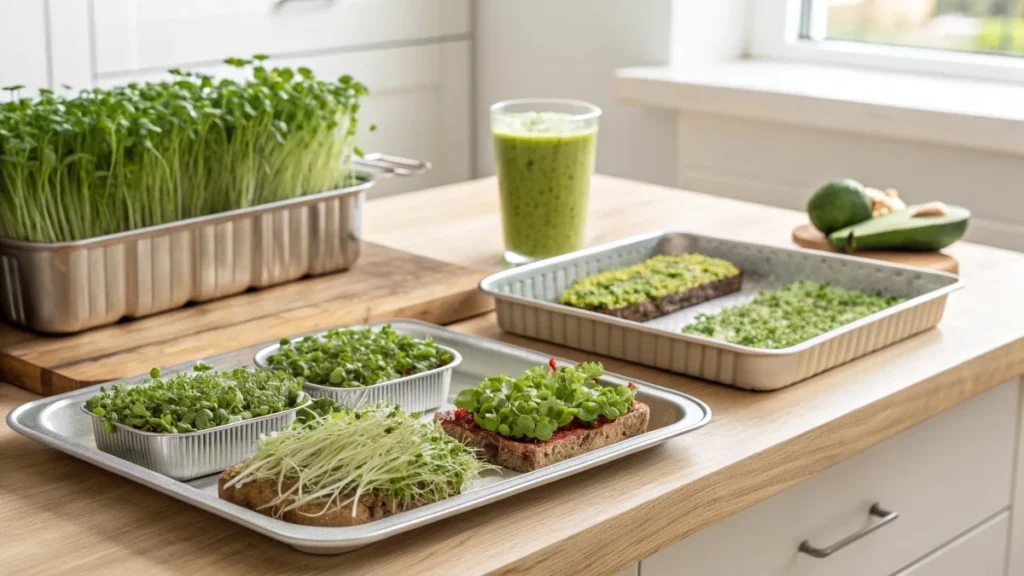
Microgreens have quickly become one of the most talked-about foods in healthy eating, but many people still wonder why they are different from other popular superfoods.
These tiny plants are harvested just days after germination, usually between 7 and 21 days, and carry a unique mix of nutrition, flavor, and versatility that sets them apart.
While powders and imported berries dominate the superfood aisle, microgreens can be grown at home, used fresh, or even freeze-dried into long-lasting powders.
They are nutrient-rich, colorful, and add variety to everyday meals in ways most superfoods cannot. Understanding why microgreens stand out helps explain their growing popularity and shows how they fit into a balanced, practical, and accessible diet.
Superfood as a label, not a medical claim
The word superfood sounds scientific, but it is not a regulated nutrition term. There is no formal definition from the FDA for a superfood. That makes it easy for marketing to lean on big-sounding multipliers without the context that matters most. Several claims about microgreens repeat a headline figure that some types can have up to forty times more of a given nutrient than the mature plant. The number is eye-catching, yet it came from limited research on a small set of varieties and on specific nutrients.
Without careful context on serving size and on what people actually eat, that kind of headline can mislead. A garnish on toast is not the same as a full cup of vegetables. Treat the label as a prompt to look closer at portions, nutrients measured, and how the food fits into a balanced plate rather than a promise of instant benefits.
Why context and serving size matter
Most comparisons in nutrition tables are made per 100 grams. Many people do not eat 100 grams of delicate greens at one sitting. If you compare five to ten grams of microgreens to a full serving of a cooked vegetable, the larger serving often wins on total intake, even when the microgreen is more concentrated by weight. This is the central reason to read any multiplier together with how much you would reasonably eat in a day.
What makes microgreens different at the source
Microgreens are harvested at a very early stage. Typical harvest happens seven to twenty-four days after germination. Many popular types reach the cutting table in about ten to fourteen days. That growth window is far shorter than that of mature vegetables, and it changes how people can grow and use them.
They are practical in small spaces. You can sow densely in shallow trays, set them under an inexpensive full-spectrum light, or keep them on a sunny sill. Soil works well, and people also raise them hydroponically or aeroponically. Because the trays are compact and the cycle is quick, a small shelf can supply frequent harvests even in winter. The basic kit is simple. Trays, a growing medium, bulk seed that is labeled for microgreens, and a light. The entry cost is low compared to many specialty foods that arrive packaged and processed.
They fit family life. Short tasks like soaking the seed, spreading it, misting, and trimming are easy enough for kids to help with. Parents use them to sneak extra greens into common meals because a pinch blends into smoothies, sauces, pasta, eggs, or soups without a big change in texture. That makes them a friendly option for picky eaters.
They are also about flavor, not only nutrients. Different species deliver very different profiles. Radish brings a short spicy kick that works on tacos or noodles. Sunflower shoots are crunchy with a mild nutty note and can stand in for chips in a snack. Pea shoots taste sweet and fresh. Broccoli is mild and suits bowls and smoothies. Because flavors are concentrated at this stage, cooks use microgreens as accents, much like herbs or spices.
🌿 Recommended Microgreens Supplies |
Nutrition that is concentrated yet nuanced
There is a real concentration of some nutrients in seedlings. That is why the big multipliers were possible for certain pairings of plant and vitamin. But the pattern is uneven. Variety matters, growing conditions matter, and you need to know which nutrient is being discussed.
A simple example helps. Broccoli microgreens have been cited with about 49 milligrams of vitamin C per 100 grams. The recommended daily amount for adult men in the United States is about 90 milligrams. You would need roughly 200 grams of those microgreens to cover that figure. For many people, that is an unrealistic portion for one meal. By contrast, a half red bell pepper or a glass of juice can reach similar amounts with less bulk and less cost. The point is not that microgreens are inferior. It is that concentration per gram does not automatically lead to sufficiency per day.
Broccoli microgreens are also noted for sulforaphane, a phytochemical of interest in research on cellular defenses. That specific compound is one reason this variety is singled out in practical guides for families. The presence of a sought-after compound does not change the serving size reality. It simply helps you choose varieties that match your goals.
A second nuance is the evidence base. Many measurements focus on nutrient profiles, such as vitamins A, C, E, and K. There is far less research that tracks long-term outcomes in people who eat microgreens regularly. That gap matters when you see dramatic claims about disease prevention. The safest way to frame them is as useful additions to a plate that already contains whole vegetables, fruits, grains, and proteins.
Why the forty times line needs caution
That figure came from a small set of about twenty-five varieties. Some, like red cabbage and cilantro, showed high concentrations of specific nutrients. Others, such as basil or pea shoots, did not. Extrapolating a headline across the hundreds of edible microgreen types creates a false picture. Use variety-specific information and think in portions you will actually eat.
Fresh and freeze-dried forms with very different shelf lives
Fresh-cut microgreens are vibrant and delicate. Heat can dull their texture and degrade some nutrients, so a practical rule is to add them at the end of cooking. Fold into scrambled eggs after you remove the pan from the stove. Scatter the soup at the table. Toss into a warm pasta just before serving. This preserves color and snap while keeping the nutritional lift closer to what you expect.
Freeze drying changes the math on waste and scheduling. You can harvest trays, load the product on lined freeze dryer trays, and run a cycle that completes in roughly twelve hours. Because the seedlings are small and hold less water than many fruits, ice buildup is modest, and batches move quickly. After a run, the greens are extremely light and fragile. Most people grind them to a fine powder.
There are concrete numbers that show how compact this can be. Five trays of mixed microgreens were reduced to about one and a half cups of powder. That powder stirs into smoothies, sauces, and soups and can even work as a seasoning because flavors stay distinct. Storage is straightforward. Use a mason jar for short to medium-term pantry use, or vacuum-seal in a mylar bag with an oxygen absorber for longer storage. This home pathway from fresh to stable powder is unusual among foods often called superfoods, many of which arrive premade and cannot be produced and preserved in a home kitchen with this level of control.
Why freeze-drying fits microgreens
The growth cycle is short, so supply can exceed what a family eats fresh. Freeze drying locks in the harvest so you can use small portions over weeks or months. It also solves the short refrigerator life of freshly cut greens. If you want to grow through winter or harvest in bursts, this method prevents loss and gives you consistent access to the flavors you prefer.
Culinary versatility that goes beyond most packaged superfoods
Microgreens serve two audiences at once. Health-minded home cooks use them to lift the nutrient density of everyday meals. Cooks in restaurants rely on them for flavor accents and visual details that make a plate look alive.
A practical way to build a habit is something growers call piggybacking. You take whatever you already eat and add microgreens on top or stir them in right before serving. This works on eggs, avocado toast, grain bowls, pasta, rice, tacos, noodle soups, and roast vegetables. It also works in smoothies where a spoon or two of a freeze-dried powder or a small handful of fresh greens disappears into fruit and yogurt.
There are many specific uses that show how flexible they are. Salads can be built entirely from microgreens or mixed with lettuces. Sandwiches and wraps get a crisp layer that holds up better than shredded leaf in some cases. Stir-fries benefit when you toss pea shoots in with garlic at the very end. Pizza can be finished with a bright handful after baking for a fresh contrast. Sushi can hold slender shoots inside or on top. Soups and stews get a fresh note when greens are added as a finishing touch. Drinks can carry herbal notes by infusing basil or mint types. Small party bites can be rolled with a strip of greens for color and crunch. Even cocktails can wear a tiny sprig as a garnish.
The common thread is timing. Add them after heating to protect the texture and preserve more nutrition. That one habit makes every use case more successful.
Why this versatility matters in daily life
Many foods labeled as superfoods arrive only as powders or pills. Microgreens can be used fresh, used as a homemade powder, or used as a visible element that changes the way a dish tastes and looks. That dual identity as ingredient and seasoning is a genuine point of difference.
Accessibility and economics compared to other foods called superfoods
One clear distinction is that microgreens do not need to be imported, processed, or packaged in bulk before you can use them. They can be grown indoors on a shelf or even on a window ledge with very simple tools. A tray, soil, or another medium, and a basic light are enough to produce a steady harvest. The cycle from seed to cutting can be as short as ten days, which means the time between sowing and eating is much faster than almost any vegetable. This makes them more accessible to anyone who wants a fresh supply without relying on long supply chains.
In many families, microgreens become a shared activity. Children can spread seeds, mist the trays, and cut the shoots. The effort is low, and the results are fast enough to hold attention. Parents mention using them to encourage picky eaters since a small pinch of greens can be hidden in smoothies, sauces, and pasta dishes.
From an economic point of view, the ability to produce a steady stream of greens from bulk seeds reduces the need to buy pre-packaged powders or supplements that are often priced as premium superfoods. For those who prefer not to grow, local farmers’ markets and regional online markets now sell microgreens directly. In central Illinois, for example, they are offered through community farmers’ markets and platforms like Market Wagon. This makes them available at a local scale, contrasting with superfoods such as goji berries or acai that usually travel long distances before reaching the table.
Common myths to reconsider
Several claims often repeated about microgreens deserve careful review. The most famous is the claim that they are forty times more nutritious than their mature plant. That statement is based on a small set of around twenty-five varieties tested for certain vitamins and minerals more than a decade ago. Some varieties, such as red cabbage and cilantro, did show higher concentrations of particular nutrients. Others, such as basil and pea shoots,s did not. Extending the same figure across more than a thousand edible microgreen varieties is misleading.
Another common belief is that microgreens can replace whole vegetables in the diet. In reality, the portion sizes matter. Studies often calculate nutrient content per 100 grams. But most people eat just a few grams of microgreens at a time, perhaps as a garnish on a sandwich or as a handful in a salad. That is not enough to fill you up or to meet daily requirements for key vitamins and minerals. Mature vegetables still play the central role in providing fiber, volume, and satiety. Microgreens should be viewed as a supplement to those foods rather than a substitute.
There is also the broad claim that they are a miracle cure or shortcut to health. Nutrition is complex. No single food supplies everything the body needs. Microgreens contribute vitamins, minerals, antioxidants, and in some cases compounds such as sulforaphane. They are an excellent addition but not a replacement for a balanced diet. The best perspective is to enjoy them for their flavor, their freshness, and their versatility, while keeping expectations grounded.
Why microgreens are different
Microgreens stand apart from other foods often labeled as superfoods because of the combination of speed, flexibility, and variety. They can be harvested in as little as ten days. They can be grown in a kitchen or on a shelf with little equipment. They can be eaten fresh as a garnish, ground into powder after freeze-drying, or blended directly into drinks. This range of forms is unusual compared to many superfoods that arrive only as dried powders or packaged imports.
They also carry a dual identity. They are ingredients that add concentrated nutrition, but they are also culinary accents that deliver flavor and presentation value. Radish microgreens bring a quick spice, sunflower shoots offer crunch, pea shoots are sweet, and broccoli provides a mild base with the added benefit of sulforaphane. This variety lets you choose based on taste and nutritional focus rather than relying on a single product.
Another difference is the control you have. With microgreens, you can decide which varieties to grow, when to harvest, and even whether to preserve them through freeze-drying for longer storage. A five-tray harvest can be reduced to about one and a half cups of powder, which can then be stored in jars or sealed bags with oxygen absorbers. That level of home control over a nutrient-dense food is rare.
When compared to the hype around other superfoods, the grounded truth is that microgreens are valuable not because they are magic, but because they combine fast growth, flexible use, distinct flavors, and local accessibility. They offer both nutrition and culinary creativity in ways that many other so-called superfoods cannot.
🌿 Recommended Microgreens Supplies |