
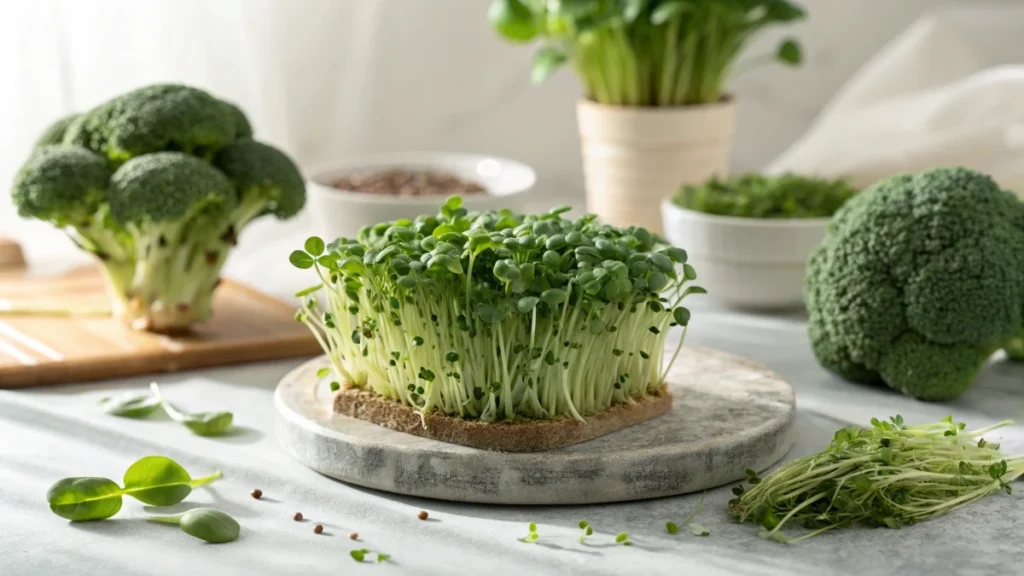
Microgreens look tiny, yet they often deliver more nutrition than a full plate of salad. If you keep hearing about them and quietly wonder why microgreens are better than the vegetables you already buy, you are not alone. I mean, who has time to overhaul every meal just to eat healthier?
Young greens can contain far higher levels of vitamins, antioxidants, and sulforaphane compared to their mature versions, while growing in a small tray on a kitchen counter.
In this guide, you will learn how microgreens compare to regular vegetables, from nutrient density and gut health to cost, convenience, taste, and everyday real-life food choices.
A Simple Question With a Surprising Answer
If you care about eating healthy, you have probably heard the line that you should eat more vegetables. That advice still stands. What most people do not realize is that the same plants we eat as full-grown vegetables also have a much earlier stage that can be even more concentrated in nutrition. That stage is the microgreen stage.
So when we ask why microgreens are better than vegetables, we are not saying that mature vegetables are bad. The real question is where microgreens offer an edge. When you look closely at how they grow, what is inside them, and how they affect the body, a pattern appears.
Microgreens can contain far more vitamins and protective compounds per gram than the same plant grown to full size. Some research reports up to forty times the nutrient content compared to mature vegetables. In other words, a small handful of microgreens can sometimes give similar nutrition to a much larger bowl of salad greens.
On top of that, microgreens are ready to harvest in about a week, can be grown all year indoors, and are easy to tuck into everyday meals. Mature vegetables still matter for fiber, fullness, and classic dishes. Yet when you focus on nutrient density, convenience, and specific plant compounds, microgreens often come out ahead.
That is the simple answer. Microgreens do not replace vegetables. They take many of the same benefits and concentrate them into a smaller, fresher, and often more accessible form.
What Microgreens Actually Are And How They Differ From Sprouts And Full Vegetables
Before comparing microgreens to vegetables, it helps to understand exactly what stage of growth we are talking about. A plant starts as a seed. The seed absorbs water and wakes up. The first tiny root appears, and then a small shoot. This very young stage that usually stays in water and is eaten seed and root together is called a sprout.
If you let that sprout keep growing in a shallow layer of growing medium and give it light, it develops a slender stem and the first true leaves open up. When that young plant is only a few inches tall and still very tender, it is in the microgreen stage. For a wide variety, this is between seven and twenty-one days after sowing. At this point, you cut the stem above the root line and eat the top portion, usually as a fresh garnish or a small salad component.
If you keep letting the plant grow past the microgreen stage, it becomes the mature vegetable you recognize in the grocery store. A broccoli plant turns into a full head. Kale forms large leaves. Peas form vines and pods. The same seed can therefore give you three very different foods depending on when you harvest it: sprout, microgreen, or mature vegetable.
Sprouts and microgreens are often confused, but they are quite different in practice and in safety. Sprouts spend their short life mostly in water. If the seed supply is not clean, bacteria like E coli or Salmonella can multiply rapidly because the sprout environment is warm and moist. Microgreens are grown in a medium such as coco coir or jute mat, with better airflow and light. You cut above the roots rather than eating the entire seed and root system. When you use high-quality pathogen-tested seed, clean trays, and good water, you reduce many of the concerns that show up in sprouting.
Compared to mature vegetables, microgreens are the teenage phase of the plant. They have already drawn on the stored energy of the seed and are using it to build new tissues fast. That rapid early growth is the main reason their nutritional profile is so concentrated. The plant has not yet spread its resources into thick stems, flowers, and fruits. Instead, most of the goodness is packed into a small amount of leaf and stem that you eat in one bite.
🌿 Recommended Microgreens Supplies |
Why Microgreens Deliver More Nutrition In Less Food
Microgreens and mature vegetables come from the same seed, yet their nutrient levels are not the same. When you look at the numbers, microgreens often give you more nutrition in a much smaller serving.
Up To Forty Times More Vitamins And Antioxidants
Several controlled analyses have compared young microgreens to their full-grown versions. Some of these results show that microgreens can contain up to forty times the level of certain vitamins and antioxidants found in the mature form of the same plant. That does not mean every nutrient is forty times higher. It means that for specific compounds such as vitamin C or certain polyphenols, the concentration can be dramatically higher at the microgreen stage.
Think about what that means on your plate. To get a similar amount of certain vitamins from mature greens, you may need a full large bowl. With microgreens, you might only need a small handful scattered over your meal. For someone who struggles to eat large portions or who feels full quickly, this can make it easier to reach daily nutrient goals without feeling stuffed.
This dense profile makes sense biologically. In the first weeks of growth, the seed is pushing all of its stored energy and building blocks into those first few leaves. The young plant needs strong antioxidant protection as it transitions from darkness in the soil to bright light. So it produces a high level of protective compounds. When you harvest at this stage, you catch the plant during that peak of concentrated nutrients.
Broccoli Example: Around Forty Percent More Nutrient-Dense Than A Full Head
A simple example many growers like to use is broccoli. A mature head of broccoli is already known as a healthy vegetable. Yet when you compare mature broccoli to broccoli microgreens grown from the same seed, the younger version comes out ahead in nutrient concentration.
Figures shared by educators in the growing community mention that broccoli microgreens can be roughly forty percent more nutrient-dense than a full head of broccoli. That means if you matched them gram for gram, the microgreens would deliver noticeably more vitamins and active plant compounds than the same weight of the mature vegetable.
For someone who wants to make every bite count, that difference is significant. You might sprinkle a small pile of broccoli microgreens on eggs or a sandwich and get an impressive nutrient boost without changing the rest of the meal. This is one major reason why many health-conscious people ask why microgreens are better than vegetables for certain goals. They are not magic. They are simply a more concentrated form of the same plant.
Higher Levels Of Key Minerals, Enzymes, And Chlorophyll
Microgreens are not just about vitamins. They also supply important minerals and plant-based compounds that support different functions in the body. Young greens often contain notable amounts of iron, potassium, and zinc. These minerals support energy production, fluid balance, immune function, and many cellular processes.
At the microgreen stage, many plants also show higher levels of active enzymes and chlorophyll compared to their older form. Chlorophyll is the green pigment that captures light for photosynthesis. Besides its role for the plant, it has been associated with antioxidant and detoxifying effects in humans. When you eat very fresh microgreens, you are getting chlorophyll that has not had time to degrade during long storage or transport.
Enzymes are another piece of the puzzle. These are proteins that help speed up chemical reactions. The young plant is busy building new tissues, repairing cells, and managing oxidative stress. So it keeps enzyme systems highly active. When you eat microgreens raw and freshly cut, you are much closer in time to those natural processes. While the body breaks down many plant enzymes during digestion, some may still play a role in how easily the food is handled in the gut.
All of this adds up to a food that delivers a lot in a small serving. Microgreens do not replace the fiber and bulk of mature vegetables. They specialize in intensity.
🌿 Recommended Microgreens Supplies |
The Sulforaphane Advantage: A Major Reason Microgreens Shine
One of the most exciting differences between microgreens and mature vegetables is found in a specific plant compound called sulforaphane. This substance is part of a group of compounds that have been studied for years in relation to cell protection and healthy detoxification pathways.
Sulforaphane is especially concentrated in cruciferous plants such as broccoli, kale, and cauliflower. It forms from precursors known as glucosinolates when the plant tissue is chopped or chewed. Both microgreens and mature vegetables contain these precursors, but their levels are not equal.
Ten To One Hundred Times More Sulforaphane In Broccoli Microgreens
Research looking at broccoli at different stages of growth has found a wide gap in sulforaphane potential. Broccoli microgreens can contain approximately ten to one hundred times more sulforaphane than a mature head of broccoli. That is a massive difference. Even at the lower end of that range, the microgreen stage is far more concentrated.
Sulforaphane has drawn attention because of its antioxidant and anti-inflammatory properties. It can activate pathways in the body that increase the production of internal protective enzymes. These enzymes help neutralize reactive molecules and support the handling of everyday chemical exposures. Early and ongoing research has also explored its potential role in protecting against certain forms of cancer.
When you choose microgreens made from cruciferous plants, you are tapping into this sulforaphane advantage in a very efficient way. A small serving of broccoli microgreens added to your lunch can give you more of this compound than a much larger serving of cooked broccoli in the evening. That does not mean you should stop eating mature broccoli. It does suggest that adding microgreens on top can significantly raise your intake of this unique nutrient.
Bitter Compounds And Why They Are Often The Helpful Ones
Many people notice that certain microgreens, such as kale or mustards have a slight bite or bitterness. That flavor is not a sign of poor quality. It actually comes from the same glucosinolates and related plant compounds that give these foods their protective edge.
Food scientists who have examined microgreens and mature vegetables side by side report that microgreens often carry higher levels of these glucosinolates. Those molecules are part of the plant defense system. When the plant is young and vulnerable, it builds up more of them to help protect against pests and stress.
For the person eating them, that mild bitterness is often a sign of increased nutritional interest. Understandably, not everyone enjoys very bitter foods. Growers can adjust conditions such as light, temperature, and nutrient solutions to slightly change flavor. Yet there is always a balance. If you push too hard to remove all bitterness, you may also be reducing some of the very compounds that make microgreens special.
A simple approach is to use microgreens in a way that lets their flavor complement other ingredients. Spicy mustards can lift eggs or tacos. Slightly peppery salad mixes can freshen up soups or sandwiches. When used thoughtfully, you benefit from the bitter compounds without feeling overwhelmed by the taste.
Gut Health, I nflammation And Weight Control: What the Science Shows.
So far,r we have looked at nutrients on paper. To understand why microgreens might be better than vegetables in certain ways, it is also important to look at what happens in living bodies. That is where controlled feeding studies are useful.
One research project examined the effects of kale harvested as a microgreen and kale harvested as a mature leaf. Both were added to a high-fat eating pattern to see if they could blunt some of the negative effects. The researchers were interested in two main outcomes. First, whether these foods would limit weight gain. Second, whether they would shift the composition of gut bacteria.
Kale Microgreens And Mature Kale In High Fat Diet Research
In that study, both kale microgreens and mature kale helped reduce the amount of weight gained when compared to an identical high-fat pattern without added greens. In simple terms, when the same rich food pattern was followed, the presence of either form of kale slowed down how much weight was put on.
The researchers also saw meaningful changes in the gut microbiome. In other words, the blend of bacteria living in the digestive tract shifted when kale was part of the daily intake. This finding matters because imbalances in gut bacteria are linked with a wide range of chronic issues, including metabolic problems and digestive discomfort.
One key takeaway from this work is that microgreens are at least as effective as their mature cousins in these specific outcomes. In some areas, such as levels of certain glucosinolates, microgreens show even stronger potential. At the same time, mature kale brings more fiber and more chewing volume, which supports different aspects of digestive health.
Microgreens For Concentration, Vegetables For Fiber And Volume
When you step back, a clear pattern appears. Microgreens excel at providing concentrated nutrients and active plant compounds in a small package. They are a way to raise your intake of vitamins, antioxidants, and special compounds like sulforaphane without dramatically changing how much you eat. This is particularly helpful for people who already feel full quickly or who do not enjoy huge plates of salad.
Mature vegetables excel in other areas. They usually contain more total fiber per serving and offer more bulk. That means they help you feel satisfied after a meal and keep your digestive system moving smoothly. Some nutrients also become more available when you cook full-sized vegetables, something you rarely do with microgreens.
For gut health, inflammation control, and weight management, the smartest strategy is not to choose one over the other but to combine them. You might fill half your plate with cooked or raw vegetables and then finish by scattering a generous layer of microgreens over the top. In that simple move, you bring together the best of both worlds. The fiber and fullness from the mature vegetables, plus the concentrated nutrition from the young greens.
This is the practical heart of the idea that microgreens are better than vegetables in certain respects. They do not cancel out the need for full-grown plants. They give you a simple tool to raise the nutritional quality of the meals you already eat.
Everyday Benefits: Why People Find Microgreens Easier To Use
When you only look at nutrient charts, microgreens vs vegetables can feel like an abstract comparison. Real life is different. What usually decides what you eat is time, money, space in your kitchen, and how easy it feels to stay consistent. This is where microgreens quietly shine.
Growing a tray on your counter takes very little commitment, yet it gives you access to fresh living greens in a way that even the most beautiful produce aisle cannot always match. Many people discover that once a tray is in front of them, they reach for it without much thought. That simple habit can do more for your daily nutrition than any complicated plan.
Seven To Twenty-One Day Harvest And Indoor Growing Throughout The Year
One big advantage of microgreens over regular vegetables is speed. Wide common varieties such as broccoli, salad mixes, mustards, and turnips are ready to harvest in about seven days. Others might take up to twenty-one days, but that is still very quick compared to the months needed for a full plant to reach maturity in a garden.
This short cycle means you can start a tray every week and always have fresh greens coming in. You do not have to wait for a season. You do not have to hope the store has good stock. Instead, you control the timing.
Because microgreens are grown in shallow trays, they fit easily indoors. A bright windowsill, a shelf, or a small rack under simple lights is enough. Indoor temperatures stay more stable than outdoor temperatures, which helps lower the risk of mold and other problems. In more humid climates, it helps to use a two-tier tray so the plants sit above a thin layer of water and drink from the bottom. That way, the leaves stay dry, and the airflow around them stays better.
When you compare this to trying to grow full-sized vegetables in a small apartment or during a cold winter, microgreens often feel much more practical. This indoor control is one of the reasons many people say microgreens are better than vegetables for their daily routine, even if they still enjoy both.
Simple To Grow Even If You Have Never Gardened
A lot of people assume you need a green thumb to grow anything. Microgreens break that belief quickly. You do not need a big list of tools. You do not need years of experience. The basic setup looks like this.
You have a tray with drainage holes that sits inside a second tray without holes. This gives you that two-tier system so you can water from the bottom. You fill the top tray with a clean growing medium such as coco coir. Coco coir is made from coconut husks and is often sterilized, which helps you avoid bug eggs and many soil issues. Some growers also like jute mats, which are simple, natural fiber pads that hold moisture well.
You spread your microgreen seed over the surface, mist it with clean water, and keep it covered for a few days so the seeds can germinate. Once the sprouts push up, you remove the cover and let light do its work. A spray bottle is handy in the early phase, then you mostly switch to adding water to the lower tray so the roots drink from below.
Seed quality matters. If you use seed that is tested for pathogens and labeled for microgreen production, you greatly reduce the chance of unwanted bacteria such as E coli or Salmonella. Water quality matters as well. Filtered water that is not too acidic and not too alkaline gives more stable results.
When you see it laid out like this, growing microgreens becomes very approachable. With mature vegetables, you would often need outdoor space, deeper soil, weather protection, and more patience. In that sense, microgreens are often a gentler way for a beginner to bring fresh greens into their home.
Easy To Add To Meals You Already Eat
The most important part of any healthy habit is that you actually follow through. Microgreens fit into this perfectly because they do not force you to reinvent your meals. You simply add them to what you already like.
There are gentle-tasting microgreens such as broccoli, kale, and pea shoots. These work well on scrambled eggs, omelets, grain bowls, and sandwiches. You can toss a handful on top of a soup right before serving so they stay bright and crisp. You can mix them into a salad to give a fresh texture contrast.
Then there are more bold flavors, such as oriental mustard and brown mustard, or spicy salad blends. These can wake up tacos, burgers, noodle dishes, roasted vegetables, or even something as simple as avocado toast. Some people even stir microgreens into macaroni and cheese or scatter them over pizza because it feels like a small practical upgrade. I mean, that little sprinkle might not transform your whole diet overnight, but it nudges the overall pattern in a better direction.
For those who really struggle with vegetables, blending mild microgreens into a smoothie with fruit or chocolate can be a gentle entry point. The greens almost disappear into the flavor, yet the nutrient density remains. This flexibility is a big part of why microgreens are better than vegetables for many busy people. They slide into daily life without drama.
Economic And Environmental Upside
When you compare microgreens and vegetables, health is only one side of the story. The cost of food and its impact on the environment also matter. Microgreens offer some quiet advantages here that are easy to overlook.
Buying small containers of cut microgreens from a store can feel expensive. Yet growing them at home from seed flips that equation. You invest in trays, a block of coco coir or similar medium, and packets of seed. After that, your main ongoing costs are water, a little electricity if you use lights, and your time.
Over repeated harvests, the cost per tray usually drops far below the price of store-bought microgreens. At the same time, you reduce waste at many points along the chain.
When you grow microgreens yourself, you do not need plastic clamshell packaging every week. You are not paying for transport from a distant farm to a distribution center to a store. That means less fuel burned and fewer refrigerated trucks running back and forth.
There is also less food spoilage. Traditional vegetables often sit in storage and on shelves before reaching your kitchen. Once home, they might keep for a week or two before they start to wilt or rot. Every bag of salad that goes slimy in the fridge is money lost and resources wasted.
Microgreens, by contrast, stay rooted in their tray until the moment you cut them. You harvest what you need for that meal and leave the rest alive and growing. They do not degrade on a truck. They do not lose crispness in a display case. This live-to-plate flow is one reason many people find microgreens appealing when they look at the bigger picture.
From a sustainability angle, they allow people in apartments and dense cities to participate in a form of food growing that uses very little land. That will not replace farms, of course. It does ease some pressure and keeps you more connected to the food you eat.
Where Mature Vegetables Still Win And Why You Need Both
With all these points in favor of microgreens, it might be tempting to think you can skip regular vegetables entirely. I am not sure that would be a wise move. Mature vegetables still bring things to the table that microgreens simply cannot replace.
The first is fiber. While microgreens do contain some fiber, they are usually eaten in much smaller quantities than full-sized vegetables. A large serving of cooked kale, roasted Brussels sprouts, or a generous salad provides bulk that helps keep digestion regular and supports a healthier gut environment. This kind of volume is hard to match with a small garnish of microgreens on top.
The second is satiety. When you eat a meal that includes a big portion of vegetables, you feel full and satisfied with fewer calories. That physical feeling of fullness is important if you want to manage weight and avoid constant snacking. Microgreens add nutrition but not much volume, so they work best as an upgrade rather than the main source of plant bulk.
Cooking also changes things in helpful ways. Some nutrients are actually more available after cooking. Tomatoes are a famous example outside the microgreen world, but many other vegetables also shift their nutrient profile when heated. Hearty dishes such as stews, stir fries, and roasted vegetable trays are hard to make with microgreens alone.
Mature vegetables often cost less per kilogram than using all your greens in microgreen form, too, especially for families preparing big meals. So from an economic standpoint, regular produce still holds a strong place.
In short, mature vegetables are not outdated just because microgreens stepped into the spotlight. They handle fiber, chewing, comfort foods, and many cooked dishes. Microgreens handle concentration, freshness, and a quick nutrient lift. Both play different roles within one overall eating pattern.
Final Takeaway: Why Microgreens Can Be Better, but Not A Replacement
When you put all of this together, a clear picture starts to emerge. Microgreens are often better than vegetables in specific areas that matter a lot today. They are more concentrated in many vitamins and antioxidants. They can hold far higher levels of special compounds such as sulforaphane from broccoli and strong glucosinolates from cruciferous plants. They are quick to grow, easy to tuck into your life, and possible to raise indoors throughout the year.
At the same time, mature vegetables remain essential for fiber, fullness, and the deep comfort of cooked meals. They give you volume and a different set of benefits that microgreens cannot fully match. Instead of thinking in terms of either or, it makes more sense to think in terms of layering.
You fill a good portion of your plate with a variety of whole vegetables, both raw and cooked. Then you use microgreens as a daily upgrade, scattered over eggs, soups, wraps, bowls, and even the odd fun meal like pizza or pasta. That way, you get the best of both worlds: the strong base that vegetables provide and the concentrated lift that microgreens bring.
If you keep asking why microgreens are better than vegetables, the honest answer is simple. They are better in some very focused ways, especially for nutrient density and ease of use. They are not better at everything. They are not meant to carry the whole workload alone. Used together, they make it much easier to move your everyday eating in a healthier direction without feeling like you have to completely change who you are.